On 20 and 21 November 2012, delegates from the 20 member states of the European Space Agency (ESA) and Canada met at the 'Mostra d'Oltremare' conference centre in Naples, Italy.
Nereidum Montes, a chain of mountains over 1000 kilometres long, is part of the northern rim of Argyre Basin, the second largest impact basin on Mars. On 6 June 2012, the HRSC camera on board ESA's Mars Express spacecraft, which is operated by DLR, photographed a part of this mountain range
Mars is clearly much smaller than Earth, but it can still come up with impressive superlatives. Several landscape features have unquestionably enormous dimensions – at over 21 kilometres in height, Olympus Mons is the largest volcano in the Solar System; the Hellas impact basin is more than 2000 kilometres across and eight kilometres deep – but particularly spectacular is the Valles Marineris canyon system
Clouds, darkness, rain – the radar 'vision' of TerraSAR-X is unaffected by these conditions. Dark and light areas contrast clearly in this image, acquired by the German Aerospace Center's (DLR) TerraSAR-X satellite.
The first solar tower power plant in North Africa will be built in Algeria. The People's Democratic Republic of Algeria Ministry of Higher Education and Scientific Research and the German Federal Ministry for the Environment, Nature Conservation and Nuclear Safety (BMU) have agreed to collaborate on this project.
The first two satellites for the European Galileo navigation system have been orbiting Earth since 21 October 2011. Now, two more are about to follow; on 12 October 2012 at 20:15 CEST, a Soyuz rocket will launch satellites three and four into their position in space.
On 8 June 2012, the High Resolution Stereo Camera (HRSC), operated by the German Aerospace Center (DLR) on board ESA's Mars Express spacecraft, acquired images of a region inside the Argyre Impact Basin, which is 1800 kilometres across and five kilometres deep.
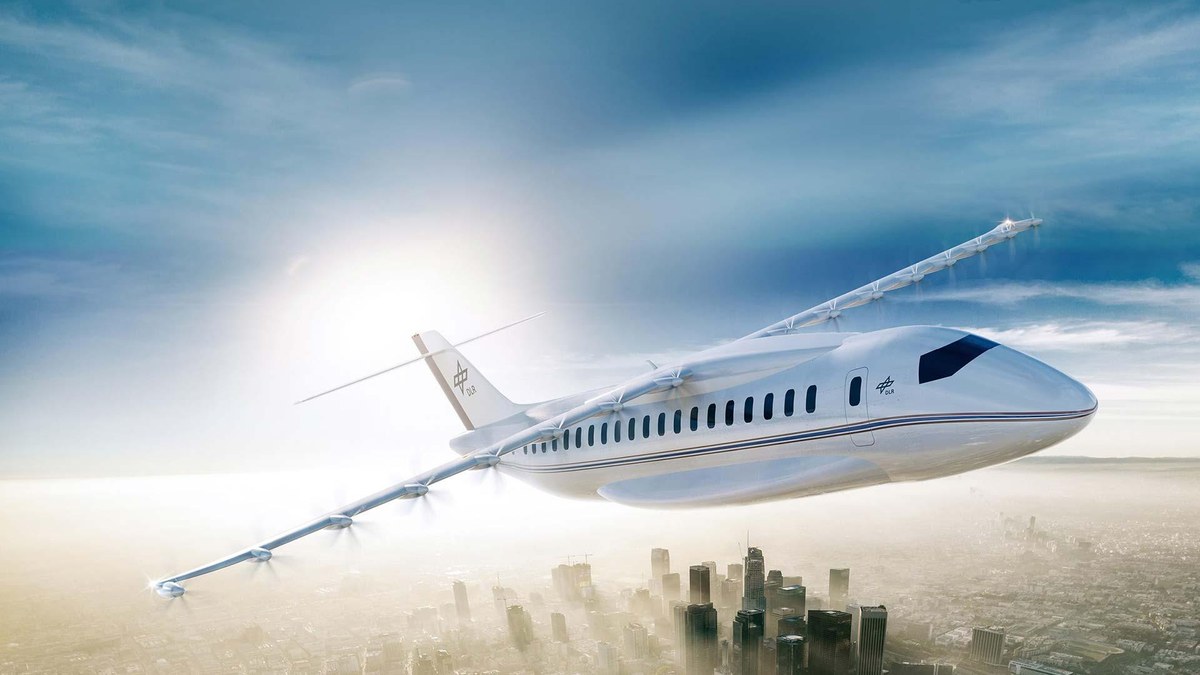
The German Aerospace Center (DLR) and 13 leading representatives of the European aviation industry and research sector have jointly agreed to intensify their cooperation in the field of eco-efficient aviation.
Researchers at the German Aerospace Center (DLR) have been instrumental in the preparation of a report by the World Meteorological Organization (WMO) regarding the development of the ozone layer in the stratosphere. Based on estimates, by about the mid 21st century, the ozone layer will have the same thickness as it had in the early eighties.
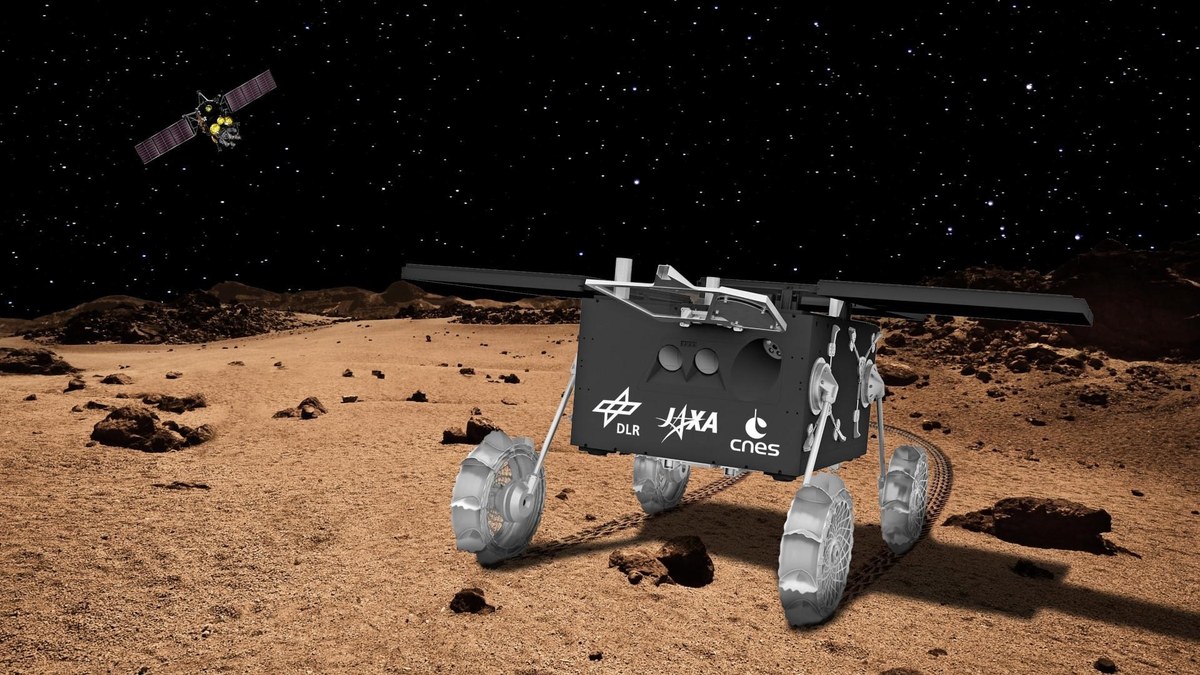
When the Japanese Hayabusa-2 mission is launched towards asteroid 1999 JU 3 in 2014 to collect surface samples, MASCOT – the Mobile Asteroid Surface Scout – an asteroid lander developed by DLR will be on board.
In Morocco, a group of companies led by Saudi Arabian ACWA Power International is going to build a power plant that will provide electricity for less than 15 euro cents per kilowatt hour.
The German Aerospace Center (DLR) has developed VibroTac (Vibrotactile Feedback), a device to support blind and visually impaired people in their daily lives.
A robotic arm controlled entirely by the thoughts of a paraplegic woman – to accomplish this, Patrick van der Smagt from DLR and John P. Donoghue from Brown University in the USA 'networked' expertise from their two research disciplines, robotics and neuroscience.
A service satellite captures an uncontrollable satellite in space, repairs or refuels it and, at the end of the mission, ensures that the defective satellite is disposed of in a controlled manner. Something that sounds like science fiction is now a step closer to reality.
The ILA Berlin Airshow 2012 Berlin opened on 11 September 2012. The German Aerospace Center stand is extremely varied and complete, covering topics from aeronautics, to materials in space through to civil security.
Johann-Dietrich Wörner, Chairman of the DLR Executive Board, in an interview on DLR at the ILA Berlin Air Show 2012.
On 11 September 2012 at the ILA Berlin Air Show, the German Aerospace Center (DLR) and the United States National Aeronautics and Space Administration (NASA) announced a future collaboration in the field of aeronautics research.
At the International Aerospace Exhibition 2012 in Berlin, DLR will be displaying their research in the aerospace sector with more than 70 exhibits at the DLR stand (Hall 4), the Space Pavilion, the open-air area and the static display.
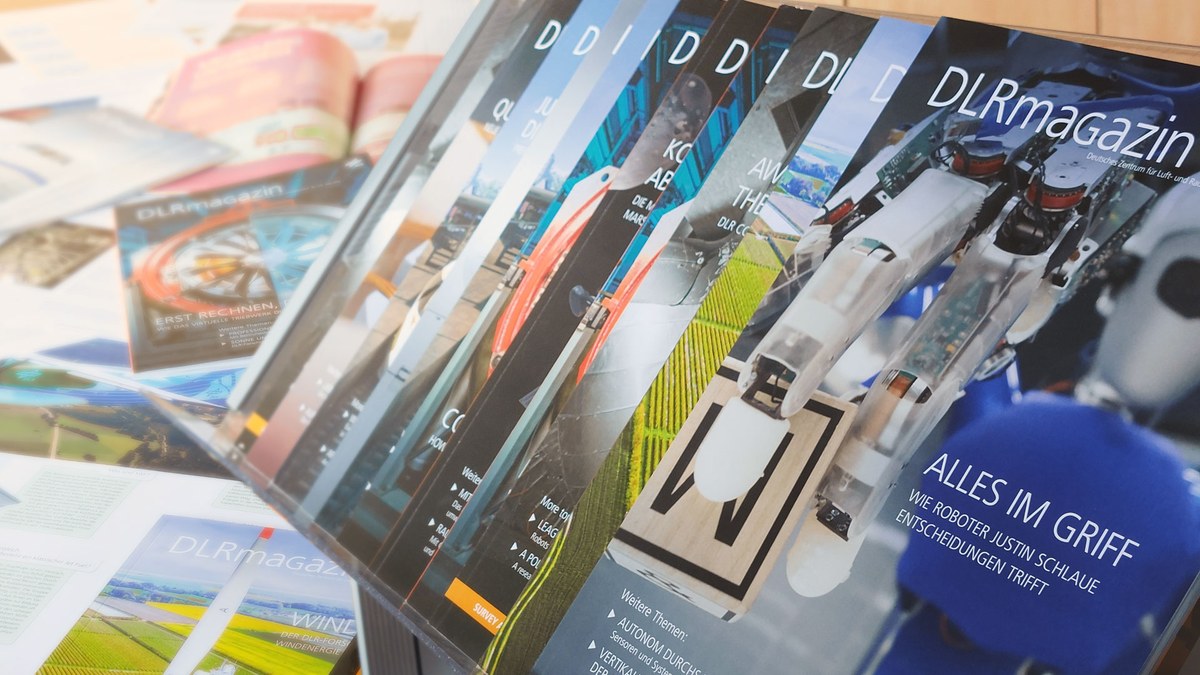
The countdown has begun! In this issue of the DLR Magazine we took a look at volcanic ash under a microscope, shared the excitement of scientists as SHEFEX II prepared for launch, caught a glimpse of Alexander Gerst's training for his upcoming mission in 2014 and went all the way to Poland to visit the kings of aircraft at their final destination.
Every year, there is a six percent increase in the volume of air traffic. To make air travel more environment-friendly and quieter, researchers at DLR, together with partners Airbus, EADS Innovation Works and Cassidian Air Systems, have been carrying out research to reduce the aerodynamic drag of aircraft and have developed an alternative to the traditional leading-edge slat.