The coastal regions of Malaysia are major source areas of biogenic halogen compounds capable of damaging the ozone layer. This was the verdict reached by scientists from the German Aerospace Center (DLR) together with partners from the SHIVA project.
Modern helicopters could be significantly faster and more manoeuvrable - if aerodynamics did not impose limitations on them. Researchers at the German Aerospace Center (DLR) in Göttingen have now discovered and flight-tested a way to increase manoeuvrability using an idea they got from observing humpback whales.
As one of Europe's leading research institutions, the German Aerospace Center (DLR) will continue to align its research work with key issues concerning environmental protection, mobility, energy supply and security in 2012.
On 14 November 2011, the German Aerospace Center (DLR) formally inaugurated its office on the Nanyang Technological University (NTU) campus in Singapore.
The industrial production of chlorofluorocarbons (CFCs) has been forbidden under international agreement, but it is also possible that natural chlorinated and brominated compounds might damage the ozone layer.
The German Aerospace Center (DLR) and Airbus have flight-tested a new ventilation system for aircraft for the first time, with the objective of improving passenger comfort while saving energy and fuel.
What influence do contrails and volcanic emissions have on the climate? Scientists from the German Aerospace Center (DLR) tackled this question by conducting 12 research flights with the Falcon research aircraft as part of the Concert project.
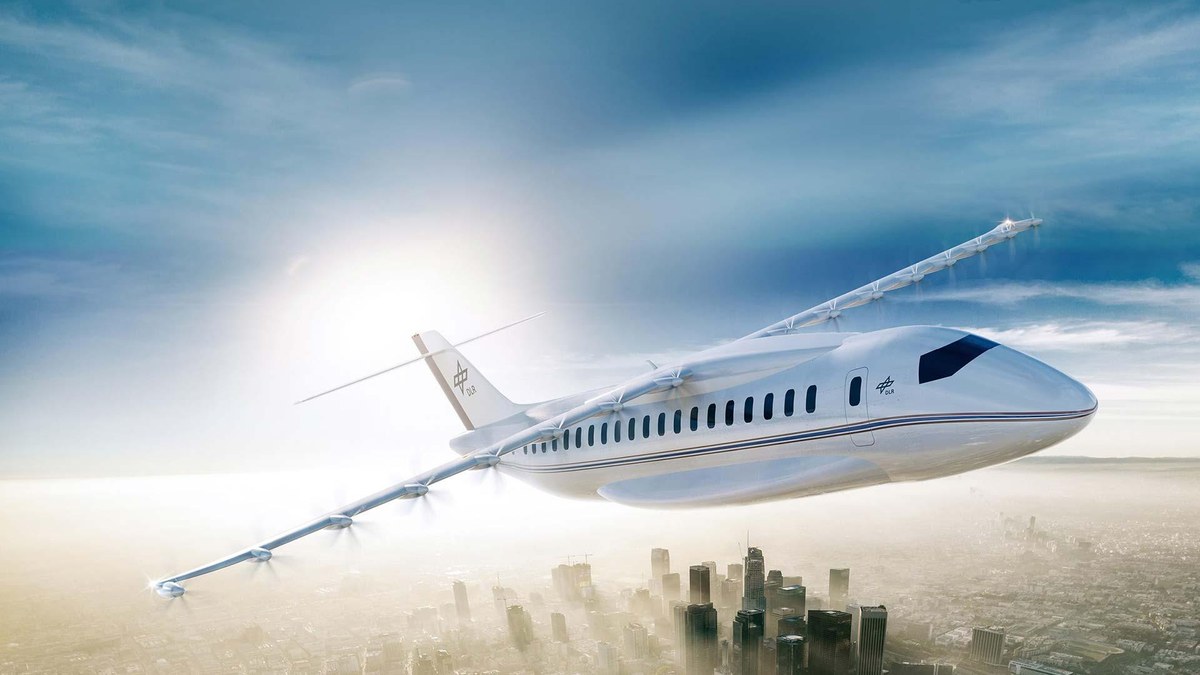
What will the aircraft of the future look like? Researchers at DLR are trying to answer this question. One possible option is known as a Blended Wing Body.
Anyone who has ever wanted to know what a combustion chamber test stand looks like from the inside, how a wind tunnel works or how big the Airbus A380 really is must come to German Aerospace Day.
On 18 September 2011, the German Aerospace Center (DLR) is holding its Aerospace Day in Cologne-Porz. On this date, DLR and the European Space Agency (ESA) – alongside other partners, will be showcasing their research projects from the aerospace, energy and transport sectors.
The Moscow Aviation and Space Salon show, MAKS 2011, takes place in Zhukovsky, south of Moscow, between 16 and 21 August 2011. The German Aerospace Center (DLR) is once again represented at Russia’s national aerospace show this year.
Be it Spitsbergen, Greenland, the Tropics or the southern tip of the Americas – its deployment in the service of science has already taken the Dassault Falcon 20E research aircraft to an incredibly diverse range of places. The Falcon has been flying for the German Aerospace Center (DLR) for the last 35 years.
Deutsche Lufthansa AG started using biofuels on its regular scheduled flights on Friday, 15 July 2011. As part of this project, the German Aerospace Center (DLR) will be taking exhaust gas measurements directly on the engine and comparing the emissions from kerosene and from the biofuel.
On 30 June 2011, DLR’s A320 ATRA (Advanced Technology Research Aircraft) taxied around Hamburg Finkenwerder Airport propelled by an electric nose wheel. In the taxiing tests, researchers and engineers from the German Aerospace Center (DLR), Airbus and Lufthansa Technik demonstrated a fuel cell-powered electric nose wheel. When installed in airliners, such nose wheels could significantly reduce noise and emissions at airports.
Air traffic will continue to grow in the foreseeable future, increasing the workload of air traffic controllers. Researchers at the German Aerospace Center (DLR) have been examining what would happen if air traffic controllers started to view German airspace as a whole, rather than continuing the current practice of viewing it as small areas known as 'sectors'.
While pilots at the controls of an F-4F Phantom II or Eurofighter conduct test flights at altitudes of several thousand metres, their 'client' stands on the ground below. As a flight test engineer at the German Aerospace Center (DLR), Ina Niewind ensures that aircraft will be able to operate even more safely in the future. She prepares flight tests, defines the test plans, reviews the responses of the aircraft and the reactions of the pilot, and afterwards, carefully evaluates the results.
The flight of birds is still largely unexplored; in particular, the movements performed during the beat of a wing and the airflow around the wing are a puzzle to scientists. The German Aerospace Center (DLR), in collaboration with its partners, is addressing question. On 26 April 2011, they will photograph the wing of a barn owl while it is in flight.
One year ago, on 14 April 2010, the Icelandic volcano of Eyjafjallajökull erupted and effectively grounded large parts of the air transport sector across Europe. The data collected during the eight measurement flights by the Falcon research aircraft, operated by the German Aerospace Center (DLR), have now been evaluated.
A helicopter relies on its rotor to be able to take off and land vertically. The rotor is also responsible for the noise a helicopter makes during flight. Researchers at the German Aerospace Center (DLR) in Göttingen and NASA are investigating the exact origin of this rotor noise. The aim is to make the helicopters of the future quieter.
The German Aerospace Center (DLR) has been performing flight tests to simulate and study the flight characteristics of large 'flying wing' configurations to prepare for future aircraft designs. These have been tested and evaluated using DLR's ATTAS (Advanced Technologies Testing Aircraft System) research aircraft.