Huge landslides, lava flows and tectonic forces have generated the stunning landscape seen in these images acquired by the DLR-operated HRSC camera system on board the Mars Express spacecraft.
On 4 May 2013 at 04:06 (CEST), when the European Proba-V satellite lifts off on a Vega launcher with the primary mission of observing vegetation from space, it will be carrying another instrument on board – one that will be keeping an 'eye' on aircraft.
"Go for Spacelab activities," confirmed NASA Mission Control Center on 26 April 1993 at 18:51 CET. German astronauts Hans Schlegel and Ulrich Walter and their United States colleagues had to wait almost two months until, with this command, the D2 mission could finally begin.
In 1993, during the second German D2 Spacelab Mission, astronaut Hans Schlegel orbited Earth 160 times and conducting numerous international experiments as payload specialist. This was Schlegel's first flight into space.
It is a premiere eagerly awaited by scientists and technicians; on 19 April 2013, a Soyuz launcher successfully carried the successor to the long-standing BION series of Russian research satellites into space.
The first results from the Alpha Magnetic Spectrometer (AMS) have been released. This space 'camera' has recorded 20 billion cosmic particles in the first 18 months of operation – yet that is just a small step.
Bureaucracy-free assistance in the event of an emergency – this is the aim of the 15 space agencies united within the International Charter 'Space and Major Disasters'.
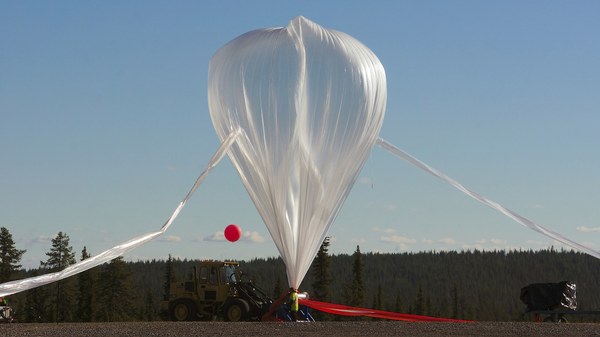
It is the world's longest running rocket programme for conducting research in microgravity, and today it is celebrating an anniversary. Around 35 years after the launch of the first TEXUS mission in December 1977, the 50th TEXUS rocket was successfully launched into space from the Esrange Space Center near Kiruna in northern Sweden on 12 April 2013 at 06:25 CEST.
Intense underground steam explosions that occurred during the crater formation process could be responsible for the central depressions present in these 'twin' craters, located on Thaumasia Planum, an elevated plateau that lies immediately to the south of Valles Marineris, the largest canyon in the Solar System.
Human skin is an organ with many functions; it regulates, among other things, the water balance and temperature of the body, it prevents the entry of pathogens, protects the body from ultraviolet radiation and serves as a sensory organ. But how does it react to the harsh conditions of space? Researchers at the German Aerospace Center (Deutsches Zentrum für Luft- und Raumfahrt; DLR) are seeking answers to these questions with the SKIN B experiment, funded by DLR Space Administration. The experiment started its journey to the International Space Station (ISS) from the Baikonur Cosmodrome in Kazakhstan at 21:43 CET on 28 March 2013, carried by the Soyuz TMA-08M spacecraft with the crew of ISS Expedition 35.
From the outside it looks like just a large industrial robotic arm with a cockpit, but to the pilot inside the simulator, it feels like a real aircraft. The pilot sits at the controls, and the flight commands are converted into corresponding movements of the robotic arm in real time.
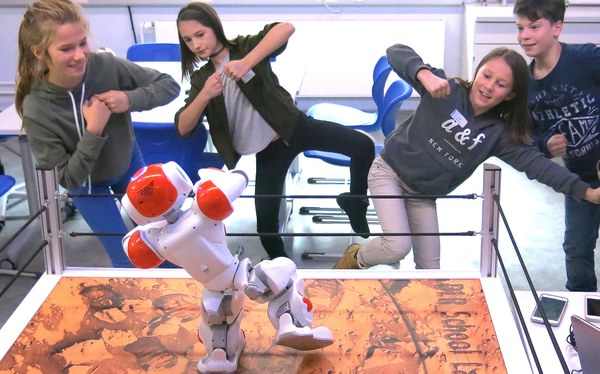
It began in the summer of 2009, with two legs and a camera mounted on top – but it was still far from being a robot of humanoid appearance. Gradually, the TOrque controlled humanoid RObot (TORO), the German Aerospace Center's (Deutsches Zentrum für Luft- und Raumfahrt; DLR) walking machine, has become more human-like – an upper body, a head with camera eyes and arms have been added.
Temperatures alternating between extreme heat and cold, electromagnetic radiation and weightlessness – environmental conditions prevailing in space are harsh. Nevertheless, satellite components and those of the International Space Station ISS and other systems must withstand these conditions and continue to function reliably. Within the national "On-Orbit-Verification"-(OOV)-Programme- the Deutsche Zentrum für Luft- und Raumfahrt (DLR) is testing the maturity of space technologies under real condtitions in their intended space environment. The core element of this programme is the small satellite TET-1 built by the prime contractor Kayser-Threde GmbH of Munich.
The original Philae comet lander has been travelling through space since 2 March 2004. It is currently in hibernation mode, awaiting its arrival at Comet 67P/Churyumov-Gerasimenko. But the Philae models on the ground are being put through their paces: they are being tested to breaking point and examined by DLR.
2153 mirrors twist and turn at DLR Experimental Solar Thermal Power Plant in Jülich, directing sunlight onto a 22-square-metre receiver. TerraSAR-X, the German radar satellite operated by DLR, can also detect the mirrors as they follow the Sun – from more than 500 kilometres above Earth.
The northern hemisphere of Mars is a single, massive lowland with only a few distinctive landscape features. Frequent, intense dust and sand storms are recurrent here over the course of the seasons. When this happens, the wind transports very small particles, which are either deposited in other locations, or, if they encounter rock, leave their mark through the effects of erosion.
Last week, the European Space Agency (ESA) announced its choice of scientific experiments for the JUICE Mission (JUpiter ICy moons Explorer). The decision taken involved two experiments developed by the German Aerospace Center (DLR) Institute of Planetary Research.
Near Hanksville, Utah, in the United States, but 'on Mars'. At least that is what Volker Maiwald will feel when he embarks on his two-week mission in the Mars Desert Research Station on 23 February 2013.
On 13 January 2013 the High Resolution Stereo Camera (HRSC), operated by the German Aerospace Center (Deutsches Zentrum für Luft- und Raumfahrt; DLR) on board ESA's Mars Express spacecraft, imaged the mouth of the Tinto Vallis region of Mars, southwest of Palos Crater.
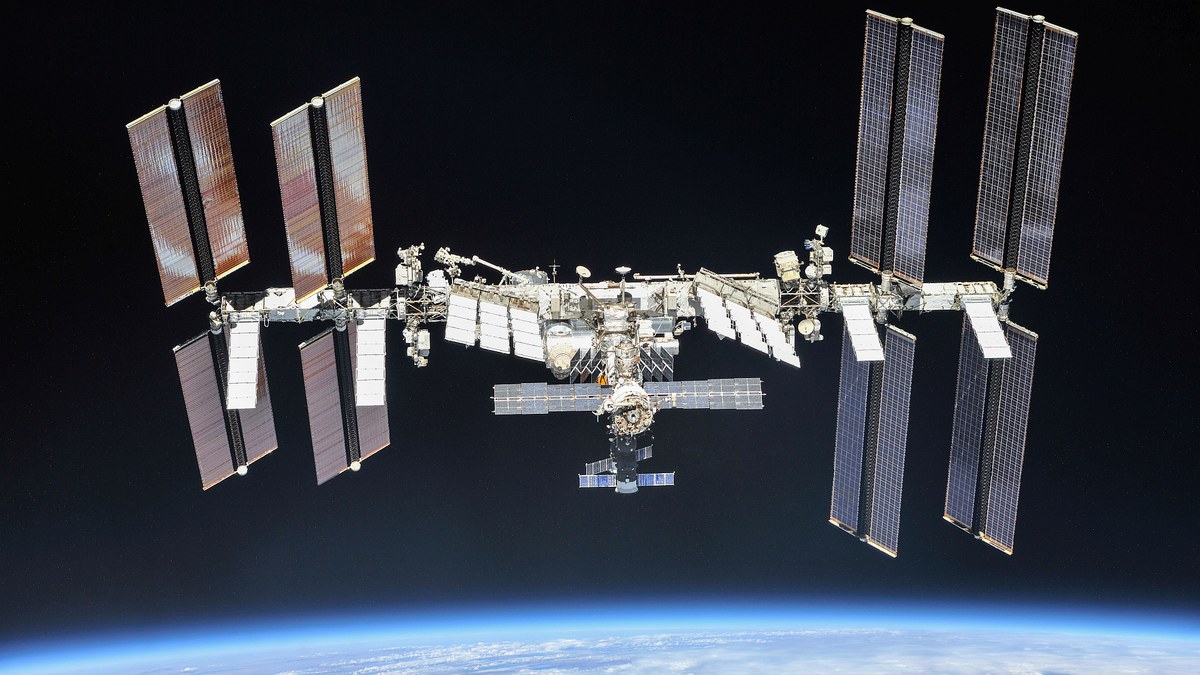
From the outside it resembles a shiny barrel; inside, however, it contains a myriad of possibilities for scientific work under microgravity conditions. The European Columbus research module has been flying through space for five years, attached to the International Space Station (ISS).