Nobody would have believed it back then; when the European Space Agency (ESA) spacecraft Mars Express was launched on 2 June 2003 to investigate our neighbouring planet, its mission was intended to last one Mars year, which is equivalent to about two Earth years.
Grabens, dendritic valleys, lava flows and the highest known mountain in the Solar System – in the images from the German stereo camera on board the Mars Express spacecraft, the topography of the Red Planet appears so three-dimensional that you could walk through it.
His muscles are of interest to the scientists, as is his internal clock and the radiation dose to which he will be exposed during his work in the European Columbus research laboratory. On 28 May 2013 at 22:31 CEST, the European Astronaut Luca Parmitano will depart from the Baikonur Cosmodrome in Kazakhstan on board the Soyuz TMA-09M spacecraft, beginning his journey to the International Space Station (ISS), as part of the Expedition 36/37 crew.
European astronaut Luca Parmitano's 'Volare' mission will begin on 28 May 2013 with the launch from the Baikonur Cosmodrome in Kazakhstan. The International Space Station will be his place of work and home for the next six months.
Huge landslides, lava flows and tectonic forces have generated the stunning landscape seen in these images acquired by the DLR-operated HRSC camera system on board the Mars Express spacecraft.
"Go for Spacelab activities," confirmed NASA Mission Control Center on 26 April 1993 at 18:51 CET. German astronauts Hans Schlegel and Ulrich Walter and their United States colleagues had to wait almost two months until, with this command, the D2 mission could finally begin.
In 1993, during the second German D2 Spacelab Mission, astronaut Hans Schlegel orbited Earth 160 times and conducting numerous international experiments as payload specialist. This was Schlegel's first flight into space.
The first results from the Alpha Magnetic Spectrometer (AMS) have been released. This space 'camera' has recorded 20 billion cosmic particles in the first 18 months of operation – yet that is just a small step.
Intense underground steam explosions that occurred during the crater formation process could be responsible for the central depressions present in these 'twin' craters, located on Thaumasia Planum, an elevated plateau that lies immediately to the south of Valles Marineris, the largest canyon in the Solar System.
The original Philae comet lander has been travelling through space since 2 March 2004. It is currently in hibernation mode, awaiting its arrival at Comet 67P/Churyumov-Gerasimenko. But the Philae models on the ground are being put through their paces: they are being tested to breaking point and examined by DLR.
2153 mirrors twist and turn at DLR Experimental Solar Thermal Power Plant in Jülich, directing sunlight onto a 22-square-metre receiver. TerraSAR-X, the German radar satellite operated by DLR, can also detect the mirrors as they follow the Sun – from more than 500 kilometres above Earth.
The northern hemisphere of Mars is a single, massive lowland with only a few distinctive landscape features. Frequent, intense dust and sand storms are recurrent here over the course of the seasons. When this happens, the wind transports very small particles, which are either deposited in other locations, or, if they encounter rock, leave their mark through the effects of erosion.
Last week, the European Space Agency (ESA) announced its choice of scientific experiments for the JUICE Mission (JUpiter ICy moons Explorer). The decision taken involved two experiments developed by the German Aerospace Center (DLR) Institute of Planetary Research.
On 13 January 2013 the High Resolution Stereo Camera (HRSC), operated by the German Aerospace Center (Deutsches Zentrum für Luft- und Raumfahrt; DLR) on board ESA's Mars Express spacecraft, imaged the mouth of the Tinto Vallis region of Mars, southwest of Palos Crater.
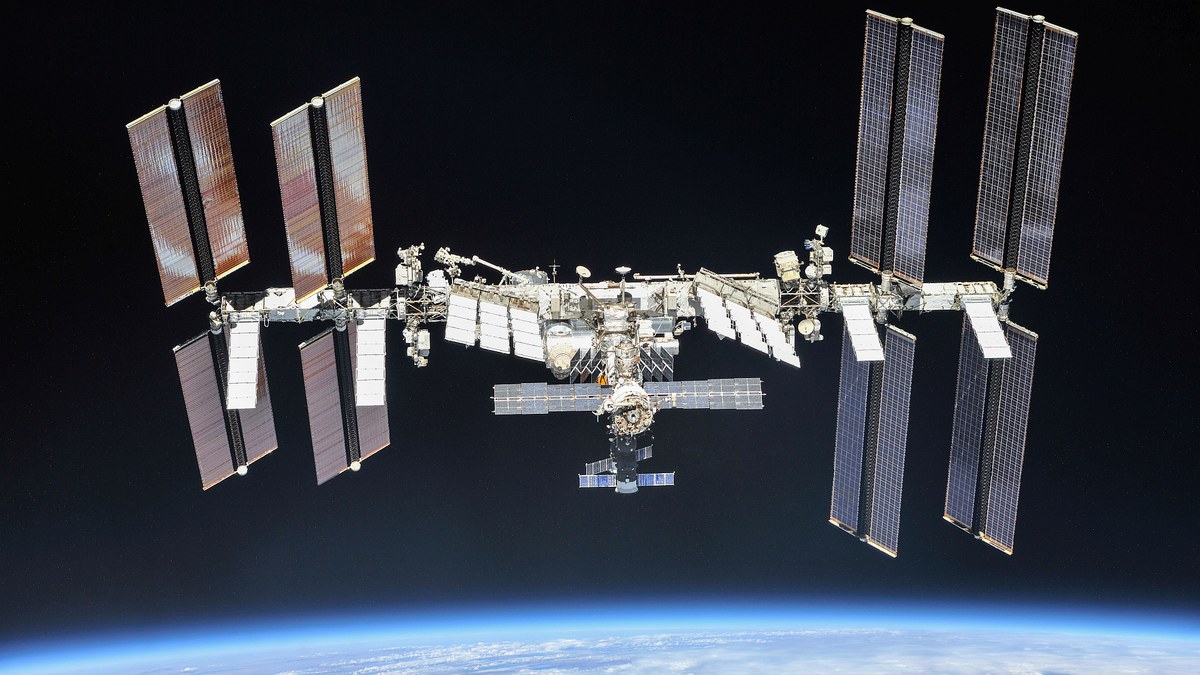
From the outside it resembles a shiny barrel; inside, however, it contains a myriad of possibilities for scientific work under microgravity conditions. The European Columbus research module has been flying through space for five years, attached to the International Space Station (ISS).
As we look at the numerous graben and valleys that wind through the Martian highlands, it is not always clear which geological processes created them.
Captain William Mynors was not particularly creative as he sailed past a remote island in the Indian Ocean on the 'Royal Mary', a ship belonging to the British East India Company, on 25 December 1643.
Observing a seasonal phenomenon has its own special appeal on Mars. As the planet's rotational axis has a slightly greater inclination to that of Earth, our planetary neighbour experiences distinct seasons too – except these last around twice as long since it takes nearly two Earth years for Mars to orbit the Sun.
Glasses are rattling on the shelves and the ground is rumbling – since January 2011 the earth under the Santorini volcano has been stirring. Most of the time, it is barely noticeable, but every now and then the inhabitants notice small tremors jolting the volcanic archipelago.
Nereidum Montes, a chain of mountains over 1000 kilometres long, is part of the northern rim of Argyre Basin, the second largest impact basin on Mars. On 6 June 2012, the HRSC camera on board ESA's Mars Express spacecraft, which is operated by DLR, photographed a part of this mountain range