The original Philae comet lander has been travelling through space since 2 March 2004. It is currently in hibernation mode, awaiting its arrival at Comet 67P/Churyumov-Gerasimenko. But the Philae models on the ground are being put through their paces: they are being tested to breaking point and examined by DLR.
For the first time, researchers at DLR have been able to carry out noise measurements inside a helicopter engine. To do so, researchers from the Division of Engine Acoustics at the DLR Institute of Propulsion Technology in Berlin used new hot gas microphone probes specially designed for investigating the processes responsible for noise generation.
2153 mirrors twist and turn at DLR Experimental Solar Thermal Power Plant in Jülich, directing sunlight onto a 22-square-metre receiver. TerraSAR-X, the German radar satellite operated by DLR, can also detect the mirrors as they follow the Sun – from more than 500 kilometres above Earth.
Many disciplines are involved in the design and development of an aircraft. To obtain the best combination of wings, fuselage and engines, researchers must work closely together and share their expertise effectively.
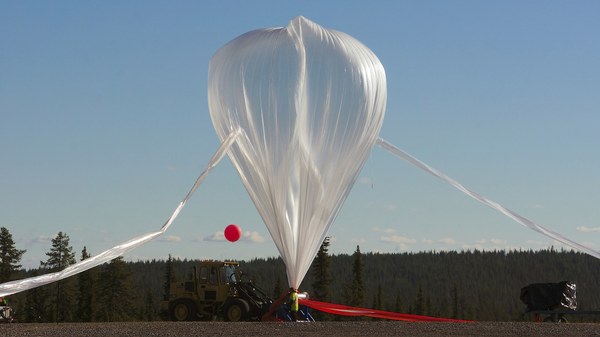
There are very few ways of conducting experiments without the influence of Earth's gravity. One of these platforms became available on 25 November 2012, when a rocket was launched from the Swedish Esrange Space Center in Kiruna.
In Morocco, a group of companies led by Saudi Arabian ACWA Power International is going to build a power plant that will provide electricity for less than 15 euro cents per kilowatt hour.
A mere seven minutes on 6 August 2012 will decide whether the Mars Science Laboratory (MSL) will be successful. Then, the 900-kilogram capsule enclosing the Curiosity rover will begin decelerating 125 kilometres above the Martian surface before being lowered on cables by a rocket-powered 'sky crane'.
As Janine Schneider walks through the materials testing facility, her eyes light up; it is clear that she is comfortable between the long rows of test equipment. She knew she wanted to work here the moment she entered the premises of the DLR Institute of Materials Research in Cologne for the first time, during a trip there as a student. In our DLR Portraits series, we present the materials researcher.
The solar thermal power plant fed its full output of five megawatts into the grid for the first time on 25 January 2012. This power plant went into operation at the end of last year, and is the first parabolic trough collector array in which steam is generated directly in the collectors.
First, it is launched into space at 5400 kilometres per hour, then come three and a half minutes of weightlessness, and finally it lands using a parachute.