Cologne

News Archive

  • <<
  • Page 2 of 2

All years

Mapheus: Zusammenbau der Experimente

MAPHEUS-3 - spherules, metals and microgravity

23. November 2011

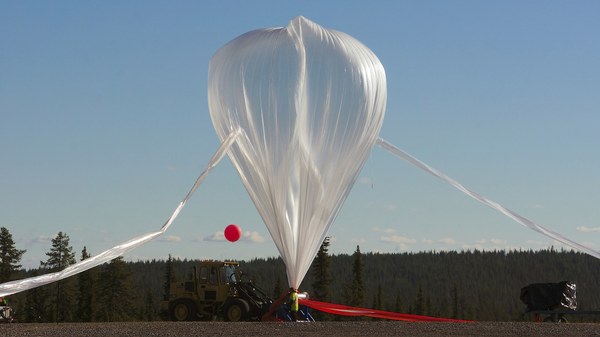
First, it is launched into space at 5400 kilometres per hour, then come three and a half minutes of weightlessness, and finally it lands using a parachute.

'Hands-on' space experience at German Aerospace Day

25. August 2011

'Encounter' a satellite in orbit, view the Moon and the Rhine Valley in 3D, board SOFIA, the airborne observatory, or visit the wind tunnel or astronaut training facility to experience the extreme conditions to which materials and people are exposed in space – these are just a few of the many space-related activities that DLR in Cologne will make available to the general public on 18 September 2011.

German Aerospace Day at DLR in Cologne – a live encounter with astronauts and high-tech research

19. August 2011

On 18 September 2011, the German Aerospace Center (DLR) is holding its Aerospace Day in Cologne-Porz. On this date, DLR and the European Space Agency (ESA) – alongside other partners, will be showcasing their research projects from the aerospace, energy and transport sectors.

First joint European Space Tweetup in Cologne

27. July 2011

The German Aerospace Center (DLR) and the European Space Agency (ESA) are inviting 60 Twitter followers to the first joint European Space Tweetup as part of German Aerospace Day, on 18 September in Cologne, Germany.

Start geglückt: US%2dSpace Shuttle Endeavour fliegt ein letztes Mal zur ISS

Space Shuttle Endeavour flies to the ISS for the last time

16. May 2011

On 16 May 2011 at 08:56 EDT (14:56 CEST), Space Shuttle Endeavour lifted off from Launch Pad 39A at Kennedy Space Center (Florida) on the penultimate shuttle mission (STS-134) to the International Space Station (ISS). On board are the commander Mark Kelly, pilot Gregory H. Johnson, mission specialists Michael Fincke, Greg Chamitoff, Andrew Feustel and Italian ESA astronaut Roberto Vittori.

Strahlungsdetektoren aus dem Weltraum

Radiation detectors in space

11. May 2011

Six thousand lithium fluoride crystals, each one holding information about radiation in space – this is the payload that astronaut Paolo Nespoli and his colleagues removed from the life-size Matroshka human dummy on the International Space Station (ISS) and sent back to Earth. Researchers at the German Aerospace Center (DLR) are now starting work on an evaluation of these small radiation detectors.

Back from space: bacteria's survival skills tested on the International Space Station

4. April 2011

Resistant spores of bacillus subtilis have spent 22 months in the 'EXPOSE-R' test container outside the International Space Station (ISS). For the first time during a long-duration mission, they were mixed with artificial meteorite dust and exposed to the harsh conditions of outer space. Scientists at the German Aerospace Center (DLR) are now determining precisely how many of these spores have survived their stay in space. If it turns out that the meteorite dust was able to shield the spores from the hostile space environment, microorganisms may be capable of surviving in meteorites for long periods of time and travelling from one planet to another.

Konzentrierende Solartechnik: DLR und das Australian Solar Institute forschen gemeinsam

DLR and the Australian Solar Institute sign agreement on joint research into concentrating solar energy technology

16. March 2011

At a meeting in Berlin on 16 March 2011, the German Aerospace Center (DLR) and the Australian Solar Institute (ASI) agreed to cooperate on research into concentrating solar energy technology. Senator Kim Carr, the Australian Minister for Innovation, Industry, Science and Research, and Ulrich Wagner, the DLR Executive Board Member for Energy and Transport, signed a Memorandum of Understanding to support this initiative. The technology is best suited to regions with high levels of solar radiation, which includes large parts of Australia.

Der Weg zum Mars – DLR%2dForscher simulieren Marsatmosphäre

The way to Mars – DLR researchers simulate the martian atmosphere

20. January 2011

To support the European ExoMars Mission to explore the Red Planet, an international project is being launched on 20 January 2011 with the aim of simulating the entry of spacecraft into the martian atmosphere. The project team is made up of German, Russian and Italian scientists and will be coordinated by the Supersonic and Hypersonic Technology Department (Überschall- und Hyperschalltechnologie) at the German Aerospace Center (DLR) Institute of Aerodynamics and Flow Technology (Institut für Aerodynamik und Strömungstechnik; IAS). Among other things, researchers are now simulating the atmosphere of Mars in a wind tunnel at the DLR's site in Cologne.

Warum wir aufwachen %2d Auswirkungen von Verkehrslärm auf das Schlafverhalten

Why we wake up – the impact of traffic noise on sleep patterns

6. January 2011

Traffic noise is annoying, it causes stress and sickness - most people would agree to this. To combat the effects of the noise, we first need to understand how humans react to different types of noise. A research group at the German Aerospace Center (DLR) has addressed this complex subject.

 
  • <<
  • Page 2 of 2