In this RCAS (Railway Collision Avoidance System) research project, scientists from three DLR Institutes of Communications and Navigation, Transportation Systems, and Robotics and Mechatronics have developed a complete system, requiring no infrastructure, for the prevention of train collisions. DLR's cooperation partner is Bayerische Oberlandbahn. This Bavarian rail operator provided one of its Integral regional trains as a test vehicle for the RCAS system (Photo).
Credit: DLR (CC-BY 3.0).
The DLR RailSiTe train laboratory is part of the DLR Institute of Transportation Systems in Braunschweig. It has now been accredited as the only German laboratory for testing components of the future European Train Control System (ETCS). ETCS is designed to standardise European rail traffic systems and make cross-border rail travel faster and more cost-effective. There are currently more than 20 different national train control and protection systems in Europe.
Credit: DLR.
The DLR RailSiTe train laboratory enables detailed technical and operational simulations and testing of railway control and safety technology. It has now been accredited as the only German laboratory for testing components of the European Train Control System (ETCS).
The external part of the laser terminal is attached to the fuselage of the DLR Do 228-212 research aircraft.
Different DLR vehicle technologies, such as new propulsion concepts or lightweight construction, are evaluated and compared with a computer model. Scientific evaluation makes recommendations for policy and economics.
One-of-a-kind – the performance of high-speed trains is tested under unprecedentedly realistic conditions in the new tunnel simulation facility at the German Aerospace Center (DLR) in Göttingen.
The Schlörwagen was an experimental car, which caused a stir in 1939. It had an amazingly low drag coefficient of 0.186. Measurements carried out in the seventies by Volkswagen confirmed that the drag coefficient of the Schlörwagen was a mere 0.15. Today's passenger cars have a drag coefficient ranging from .24 to 0.3; they cannot match the favourable aerodynamic shape of the Schlörwagen. This image shows a model Schlörwagen in the wind tunnel. The tight airflow is clearly visible.
With the DLR ViewCar, the researchers examined driver behavior. Results determined that drivers are subjected to greater stress at intersections.
At 400 kilometres per hour, a silent double-decker – the Next Generation Train (NGT) – will travel into the future and in doing so will realise energy savings of 50 percent. In this project, the German Aerospace Center (DLR) is combining its skills in the field of railway vehicle research. DLR researchers are working to make the trains of tomorrow lighter, more energy efficient, more comfortable, safer and, at the same time, faster.
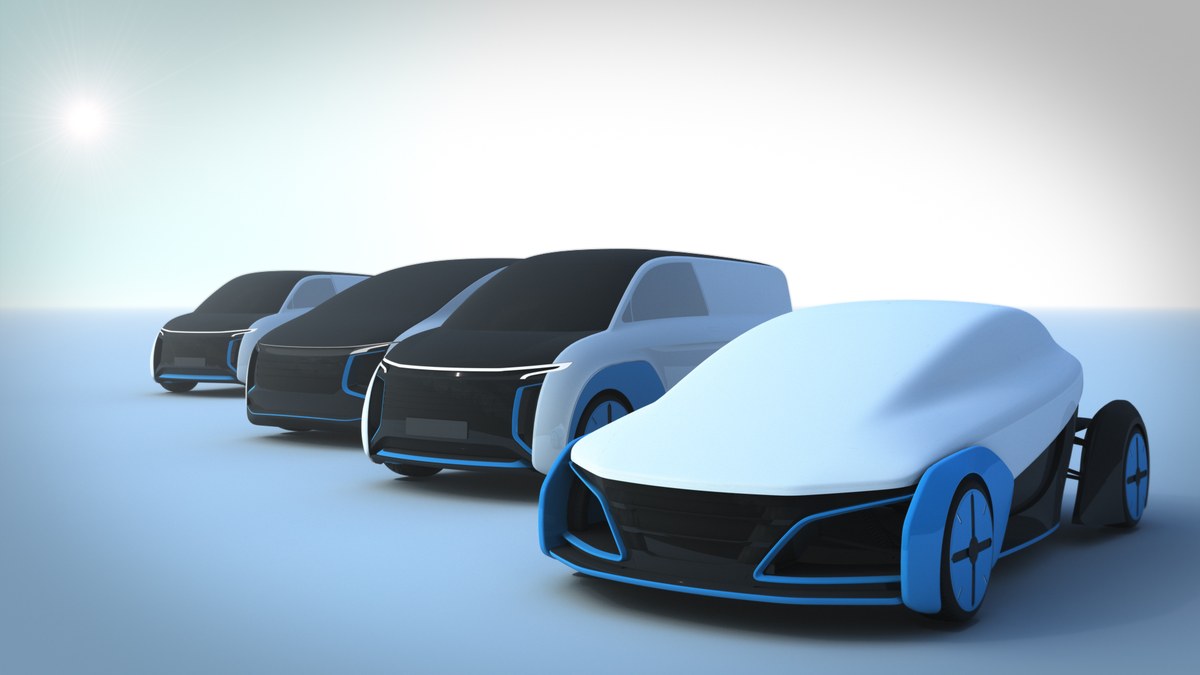
Environmentally friendly, safe, comfortable and affordable; that's how it should be. DLR transport researchers investigate the car of the future. approaches.
The tunnel simulation facility at DLR Göttingen is the only one of its kind in the world. Before they enter the experimental Plexiglas tunnel, a 'catapult' can accelerate the model trains to speeds of up to 400 kilometres per hour on the 60-metre-long test track.
With the touch of a button, the driver can select the level of automation. Road traffic accidents are often the result of errors made by inattentive, overstressed or tired drivers. The objective of the EU project HAVEit (Highly Automated Vehicles for Intelligent Transport), in which the German Aerospace Center (Deutsches Zentrum fuer Luft- und Raumfahrt; DLR) played an active role, was to minimise the number of this kind of accidents.
Credit: HAVEit.
The dynamic driving simulator at the DLR Institute of Transportation Systems in Braunschweig.
Credit: DLR/Markus Steur.
To make railway trains faster and more economical, their shape is decisively important. Two new research facilities at the German Aerospace Center (DLR) in Göttingen are involved in developing the aerodynamically optimum shape for future rail vehicles.
VABENE is a traffic management system to support the emergency services at major events and during disasters. The data can be used to create real-time images of traffic conditions, among other things.
With this double-deck train model made from carbon-fibre-reinforced composite, DLR researchers measure, among other things, the noise emitted by a high-speed train.
In the Next Generation Train (NGT) project, DLR personnel from nine research institutes are investigating the general conditions for the high-speed trains of the future. This includes, in particular, scientific questions relating to high-speed rail transport in the fields of aerodynamics, structural dynamics, the dynamics of vehicle movement, propulsion, energy management, materials science and lightweight construction. The goal is the development of high-speed trains suitable for type approval and with greatly reduced specific energy requirements as well as improved passenger comfort and noise characteristics.
In RailSiTe®, the railway technology laboratory, DLR develops new technologies for complete rail systems.
Credit: DLR/Markus-Steur.de.
With the increasing provision of traffic information through modern information and communication technologies such as PDAs, smartphones, mobile phones and the Internet, individual transport users will in future be able to travel more flexibly, more rapidly and more comfortably in their chosen mode of transport.
The DLR Dynamic Drive Simulator delivers a realistic driving experience. This means that unusual or dangerous situations can be examined with or without driver assistance.
Traffic Tower is the virtual traffic management centre for the DLR control centre. Whether monitoring traffic during major events or evaluating traffic control algorithms, Traffic Tower supports DLR research through its simulation of road traffic and traffic control systems.
With seven test vehicles, the EU project demonstrated HAVEit solutions for highly automated driving.
Equipped with sensors and an electronic steering system, steer-by-wire, the FASCar II is used to test innovative driver assistance and automation systems.
In a driving demonstration, the DLR Institute of Transportation Systems, an autonomous vehicle was able take advantage of traffic information, from traffic lights to speed adjustment.
Credit: DLR..
The trains of the future need to be efficient, safe and cost-effective. To this end, DLR combines skills in, among other things, aerodynamics, lightweight construction, energy management and communications.Using wind tunnel models (coloured silver in the illustration), crosswind stability and possibilities for drag optimisation are investigated. A draft design has been prepared (light lattice structure) for the topological optimisation of the train structure, from which conclusions about the main load paths in the carriage body can be drawn. This gives important information for the selection of the manufacturing and assembly technologies to be used for the Next Generation Train.
The traffic noises played back were recorded in residential areas under realistic conditions.
The transport sector is a cornerstone of Germany's industrialised economy. It satisfies individual mobility needs, provides employment and makes up a significant share of the net economic added value. On the other hand, transport has some adverse effects.
How can rail transport be made safer, more efficient and environmentally friendly? How must the trains of tomorrow be designed? Rail transport researchers at the German Aerospace Center (DLR) are addressing these questions. In the 'Next Generation Train' (NGT) project, researchers from nine DLR institutes are using an interdisciplinary approach to tackle the key questions of how the trains the future can be made fast, safe, comfortable and environment-friendly.