TEXUS 50 was succesfully launched on 12 April 2013 at 06:25 CEST from the Esrange Space Center near Kiruna, in northern Sweden, carrying four German experiments on board. The rocket reached an altitude of 261 kilometers. There were 6 minutes and 20 seconds of microgravity during the flight.
Credit: DLR (CC-BY 3.0).
The TEXUS-50-rocket mounted in the launch tower at the Swedish Esrange Space Center near Kiruna.
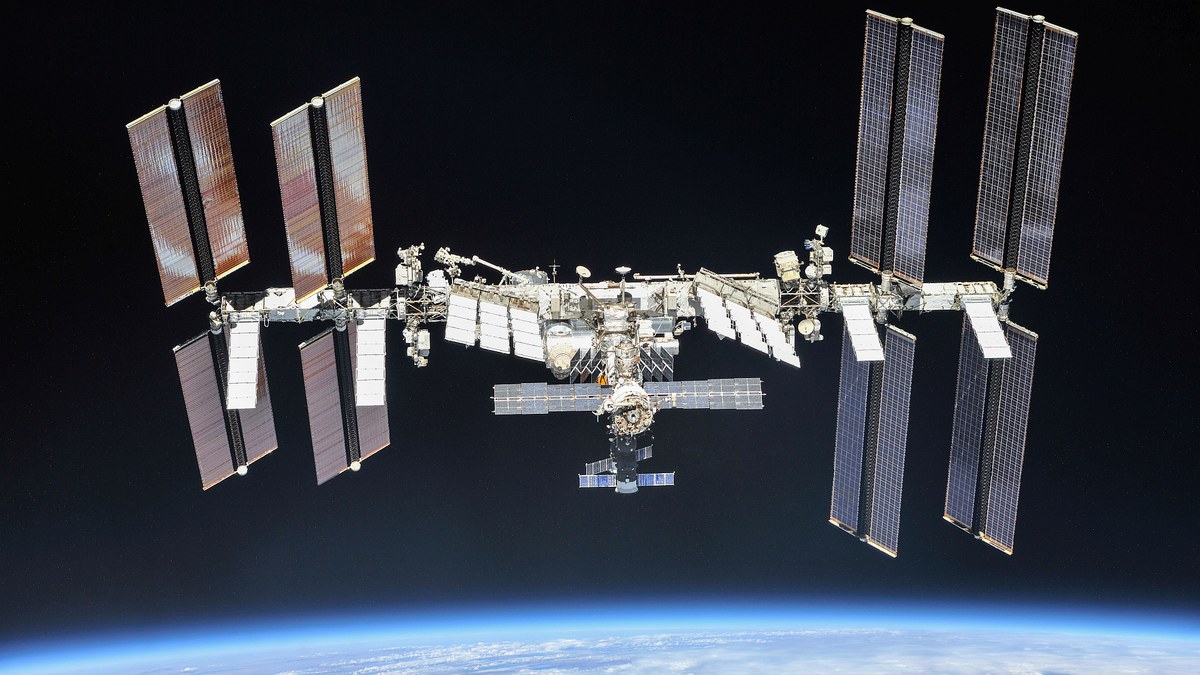
The Russian Soyuz TMA-08M spacecraft taking the astronauts of Expedition 35 to the ISS also carried the SKIN B experiment, which is being overseen by German researchers. The launch vehicle lifted off from the Baikonur Cosmodrome in Kazakhstan at 21:43 CET on 28 March 2013. A new fast-rendezvous flight profile allowed the spacecraft to dock with the ISS in only six hours (four orbits), rather than the more usual two days; docking took place on 29 March at 03.28 CET. At 05:35 CET, the new crewmembers entered the Russian Poisk module to which the Soyuz had docked.
Credit: NASA / Carla Cioffi.
Engineers at the German Aerospace Center (Deutsches Zentrum für Luft- und Raumfahrt; DLR) are using TORO to conduct research into robots that respond to their surroundings and can move safely in an unknown environment.
The German Aerospace Center's (Deutsches Zentrum für Luft- und Raumfahrt; DLR) TORO robot began as a walking machine – just legs with a camera. With an upper body, arms and hands, TORO is now complete.
With its arms and hands, the German Aerospace Center's (Deutsches Zentrum für Luft- und Raumfahrt; DLR) TORO robot can perform tasks such as opening doors.
2153 mirrors twist and turn at the German Aerospace Center (Deutsches Zentrum für Luft- und Raumfahrt; DLR) Experimental Solar Thermal Power Plant in Jülich, directing sunlight onto a 22-square-metre receiver. TerraSAR-X, the German radar satellite operated by DLR, can also detect the mirrors as they follow the Sun – from more than 500 kilometres above Earth. The reflections of the radar signals make the tower and mirror array appear as bright spots of light.
Artist's impression of the JUICE Mission (JUpiter ICy moons Explorer) to Jupiter and its 67 moons. JUICE is scheduled to launch in 2022, and DLR is involved in the mission. The mission focuses on the planet itself, as well as three of its moons, Ganymede, Callisto and Europa. Scientists believe that oceans of water are present beneath the thick ice on their surfaces – and it is even conceivable that life, as we know it, may have evolved here. Arrival at Jupiter is scheduled for 2030. After a three-year observation period, JUICE is scheduled to complete its mission in 2033.
Credit: ESA/AOES.
The JUICE space probe together with Jupiter and its four Galilean moons. Ganymede is shown in cross-section to display its supposed internal structure. You can see a thin blue line marking an ocean of water sandwiched between ice shells, surrounding a core of metal and rock. The small moon to the left is Io, which has no icy armour but does have sulphur geysers. JUICE will not fly to Io.
Credit: ESA.
Volker Maiwald, a researcher at the German Aerospace Center is a member of Crew 125 of the Mars Desert Research Station in Utah. The scientific programme includes 'space walks' in a kind of space suit to an outside area in which biological and geological experiments are to be conducted.
Credit: Mars Society.
On 7 February 2008, the European research module Columbus set off on board the Space Shuttle Atlantis en route to the International Space Station (ISS). German astronaut, Hans Schlegel, accompanied the mission and, in the course of a space walk, carried out work on the outer skin of the module.
Credit: NASA.
On 11 February 2008, the Columbus space laboratory was lifted out of the cargo bay of Space Shuttle Atlantis by the robot arm on the ISS.
Credit: ESA/NASA.
The deployable helix antenna of the AISat microsatellite is four metres long, and will be used to keep an eye on ship traffic worldwide. It will be launched in 2013 aboard an Indian rocket.
Christmas Island is a 135-square-kilometre island in the Indian Ocean. In the image acquired with the German Aerospace Center (Deutsches Zentrum für Luft- und Raumfahrt; DLR) TerraSAR-X radar satellite, one thing is clear – even today, tropical rainforest proliferates on the island and the coastal cliffs continue to make life difficult for mariners.
The DLR SpaceLiner is intended to stand upright like a space shuttle before launch and take off on its journey using rocket engines. After the initial burn, the reusable booster stage will separate from the orbiter, in which there will be a capsule with a capacity of 50 passengers. The glide phase will start eight minutes later, at 20 times the speed of sound.
The DLR SpaceLiner is intended to stand upright like a space shuttle before launch and take off on its journey using rocket engines. After the initial burn, the reusable booster stage will separate from the orbiter, in which there will be a capsule with a capacity of 50 passengers. The glide phase will start eight minutes later, at 20 times the speed of sound. The landing, around 80 minutes later, will take place on a normal runway like a conventional aircraft.
The vision is enticing – board in Europe, sit back, and disembark 90 minutes later on the other side of the world, in Australia. But before the SpaceLiner, which is being developed by the Institute of Space Systems at the German Aerospace Center (Deutsches Zentrum für Luft- und Raumfahrt; DLR), can fly a route like this for the first time, new technologies still have to be tested and basic requirements defined.
The DLR MIRO is the second generation of a versatile robot arm for surgical applications, developed at the Institute for Robotics and Mechatronics. With its low weight of 10 kg and dimensions similar to those of the human arm, the MIRO robot can assist the surgeon directly at the operating table where space is limited.
On 25 November 2012, the high-altitude sounding rocket MAPHEUS-3 was launched from the Swedish Esrange Space Center in Kiruna. On board the rocket were four experiments from the DLR Institute of Material Physics in Space. The MORABA mobile rocket base was responsible for the launch.
The granulate gases in the MEGraMa-M experiment: When subjected to conditions of microgravity, the spherules float in the brightly lit sample container. The circular electromagnets on the four sides of the container caused the particles to move.
Credit: DLR / Franz Bischof.
For scientists at the German Aerospace Center (DLR), the flight of the high-altitude sounding rocket MAPHEUS-3 is a way of conducting experiments under microgravity conditions. Days before the launch, the rocket and its on-board experiments are prepared for their flight.
The German Aerospace Center's (Deutsches Zentrum für Luft- und Raumfahrt; DLR) TerraSAR-X radar satellite orbits Earth at an altitude of 514 kilometres. It acquired this image of the Bonneville Salt Flats in the USA at 13:40 local time on 23 June 2009. The black represents areas of water, where radar signals transmitted by the satellite are reflected away by the smooth surface of the water. The city of Wendover is conspicuous in the upper half of this space radar image, with the orange colouring indicating a strong increase in the local variance of the return signal, due to direct or multiple reflections off the buildings and streets.
VINCI should become available by 2017. As it is re-ignitable, the engine is capable of inserting satellites directly into a geostationary orbit or releasing them in a variety of other orbits. Furthermore, its active de-orbit capability helps to avoid space debris.
In 2015, ESA's BepiColombo mission will begin its journey to Mercury. After six years in space, the spacecraft will enter orbit around Mercury and spend at least one year exploring the planet. The data acquired by its instruments will be transmitted to Earth, providing scientists with new information about the composition and properties of Mercury. Among the instruments is MERTIS (Mercury radiometer and thermal infrared spectrometer), a unique optical instrument incorporating the latest infrared technologies.
Remote sensing data from Earth observation satellites are essential for many geoscientific questions. They document, for example, degrees of urbanisation and industrialisation, traffic loads, air pollution, and areas that are used for agriculture and forestry. Using the Alps as an example, DLR scientists illustrate the impact of climate change on this unique ecosystem.
DLR is developing the HP³ (heat flow and physical properties package) probe. It will be the first probe after Apollo to measure the heat flow in the subsoil of a terrestrial body. HP³ will be one of the experiments carried by the lander module of NASA's proposed InSight mission scheduled for launch in 2016.
On a parabolic flight DLR scientists have examined orthostasis under the gravity conditions prevailing on Mars and the Moon.
DLR's HP3 experiment uses an electromechanical impact mechanism capable of driving an instrument container into the Martian surface to a depth of up to five metres. Behind the cylindrical drill is a flat cable with thermal sensors. These sensors measure the temperature profile and the heat conductivity of the soil, from which the heat flow can be determined. Until now, a fully-automatic mole of this kind has never been used on any planetary body in our Solar System.
In this project, robotics have been successfully applied to minimally invasive surgery, also known as 'keyhole surgery'.
Processing and archiving data centres for the Sentinel-1 and Sentinel-3 satellites are being prepared at the DLR Earth Observation Center in Oberpfaffenhofen.
On 22 July 2012 at 08:41:39 CEST, the first small German satellite in the ‘On-Orbit-Verification’ (OOV) programme was carried into orbit from the Cosmodrome in Baikonur, Kazakhstan by a Russian Soyuz launch vehicle. TET-1 is a technology testbed with 11 experiments on board that will be operated in space for a year.
Credit: DLR.
Artist’s impression of the TET-1 small satellite, which will verify the performance of eleven payloads under space conditions over a period of one year. Kayser-Threde GmbH developed and built the refrigerator-sized satellite on behalf of the DLR Space Administration, with the support of its subcontractors. DLR’s German Space Operations Center (GSOC) in Oberpfaffenhofen will be responsible for the mission operations. TET-1 orbits at an altitude of 520 kilometres.
Credit: DLR / Astro- und Feinwerktechnik Adlershof GmbH.
Between the Scottish mainland and the Orkney island of South Ronaldsay, the water flows at very high speed. The German Aerospace Center (DLR) TerraSAR-X and TanDEM-X radar satellites make it possible to identify and analyse these currents from space.
DLR's SHEFEX II spacecraft was equipped with more than 300 sensors. SHEFEX II was launched on 22 June 2012 from the Norwegian Andøya Rocket Range.
A wealth of information regarding pressure and temperature, among many other variables, was recorded during the flight of SHEFEX II. Now, researchers at the German Aerospace Center (DLR) will begin evaluating this data.
After a 10-minute flight, the sharp-edged SHEFEX II spacecraft landed safely west of Spitsbergen. DLR researchers launched the seven-ton and roughly 13-metre-long rocket and its payload from the Andøya Rocket Range in Norway at 21:18 CEST on 22 June 2012. As it re-entered the atmosphere, SHEFEX withstood temperatures exceeding 2500 degrees Celsius and sent measurement data from more than 300 sensors to a ground station.
SHEFEX II and its launch vehicle still in the horizontal position; just before lift-off, the roof opens and the launch tower is raised to the vertical position.
DLR researcher Hannah Böhrk examines the porous thermal shield tiles, through which nitrogen flows during flight. The gas creates a film over the SHEFEX II craft and performs active cooling during re-entry.
A few days before the launch, DLR researchers assemble the various components of the SHEFEX II vehicle. The spacecraft is notable for its sharp-edged design.
After assembly, the SHEFEX II craft and its launch vehicle are transported to the launch pad. The antenna of the DLR radar system that was used to track the flight is visible in the background.
The SHEFEX II craft, its launch vehicle and the tower during a practise countdown.
Five years ago, at 04:14 CEST on 15 June 2007, the German TerraSAR-X radar satellite was launched from Russia's Baikonur Cosmodrome in Kazakhstan. This marked the beginning of a new era in satellite remote sensing for Germany. Designed to operate for five years, the satellite has now completed its nominal service life but it remains in excellent condition; the spacecraft is expected to continue operating for several more years.
Using TerraSAR X data, Berlin Central Station was measured horizontally and vertically over the course of a year. In the warm season, the steel structure of the building expands; in winter, it contracts again. Based on the coloured dots, the maximum deformation in the course of one year can be seen to be in the millimetre range. The horizontal movement is visible in the left-hand image, and the vertical movement of the station structure is shown in the right-hand image.
Credit: Stefan Gernhardt, TU München.
Radar view from above; this data analysis reveals variations in the height of the station and its surroundings. The yellow and red markings in the dot cloud show elevation changes in the millimetre range.
Telepresence technology can be used to inspect, maintain and repair unsafe or inaccessible industrial facilities from a safe distance. Transparent data transfer for the visual, auditory and tactile senses enables a human to control a robot such as Space Justin remotely, as if it was right there.
In a unique experiment DLR has collaborated with partners in the United States to enable a quadriplegic patient to control a lightweight DLR robot with her thoughts. The RMC is also using an innovative learning method for robotically supported rehabilitation. At AUTOMATICA, the researchers are demonstrating how measuring muscle activity is sufficient for controlling a robot with a hand in order to move and grip with agility and great precision.
The humanoid walking machine shown in this image was first presented at the last AUTOMATICA, two years ago. This time, the two flexible legs are striding out again – enhanced with an upper body.
The RMC has introduced a paradigm shift in the area of safe, intuitive collaboration between humans and robots; the new generation of robotic assistants puts the human at the core of the robotic system. The two-armed 'co-worker' automatically adjusts its activity and the level of safety to suit the distance from its human colleague. This means that the human can interactively and very easily reprogram the robotic software at any time – just by moving.
The DLR Hand-Arm System does not only look human-like – thanks to its flexibility it can also be moved like a human arm. Those at AUTOMATICA will be able to see how HASy catches balls thrown by humanoid robot Agile Justin.
In the Mars simulation chamber, DLR researchers recreated the atmospheric composition and pressure, the planet's surface, the temperature cycles and the solar radiation incident on the surface. The activity of polar and alpine lichen was investigated under these conditions.
Among the microorganisms that survived for 34 days in the Mars simulation chamber at the German Aerospace Center (Deutsches Zentrum für Luft- und Raumfahrt; DLR) were polar lichens.
Envisat is the largest Earth observation satellite ever built and was really only designed to operate for five years. Ten years later, its scientific instruments still work perfectly; one of them is SCIAMACHY.
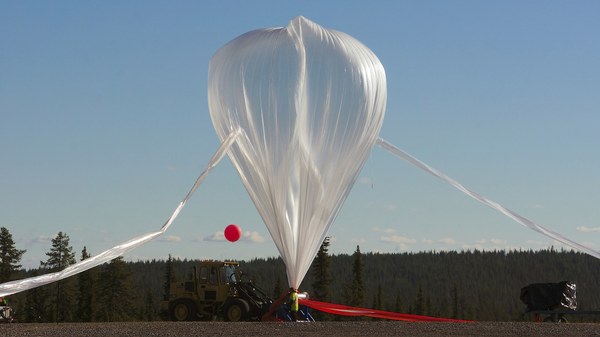
The sounding balloon is made of special rubber material and is about 1.50 metres in diameter. The balloon is filled with helium and can reach an altitude of 30 kilometres.
Cryovolcanism at the south pole of Enceladus: a plume, possibly emanating from a near body of liquid water, emanates from a series of jets located within the 'tiger stripes'. Enceladus Explorer will find out whether there are traces of life deep in the ocean of liquid water below the icy crust.
Credit: DLR/NASA.
The Institute of Technical Physics at the German Aerospace Center (Deutsches Zentrum für Luft- und Raumfahrt; DLR) develops and builds lasers. In the future, lasers will be capable of detecting items of space debris and accelerating the decay of their orbits.
In the laser laboratory at the DLR Institute of Technical Physics, researchers are experimenting with high-power lasers that operate in the kilowatt range.
A year after the initial operational phase, TanDEM-X has mapped all land surfaces on earth except Antarctica completely. Elevation models have been generated with the data. According to the color scale, green tinted areas already comply with a the requirement of a two-metre accuracy. Yellow-coloured areas must be recorded a second time, reddish surfaces also require recording from a different angle. Gray-shaded strips have been recorded, but have yet to be processed.
Scramjet in the Göttingen wind tunnel. Professor Russell Boyce from the University of Queensland examines the scramjet engine in the High Enthalpy Shock Tunnel at Göttingen (Hochenthalpiekanal Göttingen; HEG).
MAPHEUS-3-engineer Jörg Drescher performs final preparation work on the MEGraMa-M experiment.
Microgravity will last for three and a half minutes in the MAPHEUS-3 rocket. The experiments were designed and built at the DLR Institute of Materials Physics in Space.
The four experiments on MAPHEUS-3 require not only microgravity but also hard vacuum conditions. The corresponding system is prepared for its use.
One of the experiment containers was removed from the SIMBOX apparatus. The data will be processed and evaluated by the experts in the coming days.
Wolfgang Jung and his colleagues will also supervise the SHEFEX II (SHarp Edge Flight EXperiment) campaign that will launch from the Andøya rocket range in northern Norway in the spring of 2012. In the SHEFEX programme, DLR is studying thermal protection concepts for spacecraft that have to endure temperatures of up to 2000 degrees Celsius.
Mars500 cosmonaut Romain Charles takes an air sample for the German MICHA experiment. Researchers at DLR are investigating the development of microorganisms in the virtual spacecraft.
The tents and vehicles are clearly visible in this radar image. The artificial structures have been coloured to make them more easily visible; the actual radar image is black and white.
On 31 October at 22:58 CET (on 1 November at 05:58 local time), the Chinese spaceship Shenzhou-8 was launched on board a Long March rocket from the Jiuquan Satellite Launch Center in Inner Mongolia.
Credit: DLR/Markus Braun.
The 'Long March' launch vehicle that will carry Shenzhou-8 and SIMBOX into space, on its way to the launch pad at Jiuquan Satellite Launch Center in Inner Mongolia. On board is the SIMBOX (Science in Microgravity Box) experimental facility containing 17 experiments from the fields of biology and medicine, which will be conducted by German researchers together with their Chinese colleagues This is the first time that the China Manned Space Engineering Office (CMSEO) cooperates with another nation in the use of Shenzhou – the core of China's human spaceflight programme.
The SIMBOX experiment hardware, consisting of a heated chamber and centrifuge, will carry biological samples in 40 compartments.
Credit: Astrium.
Andreas Neuman and André Holz viewing an electric propulsion system installed in the vacuum chamber. The STG-ET has been specially built for research into electrical propulsion systems for space.These systems have different applications than do conventional chemical propulsion systems.
A vacuum is created inside the chamber, where the temperature is reduced to minus 268 degrees Celsius – close to absolute zero.
A few days before re-entering Earth's atmosphere, the German X-ray research satellite ROSAT was targeted by the Tracking and Imaging RAdar (TIRA) at the Fraunhofer Institute for High Frequency Physics and Radar Techniques in Wachtberg, near Bonn, which is unique in Europe. TIRA is part of a global network of monitoring stations that collected data about ROSAT. From this data, the orbit was determined and images were produced. This example, acquired on 20 October 2011, clearly shows the antenna mast of the satellite.
Credit: Fraunhofer FHR.
Double success: On 21 October at 12.30 CEST the first two Galileo satellites were launched on board a Russian Soyuz rocket from Europe's Spaceport in French Guiana. This was the first launch of a Soyuz rocket from French Guiana.
The Galileo Control Centre at the DLR site in Oberpfaffenhofen, near Munich.
DLR's ROKVISS robotic arm shows no signs of external damage. The results of tests now being conducted confirm that the technologies developed by the DLR Institute of Robotics and Mechatronics are well suited for use in space.
DLR's ROKVISS robotic arm is equipped with four connectors – for heater power, data, power for the arm itself and video data (from right to left in the image). For its transport back to Earth, the astronauts were instructed to cut the cables – to simplify dismantling aboard the ISS.
Short Arm Human Centrifuge at the DLR Institute of Space Medicine in Cologne. It allows to simulate artificial gravity.
Credit: DLR / Markus Steur .
Earth observation satellites provide information on altitude, climate change and much more. Based on the data obtained with the German Earth observation satellites TerraSAR-X and TanDEM-X, DLR researchers have developed a sample 3D elevation model of the Rhine valley, which will be showcased on German Aerospace Day 2011 in Cologne.
TanDEM-X and TerraSAR-X orbit in formation to acquire data for a highly accurate global digital elevation model.
As part of the International K2 North Pillar Expedition 2011, German mountaineer Ralf Dujmovits and his wife Gerlinde Kaltenbrunner plus a small international team planned on climbing K2 at the end of June 2011, via the technically demanding north route, which has seldom been followed to date. DLR scientists supported the expedition with a highly accurate 3D model of the mountain. Thanks to the ability to explore the intended route virtually in advance, the mountaineers had a relatively clear idea of which route they would be taking. On 23 August 2011 Gerlinde Kaltenbrunner reached the summit of K2 together with three other climbers from the team, making her the first woman to climb all 8000-metre peaks without an oxygen bottle.This image shows the northwest ridge of K2. To the right in the background is Broad Peak, another 8000-metre mountain in the Karakoram Range. A mountaineer could never have reached the position of the virtual camera. The 3D view offers entirely new views of the massif.Technical information regarding this image:Satellite: WorldView-2Operator/Reference: Digital Globe, Longmont, USA, European Space Imaging, MunichDate acquired: November 10th 2010; 06:02 UTCGeometric resolution of image data: 0.5 metreResolution of elevation model derived: 0.5 metres (horizontal), 2 metres (vertical)Data processing and visualisation: DLR Earth Observation Center (EOC)
Credit: DLR 2011 .
After the last Space Shuttle landing: Atlantis completed the STS-135 mission on 21 July 2011.
Credit: Thilo Kranz /DLR (CC-BY 3.0).
The US Space Shuttle Atlantis landed at Kennedy Space Center in Cape Canaveral, Florida, on 21 July 2011 shortly before sunrise at 05:57 local time (11:57 CEST). After 13 days in space, this last space shuttle mission (STS-135) has come to an end.
Credit: Thilo Kranz / DLR.
SOFIA is a joint project of NASA and DLR. The astronomical observation flights take place at night. This photo was taken during a daytime test flight, during which the telescope hatch was opened for testing purposes.
A total of eleven instruments on the Rosetta spacecraft and ten experiments on the Philae lander, several of which DLR is contributing to, will collect data on this first close encounter with the comet. The OSIRIS dual camera system on the spacecraft will use its narrow-angle channel to observe the nucleus and its wide-angle imager to examine the environment surrounding the comet. The scientists will use these images to select the landing site on P67/Churyumov-Gerasimenko best suited for Philae. The Visible and Infrared Thermal Imaging Spectrometer (VIRTIS) has been designed to analyse the surface of the comet and its temperature from the orbiter. As Philae touches the comet for the first time, a harpoon will be fired to penetrate the surface and prevent the lander from 'bouncing' back into space. The following experiments developed at DLR will be on the Philae lander: the ROLIS camera will image the comet's surface during and after landing; the SESAME experiment will perform seismic investigations on the comet; and the MUPUS instrument will measure a wide range of physical parameters.
The landing manoeuvre is tested using what is known as a ground reference model – a replica of the lander constructed from spare parts. Using this model and their software, researchers are able to simulate, not only the sequence of operations that will be carried out during the landing in November 2014, but the operations on the surface of the comet as well.
This coloured SRTM elevation model shows the elevations for New Orleans in the southern USA. Large parts of the city lie considerably below sea level and would flood without elaborate and extensive protective measures. The yellow and green zones lie above sea level, while the blue zones lie up to four metres below it.
Credit: DLR/USGS.
Based on two radar images supplied by SRTM (one of the two images can be seen on the extreme left of this illustration), the first intermediate step is to calculate the differences between them. These differences in phase information are then depicted in the second image from the left as fringes. From these, the elevation model (third image) can be derived. Low-lying regions are shown as dark areas, with lighter coloured areas denoting higher elevations. Each grey-scale value represents an elevation measured in metres above sea level. The last image in the sequence shows the final digital elevation model, shaded and coloured using an atlas colour scheme. To make the image easier to interpret, the radar image is incorporated into the colour data.
Mission STS-134 is the last flight of the NASA Space Shuttle Endeavour. The space shuttle was completed on 25 April 1991 as a replacement for the Space Shuttle Challenger, which was lost in an accident, and completed its maiden flight on 7 May 1992. She has completed 24 flights so far, the last on 8 February 2010 (STS-130). At that time, Endeavour carried the connection node Tranquility and the Cupola observation deck to the International Space Station.
Credit: Thilo Kranz/DLR.
The Stratospheric Observatory For Infrared Astronomy, SOFIA, during its first test flight with its telescope exposed, on 13 July 2010. The German-built 2.5-metre infrared telescope is visible through the opening in the aircraft.
Credit: NASA/Jim Ross.
Dieses Bild zeigt die Auswirkungen des Tsunamis in einem Vorher-The effects of the tsunami are shown in a before and after comparison of the Japanese coast between 5 September 2010 (left) and the 12 March 2011 (right). Data: Rapid Eye.
Credit: DLR/Rapid Eye.
MetOP-A is the first of three EUMETSAT Polar System (EPS) satellites. It was developed by the European Space Agency (ESA) on behalf of the European Organisation for the Exploitation of Meteorological Satellites (EUMETSAT). GOME-2 is on board the MetOp Earth monitoring satellite, launched on 12 October 2006, and is continuously taking measurements of the atmosphere. GOME-2 continues the series of ESA instruments GOME/ERS-2 and SCIAMACHY/Envisat, which have been monitoring the Ozone Layer successfully since 1995 and 2002 respectively.
ATV Johannes Kepler was launched on a specially modified launcher, the Ariane 5ES, at 22:50 CET on 16 February 2011 from Europe's spaceport in French Guiana. The second space cargo carrier in the ATV programme, it is now en route to the International Space Station (ISS).
Credit: Arianespace.
'Half-time' for Mars 500; on 12 February 2011, after a 250-day simulated flight to Mars, three crewmembers will land on the Red Planet. They will climb out of their isolation pod two days later at the Moscow Institute for Biomedical Problems (IBMP) and begin a simulated exploration of Mars. Their eight-month return journey to Earth will commence in early March. Their simulated journey to Mars started on 3 June 2010, as the hatch behind them closed, marking the start of the longest ever space simulation experiment.
A small island obstructs the constant flow of the ice shelf on Queen Maud Land – it is the lighter area at the bottom left of the image. From September 2010 until it broke off, Iceberg A 62 was connected to the Fimbul Ice Shelf by a mere 800-metre-wide bridge. Two fissures in the ice from different sides of the bridge approached one another until the break occurred. The images transmitted by the radar satellite TerraSAR-X over a long period of time should enable researchers to achieve a better understanding of how icebergs calve. Until now, glaciologists have not been able to predict where and how much ice will break away each year.
The German Receiver for Astronomy at Terahertz Frequencies, GREAT, in front of the Stratospheric Observatory For Infrared Astronomy, SOFIA, prior to boarding at NASA's Dryden Aircraft Operation Facility in Palmdale, California. From left to right: Helmut Wiesemeyer, Rolf Güsten (Principal Investigator), Jürgen Stutzki (Co-Principal Investigator), Stefan Heyminck, Karl Jacobs, Urs Graf, and Oliver Ricken.
Credit: NASA/Tom Tschida.
EDRS is based on two geostationary 'distributor' satellites that, because of their fixed position in space, will be able to receive high-speed communications from low-flying Earth observation satellites and relay them to Earth without any delay. As a result, these satellites will no longer be restricted to brief contact windows when they pass over their ground stations, which is currently the case.
Credit: ESA..
The data for these digital computer models is derived from wind tunnel tests in which the main physical properties of the martian atmosphere are simulated. For example, the atmosphere of Mars contains a higher concentration of particulate matter than the atmosphere of Earth, meaning that greater resistance to erosion is required.
In Cologne, the researchers have access to a wind tunnel heated by an electric arc system, in which models can be exposed to realistic thermal loads. Optical and electronic metrology systems are used to examine the flow characteristics of the hot gases and the local thermal loads being experienced by individual sections of the model. Space capsules enter the atmosphere with their unstreamlined undersides facing in the direction of travel. This gives rise to a shock wave at high temperatures, while the gases flowing past the sides of the capsule are significantly cooler as they pass the other end of the capsule.
Mars Express reached its destination on 25 December 2003, and the the High Resolution Stereo Camera, HRSC – developed at the DLR Institute of Planetary Research in Berlin – began operations on 10 January 2004. Since then, the spacecraft has been orbiting Mars, scanning its surface with no fewer than nine light-sensitive detectors arrayed at different viewing angles. That enables the same location, with minimal time lag and under identical light and atmospheric conditions, to be imaged several times from an altitude of approximately 250 kilometres – the data obtained supplies scientists with information about the heights and depths of the planetary surface. Roughly two thirds of the surface of Mars has now been photographed with good quality imagery. Indeed, 40 percent of the planet has been photographed at a resolution of roughly 10 metres per pixel, achieved when the spacecraft reaches its lowest altitude of 250 kilometres above the Martian surface on its elliptical orbit. This image shows the proportion of nadir coverage after orbit 8901.
Elevation of the Meridiani Planum, located at the northern edge of the Southern Highlands of Mars. The region is located at about 2°N,352°E and lies between the Tharsis volcanic region to the west and the low-lying Hellas Planitia impact basin to the southeast. Meridiani Planum spans 127 x 63 kilometres, equivalent to an area of roughly 8000 square kilometres, about the size of Cyprus. This image was created using a Digital Terrain Model obtained from the High Resolution Stereo Camera on the European Space Agency's Mars Express spacecraft. Elevation data is colour-coded: purple indicates the lowest-lying regions and beige the higher elevations. The scale is in metres.
Credit: ESA/DLR/FU Berlin (G. Neukum).
SOFIA during test observations of the night sky in March 2008. The opening in the fuselage of the converted Boeing 747SP provides a glimpse of the 2.5-metre infrared telescope, built in Germany.
Technician Mario Jünemann prepares the SHEFEX II model for its test in the high-enthalpy wind tunnel at Göttingen. This involves incorporating 50 pressure sensors and 60 thermocouple elements to the projectile. During this test, thousands of data values are recorded within a thousandth of a second.
The LaserCUSING process involves the fusion of single-component metallic powders using a laser, allowing components to be built up layer by layer from almost any metallic material using 3D computer generated data. The laser beam locally fuses a single-powder material layer by layer. The laser’s rapid movement means the workpiece is scarcely heated, the melt cools down quickly and the possibilities of component distortion are minimized. The parts made from the powder cannot be distinguished from a solid piece of metal.
Hannah Böhrk and Henning Elsässer, installing the ceramic heat shield tiles. The two researchers, from the DLR Institute of Structures and Design, have been working on the design and integration of the spacecraft nose, and the construction of the heat shield for the body of SHEFEX II. Their institute developed the ceramic fibre composite being used here. The use of new materials, which retain their strength at temperatures above 1500 degrees Celsius, makes the use of sharp edges in hypersonic re-entry vehicles possible.
The aim of the SHEFEX development programme – a novel space glider called 'REX Free Flyer', which could be available from 2020 for microgravity experiments that can be returned to Earth. The sharp-edged shape promises two important advantages: firstly, the heat shield will be easier to manufacture and more immune to the effects of re-entry; in addition, the faceted shape results in improved aerodynamic properties.
The Stratospheric Observatory For Infrared Astronomy, SOFIA, during its first test flight with its telescope exposed, on 18 December 2009 above the Mojave desert in California. The German-built 2.5-metre infrared telescope is visible through the opening in the aircraft. The test flight with the door open made it possible for the engineers to monitor the movement of air in and around the telescope and the door.
Credit: NASA/C. Thomas.
This stainless steel model of the sharp-edged spacecraft SHEFEX II (Sharp Edged Flight Experiment) measures about 70 centimetres in length. A porous heat tile is located on the surface. Nitrogen flows through and out of the tile as the spacecraft re-enters Earth's atmosphere. As the gas flows out, it clings like a film to the outer surface of the flight experiment, creating a buffer layer between the spacecraft and the hot surrounding air.
Shefex II will re-enter Earth's atmosphere at more than 12 000 kilometres per hour.
Examining a 1:3 scale model of the Shefex II spacecraft in the Göttingen wind tunnel: test supervisor Alexander Wagner (left) and Dr Klaus Hannemann.
The DLR robots, Space Justin is capable of performing complex repair tasks in orbit - it receives its commands from the operator on the ground. The DLR robots will relieve future astronauts in dangerous missions in space.
Scientists at the German Aerospace Center (DLR) have recorded and analysed the signals from the new GPS-generation IFF satellite with the 30-metre German Space Operations (Deutsch Space Operations Centre GSOC) antenna in Weilheim.
As part of the development of Ariane 5’s main engine, Volvo Aero and its partners Snecma and EADS Astrium developed a new engine nozzle, called the Vulcain 2+ NE Demonstrator or NE-X, shown in the image. The innovative sandwich construction of the nozzle was successfully tested on the P5 test stand at the DLR facilities in Lampoldshausen.
DLR has operated a near-polar ground station on the O'Higgins peninsula in Antarctica for several years, and has pioneered the construction and operation of ground stations in the Antarctic. The TanDEM-X mission will use a global network of more than 10 ground stations.
Zero-gravity experiments, exploring other planets and observing the terrestrial environment from outer space are among the many space research activities of DLR.
Eminent achievements in science and technology increasingly determine the economic, political and cultural importance of a country. They play a crucial part in attracting top scientists and industrial investments to a particular location. Acting on a mandate from the Federal Government, the DLR Space Administration promotes these objectives under the German Space Program. Thanks to its excellent engineers and scientists, Germany was able to implement more than 100 space missions both nationally and within the framework of international cooperation.
The German Aerospace Center (DLR) is involved in important national and international missions, exploitation and exploration of outer space and research on the effect of weightlessness on life. Our mission pages provide an overview of the main areas of focus and highlights.