Behind the Next Generation Train lie scientific questions in the areas of aerodynamics, structural dynamics, vehicle dynamics, propulsion, energy management, materials science and lightweight construction. The aim is to develop and gain approval for efficient high-speed train designs with greatly reduced specific energy consumption and improved passenger comfort and noise characteristics.
Credit: DLR.
At 400 kilometres per hour, a silent double-decker – the Next Generation Train (NGT) – will travel into the future and in doing so will realise energy savings of 50 percent. In this project, the German Aerospace Center (DLR) is combining its skills in the field of railway vehicle research. DLR researchers are working to make the trains of tomorrow lighter, more energy efficient, more comfortable, safer and, at the same time, faster.
Credit: DLR (CC-BY 3.0).
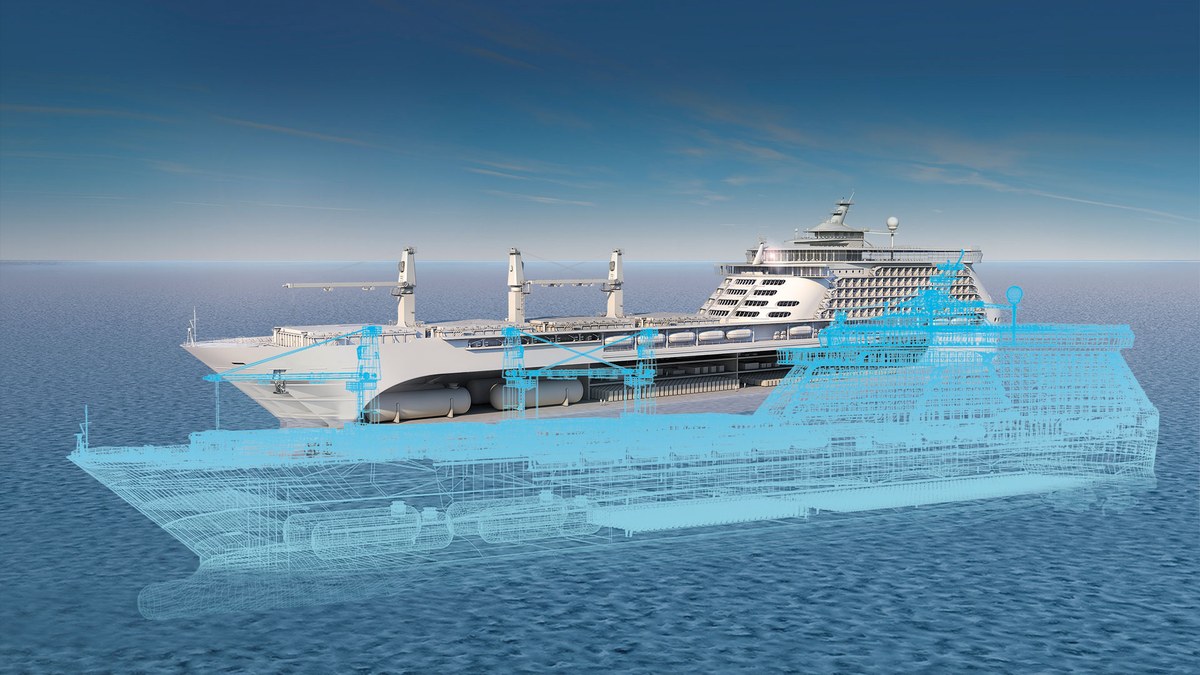
The trains of the future need to be efficient, safe and cost-effective. To this end, DLR combines skills in, among other things, aerodynamics, lightweight construction, energy management and communications.Using wind tunnel models (coloured silver in the illustration), crosswind stability and possibilities for drag optimisation are investigated. A draft design has been prepared (light lattice structure) for the topological optimisation of the train structure, from which conclusions about the main load paths in the carriage body can be drawn. This gives important information for the selection of the manufacturing and assembly technologies to be used for the Next Generation Train.
In the Next Generation Train (NGT) project, DLR personnel from nine research institutes are investigating the general conditions for the high-speed trains of the future. This includes, in particular, scientific questions relating to high-speed rail transport in the fields of aerodynamics, structural dynamics, the dynamics of vehicle movement, propulsion, energy management, materials science and lightweight construction. The goal is the development of high-speed trains suitable for type approval and with greatly reduced specific energy requirements as well as improved passenger comfort and noise characteristics.
Airflow over a model of the Next Generation Train (NGT).
With this double-deck train model made from carbon-fibre-reinforced composite, DLR researchers measure, among other things, the noise emitted by a high-speed train.