26 April 2012
Martian conditions in miniature
In the Mars simulation chamber, DLR researchers recreated the atmospheric composition and pressure, the planet's surface, the temperature cycles and the solar radiation incident on the surface. The activity of polar and alpine lichen was investigated under these conditions.
Credit: DLR (CC-BY 3.0).
Preparing the Mars simulation chamber
DLR researchers Jean-Pierre de Vera (right) and Andreas Lorek subjected the microorganisms in the Mars simulation chamber to the hostile conditions of Mars. The lichens and bacteria survived for 34 days and carried out photosynthesis.
Polar lichen
Among the microorganisms that survived for 34 days in the Mars simulation chamber at the German Aerospace Center (Deutsches Zentrum für Luft- und Raumfahrt; DLR) were polar lichens.
Expedition to the Antarctic
In the Antarctic, Jean-Pierre de Vera, a scientist at the DLR Institute of Planetary Research in Berlin, collected polar lichens that were exposed in the Mars simulation chamber to conditions replicating those found on the Red Planet.
Alpine and polar lichens could also survive on Mars. Planetary researchers at the German Aerospace Center (Deutsches Zentrum für Luft- und Raumfahrt; DLR) simulated the conditions on Mars for 34 days and exposed various microorganisms to this environment. "During this period, the lichens and bacteria continued to demonstrate measurable activity and carry out photosynthesis," says Jean-Pierre de Vera, a scientist at the DLR Institute of Planetary Research in Berlin and head of the Mars simulation project. The microorganisms adapted to this environment, primarily in niches in rocks and in fissures and gaps in the simulated Martian soil. This might be an indication that such adaptation strategies would make life possible in niches on the actual surface of Mars as well.
Lichens from inhospitable parts of Earth have demonstrated their ability to survive even under the conditions on Mars – organisms that live at altitudes of up to 3500 metres, collected in Switzerland, and cyanobacteria and lichens from the Antarctic. "We observed these samples in a Martian climate for over a month in our Mars simulation chamber," says de Vera. The researchers recreated the Martian surface with various mineral constituents, using knowledge obtained from missions such as the NASA Mars rovers 'Opportunity' and 'Spirit'. In the chamber itself, they replicated the Martian atmosphere, which consists of 95 percent carbon dioxide, four percent nitrogen and trace gases such as argon and oxygen. A vacuum pump system then ensured six millibars of air pressure, which enabled the planetary researchers to simulate the Red Planet’s tenuous atmosphere. Special radiation sources ranging from the ultraviolet to the infrared replicated solar radiation on the surface of Mars. Finally, the organisms had to cope with temperatures that fluctuated between minus 50 degrees Celsius to plus 23 degrees Celsius.
Adaptation strategies for the Red Planet
According to astrobiologist Jean-Pierre de Vera, the results obtained showed that "the terrestrial microorganisms could carry out photosynthesis even under these harsh conditions." The water required for this process is present in the morning and evening of the Martian day, when humidity condenses as precipitation across the surface, and the organisms can absorb it. The lichens prove to be creative survivors, primarily in niches on the surface – in small cracks and gaps. They adapted to the artificial Martian environment and demonstrated the same activity that they would in their natural environment. "If life arose on Mars four billion years ago, it could have remained to the present day in niches."
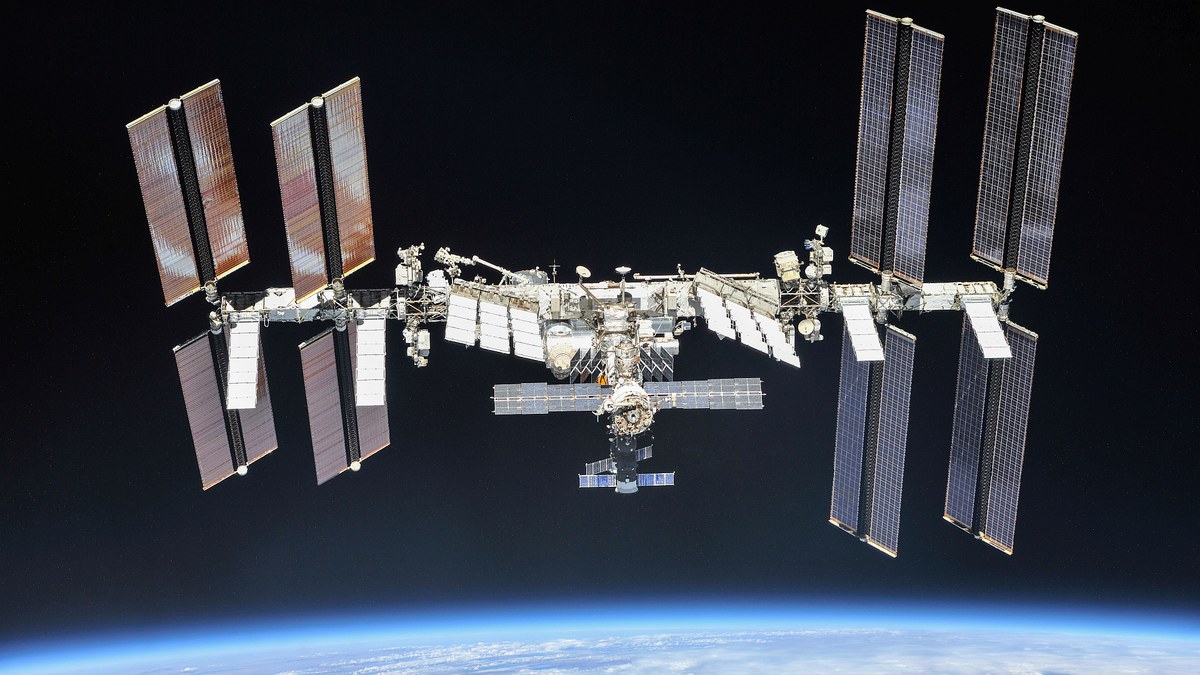
Experiments where microorganisms are exposed to space conditions have already been conducted, for example outside the International Space Station (ISS). But the scientists want to use the tests in the Mars simulation chamber to investigate the specific conditions on a planet. "We now also have the opportunity to continuously observe the occurrence of activity and at what level it occurs in the lichens and bacteria."
Search for habitable planets
The 34-day test was conducted as an international project within the Helmholtz Alliance 'Planetary Evolution and Life'. "One of the questions to be answered is: how habitable is a planet, and what makes it that way?” explains Tilman Spohn, head of the DLR Institute of Planetary Research and scientific coordinator for the Helmholtz Alliance. "This long-term experiment in the Martian simulation chamber and its results are an important step forwards," says Spohn. "It makes the presence of life on Mars more plausible." And the existence of primitive life forms such as microorganisms that can be used to address this hypothesis is only to be expected, in the planetary researcher's opinion: "Humans and fauna make up just a tiny proportion of the entire biomass – microorganisms, on the other hand, make up more than 80 percent of it."
The results obtained by Jean-Pierre de Vera's team present a significant challenge for future missions to Mars: "We must be extremely careful not to transport any terrestrial life forms to Mars," says de Vera. "Otherwise they might contaminate the planet." But there is yet another question facing the astrobiologist's team: "We know that lichens and bacteria could survive and remain active on Mars for 34 days. But could the organisms continue to live in these conditions beyond this period, for years or even centuries? Unfortunately, this question will remain unanswered, as such lengths of time would exceed the scope of this experiment."
Last modified:26/04/2012 09:48:34
This is vital work that is absolutely essential to any future colonization of Mars, granted that there is no indigenous life there to begin with.In de Vera et al. 2010 and de Vera 2012, the authors quote pH and salinity as a possible limiting factor to lichen growth in Martian conditions.In light of most recent hypotheses as to the origin of seasonal warm flows on Mars being briny water (McEwen et al., 2011), I was wondering whether, along with testing the effects of salinity on X. elegans survival and photosynthetic efficiency, the group was considering using lichens found in marine environments or splash zones for future experiments. Positive results for either of these experiments could imply increased survival of lichens in or next to seasonal warm flows.Also, would another key point be to assess the effects of a Martian environment on reproduction, if any?In any case this is extremely encouraging work which likely will impact any future decision regarding potential pioneer organisms nominated for terraforming Mars.
Dear Pierre Cauchy,thank you for your interest. Indeed lichens from the splash zones might be interesting in what it concerns tests with Martian environment under high salinity levels. But we have also to taken into account, that only lichens and cyanobacteria from polar regions were able to survive and live under these conditions. I do not know from any lichen which is from the splash zone and additionally a polar organism. If you know some of these species, please tell us. We are very interested to get samples and to test them.
"Finally, the organisms had to cope with temperatures that fluctuated between minus 50 degrees Celsius to plus 23 degrees Celsius."Is that realistic for Mars, i.e. are there places that never drop below -50 degrees? The Mars rover Opportunity, which is very close to the equator, measured temperatures below -60 degrees every night (see http://marsrover.nasa.gov/spotlight/images/20070612/20070612_Opportunity_LFHzczm_plot.jpg). Either way, congratulations to your research result! I gather you also simulated the much stronger UV radiation on Mars?
You are right. But the measured temperatures are air temperatures. This looks different, if we measure temperatures close to or in the soil, where mostly the dark, red soil must has temperatures largely warmer (between 5 to 10 degrees warmer). This is also very well known from measurments in field studies on Earth.The radiation has also be tested (by the use of a Xe-lamp), and as described, only niche conditions (fissurs and cracks in rocks) with low UV-dosis amounts is not influencing the photosynthetic activity!
Thanks for the interesting article. I am a layman in science in general, so my questions might be very naive. 1. Why was the experiment 30 days, why not much more, let's say a year or so?2. Does that mean that (if a spacecraft carries lichen to Mars) lichen would survive on Mars? Or it is more like that they can survive for a while, but will eventually die?Thanks in advance
Dear Kalamona,in reference to your questions listed below, I have to explain, that1.) The time limit for experiment with just one simulation chamber is 1 month. We are also interested in experiments of one year but this is because of a lot of users, investigators etc. of the Mars simulation chamber not possible to realize. 2.) The likelihood that lichens will be carried to Mars by space crafts is very low, because of the planetary protection guidelines which are followed by the engineers and constructors before launch to Mars. There is an extensive cleaning procedure before probes are leaving the Earth. The question in the presented work with lichens is another: we want to know if the planet Mars might be a habitable planet for some terrestrial microorganisms. And if the limit is just restricted to bacteria. According to the results we are now able to say that the planet can be habitable during the investigated time of about 34 days. We ignore if there is much more time as tested. And we are also able to say, that even compared to bacteria more complex life forms like lichens, which are formed by a symbiosis of alga, cyanobacteria and fungi are able to be active under Mars-like conditions for a certain time (the investigated time!).With kind regardsJean-Pierre de Vera
Dear Jean Pierre,What about the genera Verrucaria (Verrucaria antarctica), and Buellia (Buellia frigida)? These reportedly grow in Antarctica, at least in the spash zones (Inoue 1991). There are also parasitic species of the Buellia genus (Olech 1993)Inoue M. Ecological notes on the differences in flora and habitat of lichens between the Syowa station area in continental antarctic and King George Island in Maritime antarctic. Proc NPIR Symp Polar Biol.1991 4, 91-106Olech M, Søchting U. Four new species of Caloplaca from Antarctica. The Lichenologist. 1993 25, 3 261-269
Indeed, you are right. Buelia frigida is one of the species, we are also studying. It is a lichen, we have proposed and currently investigating for the next space flight in an ESA-selected experiment, named BIOMEX on EXPOSE-R2 on the ISS. The other lichen examples you mention are also of interest.