
Abteilung Strahlenbiologie
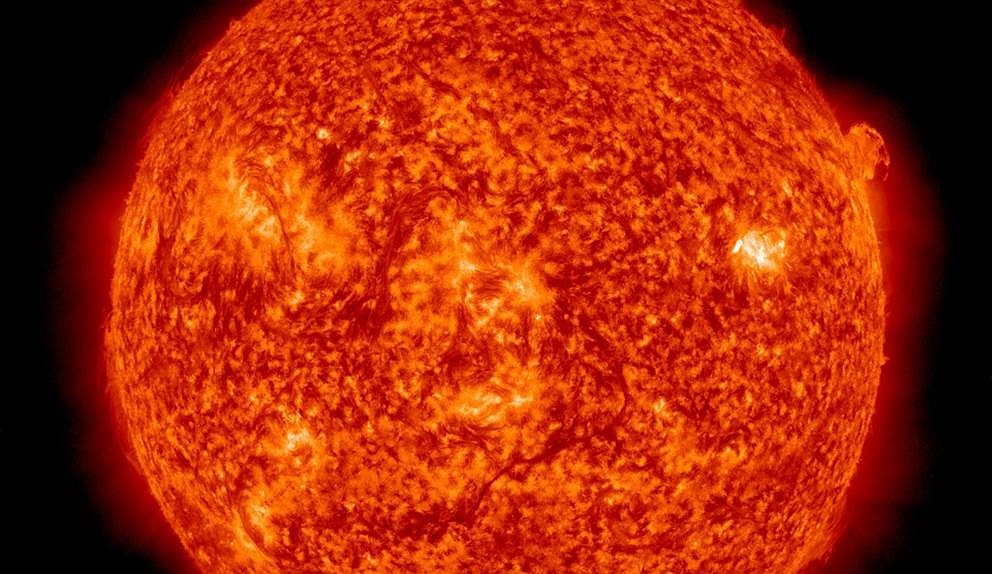

Die Abteilung Strahlenbiologie führt biophysikalische und zellbiologische Forschung durch, um die Strahlenexposition in Luft- und Raumfahrt zu bewerten und die Mechanismen der Zellschädigung und -reparatur nach Strahlenexposition aufzuklären. Ziel ist die Verbesserung der individuellen Risikovorhersage bei Weltraummissionen, in der Luftfahrt und auf der Erde.
Strahlenexposition kann Krebsentstehung und degenerative Erkrankungen verschiedener Organe (zum Beispiel Augenlinse, Gehirn, Herz-Kreislaufsystem) auslösen und fördern. Eine hohe Exposition in kurzer Zeit kann zur akuten Strahlenkrankheit führen. Daher bleibt die kosmische Strahlung ein wichtiger limitierender Faktor für langfristige Weltraummissionen und ein wichtiges Gesundheitsthema am Arbeitsplatz in Flughöhen.
Unsere Ergebnisse werden zur Verbesserung des Strahlenschutzes in der Luft- und Raumfahrt in verschiedenen Bereichen eingesetzt: Wir bewerten zum einen die Strahlenexposition auf Flughöhen und für verschiedene Szenarien von Weltraummissionen mittels aktiver und passiver Dosimetrie. Außerdem entwickeln wir neue Dosimeter und erstellen Modellrechnungen von Strahlungsfeldern. Darüber hinaus werden Strahlenschutzrichtlinien und geeignete Gegenmaßnahmen entwickelt. Wir arbeiten eng mit führenden Einrichtungen aus der Medizin zusammen, um unsere Erkenntnisse aus der strahlenbiologischen Weltraumforschung für das Verständnis von altersbedingten Erkrankungen und die Verbesserung der onkologischen Strahlentherapie zu nutzen.
Ein weiterer Schwerpunkt unserer Abteilung ist die Mikrobiologie: Neben der Bereitstellung von Zellmodellen für die strahlenbiologische Forschung untersuchen wir biotische und abiotische Faktoren, die das mikrobiologische Leben und die Anpassung an extreme Bedingungen begrenzen. Dieses Wissen setzen wir ein, um neue Ansätze zur Eindämmung der Ausbreitung von Infektionserregern zu entwickeln, das menschliche Mikrobiom zu erforschen und die Suche nach extraterrestrischem Leben und bewohnbaren Himmelskörpern zu unterstützen.
Arbeitsgruppen
Luft- und Raumfahrtmikrobiologie (Prof. Dr. rer. nat. Ralf Möller)
- Strahlenreaktion von Mikroorganismen
- Erforschung des menschlichen Mikrobioms, Biofilmbildung, antimikrobielle Materialien und Dekontaminationsansätze
Astrobiologie (Dr. rer. nat. Petra Rettberg)
- Leben in extremen Umgebungen
- Das Mikrobiom begrenzter Lebensräume
Zelluläre Schutzmechanismen (PD Dr. med. vet. Christine E. Hellweg)
- Molekulare Mechanismen der Wirkung von Weltraumstrahlung auf verschiedene Organe, Modifikatoren der Strahlenreaktion und Radiosensitivität
Biophysik (Dr. rer. nat. Thomas Berger)
- Dosimetrie und Modellierung der Strahlung im Weltraum – von der Internationalen Raumstation (ISS) bis zum Mond und Mars
Team
Strahlenschutz in der Luftfahrt (N.N.)
- Strahlungseffekte in der Atmosphäre
- Entwicklung von Produkten und Dienstleistungen für die Luftfahrtindustrie und die Gesellschaft