
Radiation Biology
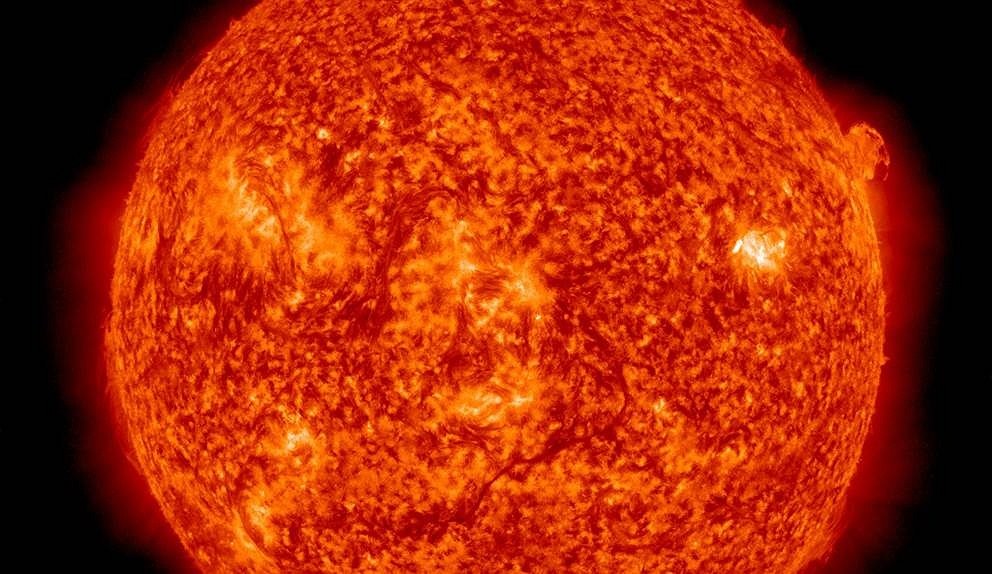

The Radiation Biology department conducts biophysical and cell biological research to assess the radiation exposure in aviation and spaceflight and to elucidate mechanisms of cell damage and repair following radiation exposure. The goal is to improve individual risk prediction for space missions, in aeronautics, and on Earth.
Radiation exposure can initiate and promote carcinogenesis and degenerative diseases of different organs (e.g. eye lens, brain, cardiovascular system). A high exposure in short time can even cause acute radiation sickness. Therefore, cosmic radiation remains a major limiting factor for long-term space missions and an important occupational health issue at aviation altitudes.
Our findings are applied to improve radiation protection in aviation and spaceflight: We assess radiation exposure at aviation altitude and for different space mission scenarios using active and passive dosimetry. Furthermore, we develop new dosimeters and compile model calculations the radiation fields. Moreover, we develop radiation protection guidelines and suitable countermeasures. We closely collaborate with leading medical partners to translate our findings from space radiobiological research to advance the knowledge of aging-associated diseases and oncologic radiotherapy.
Another focus of our department is microbiology which in addition to providing cell models for radiation biology research is applied to elucidate biotic and abiotic factors limiting microbiological life and adaptation to extreme conditions. We apply this knowledge to develop novel approaches to limit the spread of infectious agents, to investigate the human microbiome, and to support the search for extraterrestrial life and habitable environments on other celestial bodies.
Working Groups
Aerospace Microbiology (Prof. Dr. rer. nat. Ralf Möller)
- Radiation response of microorganisms
- Human microbiome research, biofilm formation, antimicrobial materials and decontamination approaches
Astrobiology (Dr. rer. nat. Petra Rettberg)
- Life in extreme environments and microbiome of confined habitats
Cellular Protection Mechanisms (PD Dr. med. vet. Christine E. Hellweg)
- Molecular mechanisms of space radiation effects in CNS and other target organs, modifiers of radiation response and radiosensitivity
Biophysics (Dr. rer. nat. Thomas Berger)
- Space radiation dosimetry and modeling from ISS to Moon and Mars
Team
Radiation Protection in Aviation (N. N.)
- Radiation effects in the atmosphere
- Development of products and services for the aviation industry and the society