ASPIRO
The project ASPIRO researches and develops new methods and technologies for the use of intelligent robotic systems in a human-centered, resilient and sustainable aerospace industry.
| | |
|---|
Duration: | 2025-01-01 until 2028-12-31 |
Project partners: | |
Fields of application: | - Production in aerospace industry and circular economy
- Intuitive human-robot-collaboration / Intuitive Mensch-Roboter-Kollaboration
- Autonomous mobile manipulation
- Reconfigurable robot work cells
- Highly flexible robotic systems / Hochflexible Robotersysteme
- Digital twins of manufacturing processes
- Next generation production robots
|
Website: | (soon) |
Project details
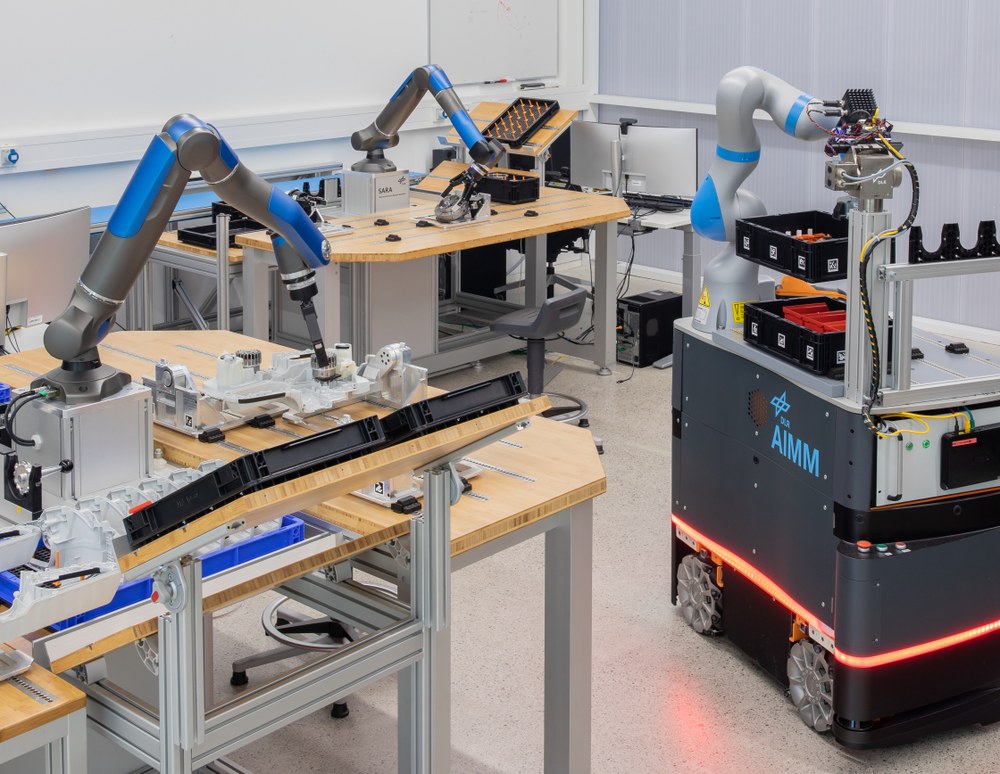
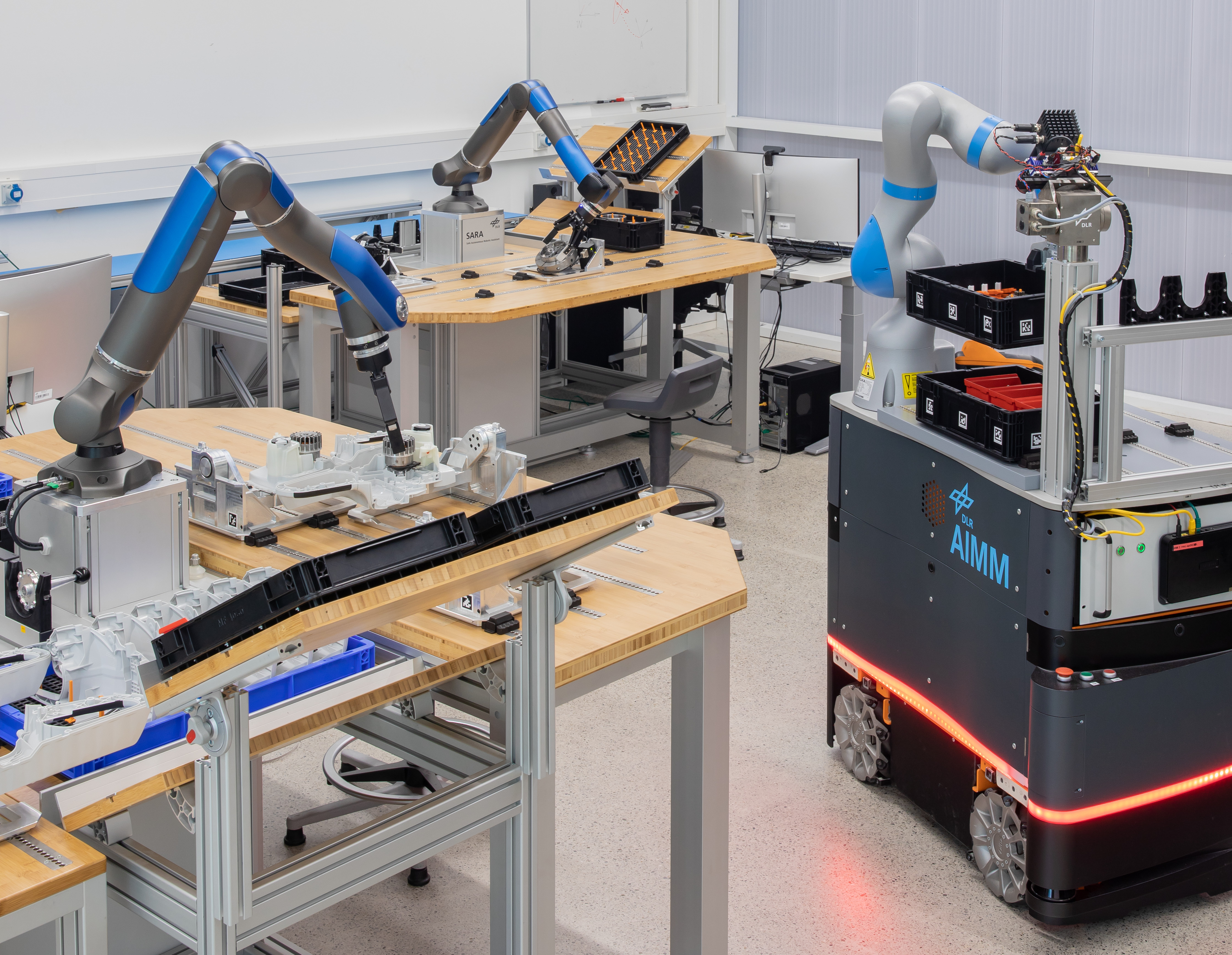
The project ASPIRO (AeroSpace Production using Intelligent Robotic systems) researches and develops new methods and technologies for the use of intelligent robotic systems in a human-centered, resilient and sustainable aerospace industry.
In view of increasingly volatile markets and complex economic conditions, the demands on production sites are growing. In addition to the need to increase productivity and efficiency, it will be crucial to be able to react quickly, flexibly and effectively to new market situations. At the same time, digitalization and artificial intelligence (AI) methods are opening up new opportunities, be it through efficient, consistent and highly connected digitalized process chains throughout the entire product life cycle or through intuitive interaction with cognitive and learning robot systems using multimodal interfaces. Flexible system concepts will also open up new fields of application for robotics – from the highly sensitive production of satellites in clean rooms to the production and inspection of lightweight structures using mobile systems.
In terms of technology and methodology, the project focuses on the further development and research of intelligent, digitally connected and modular stationary and mobile robot systems. It should be possible to adapt these systems flexibly and with little effort to the requirements of the given production tasks. Regardless of whether it is a collaborative assembly, handling or inspection task in industry or a dismantling process in the circular economy. In particular, the new possibilities of digitalisation and AI are to be used to create intelligent assistance systems for sustainable production, which not only act autonomously, but also interact with humans in a natural and simple way.