From the computer Stone Age to cutting-edge tech – the new communications system for the ISS
| Space
From the computer Stone Age to cutting-edge tech – the new communications system for the ISS
The new Monitoring and Control System at work
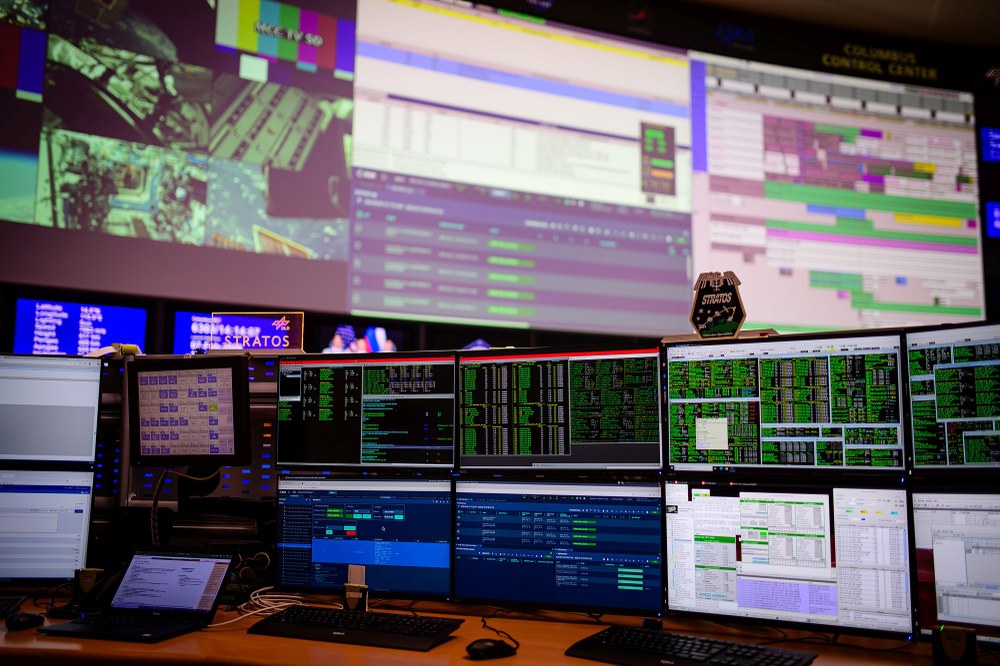
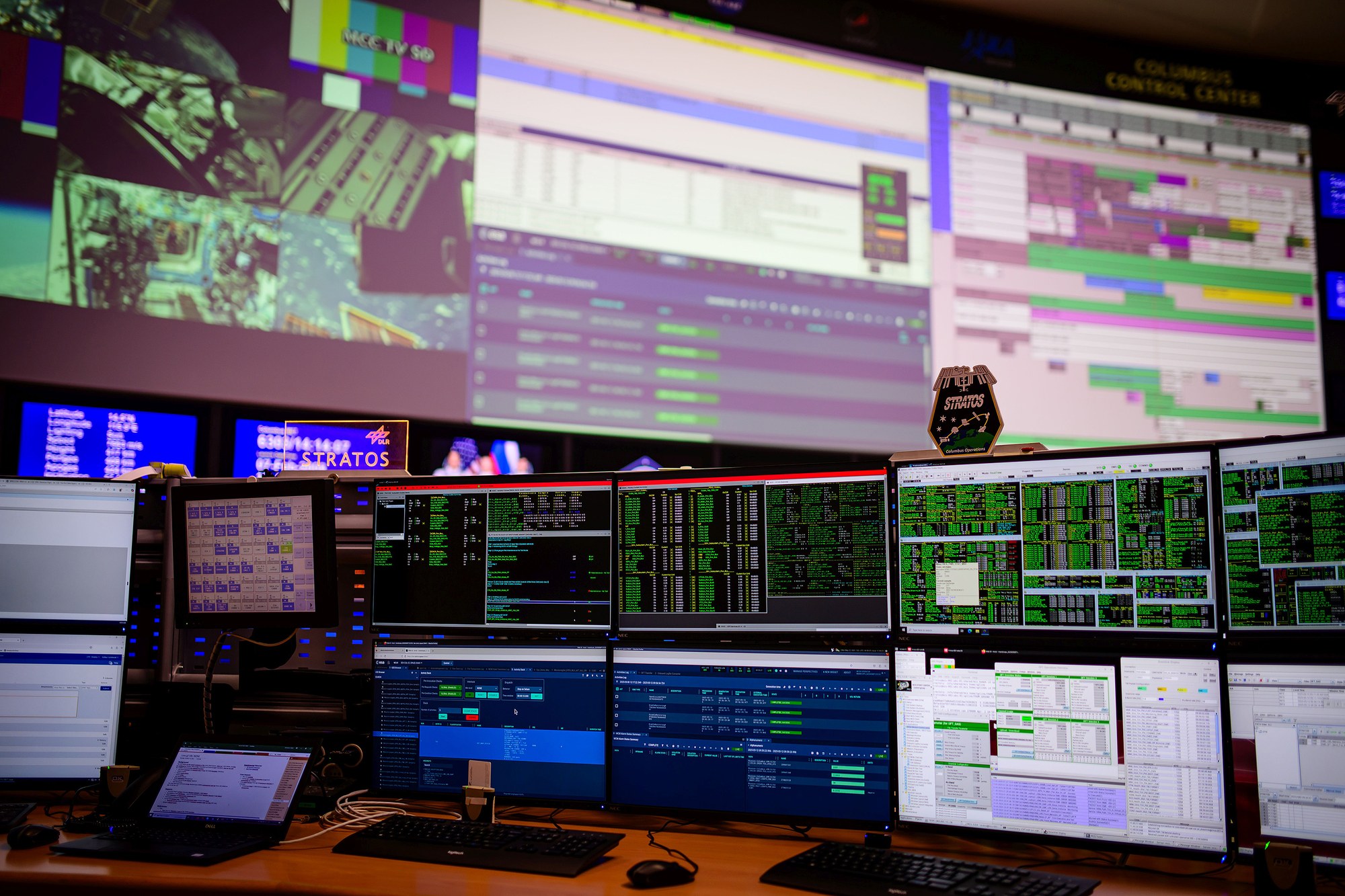
The MCS is used to transmit commands from the Columbus Control Centre in Oberpfaffenhofen to spacecraft in space and to receive data from them. The system has now been upgraded to the latest state of the art (photo optimised with AI).
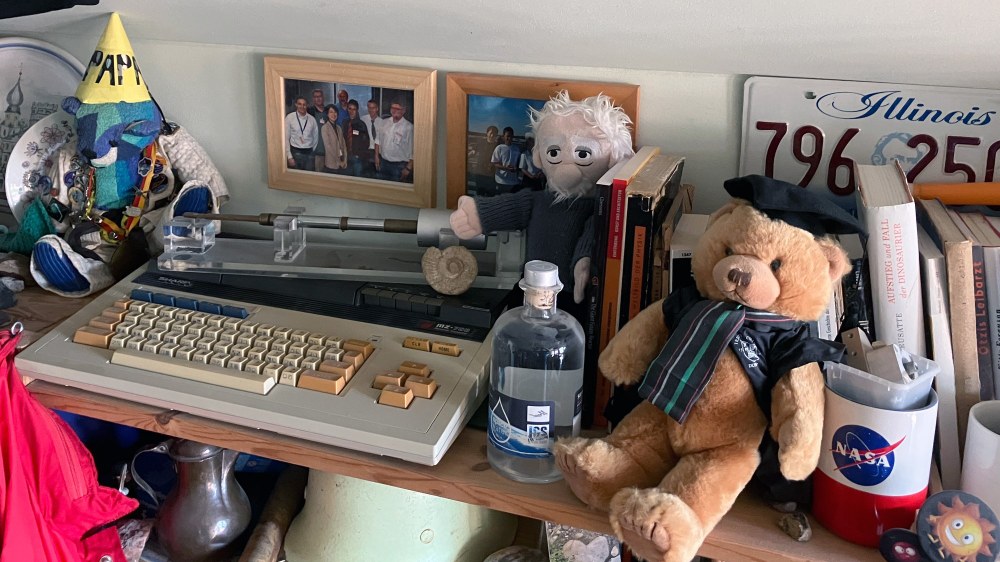
As I write these lines, I'm sitting about two metres from my very first computer – a Sharp MZ-700 – as it gathers dust on the shelf behind me. My office resembles a small museum; next to the computer stands an old specimen holder from an electron microscope, an ammonite, an Einstein doll and a Lego rocket. I wonder if the computer would show any signs of life if I plugged it in and powered it up?
After flipping the power switch on the MZ-700, a few cryptic lines of text used to appear on the screen in what would now look like a very outdated font. Then you had to insert a datasette – a data cassette – rewind it to the beginning, type in the command 'LOAD', press 'Return', start the recorder, and go and make a coffee to pass the time during the 20-minute wait.
The 'museum shelf'
An old Sharp MZ-700 computer sits on the shelf alongside other memorabilia.
If you were lucky, the computer would find the BASIC programming language on the tape and load it, and then you could finally get started. Back then, we had a good sense of what a command really was: 'LOAD', 'RUN', 'LIST', 'GOTO' (not great), 'POKE' (really bad!) …
My children – currently of school age – have no concept of all this. They swipe and tap or talk to Siri as if it were a human being. So much has changed in the past few years, and computers are now perceived entirely differently – if they’re noticed at all.
A major upgrade for the Monitoring and Control System
So when I mention in a presentation that we "send telecommands to the International Space Station" (ISS), I usually have to take a few steps back and explain what that actually means. On the ground, we use a very complex system to 'talk' to our spacecraft: the Monitoring and Control System, or MCS.
Telemetry data arrives at the Columbus Control Centre
The telemetry from the Columbus research module on the ISS is displayed on the screens in the Columbus Control Centre.
The MCS is backed by a large database, mirrored on board the Space Station, satellites or probes. It defines which commands we can send to the spacecraft, what parameters are allowed for each command and what action the command should trigger on board. It also determines how the command must be 'packaged' to be delivered correctly: there’s a sender ID, receiver ID, timestamp, checksum and other metadata that wrap around the actual instruction. Usually there are several layers of packaging that get unwrapped step-by-step on the way through the ISS to the final command receiver until, for example, the Columbus module's power distribution unit closes a particular switch – exactly as requested via the telecommand.
Using what is known as telemetry, a spacecraft or the ISS also sends data back to Earth, such as confirmation that electrical current is now flowing through that switch, which is information we need to be able to monitor the module. In space, the amperes of current are turned into bits and bytes, tagged with metadata, transmitted to Earth and then unpacked by our MCS so they appear on a screen in our control room as a number or a graph. The MCS is therefore a critical and highly complex system.
The Columbus MCS is ancient – at least by digital standards – and our software development team has spent recent years completely overhauling it. The new system reflects nearly two decades of operational experience with the Columbus laboratory, it meets the latest European standards (European Ground Systems – Common Core, or EGS-CC) and is future-ready. We’ll use a similar version for our LUNA test facility and future projects. This commonality creates synergies, simplifies operations for our flight control teams, reduces maintenance, and places us at the forefront of technology development.
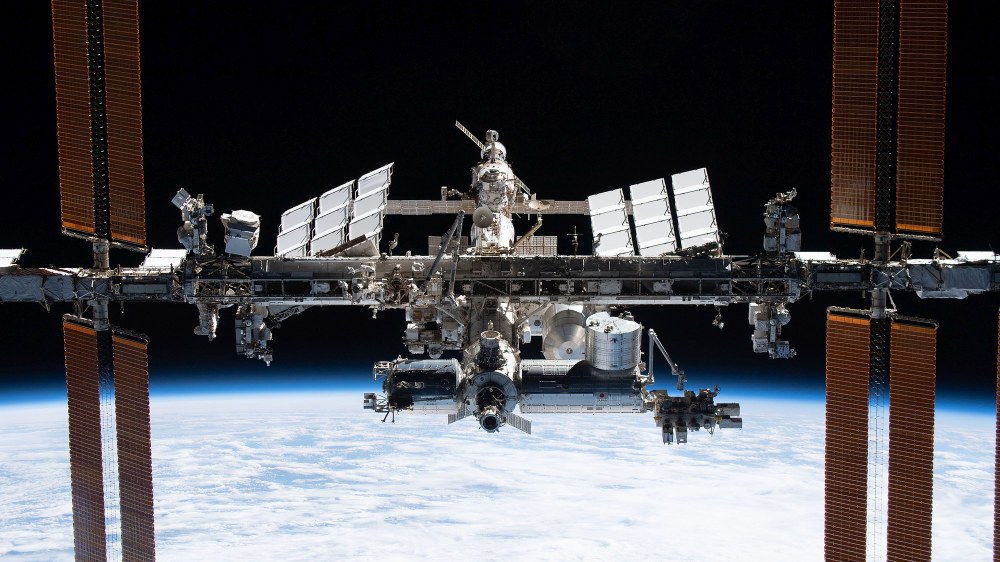
The International Space Station (ISS)
With the new Monitoring and Control System, we are entering a new era of communication in space travel.
Credit:
NASA/ESA–T. Pesquet
A new era of space communications begins
We had already tested the new system with the Eu:CROPIS satellite, but Monday marked the first trial with the Space Station – with its far higher requirements for safety, security, availability and reliability.
The astronauts only noticed a small, low-key entry on their schedule called 'MCS-R OPS-DEMO' – plus the lights in Columbus flickered briefly and a valve clicked. Just in case, we also gave them a heads-up in the Daily Summary, the crew's newsletter. In the Columbus Control Centre in Oberpfaffenhofen though, it was a major event, with the heads of the European Astronaut Centre, Frank De Winne, and the German Space Operations Center, Felix Huber, observing.
Live test of the new system at the Columbus Control Centre
Frank De Winne, Head of the ESA European Astronaut Centre (front right), and Felix Huber, Head of the German Space Operations Center (front left), watch the data transmitted by the new system from the ISS with great interest.
Our ground controllers had to switch the entire ground configuration to the new system in advance – while always being ready to revert quickly in case something unexpected happened on the ISS. They then had to switch back to the old system and run test commands to make sure everything still worked properly – hours of work and weeks of preparation.
It was Arthur, one of our flight controllers, who sent the commands to the Space Station using the new system – under the watchful eyes of many interested observers in the control room and in our visitor viewing gallery. In the live video, the lights in Columbus briefly went out and then came back on – success!
A sigh of relief from the team – and then, for the time being, a return to the old MCS and back to 'normal' Space Station operations. Meanwhile, the MCS development team can pop the champagne, before getting back to the long list of tasks still to complete before we can fully command Columbus with the new system. Figuratively speaking, we have to watch the datasette spool for a while longer before we can hit 'RUN' and enter a new era of MCS operations.