At home at the moment, there's the dubious charm of a field hospital. Our little one brought the flu into our household last week, and it knocked me down on Sunday. By now I'm more or less back on my feet. As always during those selfpitying fever bouts – when swallowing hurts and every breath burns – it strikes me how little we appreciate being healthy: simply breathing in and out without pain. Tragic, but human – we take for granted things that can quickly change...
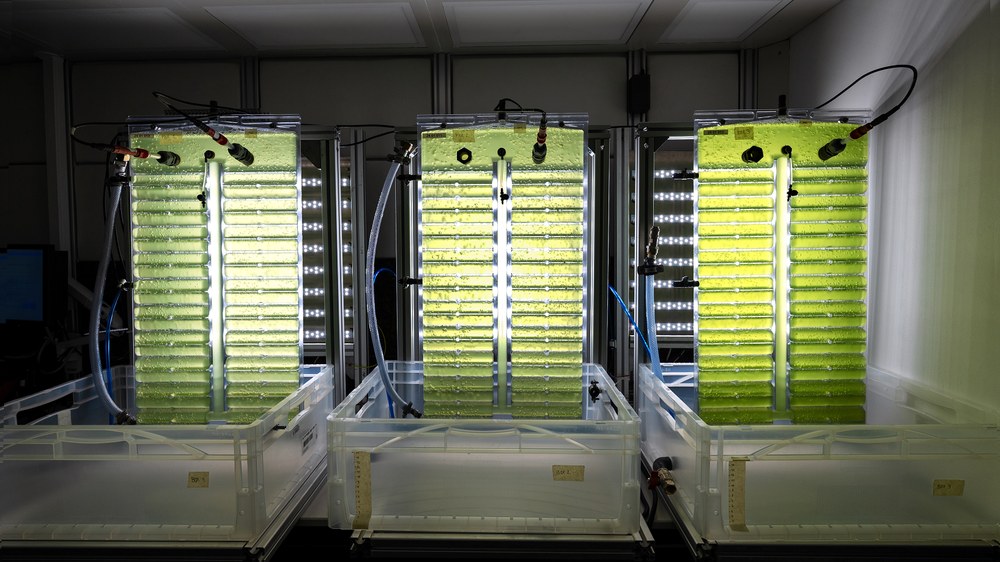
The photobioreactor system
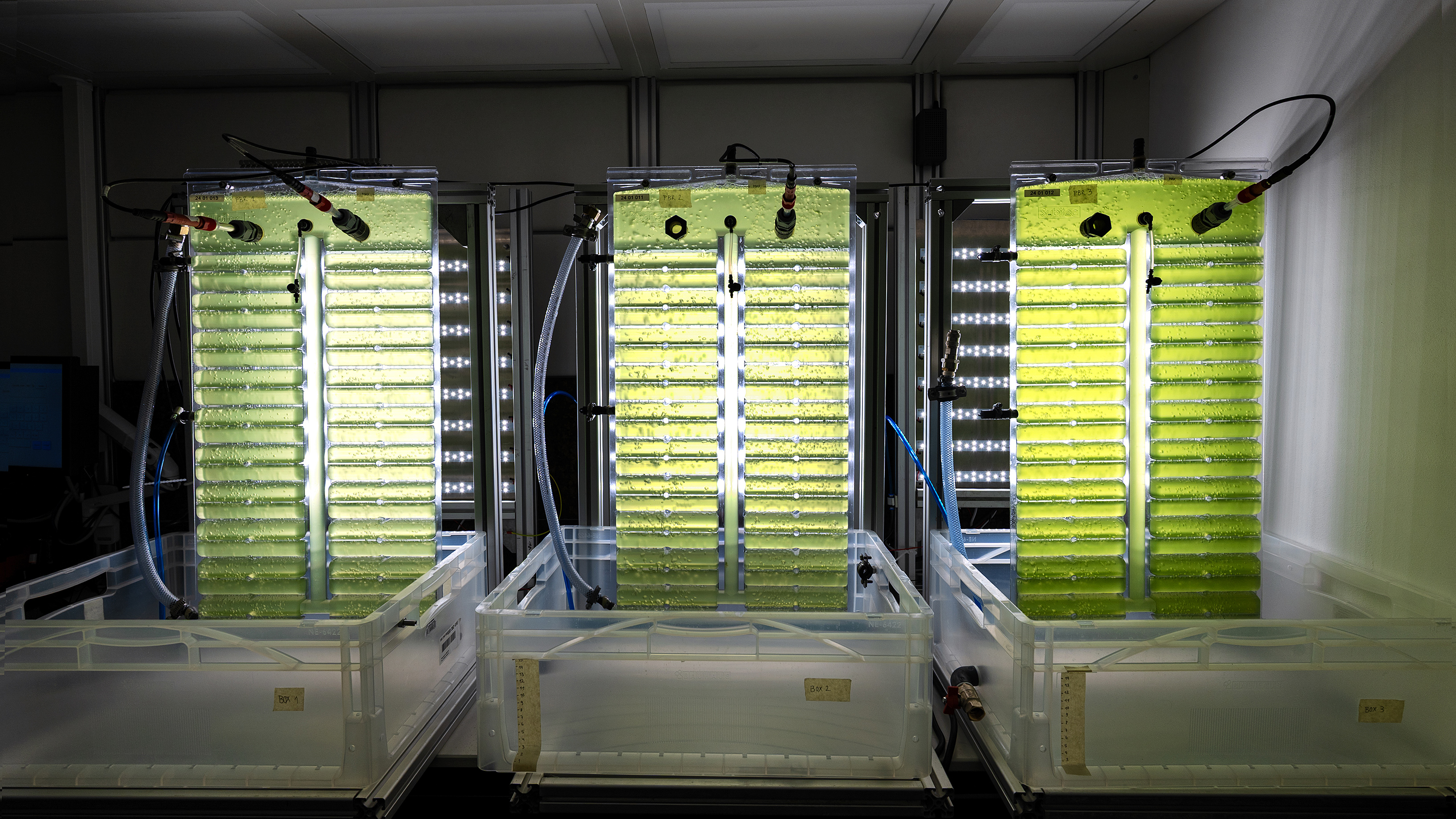
The life support system consists of three separate reactors containing microalgae suspended in a nutrient solution. Using light, the algae produce oxygen through photosynthesis, which is required for breathable air during astronaut missions. The algae can also serve as a protein-rich food source.
My feverish contemplations lead quite naturally into the experiment we're currently conducting in the FLEXhab space habitat at the LUNA Moon facility in Cologne – a kind of living and work facility for astronauts. Here on Earth, the air we breathe is a good example of things we forget to appreciate: it's simply here and available in high quality. We don't think about it, we simply inhale and exhale.
In space, things are different. If we want to send people into space, we must use complex technology to provide and maintain the breathable air we get 'for free' on Earth. The system that fulfils this function in a spacecraft is called the Environmental Control and Life Support System (ECLSS).
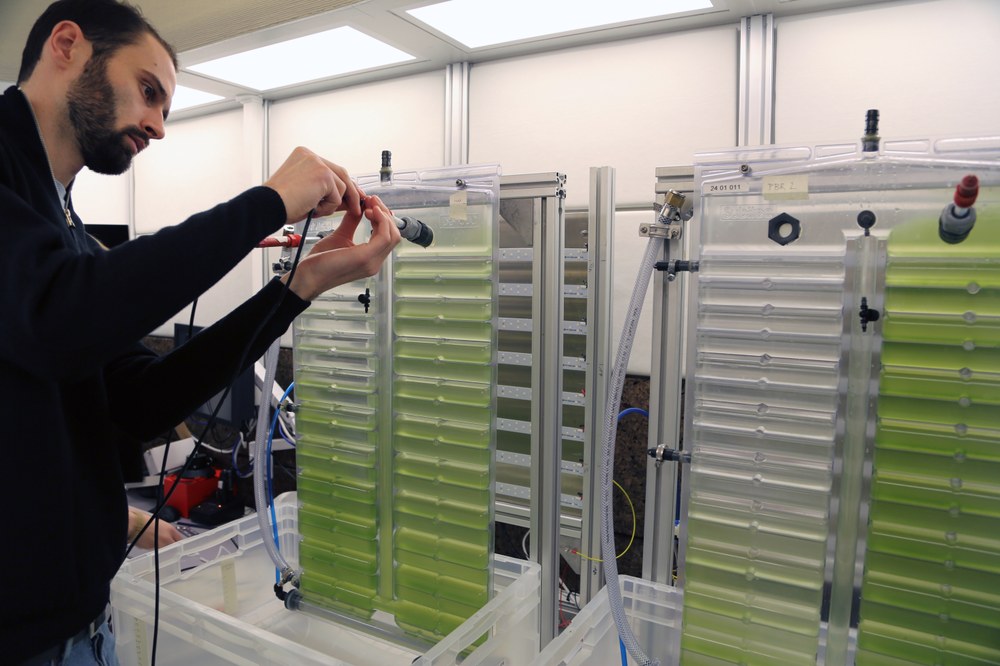
Adjusting the sensors
The system is equipped with sensors that measure the carbon dioxide level as well as the pH value and temperature of the liquid.
One of its many tasks is to add oxygen to the breathable air and remove carbon dioxide. There are various methods to do this, but particularly interesting are the techniques that form a closed loop and require as few additional resources as possible. For a longer stay on the Moon, constant resupplying from Earth would be impractical – and for missions to Mars, it would be impossible.
To address this, TU München (TUM) has developed a photobioreactor system. It uses microalgae that perform photosynthesis, converting the carbon dioxide exhaled by humans back into valuable oxygen. All we really have to do is give the algae some light, and they will work for us. In theory, at least.
Microalgae 'work for us', but are demanding too
In practice, there are plenty of technical questions and hurdles to overcome. Therefore, TUM has installed the bioreactor in FLEXhab, where it will be operated remotely for a few weeks. The habitat is particularly well suited as a test site because under its controlled conditions oxygen and carbon dioxide can be continuously and automatically monitored.
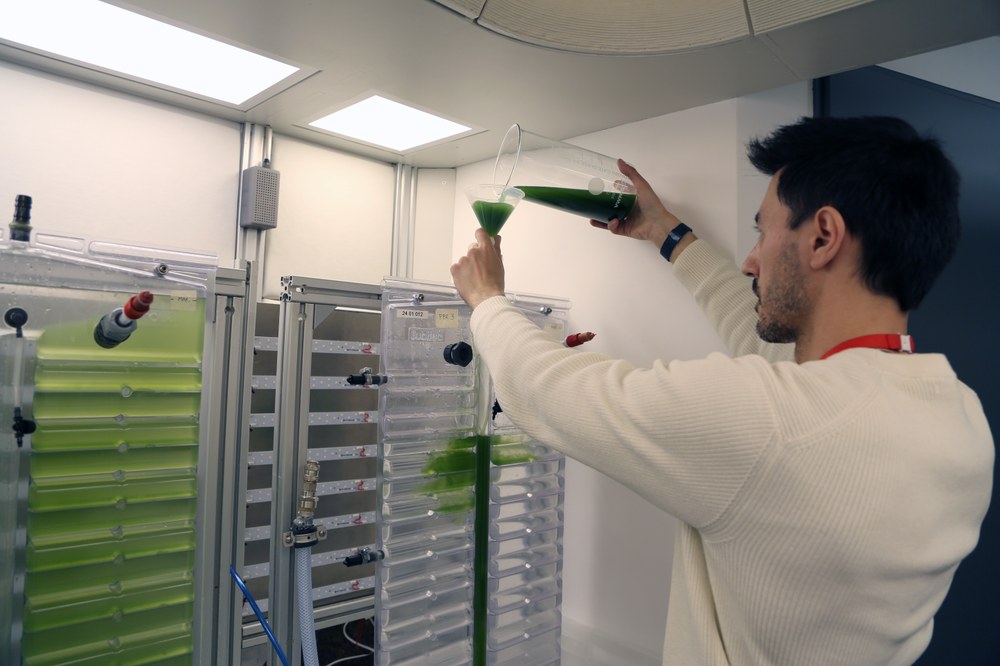
Air bubbles in the photobioreactor
Air is bubbled through the system to keep the liquid well mixed at all times.
Timon Schwarz, who leads the experiment, explains how sensitive the microalgae culture is to environmental influences. Countless parameters – from temperature and pH to sufficient nutrient levels – must remain within a suitable range. And that's precisely what the photobioreactor system is designed for: it supplies the microalgae with everything they need to multiply successfully and carry out photosynthesis.
The microalga used in this experiment, Chlorella vulgaris, is characterised by strong and robust growth and can even be consumed as a protein-rich food. That's why the alga is well suited for applications on a space station or long-duration missions in space. The experiment also aims to test how such a system can be used in real-life scenarios. Because even though most processes take place without human intervention, the photobioreactor still requires some maintenance and analysis.
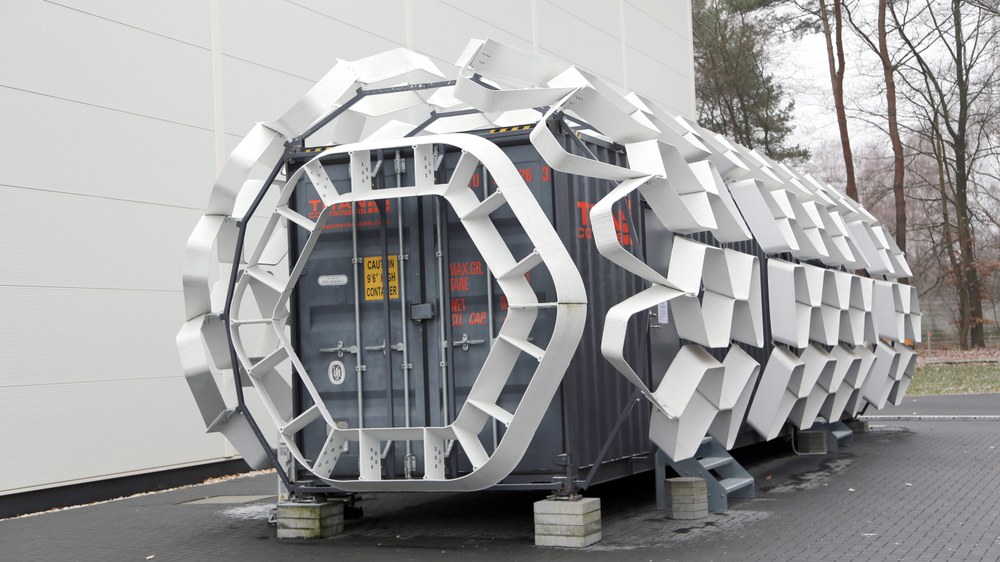
The FLEXhab space habitat outside the LUNA hall
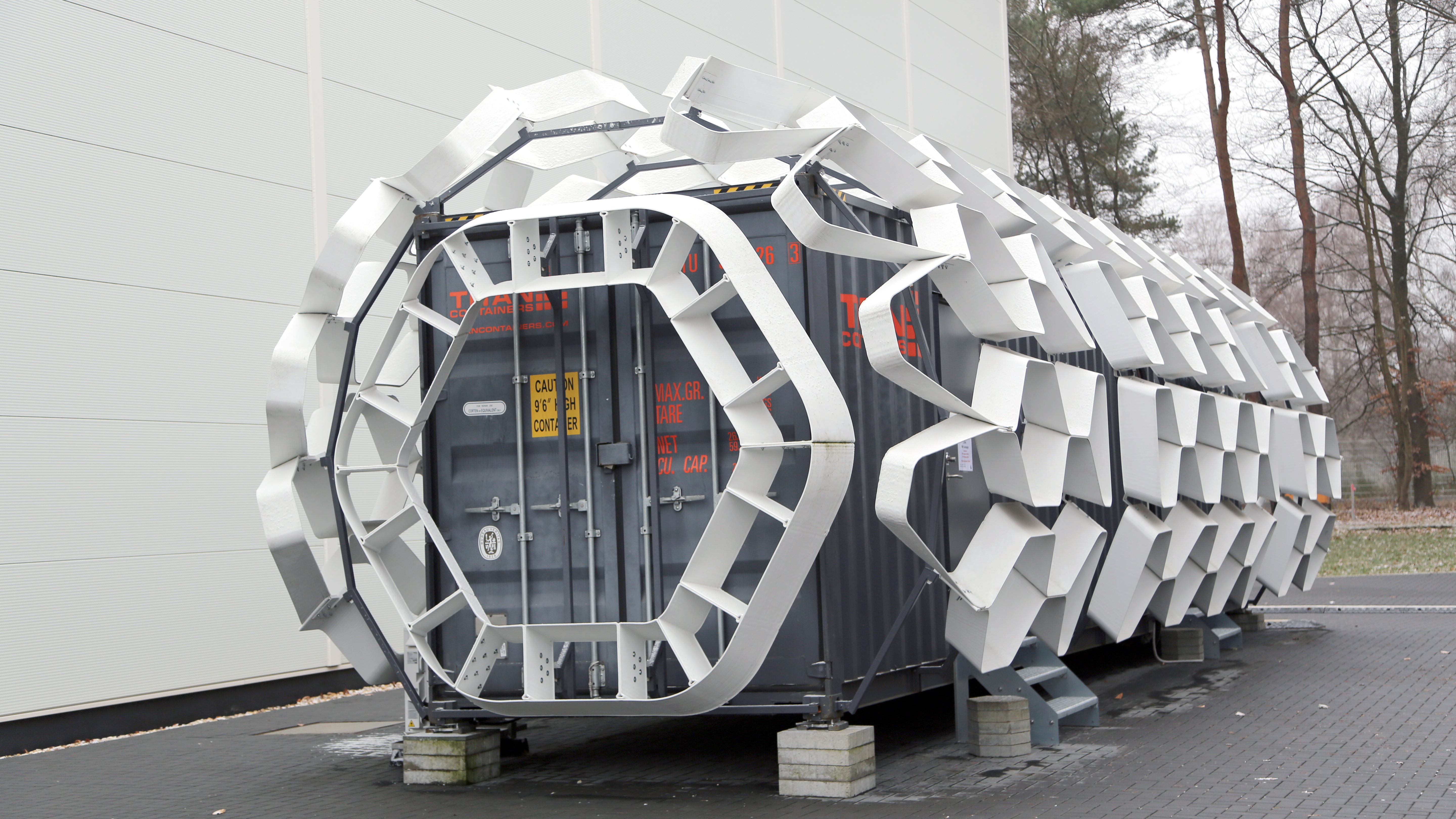
The photobioreactor campaign takes place in front of the FLEXhab at the LUNA facility in Cologne, where the habitat’s controlled conditions allow continuous measurement of oxygen and carbon dioxide levels in the air.
This experiment is also of great interest to the LUNA facility run by the German Aerospace Center (Deutsches Zentrum für Luft- und Raumfahrt; DLR) and the European Space Agency (ESA). It's the first time we're using our FLEXhab for scientific purposes and also the first time our Monitoring and Control System (MCS) – which we developed specifically for LUNA and complies with the most current European standards for space systems – is being operated in practice.
We are looking forward to the results, and I – in my improvised field hospital – am grateful to be 'only' on Earth, where opening a window can replace the eucalyptus and menthol fumes with the excellent Upper Bavarian spa air. And, as always, I remind myself to appreciate more what we so easily take for granted…