Predictive maintenance through data science excellence

PREDICT

Challenge: The limits of reactive maintenance strategies

The aerospace industry faces significant challenges from traditional time-based or reactive maintenance strategies for aircraft engines, electrified propulsion systems and unmanned aerial systems. Current maintenance strategies often lead to either premature replacement of components - causing unnecessary costs - or unexpected failures resulting in expensive downtime and safety risks. The current state of the art is inadequate:

  • Lack of real-time analytical capability: traditional approaches cannot adequately use the amount of operational data available today through advanced sensor technology.
  • Insufficient timing of maintenance activities: Without accurate condition monitoring, maintenance work is performed too early or too late.
  • Fragmented data infrastructure: Operating data, simulation results and diagnostic information are stored in silos, preventing holistic analysis.
  • Limited predictive accuracy: With current methods, it is difficult to accurately predict remaining service life and wear progression over time in complex, interdisciplinary systems.

To address this challenge, the Institute of Data Science is collaborating with other DLR institutes in the PREDICT project, contributing its data science expertise.

Data management and processing

The Institute of Data Science develops and implements methods that form the basis for effective condition monitoring and forecasting in the PREDICT project. Our work in data management and processing creates the bridge between raw data sources and usable insights.

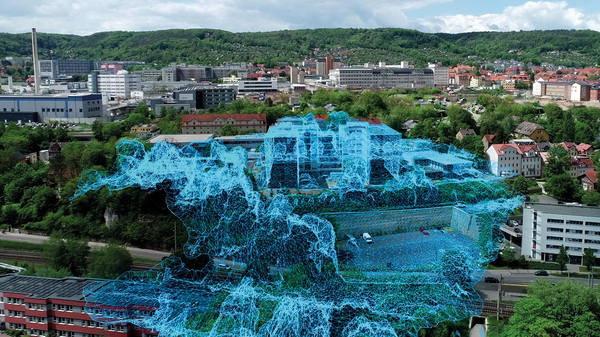
We are developing a digital data infrastructure that processes, stores and prepares operational data for analysis, ensuring that data from aircraft engines, electrified propulsion systems and unmanned aerial systems flows seamlessly through the analysis pipelines. The data management-based systems are specifically designed to process the types of data critical to predictive maintenance: Raster data for spatial visualisations, time series data to track wear progress over operational periods and point cloud data from relevant sensor technology.

The integration of our expertise into DLR's GTlab software solution creates a platform that not only stores and processes data, but also supports interdisciplinary workflows and automates recurring tasks. The platform ensures data quality throughout the entire development cycle of diagnosis and prognosis. This infrastructure relieves the research team of the challenges of data integration and enables focussed development of advanced analysis methods.

HPDA infrastructure

The high complexity and large volume of data generated in the condition monitoring of aircraft engines, electrified propulsion systems and unmanned aerial systems requires significant computing resources. Our HPDA cluster enables the processing of large amounts of data, from continuous sensor streams to extensive simulation results. The distributed computing capacities enable rapid iteration of diagnostic and prognostic algorithms and accelerate the development cycle from the concept phase to the validated method. The architecture of the cluster supports both batch processing of historical data for model training and near real-time analysis for operational health monitoring applications. This flexibility is crucial for the transfer of methods that must ultimately enable the transition from the research environment to industrial use.

Impact

The PREDICT project pushes the scientific boundaries of condition-based and predictive maintenance through the rigorous application of data science methods and their integration into an application platform. The methods and tools we have developed, in particular approaches for multidisciplinary data integration and lifecycle-integrated analyses across the entire data lifecycle, create reusable frameworks that can be adapted to individual specific challenges. They thus serve as the basis for the data-driven transformation of traditional engineering disciplines towards digital twin enablement and predictive analytics. Integration into GTlab enables practical application in industry.

Project duration: 01/2025 - 12/2027

Participating institutes and facilities: