
S²TOL+

Project goals
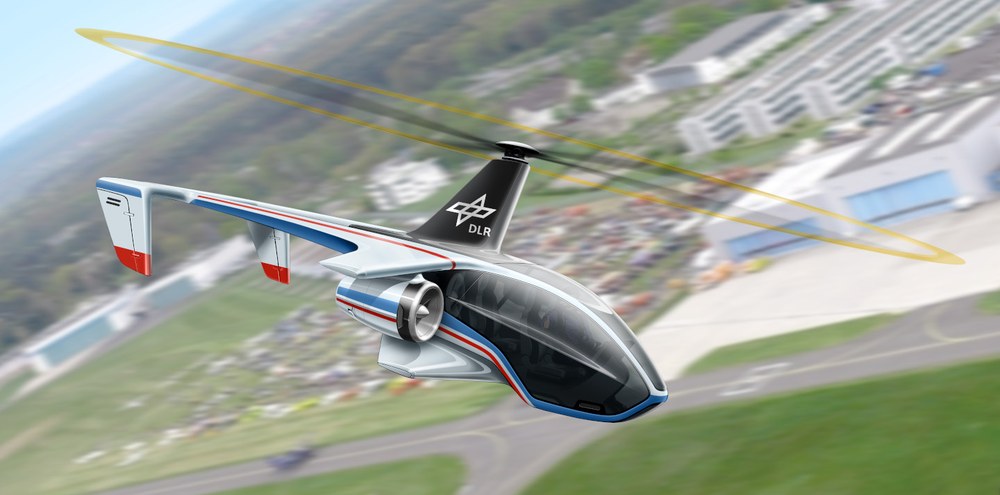
The aim of the project is to develop, test and validate innovative short take-off and landing technologies with dual-use potential that enable efficient, quiet and safe air mobility. By constructing and testing airworthy demonstrators, key technological components – from propulsion design to flight control – are to be tested under real-world operating conditions and further developed with a view to potential application and commercialisation. The systems are intended to be usable, for example, both for civil freight transport in urban conurbations and for governmental or military operational scenarios, such as the rapid supply of remote locations or disaster areas.
The following are some of the key initiatives that form part of this objective:
- Intensive flight testing of the S²TOL-Prop
- Flight testing of the S²TOL-Jet with jet-pellers
- Flight testing in collaboration with Kargo (e.g. low-altitude flight testing for dual-use applications, precise payload release)
- Functional enhancements (flight controller, engine mount, tiltable propellers, assisted autorotation)
- Further development of the high-rate fibre composite manufacturing method (one-piece production of complex hollow fibre composite structures)
- Thermal management of functionalised fibre composite structures (metallised fibres, 3D fabrics)
Contribution to electric flight
The development of fully electric aircraft demonstrates that emission-free flying is technically feasible. Electric propulsion systems minimise local pollutant emissions and noise, and promote more efficient flight concepts. These technologies offer valuable insights into energy management and the further development of low-emission propulsion systems. Furthermore, fully electric aircraft contribute to the development of environmentally friendly aviation systems by completely avoiding CO₂ emissions. They serve as a practical example of the feasibility of climate-friendly technologies in aviation and pave the way for future emission-free flight concepts.
As part of the DLR’s digitalisation strategy, the virtual replication of real aircraft enables process optimisation to be driven forward and potential problems to be identified at an early stage without disrupting operations. This virtualisation increases efficiency and opens up new possibilities in flight operations management. Furthermore, the central storage and analysis of large volumes of data enables the extraction of valuable insights that are crucial for informed decision-making and process optimisation. Through systematic processing and consistent evaluation of the data, valuable insights can be effectively utilised for strategic and operational objectives.
Summary
The S²TOL project, running until the end of 2025, focuses on developing a novel, quiet short-takeoff aircraft to be demonstrated in flight tests. S²TOL-Prop, a 400 kg gyroplane with two electric propellers, completed its maiden flight in spring 2025. The follow-up project builds on the S²TOL-Prop research to finalize the development of optimal aircraft configurations for Advanced Air Mobility, leveraging measurement data to assess flight performance and noise emissions and to facilitate the transfer of the resulting insights into future dual-use and cargo transport applications.
The shrouded propellers (Jetpellers) developed by Jetpel GmbH will be integrated into S²TOL-Jet and evaluated in ground tests by the end of 2025. The S²TOL+ project will test S²TOL-Jet in flight tests, allowing a comparison of the two propulsion systems.
Based on findings from flight tests, the demonstrators are continuously being optimized towards extremely short takeoffs and precise flight maneuvers. The improvements focus on aerodynamic adjustments to the airframe, a rotor driven inflight and a tilt of the propellers for shorter takeoffs. Moreover, the flight control functions are to be further automated. This results in valuable synergy effects with the KARGO project, particularly through the shared use of infrastructure and flight control software. The use of the technologically advanced S²TOL system also makes it possible to demonstrate maneuvers for the dual-use case at an early stage of the project, such as automated low-altitude flight maneuvers with high trajectory and altitude precision for the evaluation of mission-relevant operational profiles in unmanned cargo or special transport applications.
Thermal management and the space available for the batteries were already identified as critical factors influencing efficiency. Together with local partners from research and industry, thermal management options for energy sources integrated into fiber-reinforced plastic composite structures will be investigated in the context of lightweight system construction. The high-rate manufacturing concept developed in S²TOL will be further developed.
Finally, all scientific results from the flight tests will be comprehensively documented to ensure their further use after the project ends.
Project data | |
|---|---|
Term | 01/2026–12/2027 |
Participating institutes | |
In participation of |
|