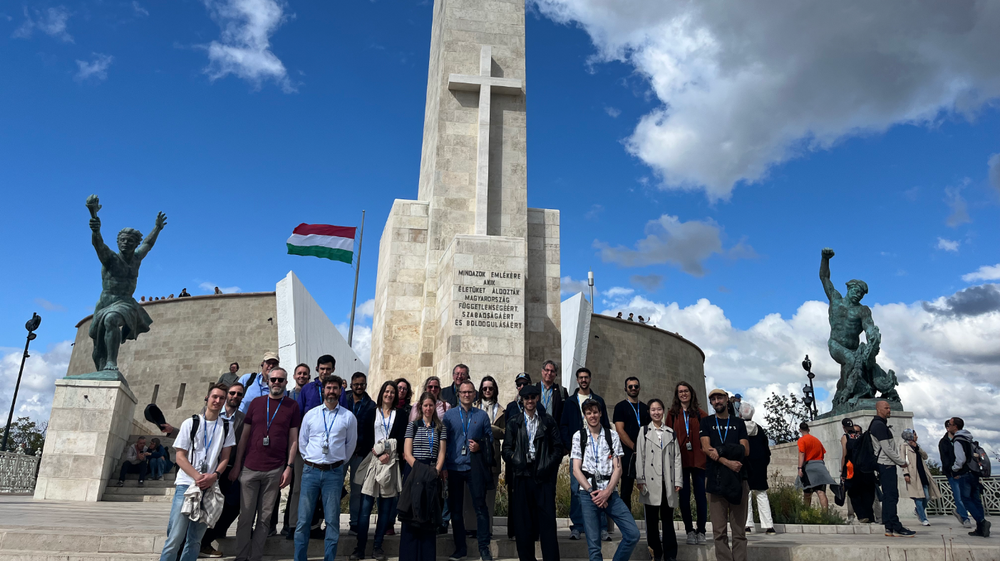
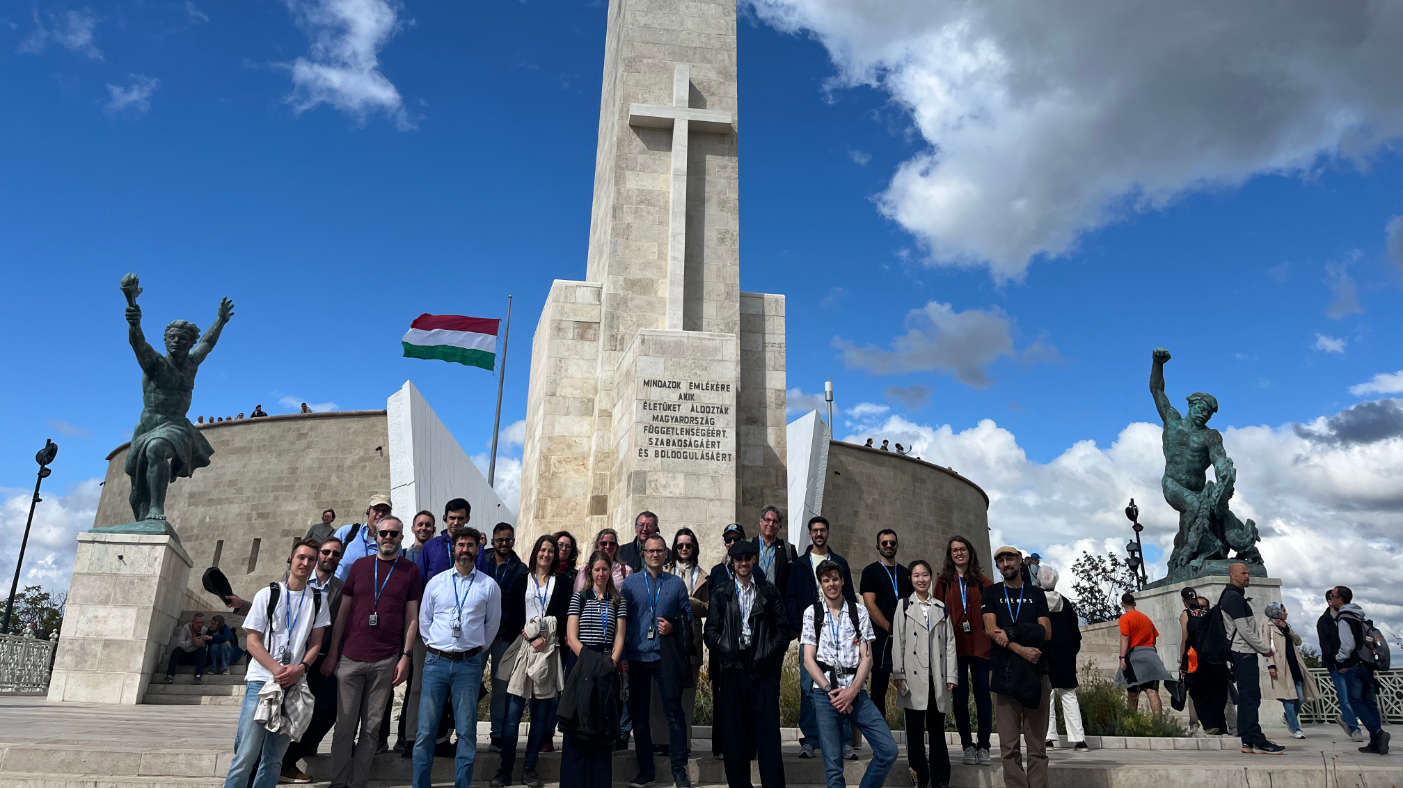
The week from September 22 to September 24 saw the 40th CHEOPS Science Team Meeting in Budapest, the first in-person meeting since ESA confirmed the mission’s second extension (EM2; 01.01.2027 to 31.12.2029). As well as celebrating the news, the team worked to define the detailed science programme for the extended mission. After members of the science team submitted proposals for which science cases and targets to observe with the consortium’s guaranteed time in EM2, the telescope was significantly oversubscribed. However, after lengthy review and discussion sessions, the programme was narrowed down to the targets which will deliver the best possible science in the years to come.
Representing our institute were Kristine Lam and Alexis Smith, both of whom had their proposals approved. Kristine will study sub-Neptunes, the most exoplanets in the Solar neighbourhood, to infer their gas content and to learn about their formation. Alexis will search for transits of known long-period planets to better understand orbital inclinations in multi-planet systems.
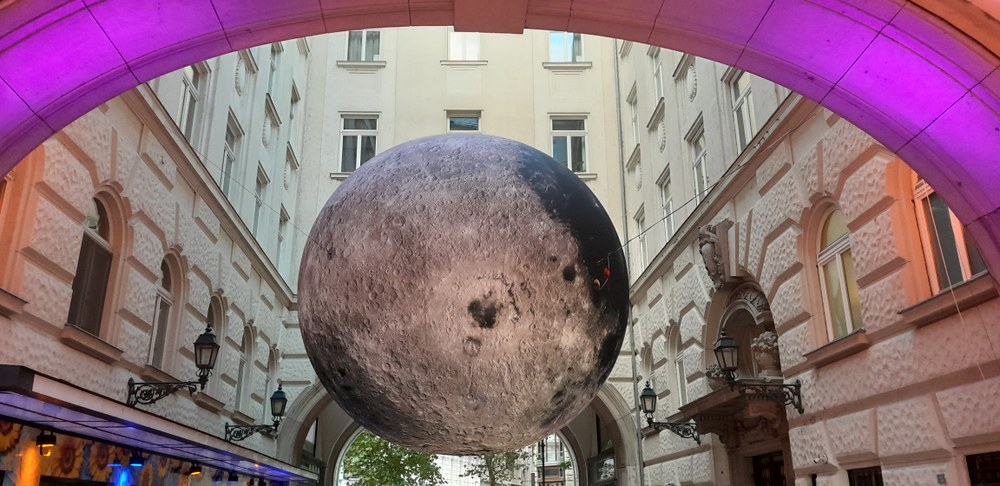
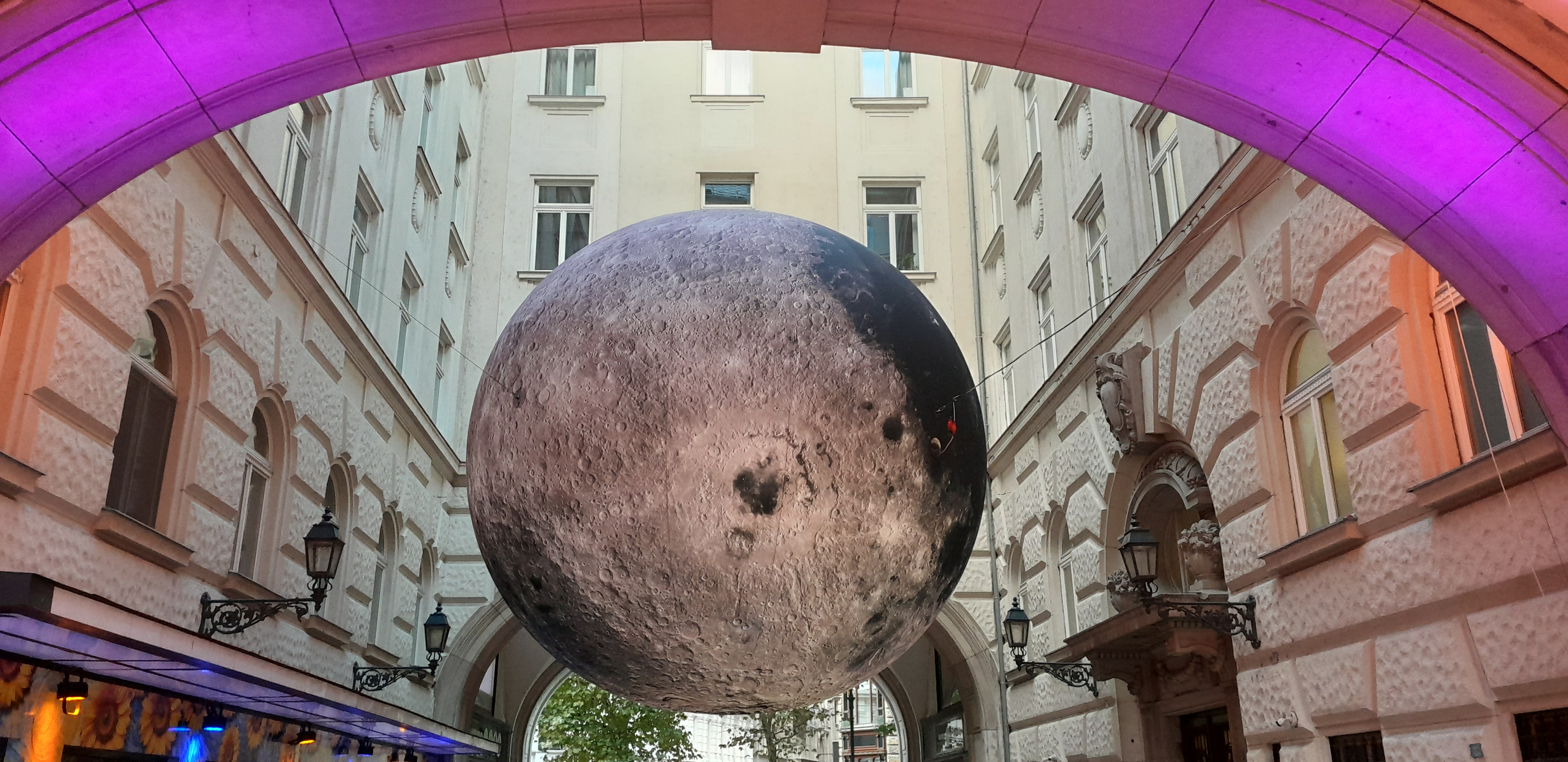
Model of the Moon in Budapest
The Moon in Budapest downtown is a real eye-catcher, even for experts.
Overall, CHEOPS now has a well-balanced science programme for EM2, which includes studies of resonant chains of exoplanets, a search for exomoons, and further insights into planetary atmospheres. Alongside the science, some of us also visited the newly-restored Budapest Citadella for a guided tour with spectacular views over the Danube.