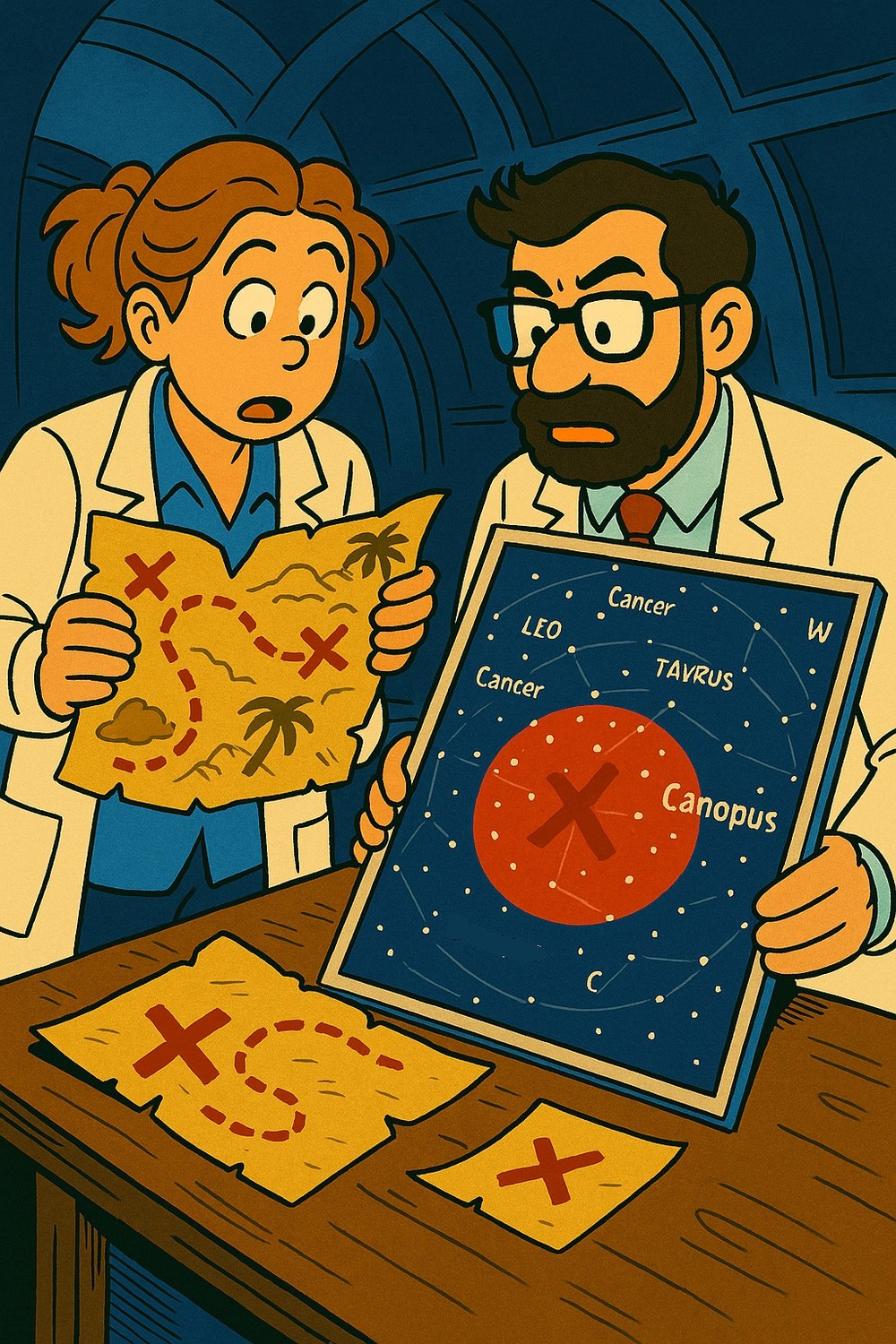
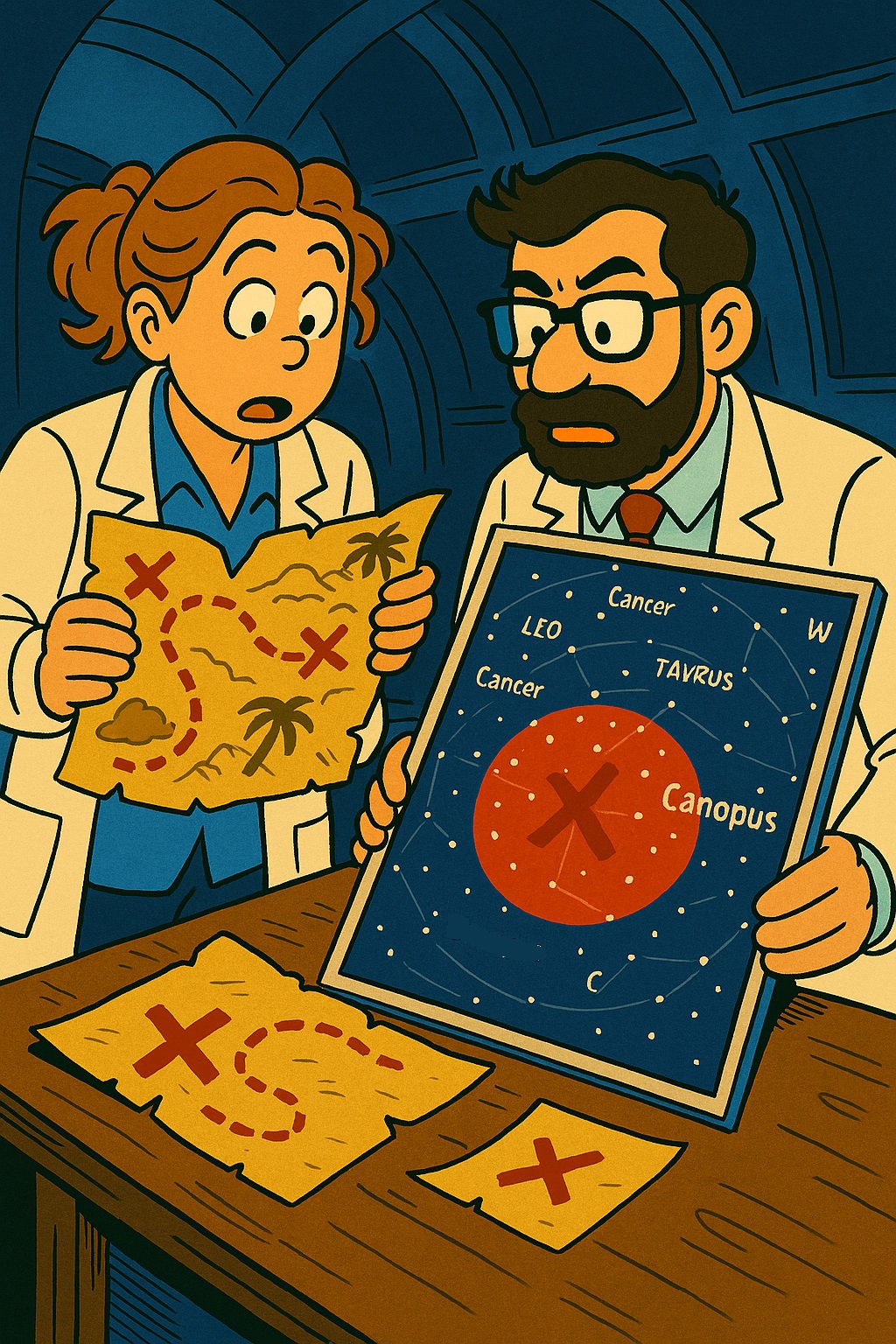
On February 17, 2026, the PLATO mission consortium has delivered to ESA a catalog of the stars that PLATO will observe. It serves as a treasure map to find extrasolar planets orbiting sun-like stars in the observation field.
PLATO Input Catalog (PIC) - a treasure map to find habitable exoplanets
Artist view of the publication of the PLATO Input Catalog as a treasure map to find exoplanets
The PLATO Input Catalog, or PIC for short, lists 290,000 stars in a field measuring 49° x 49°. But not all stars are equally interesting. The more precisely we know the properties of the stars—their brightness, variability, and distance to the nearest stars—the better we can filter out the candidates that should be observed with the highest priority. The goal of the PLATO mission is to find Earth-sized planets in the habitable zone of a sun-like star. The search is conducted using the transit method. An Earth-sized planet passing in front of a star like our Sun dims it by a tiny amount of 0.0084% or 84 ppm (84 parts per million).
In the summer of 2023, the first observation field for the PLATO mission was defined. PLATO will observe stars in this field in the southern hemisphere for at least two years. In order to determine the most interesting stars in this field in advance and to compile the catalog, the PIC team drew on the database of the Gaia satellite. This database contains two billion stars with their position, distance, relative motion, and brightness. From this data, the PIC team at PMC selected 2.5 million dwarfs and subgiants with surface temperatures between 3,200 and 6,700 K. From this group, the most promising stars for the search for exoplanets were selected, taking into account, for example, the distance between a star and its nearest neighbor or other disruptive factors. This resulted in the 290,000 stars in the PIC catalog.
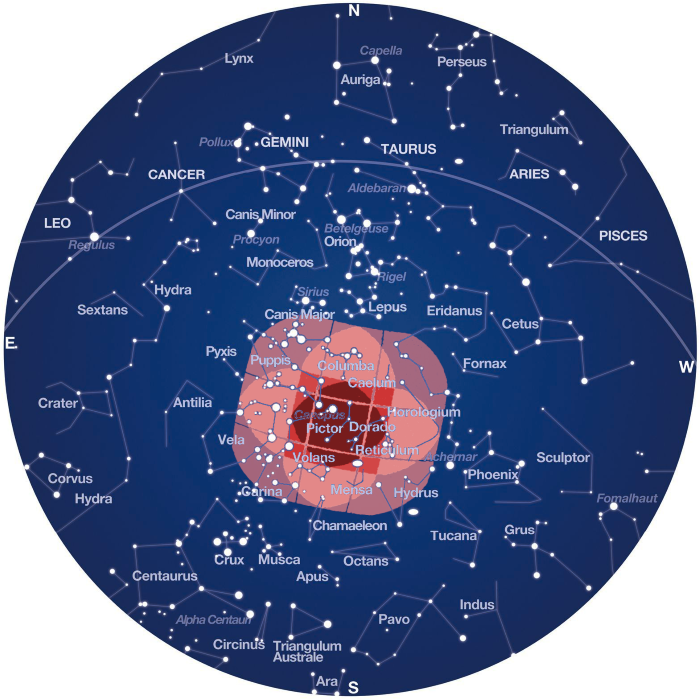
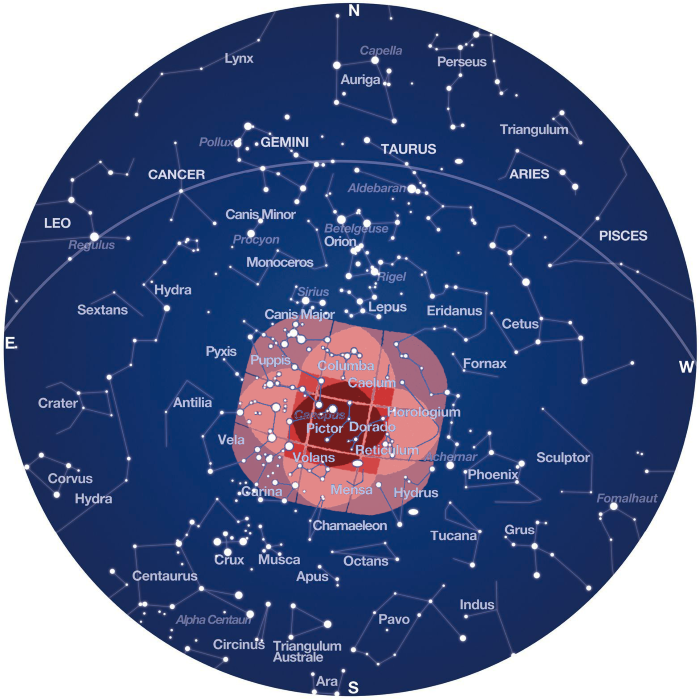
First PLATO observation field in the constellation of Carina
The first field that PLATO will observe for at least two years is located in the southern hemisphere around the star Canopus in the constellation of Carina. The red field with its colour gradations shows the areas that will be observed by 24, 18, 12 and 6 cameras, respetively. The central, dark red field is the region observed by all 24 "normal" cameras.
In addition to the stars that are observed in the search for new exoplanets, the PIC also contains stars that serve to maintain the stable position of the satellite, as well as stars that are used to calibrate the on-board instruments and models for measuring their mass, radius, and age.
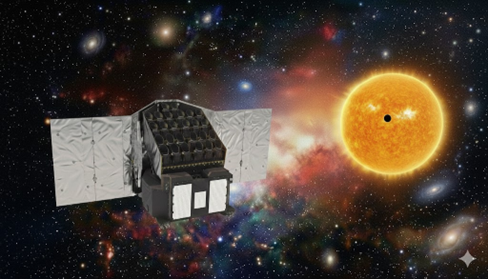
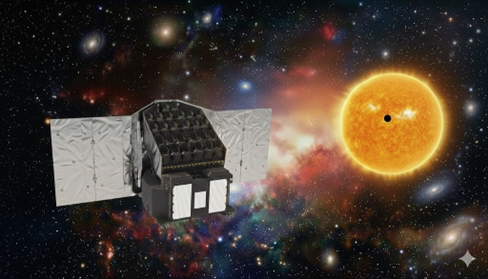
Artist's impression of PLATO satellite
PLATO will discover transiting exoplanets; among these could be Earth's twin.
The PLATO mission instrument consists of 26 cameras, with two “fast” cameras used for precise satellite tracking and the remaining 24 cameras serving as the actual “workhorses.” These “normal” cameras have four CCDs, each with 4510 x 4510 pixels, for a total of 26 x 81.4 million pixels. Together with the pixels from the two “fast” cameras, this results in over 2 billion pixels – the highest number ever flown on a space mission.
The fast cameras are read out every 2.5 seconds, the normal cameras every 25 seconds. This results in a huge amount of data that can no longer be sent in its entirety to the ground station. The solution is to record all data in a 6 x 6 pixel environment only for the most promising candidates and to send only the so-called “imagettes” to the ground station. The measurements of the other stars are processed on board, thereby reducing the amount of data.