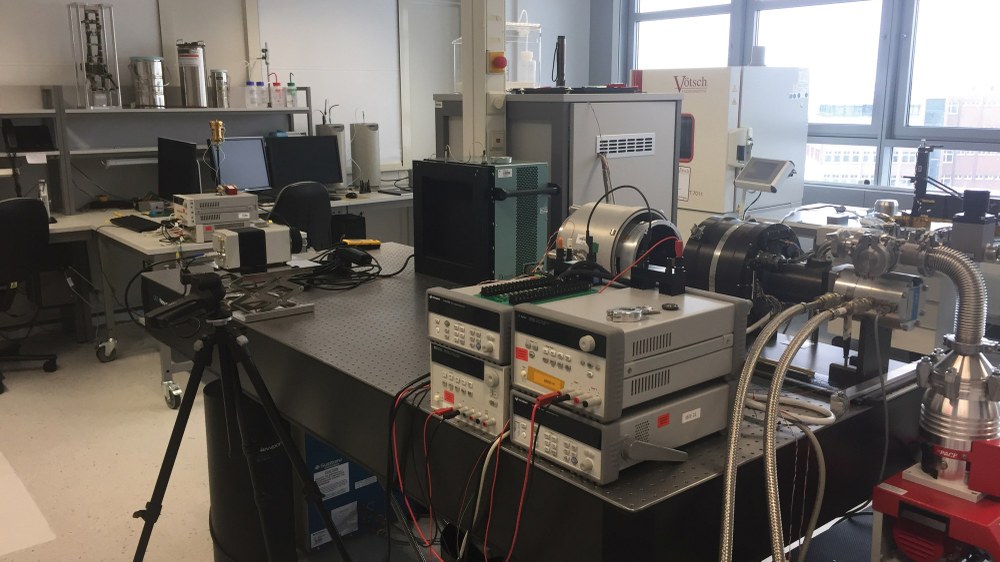
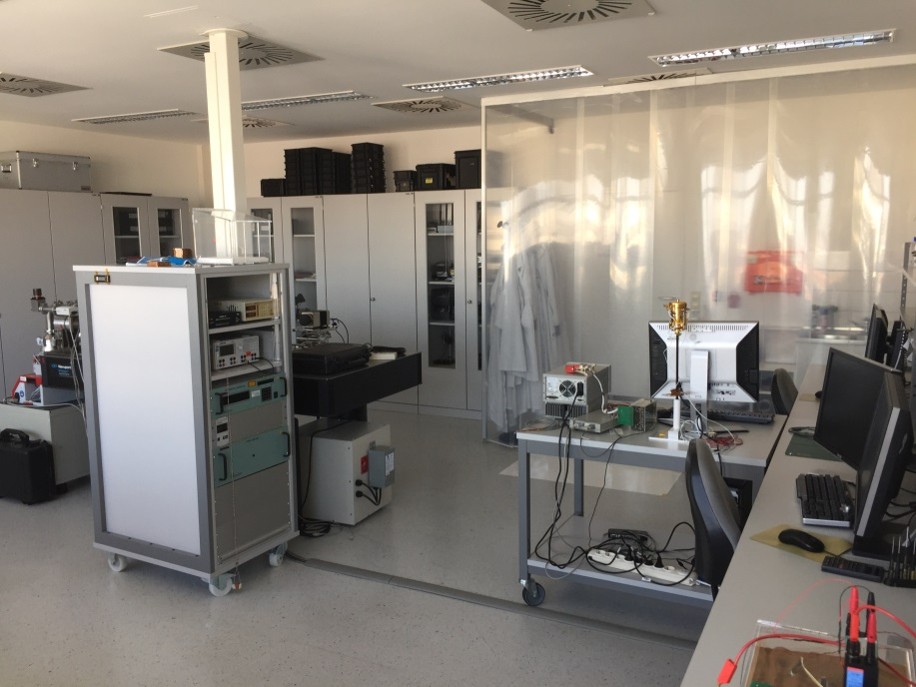
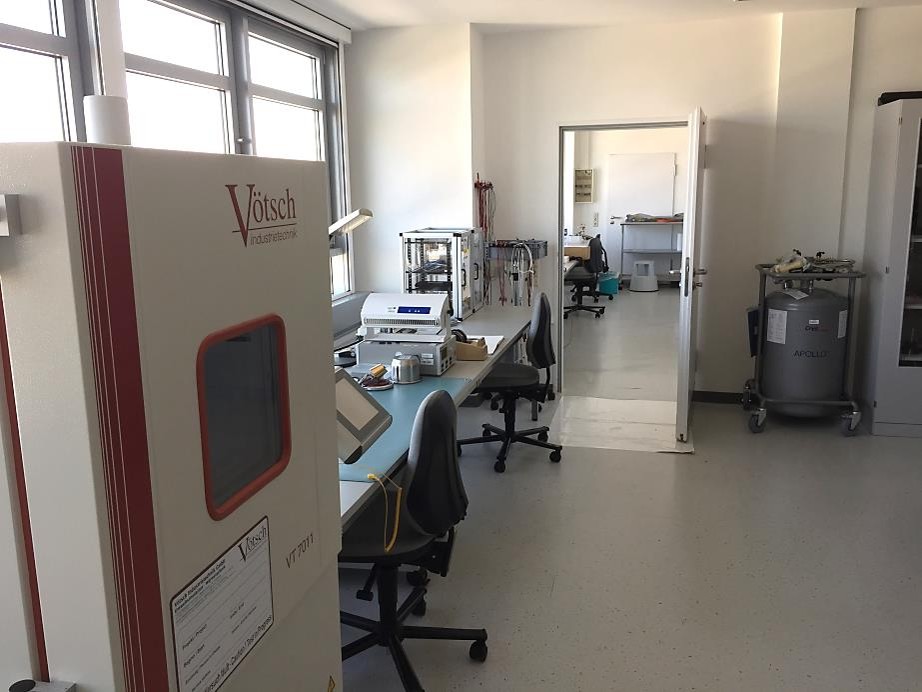
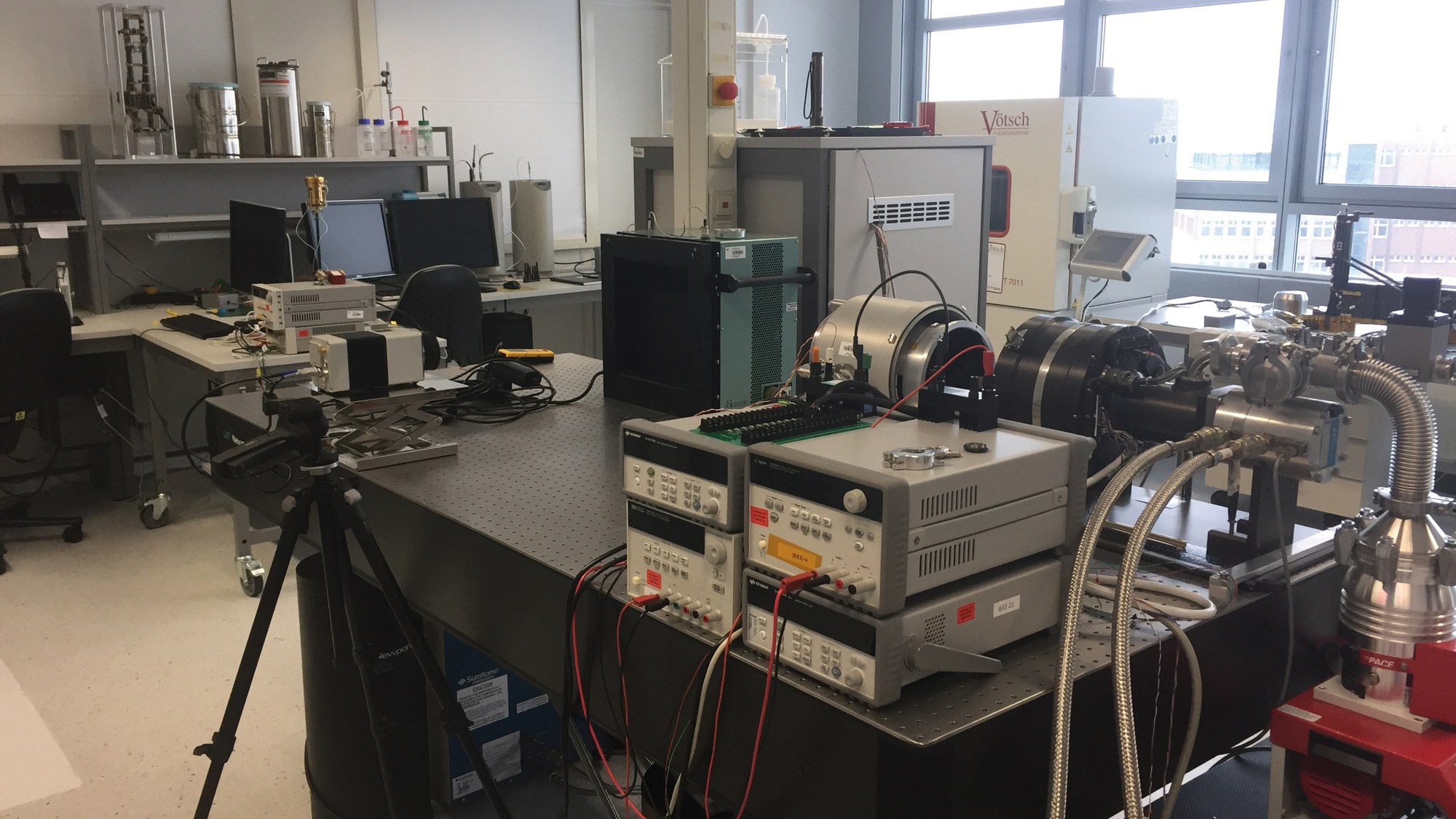
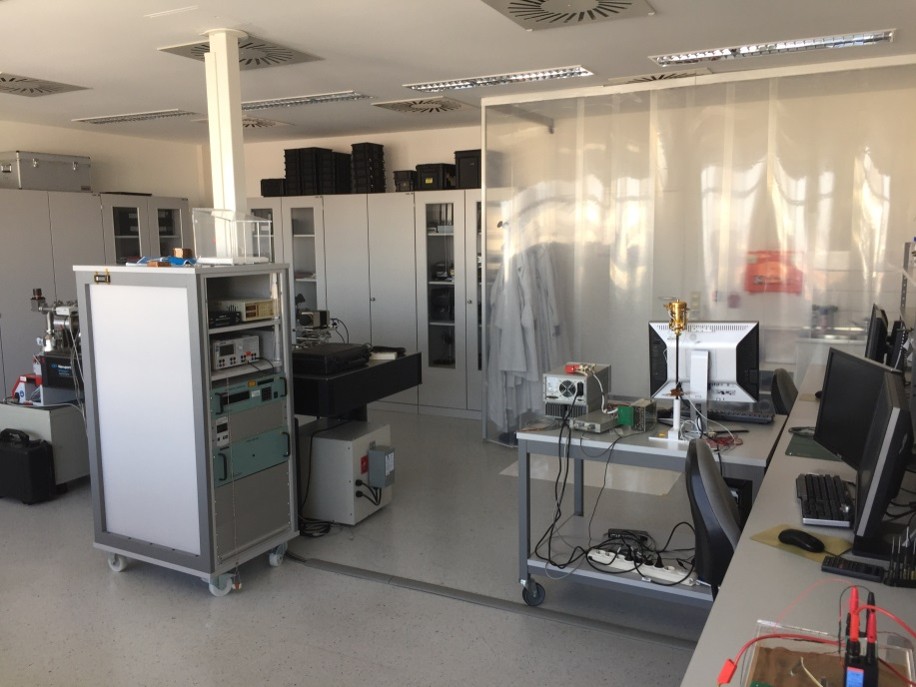
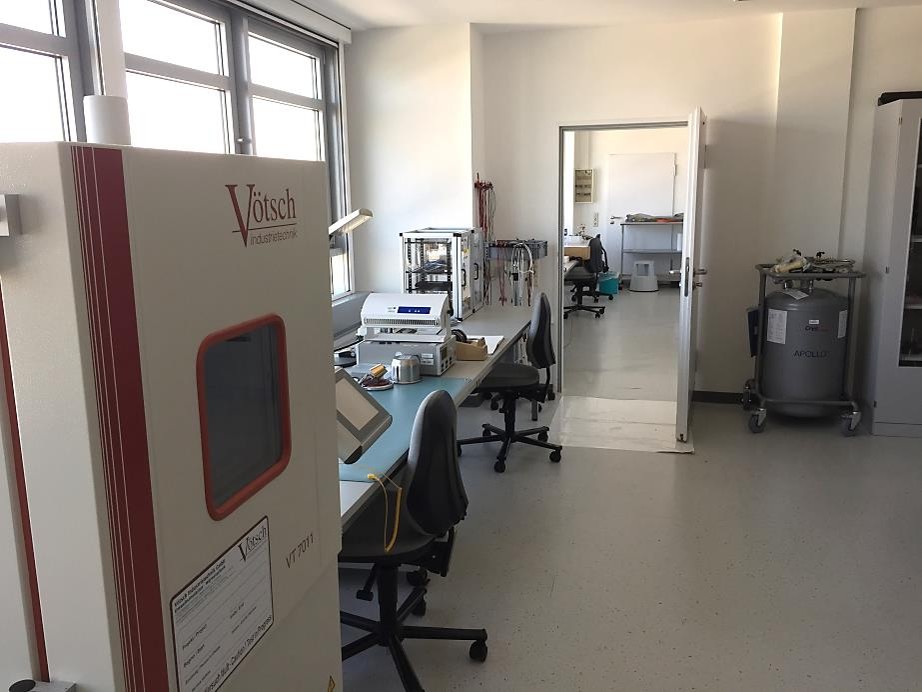
The Thermal Laboratory serves the development, qualification and calibration of space instrumentation to investigate the thermal properties of planets, asteroids and comets using contact and radiometric measurements. The instruments employed are essentially thermometers, thermal conductivity and heat flow probes, as well as infrared radiometers which are tested and calibrated in the laboratory. Furthermore, it provides support for the development and thermal testing of new technologies and instruments developed across the institute. Measurements of thermal conductivity, heat capacity, density, and porosity of analogue materials are performed to provide context for the scientific interpretation of data obtained by space missions.
The laboratory provides a controlled environment for thermal testing and calibration, including an ISO-8 environment with ESD work areas. Temperature calibration is supported by two ITS-90 fixed-point cells (water at 0.0100 °C and gallium at 29.7646 °C), secondary-standard reference thermometers, a calibration bath covering −80 to +110 °C.
Blackbody sources cover aerial blackbodies in the range from 0 to +500 °C and a dedicated low-temperature cavity blackbody with a 100 mm aperture and emissivity >0.999 operates from 190 to +100 K under vacuum condition. A helium cryostat enables testing from −200 to +50 °C under vacuum down to 10⁻⁵ mbar. The laboratory supports testing, calibration and qualification of flight-representative hardware, including radiometers, thermal sensors and host several ground reference models of actual flight hardware.