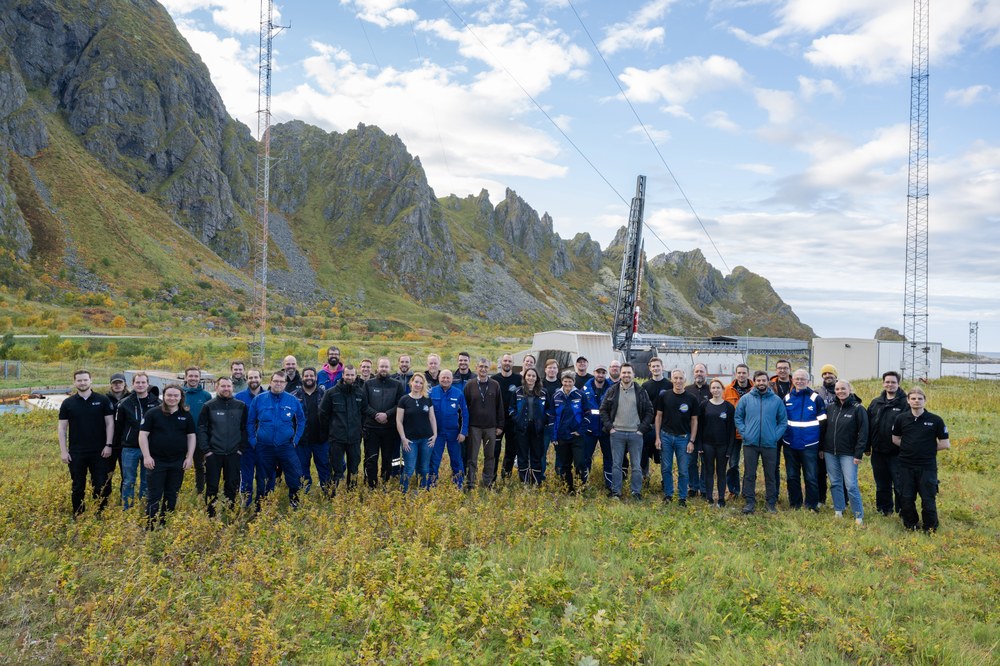
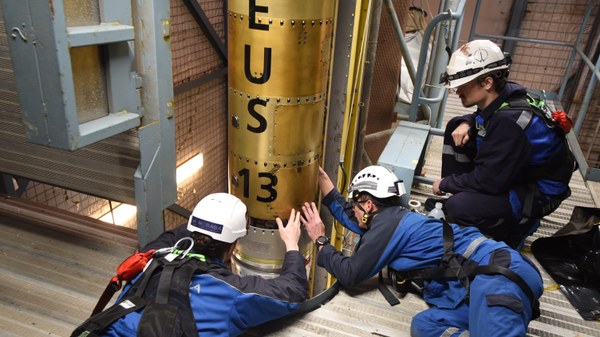
To launch a rocket carrying experiments, it takes flight engineers, number ninjas, data wizards, planners, inventors, project managers and a whole lot more. Yet attention is always drawn to the moment of the launch and the success of the flight. What is quickly overshadowed are the people – in most cases, many people – who contribute their various skills to plan, prepare and deliver a successful launch campaign. Many such minds were behind the 6 October 2025 ATHEAt flight experiment that took off from the Andøya spaceport in Norway, and in this blogpost we introduce you to a few of them.
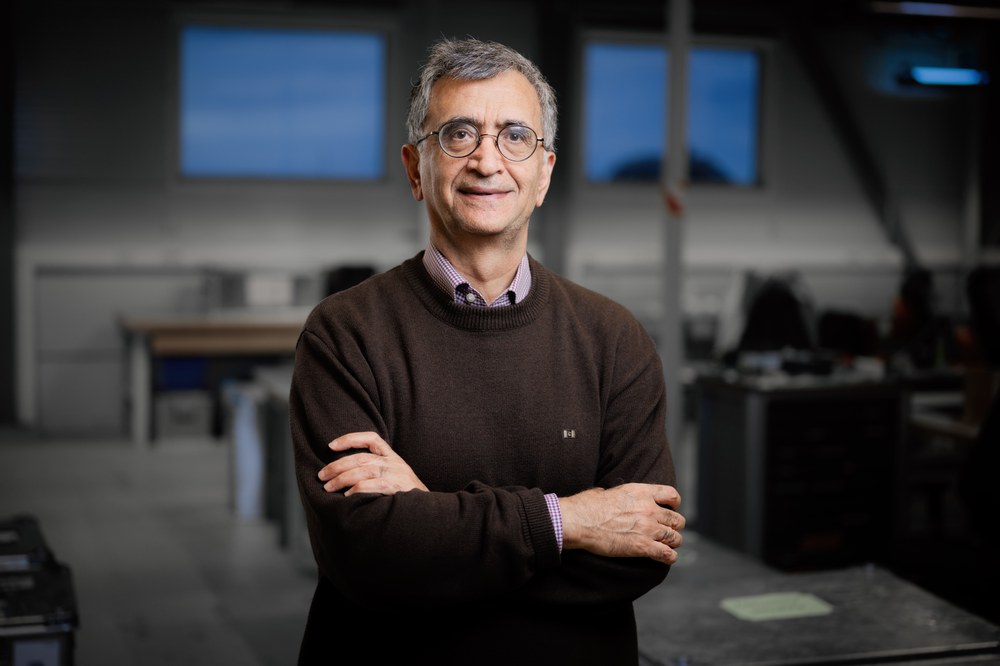
Meet Ali Gülhan, the scientific director of this experiment. This engineering maestro defined the ATHEAt technology objectives – just as he had done for the earlier ATEK and STORT flight experiments – and has led the Supersonic and Hypersonic Technologies Department of the Institute of Aerodynamics and Flow Technology for 24 years now. In Cologne, his department has multiple wind tunnels for studying the aerodynamic and aerothermal characteristics of models of spacecraft and rockets. For ATHEAt, he pulls the strings, keeps track of scientific progress and finances, and is a point of contact for industry collaborations. Of his department's work he says: "We attach great importance to ensuring our research is put to use and transformed into practical solutions." ATHEAt is not his first flight campaign, but it is the first time he's flown a rocket through lower layers of the atmosphere for approximately two minutes at between five and nine times the speed of sound. As flight speeds have risen, so have the demands placed on thermal management, heat protection and instrumentation. For space transportation systems to be reusable, they will have to survive extreme stress on re-entry - which is why ATHEAt carried more than 300 sensors to measure aerodynamic and thermomechanical stresses during flight.
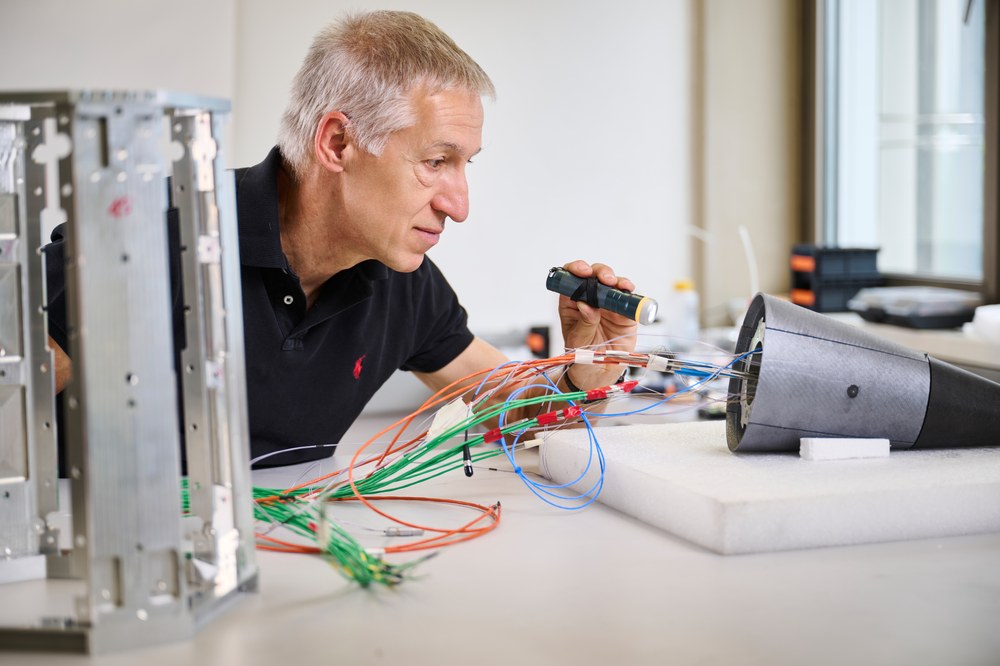
Many of these sensors were located at the front of the spacecraft. Thomas Reimer, an engineer with DLR's Institute of Structures and Design, worked as part of a team to design the nose of the rocket, producing the ceramic fibre composite material that makes up its structure and putting it all together. "Over the course of our projects, we learn how to design and manufacture the structures." Whilst the material is familiar, the shaping of the structure has got a lot more complex. In the ATHEAt experiment, the rocket experienced temperatures in excess of 2,000 degrees Celsius. "That's the most interesting part of it all – making the structures for heat protection even better," Thomas adds. Having spent over 30 years at DLR, he was the 'seasoned veteran' in his team – he joined DLR back in 1994 to write his university dissertation, and he's been with us ever since. He says his experience matched up perfectly with the skills of younger team members: "It was an absolutely successful combination – the younger ones have extensive knowledge of calculation and design tools, and I had my experience of previous missions."
An organiser extraordinaire, with a flair for numbers
Doreen Kupka
Space Operations and Astronaut Training institution
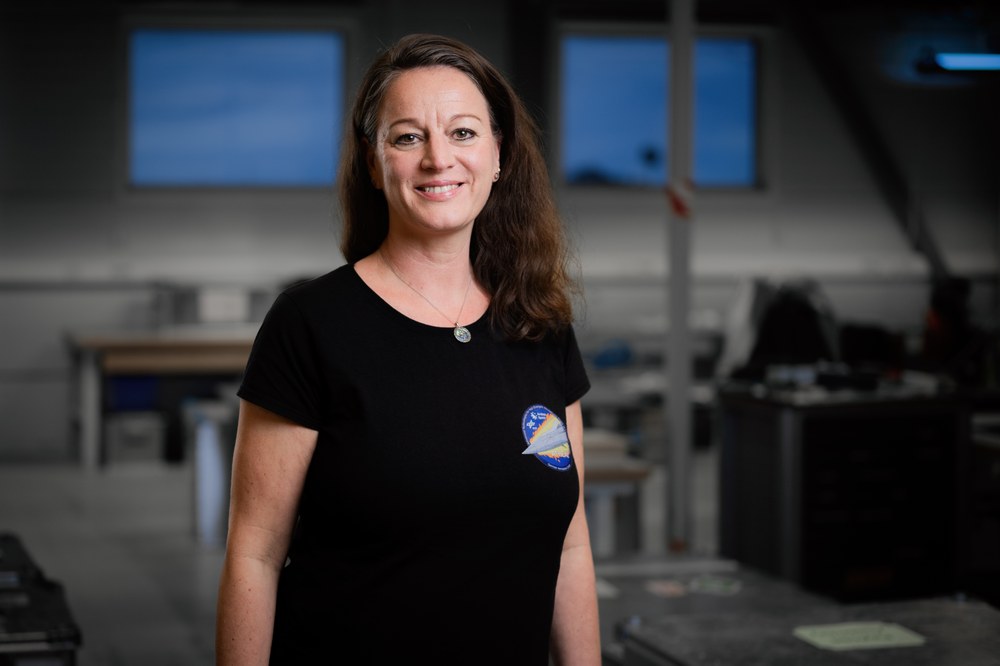
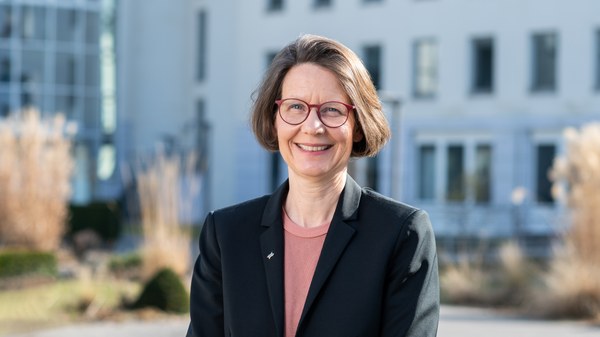
While technical efforts make the headlines, nothing happens without solid administrative support. Enter Doreen Kupka, a qualified international management expert who works at the Mobile Rocket Base (MORABA) at DLR's Space Operations and Astronaut Training institution. She joined MORABA ten years ago to fill in for a colleague on parental leave. Since then, her remit has evolved to cover a wide range of tasks. Before and after a test campaign, her role as project coordinator/manager primarily involves administrative processes: acquiring external funds, controlling projects, negotiating contracts and organising conference attendances. "An affinity for numbers is pretty important," she says. For the past three years, she has acted as a campaign administrator and has travelled with the team to the rocket launch sites. On the ground in Norway, she set up an ATHEAt project office, liaised between all stakeholders and took care of "1,000 tasks big and small" to support the campaign managers and entire team. One thing she has learnt over the years is, "You never know what a task will throw at you – each one is specific, they arise on the spur of the moment and demand a great deal of flexibility, not to mention good people skills." One thing that doesn't change, however, is that there's never a shortage of tasks when a large, interdisciplinary team launches an experiment-packed rocket to probe the future of space transportation.