
Where floating is part of the job
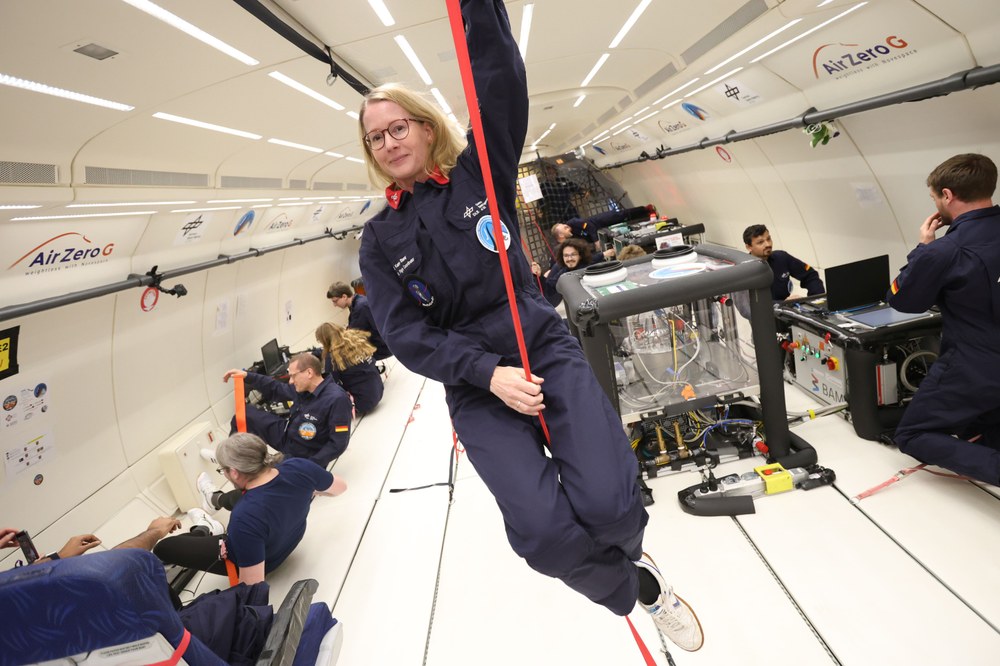

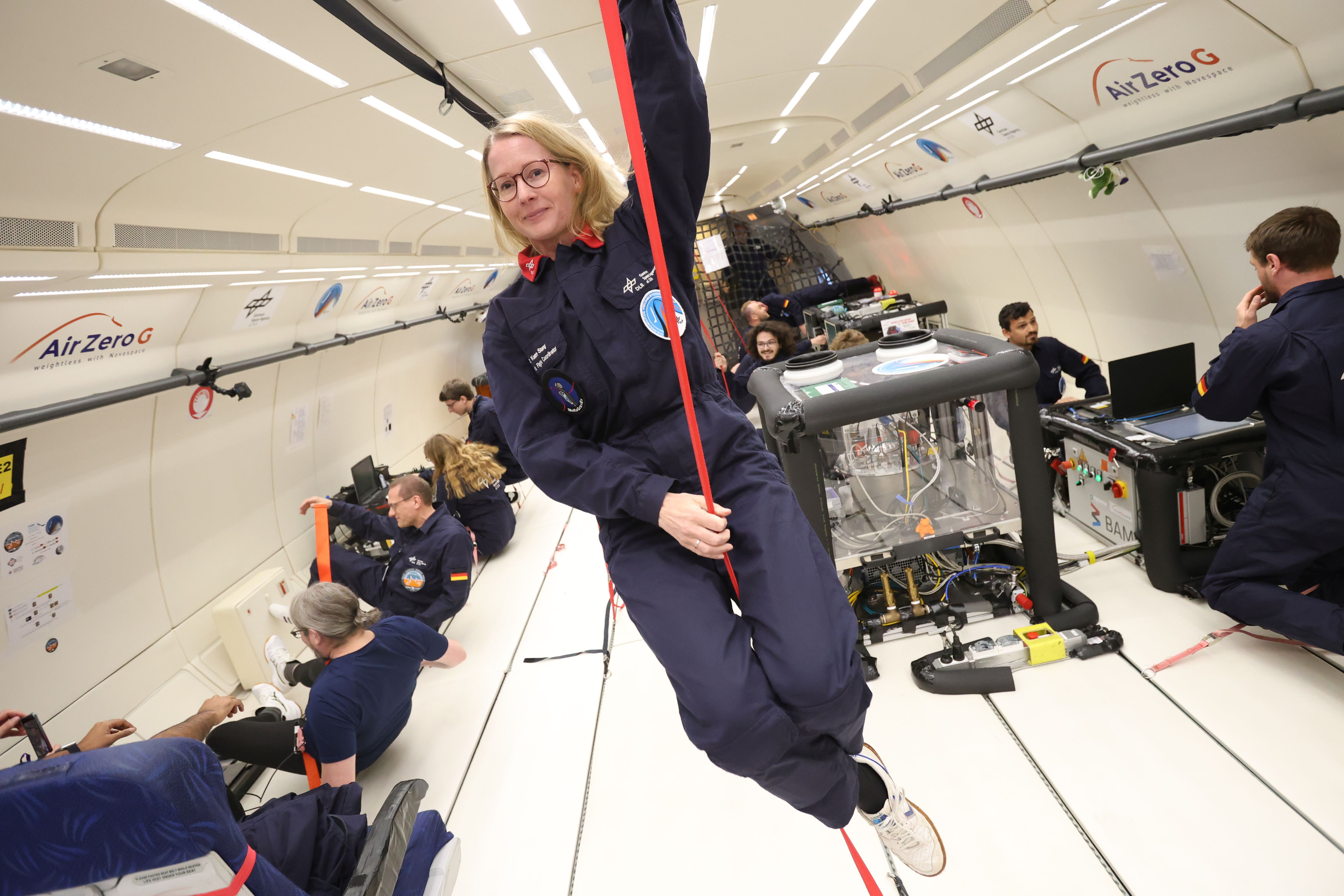
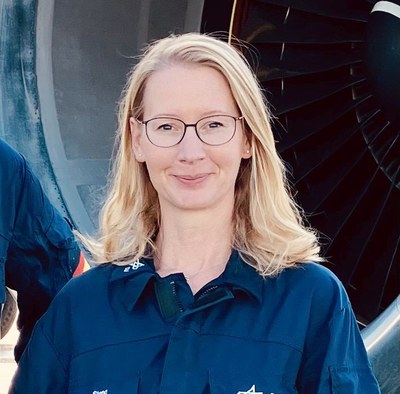
‘Incomparable’ and ‘indescribable’ are two words that Katrin Stang uses to describe a state of being that forms part of her work at the German Space Agency at the German Aerospace Center (Deutsches Zentrum für Luft- und Raumfahrt; DLR). The molecular biologist heads up the DLR programme for scientific parabolic flight. In this capacity, she is present on flights several times a year that enable scientists to conduct research in zero gravity. “Ever since Earth has existed, gravity has been acting on everything at all times,” she says. “And ever since human life has existed, everything has adapted to deal with gravity.” The human body is simply unfamiliar with the microgravity she experiences on flights in the parabolic aircraft. “You never forget your very first parabola and becoming weightless. It’s a truly incredible feeling.” Even though this floating in zero gravity only makes up a very small part of her management role, when she talks about her work, the first question she is usually asked is, “How does it feel?”
You never forget your very first parabola!
Scientific research and management
Back when she was studying for a biology degree at university in Munich, Stang could not have foreseen that she would one day work in space travel, much less that she – as one of only a tiny number of people on Earth – would experience microgravity. After completing her doctorate, one thing was clear to her: rather than stay in academia and research, she wanted to find a job where she could combine her scientific skills with management responsibilities. For almost five years, she worked as a product manager at a company that sold products ranging from blood plasma to equipment. But in 2010 she spotted a job opening at the German Space Agency at the DLR and decided to apply. “I didn’t expect to be able to work as a biologist in space travel, but I felt a strange pull towards the position,” she says. For seven years, she oversaw funding projects in the field of life sciences, concluded contracts with the aerospace industry to qualify components and instruments for the International Space Station ISS, and led projects with partners such as the European Space Agency (ESA), industrial space companies and scientific institutions. Since 2017, the 49-year-old has headed the Parabolic Flight Programme, which has been run by the German Space Agency for more than 25 years.
Alternating between weightlessness and gravity

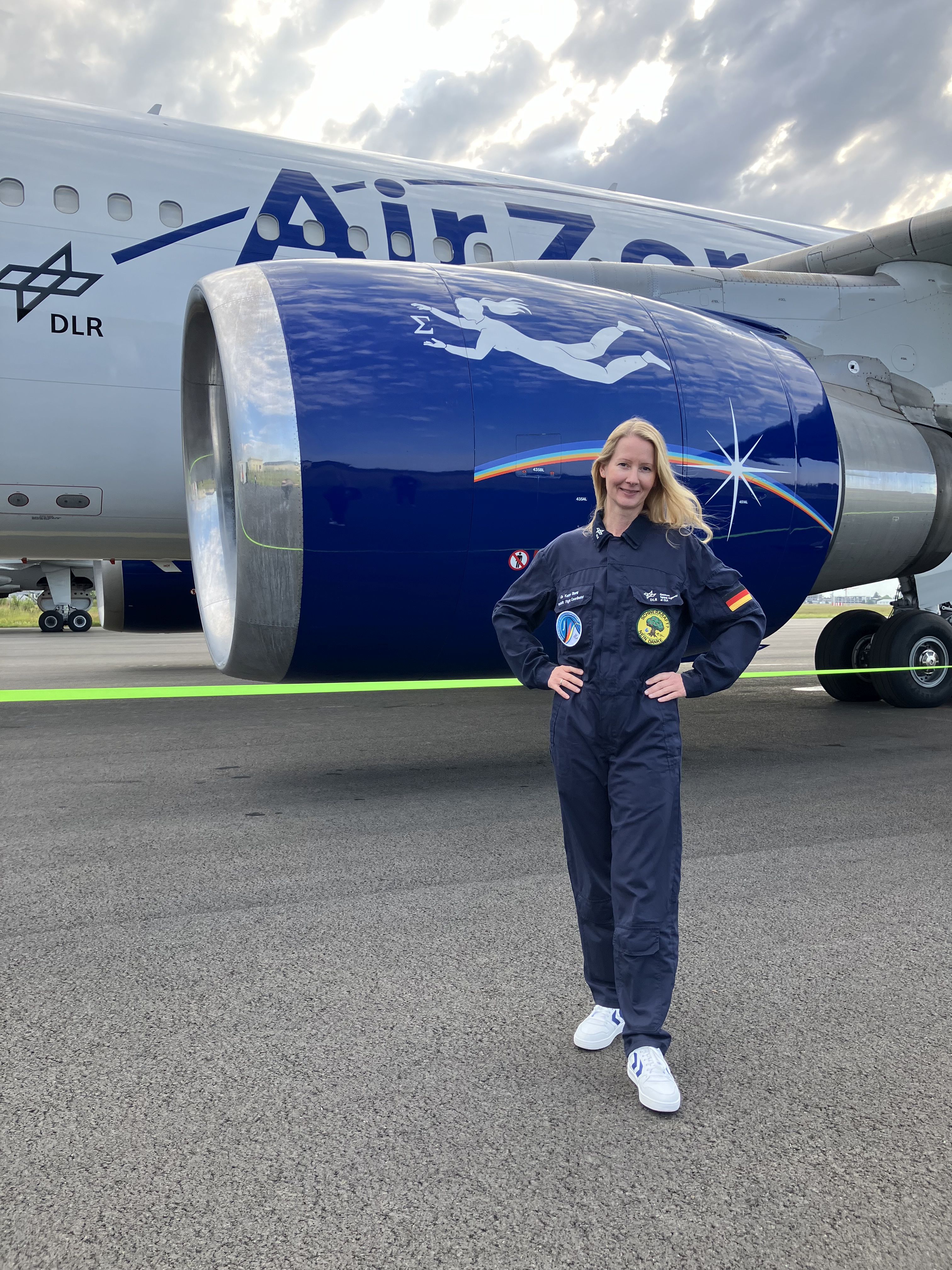
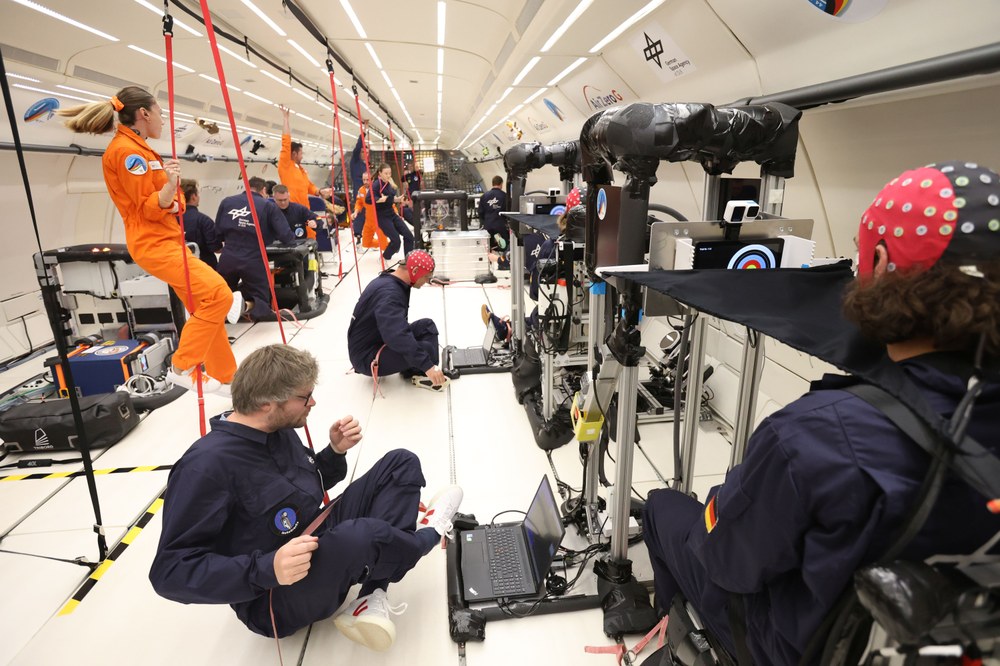
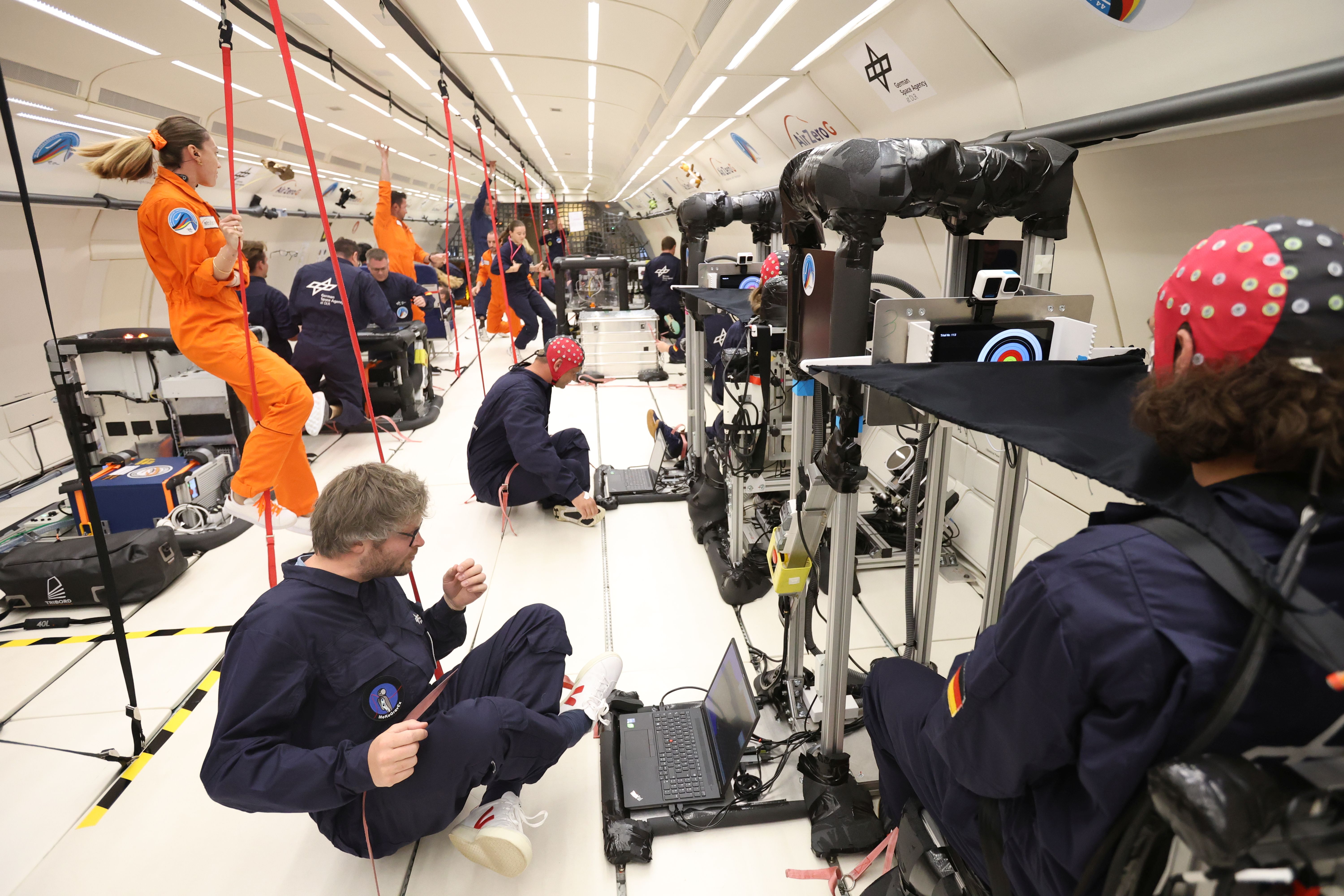
In technical terms, a parabolic flight requires a specially modified aircraft to ascend steeply and then enter free fall. For 22 seconds, microgravity prevails inside the aircraft at its highest altitude. Before and after each parabola, passengers experience almost double the force of gravity. This manoeuvre is performed 31 times, with the scientists using the zero-gravity phases for their research each time. Depending on space requirements and the resources required, Stang can fit approximately 10 to 14 experimental teams into the 100 square metre interior of the aircraft. Experiments may include satellites docking in zero gravity, solar panels unfolding or test subjects performing tasks while floating. So what’s her favourite experiment? She couldn’t possibly choose! “Every experiment has a purpose,” she says. “Sometimes experiments that don’t appear particularly noteworthy from the outside have incredibly interesting inner workings. It soon becomes apparent that all disciplines have their own fascination – and the researchers’ enthusiasm for their experiments is contagious.”
Parabolic flight campaigns take place in Bordeaux once or twice a year. For two weeks, the workshops near the airfield are buzzing with activity, with technicians unpacking experiments, setting them up on the ground and preparing them for installation on board the aircraft. Each experiment team is assigned an area where they can work on their equipment and instruments. Crates pile up, people crowd the aisles and safety inspections are carried out. “I have a small office on site, but I’m rarely in it,” says Stang. “There's always a lot to be sorted out with the experiment teams. We resolve any problems that arise and come to agreements. It’s a completely different daily routine and experience from working in the office at the German Space Agency.” And then the moment they’ve all been working towards: the three consecutive days of the second week when the flights take place over the Atlantic.
Workflows in sync with campaigns
The period leading up to the next flight campaign is always a strictly timed process. As soon as Stang and her team have selected the candidates for a campaign from the reviewed and assessed experiment applications, the clock starts ticking. “My job has distinct peaks – we’re always working towards the flight days,” she says. A flight campaign will only prove successful if everything is done meticulously and on time: deadlines for reviews, documentation, negotiations with French partner Novespace (which operates the aircraft), close communication with experiment teams, and smooth teamwork with colleagues at the specialist departments of DLR. “Making sure all the necessary conditions are in place is a major administrative and operational task.”
Pairing passion for work with well-earned downtime
Stang enjoys tracking the scientific careers of researchers involved in experiments that fly on multiple campaigns. “I get to know some of them as master’s students, see how they advance their thesis as part of their doctoral studies, and may even welcome some of them back on board as professors.” Along with the knowledge that parabolic flights make research in weightlessness accessible and cost-effective for many, this sense of progress makes her work particularly satisfying. Despite Stang’s enthusiasm for the parabolic flight programme – “I learn something new and broaden my horizons every day” – downtime is important to her, too. “I love putting my heart and soul into my work, but I make sure to balance it out with enjoying the outdoors, staying active and spending time with family and friends.”
And she feels strongly about something else: “I don’t love it when people refer to parabolic flights as ‘vomit comets’ and the like.” The human body doesn’t always immediately adapt to the change from unfamiliar microgravity to almost double gravity. The nerve cells, brain, eyes, and ears sometimes receive conflicting information, which can cause the body to react by feeling nauseous. “A lot depends on how you feel on the day, but if you follow a few rules, you won’t feel sick. I haven’t had any problems so far, although I’m sometimes relieved when the 31 parabolas are over.”
Tags: