
Rubber boots on the Moon
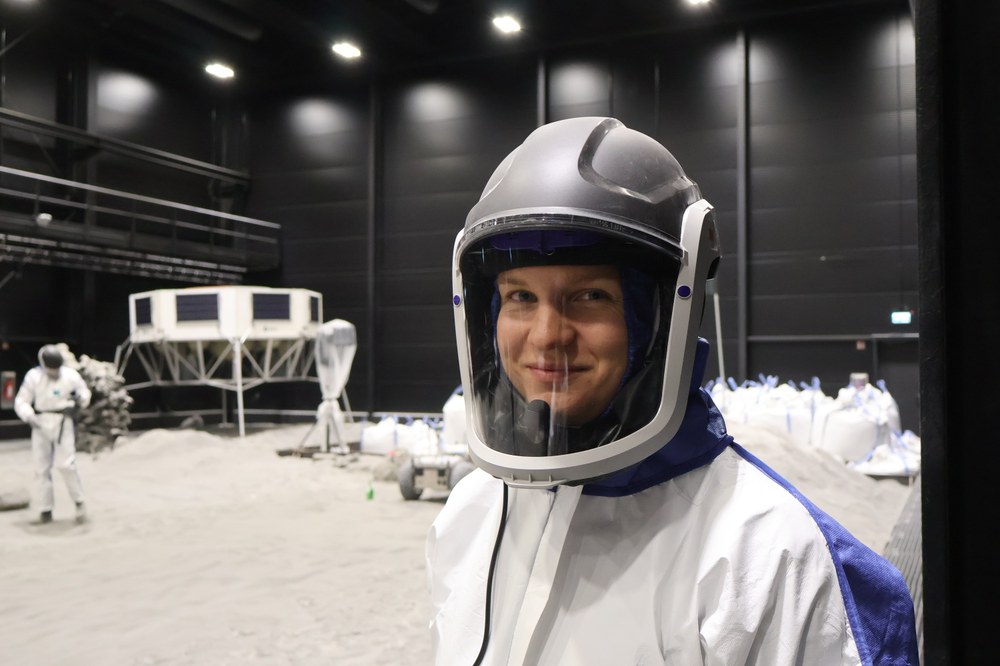


The roller door slowly slides upwards. Just a few metres down, the lunar landscape begins. Grey regolith, scattered rocks and the lander further back. Maria Hallinger enters the hall. Air flows into her face mask, constantly ventilated by a motor. A full-body suit, high rubber boots and gloves protect her body from the hostile environment, guarding against sharp dust particles that she could inhale, or might settle onto her skin. And, the suit protects the environment from everything the engineer might bring into the test area: dirt from the street, flakes of skin, small textile particles. Hallinger is part of the team that manages test campaign operations in the LUNA Hall at DLR/ESA in Cologne. Today, as campaign manager, she is supervising a team of students that are here to test a rover under lunar-like conditions.
Moonquake sensors
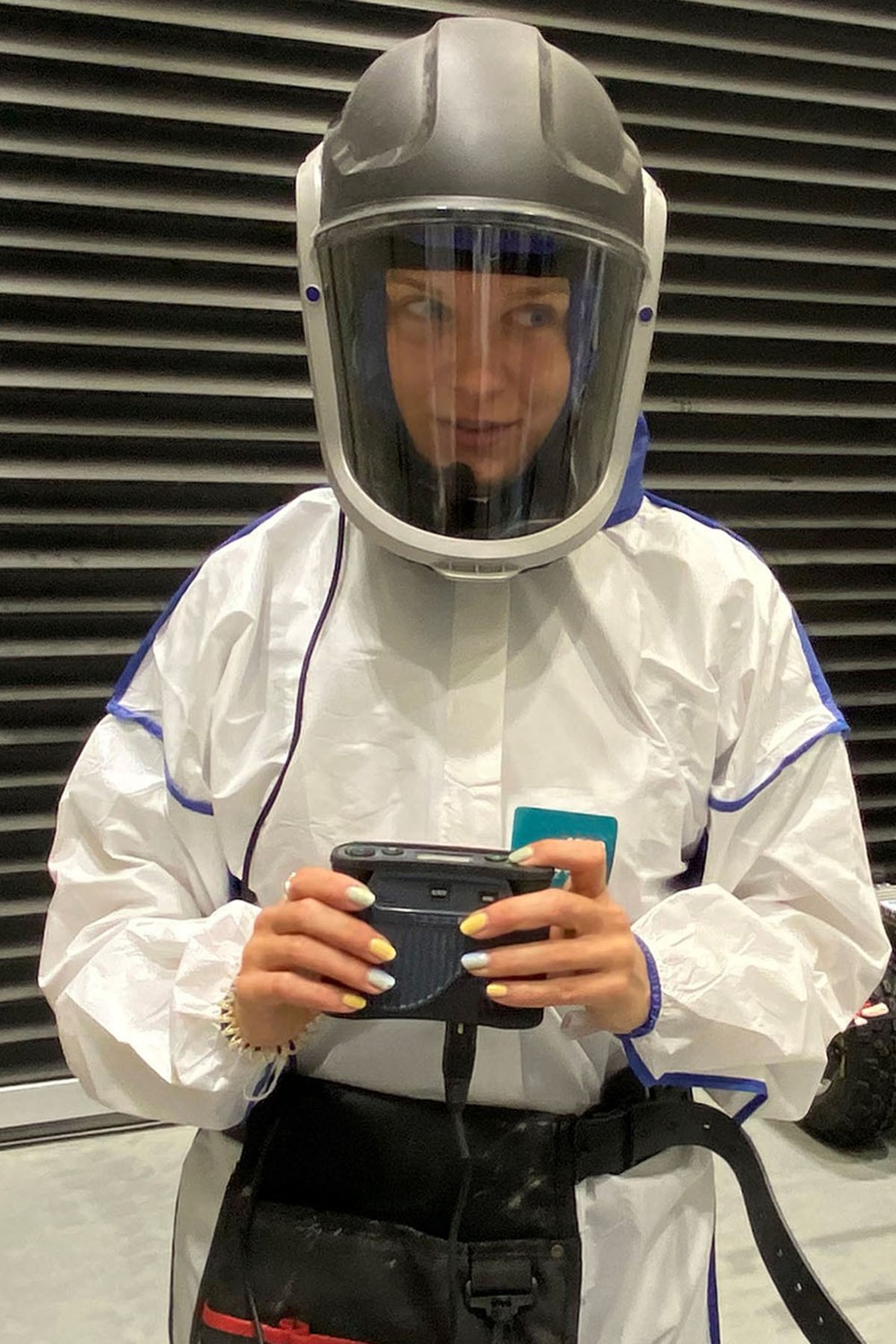
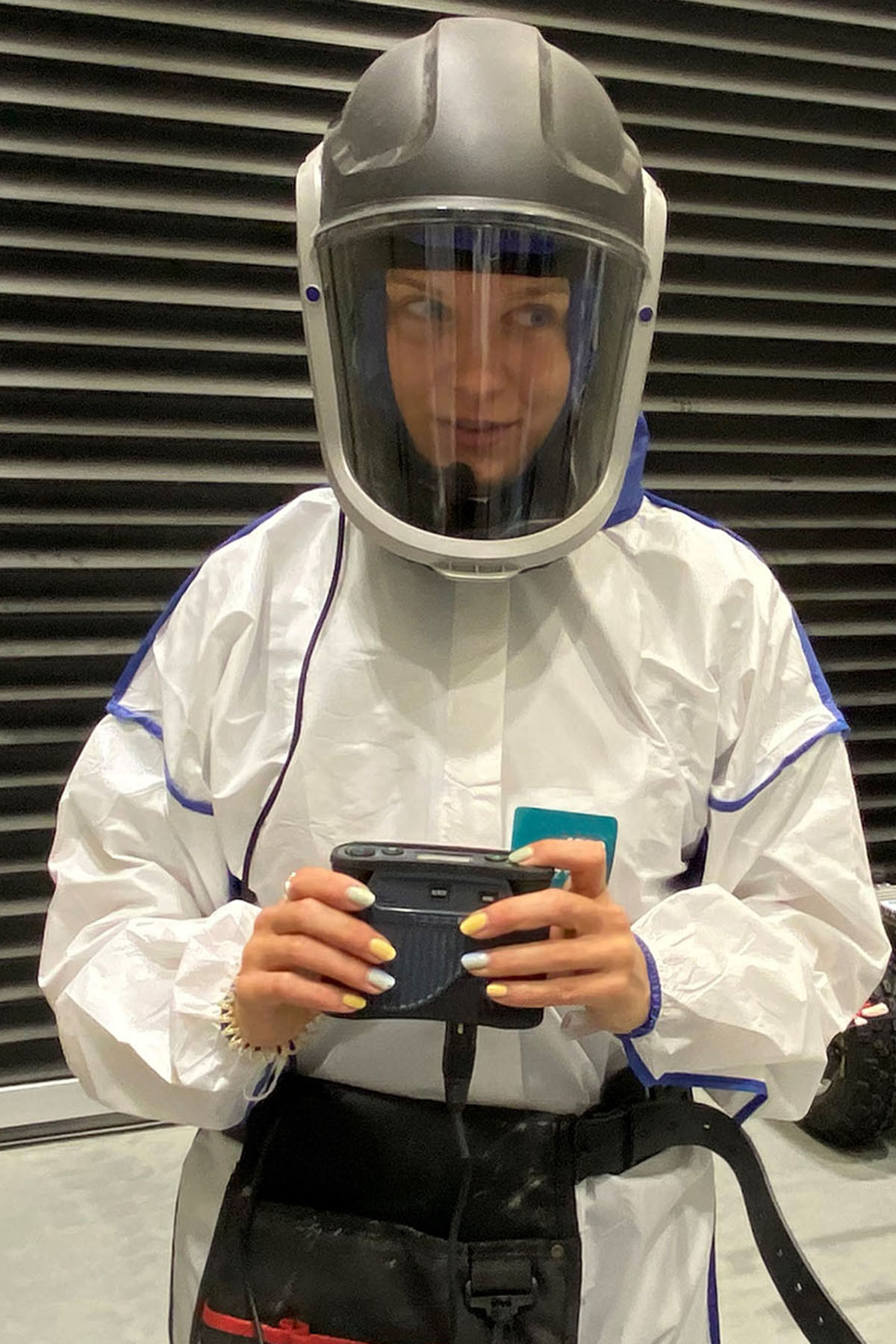
The 28-year-old knows the ins and outs of this facility. Deep in the regolith lie sensors that were the subject of her master’s thesis at DLR. The sensors measure seismic activity – earthquakes – in the ground and provide comparative data for experiments with devices designed to measure moonquakes. “I set out to investigate how such a sensor might survive in the LUNA Hall, function effectively and deliver reliable data,” says Hallinger. How could the sensor and data unit be protected from dust? How could a power supply be secured in the event of a power outage in the LUNA Hall? How could data from the depths of the regolith be transmitted to the more distant Microgravity User Support Center (MUSC)? What information is actually required, and what should be evaluated? The results of her Master’s thesis lie right before her – the lunar analogue facility is now equipped with the sensors that were the subject of her research.
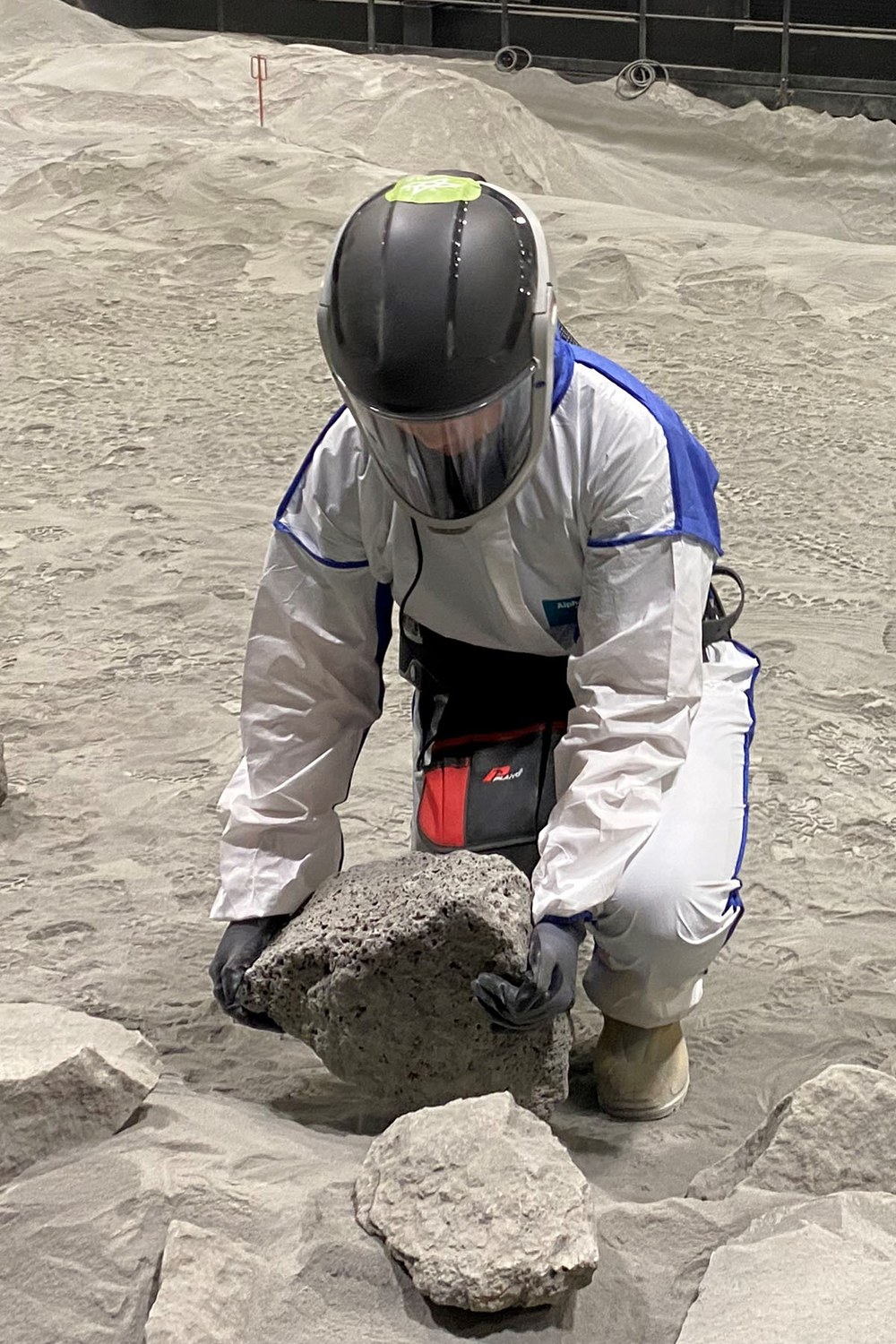
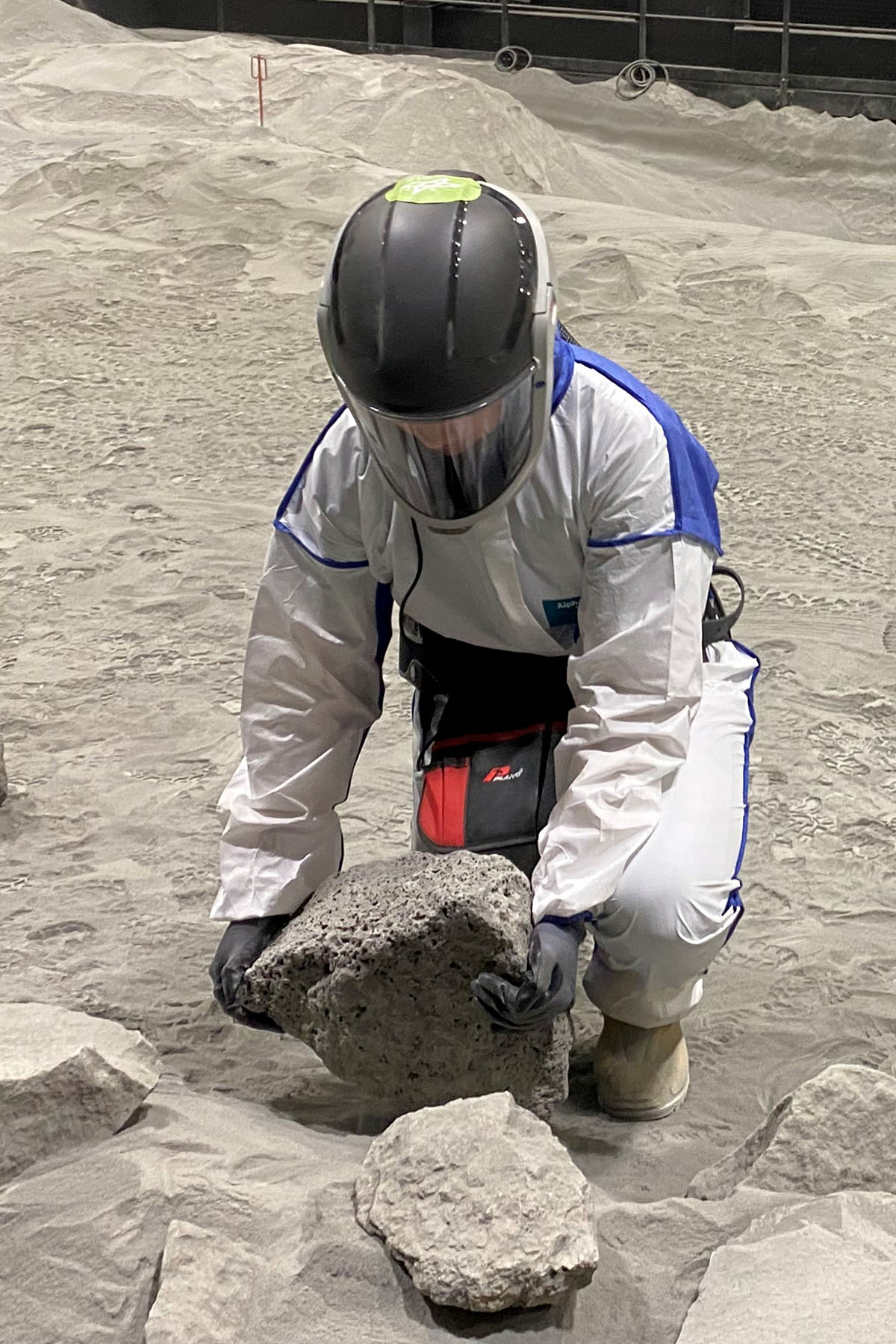
The once-pristine lunar soil in the hall is now criss-crossed by tracks left by tracks left by the rover. In this campaign, the students are attempting to test for the first time how the rover behaves at different speeds and over ground of varying solidity. On a hill, the rover gives its all – but its wheels keep sinking into the slippery regolith. In photos, the scene looks almost lunar, if you ignore the hall’s outer wall. A crew in full-body suits stands among the grey boulders, light reflecting off their visors, while the legs of a lander protrude from the grey dust in the background. Maria stands at the edge, casting an eye over everything. Through her headset, she can hear the team’s radio messages to their colleagues in the control room on the first floor. Ideally, she is simply there to observe during such moments, having clarified all questions, details and general conditions during the preparations and recorded them in the campaign plan.
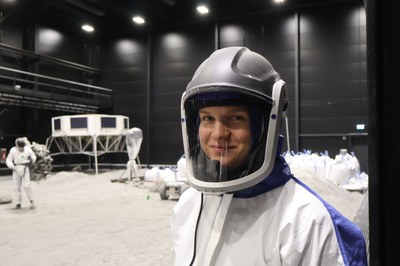
It would be amazing if I could be a role model for girls, if I could motivate more young women to study STEM subjects.
A role model for schoolgirls
The Moon didn’t come up much as a topic during Hallinger’s undergraduate course in mechanical engineering. “That only happened during my Master's thesis,” she recalls. But the more she learns about it in her work at DLR, the more her interest in Earth’s satellite grows. During her time as a Master’s student, the aspiring engineer studied the structure and formation of the Moon, the benefits of seismology and the electrical and mechanical requirements of space systems. For the practical element of her thesis, she delved deeper into the construction and operation of an instrument under lunar-like conditions. “I’m fascinated by it, and I really enjoy talking about it,” she says. And she feels compelled to share that fascination with others through talks, guided tours and media inquiries. And there’s another reason – barely a tenth of her fellow mechanical engineering students at university in Aachen were women. “And I only had one female professor throughout my entire time at university,” she says, so female role models were scarce. “It would be amazing if I could be a role model for girls, if I could motivate more young women to study STEM subjects.” She would love one day to see 50% female students in engineering.
From crane driving to desk work
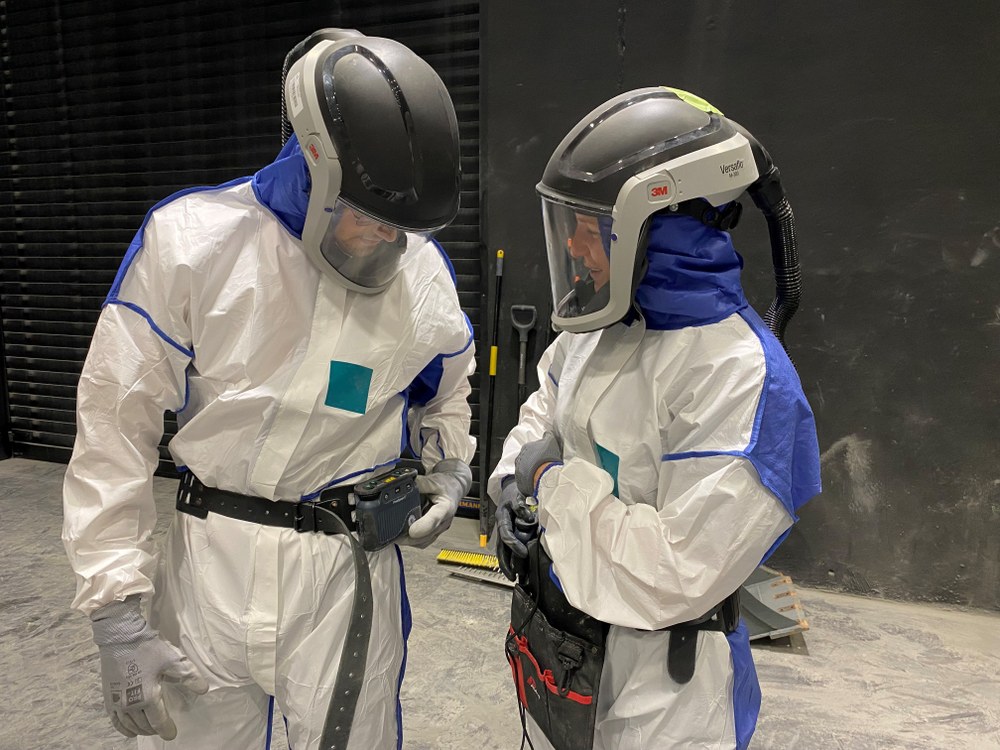
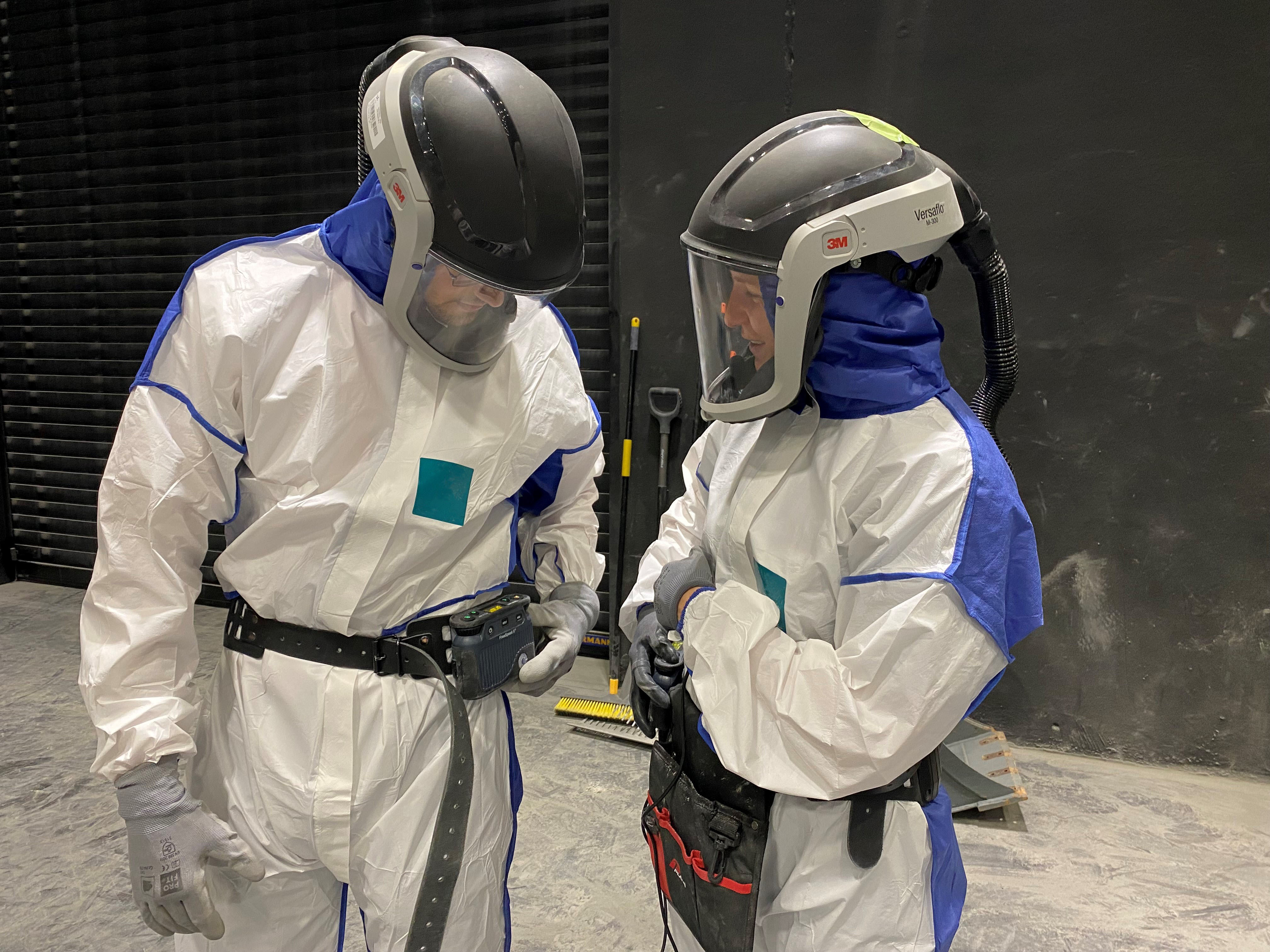
Hallinger is constantly on site during LUNA Hall test campaigns, usually for several days a month. She makes sure that no dirt from driving outside has adhered to the rover’s tyres, and that everyone entering the hall puts on their equipment correctly – from face masks and ventilation motors to suits and boots. She checks that all radios are working and that communication between teammates in the hall and control room is running smoothly. Does the light in the hall need to be bright and slanted, like on the Moon itself? Then, it is Hallinger who must prepare the solar simulator. If heavy objects are to be moved during experiments or when preparing the hall, Hallinger operates the crane that runs beneath the ceiling. If the regolith needs to be topped up or compacted for a particular experiment, then very earthly tools like rakes and shovels come into play, and Hallinger and teammates tread the soil with their boots.
In the office, desk work and meetings are scheduled to plan and document campaigns. Joint meetings are held with university scientific teams from Germany and abroad, and with industry players and partners, in order to pin down and implement requirements and objectives. The LUNA Hall isn’t just another space; it offers highly specific conditions for experiments. “Any work that is carried out there has to be documented,” says Hallinger. “And anyone who wants to drill a hole anywhere in the hall must submit an application.” After the test campaign is complete, she writes a report, much of which will be incorporated into the concept for the operation of the hall. “We use this experience to further refine our processes,” she says.
Test runs for lunar exploration
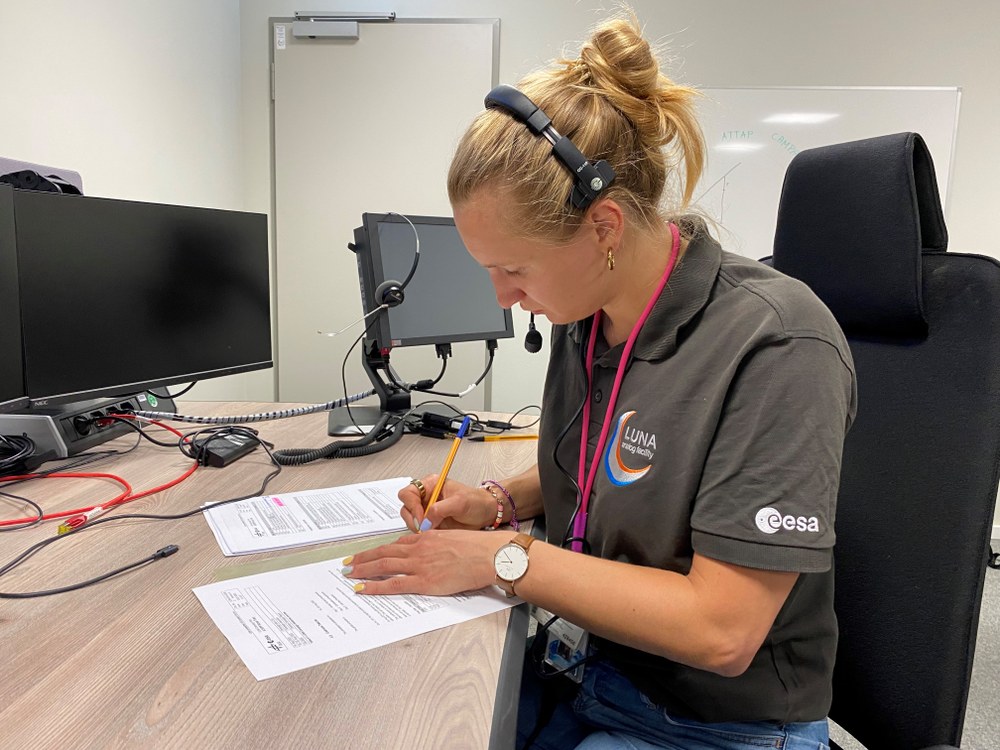
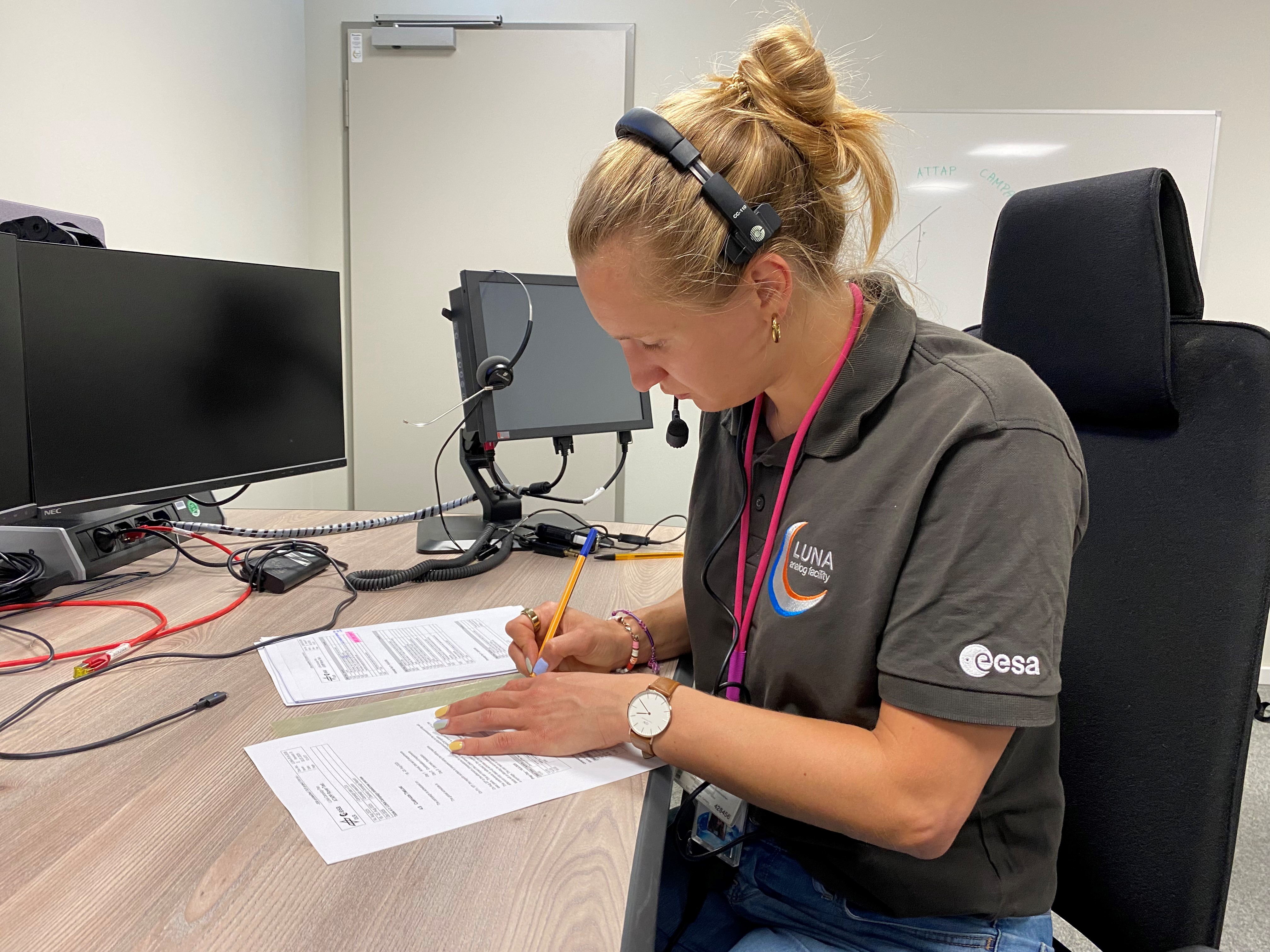
After eight hours, the first day of testing is over. The once-untrammelled field now looks anything but pristine. The team of students has put their rover through its paces: steep slopes, inclines, high speeds. They are still standing very close to their vehicle. Yet vehicles that roam the Moon will be almost 400,000 km away from the team at the control console. Hallinger has changed out of her protective clothing and is looking out of the control room at the regolith surface of the hall. That immediate oversight will also be absent from real lunar expeditions.
Hallinger once considered becoming an astronaut. “But working in space requires an incredibly structured daily routine,” she says. “The International Space Station has only one window to the outside, you live in a huge laboratory for extended periods and the entire time before and after a mission is very tightly scheduled. I prefer working as an engineer– I have more freedom and can work on missions to other celestial bodies or in Earth orbit.”
Tags: