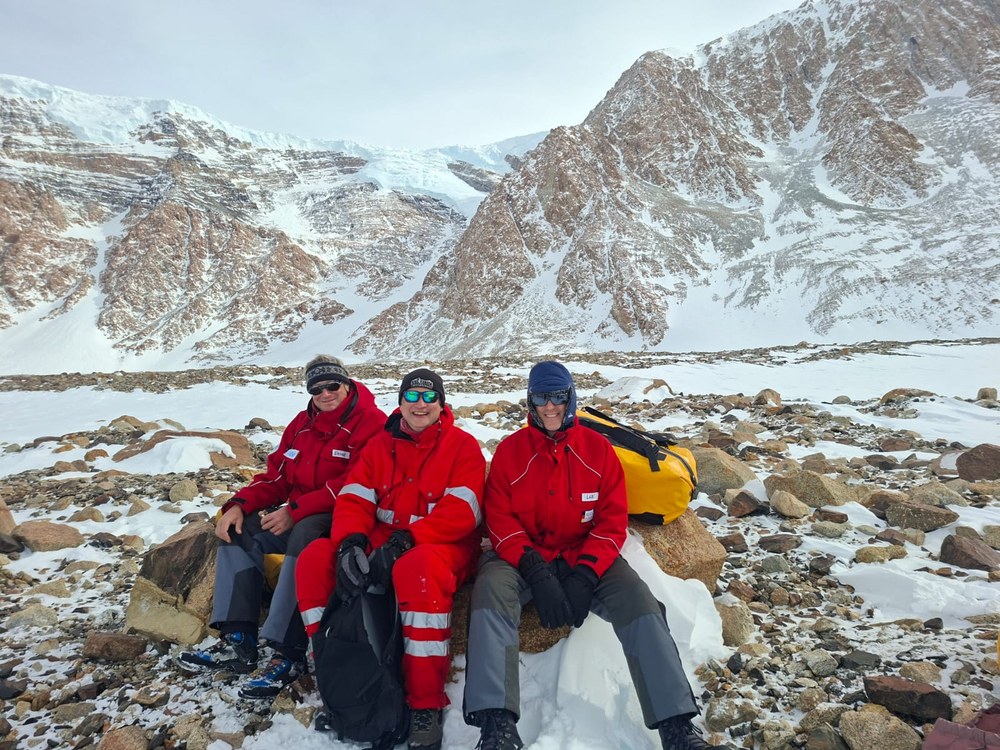
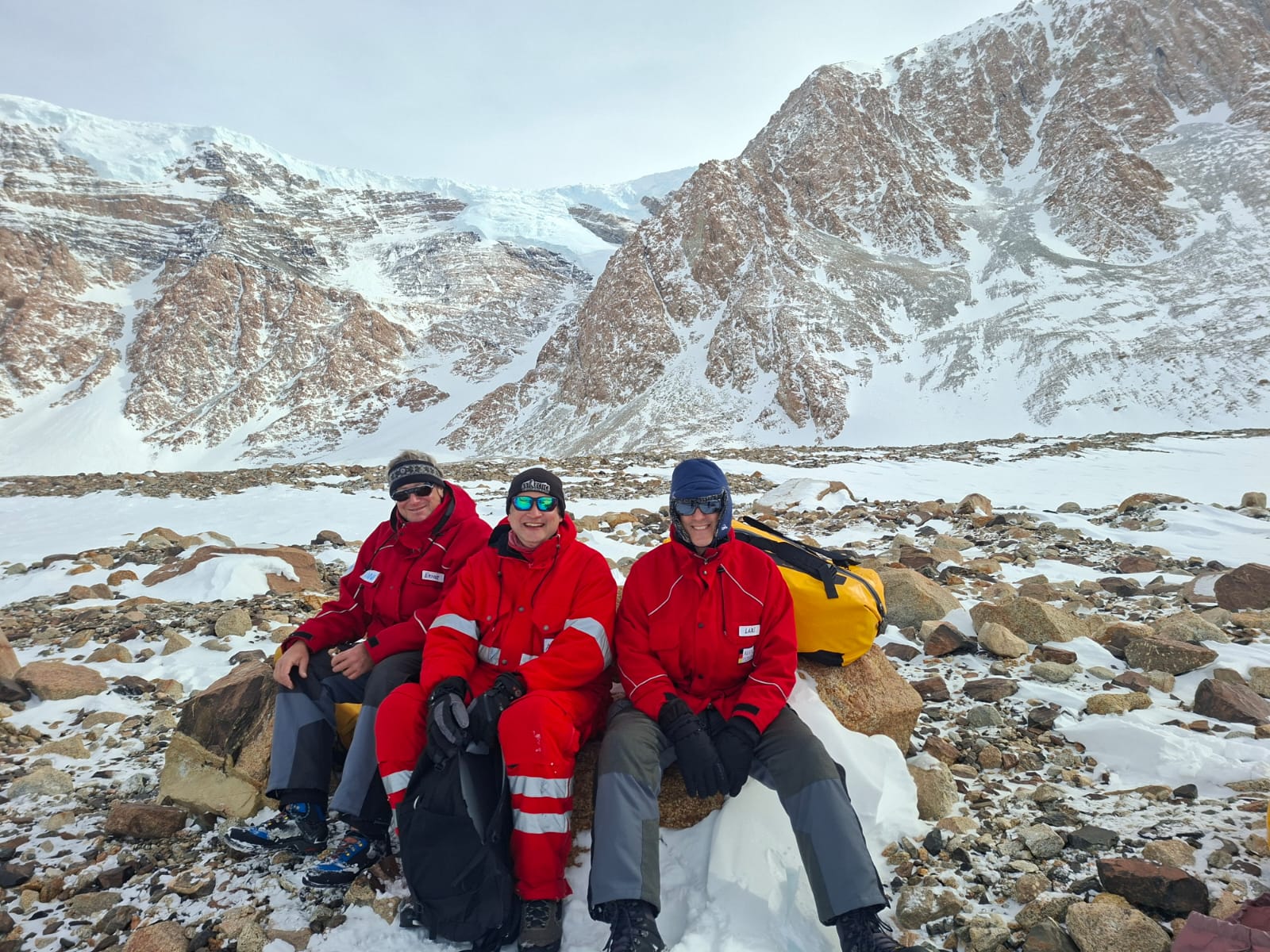
Their nights are spent in individual tents, frosty winds blowing past. Water needs to be melted from snow; it doesn't simply flow from the tap. They eat whatever is served, because the nearest snack bar or supermarket is unimaginably far away. Their ride to work? Two helicopters. The temperature? Between -9 and -20 degrees Celsius. Work clothing? Anything that's warm and windproof. DLR researchers Lars Witte, Jean-Pierre de Vera and Ernst Hauber are currently on 'Mars' – even if it doesn't look that way. Yet the Gondwana Station run by the Federal Institute for Geosciences and Natural Resources (BGR) stands near such an inhospitable, harsh area of the Antarctic that conditions are in some respects very similar to those on Mars. The location is therefore an ideal environment for testing out Mars exploration technologies and formulating hypotheses on the planet's geology and climate history.
Trialling technology for a flight through the Martian atmosphere
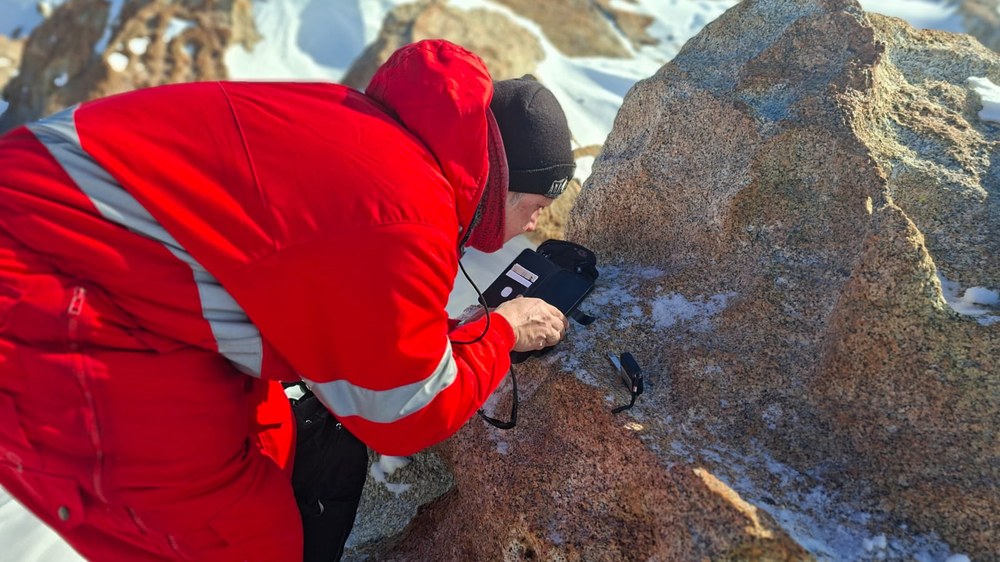
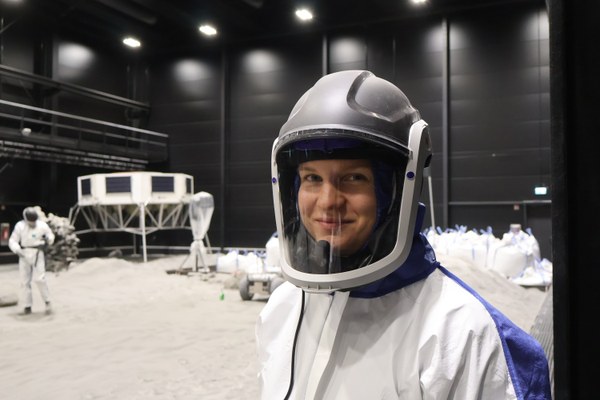
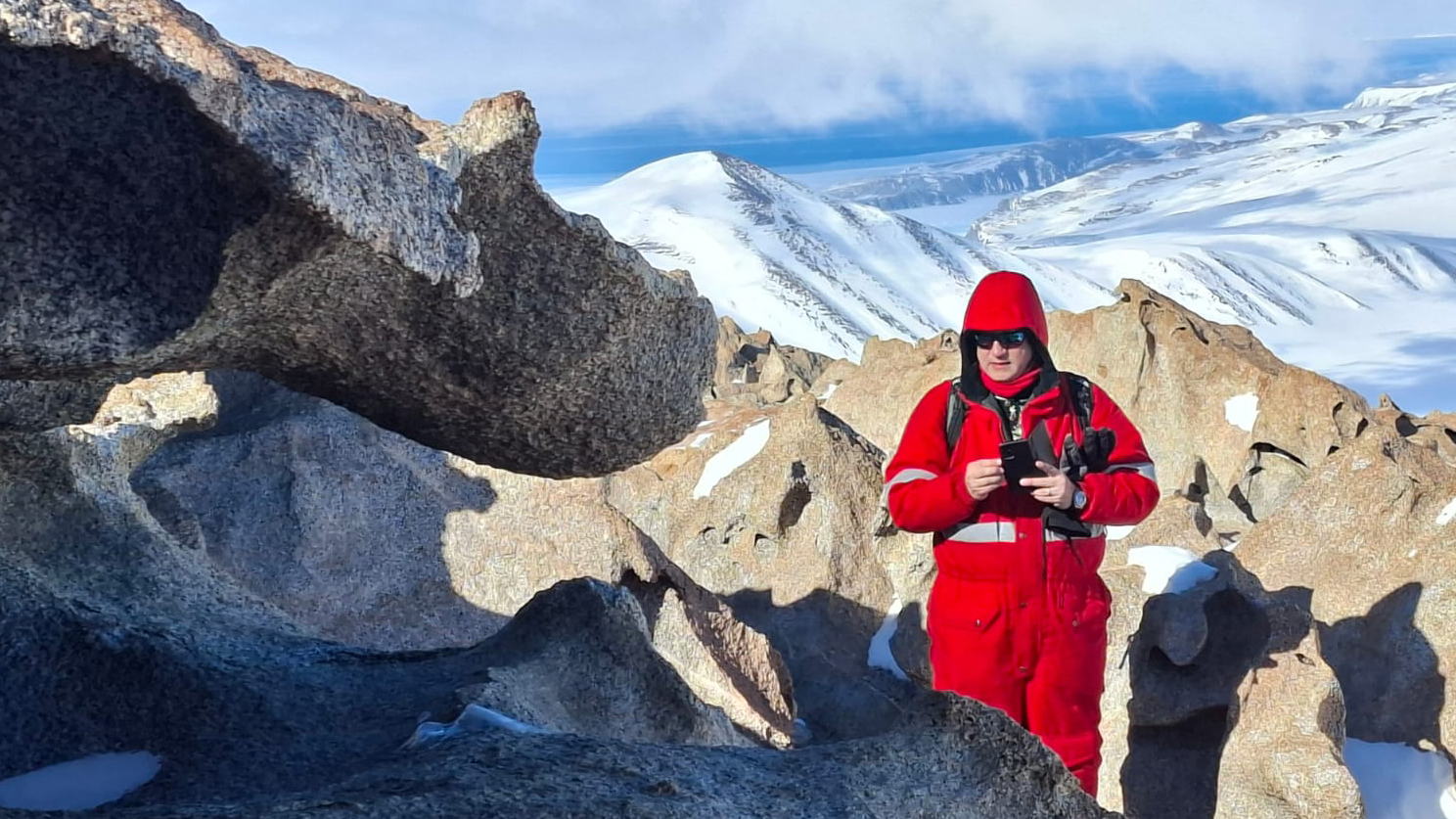
Lars Witte from the DLR Institute of Space Systems
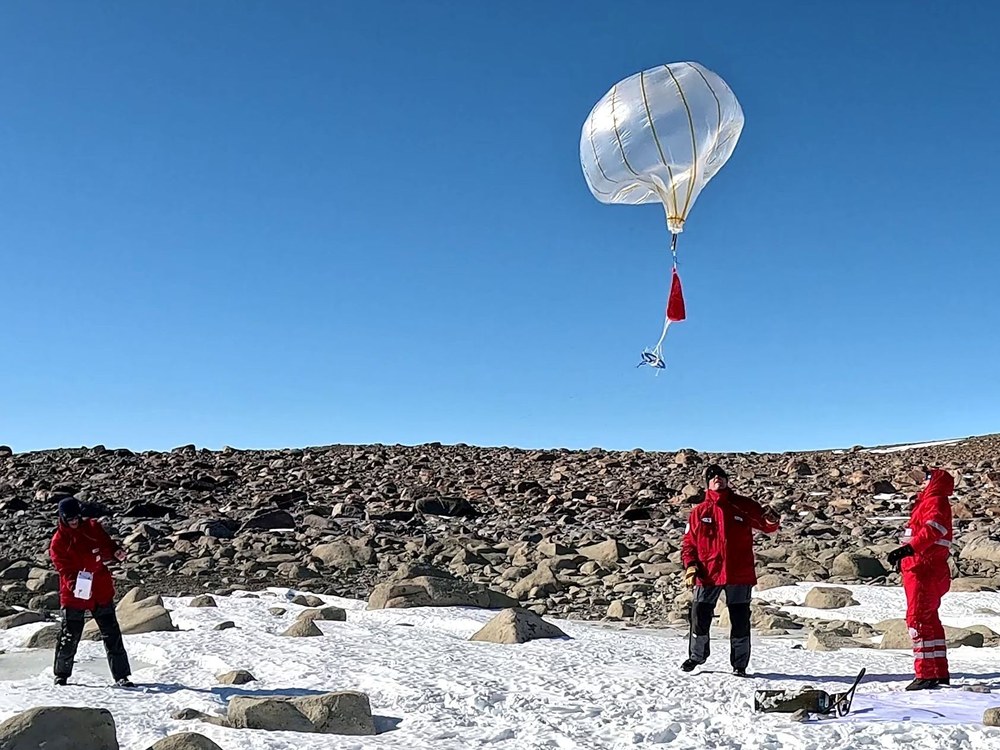
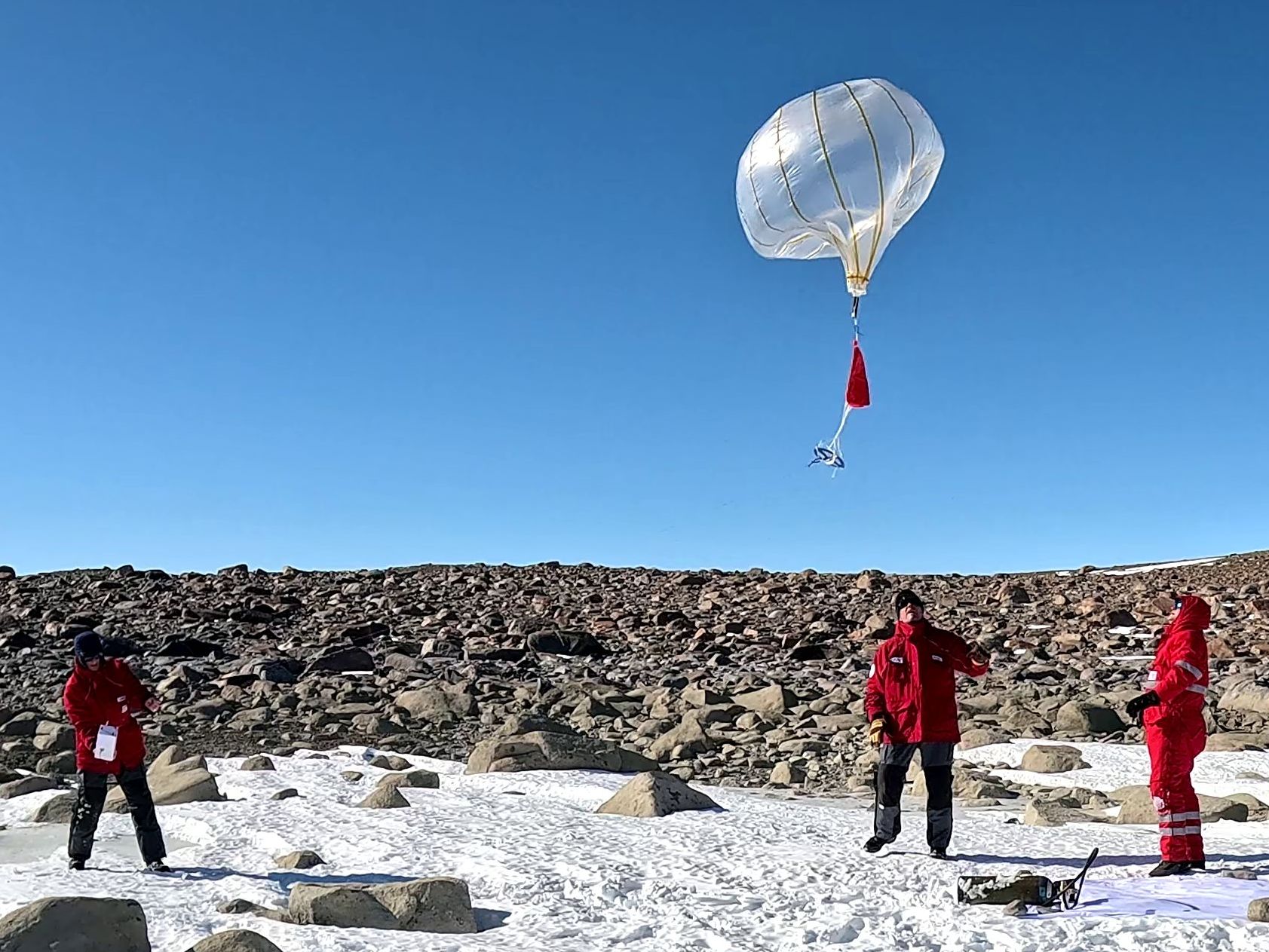
Lars Witte, member of the Institute of Space Systems and head of the Landing and Exploration Technologies department, releases weather balloons from the icy ground into the sky above. The engineer is testing a mission concept that involves the Mars Atmospheric Boundary Layer Explorer, a balloon-based experiment proposed to fly over Mars. It is designed to rise with its instruments from a landing platform on the Martian surface and provide weather data on the planet's atmosphere. "The aim and purpose of these tests here in a Mars-analogue environment is to trial this experiment, its instruments and underlying technologies for participation in a future Mars mission", says Witte, explaining his work, which he carries out in icy terrain at sub-zero temperatures.
Weather balloon flying over Mars-like terrain
Engineer Lars Witte is testing a technology that could be used in future missions on Mars.
A good stand-in for Mars is the Tarn Flat area, a rocky plain on the coast of Antarctica's northern Victoria Land, an area which is geomorphologically similar to Mars on account of its soil composition. The sensors aboard the balloon therefore look onto a landscape similar to what they would observe during a flight over the Red Planet. Witte's experiment is part of the BGR's GANOVEX 16 expedition (German Antarctic North Victoria Land Expedition), which also supports de Vera's work.
Survival artists under extreme environmental conditions
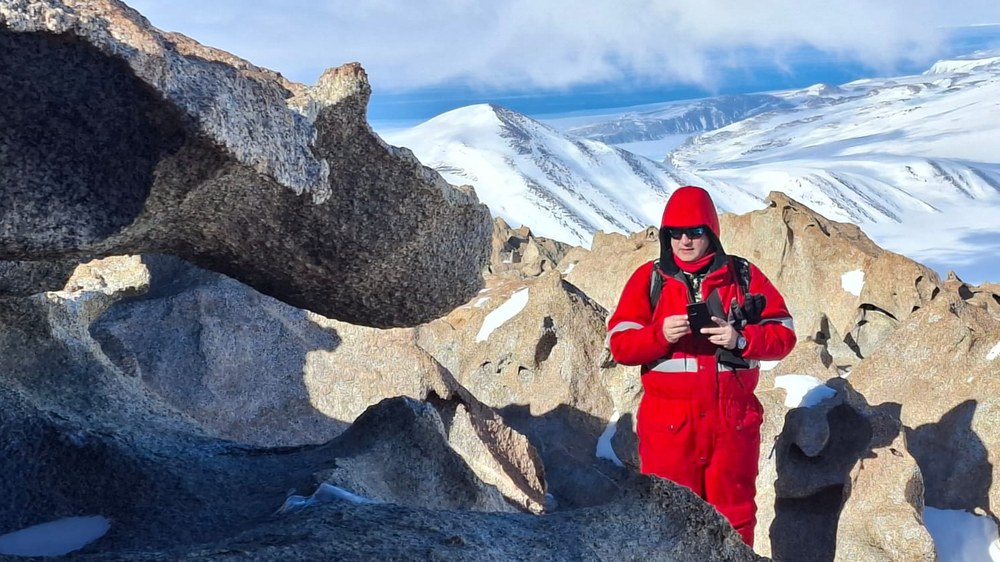
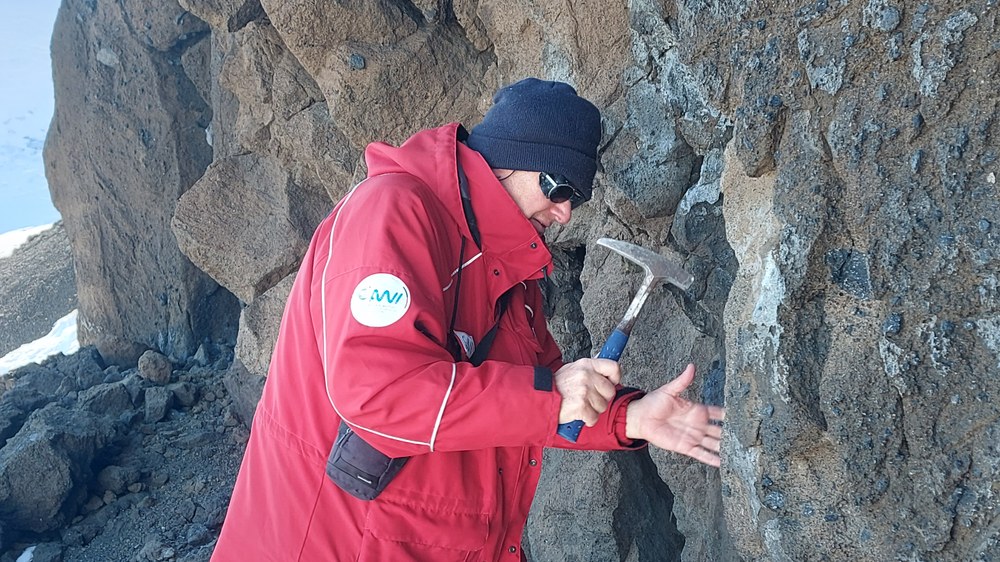
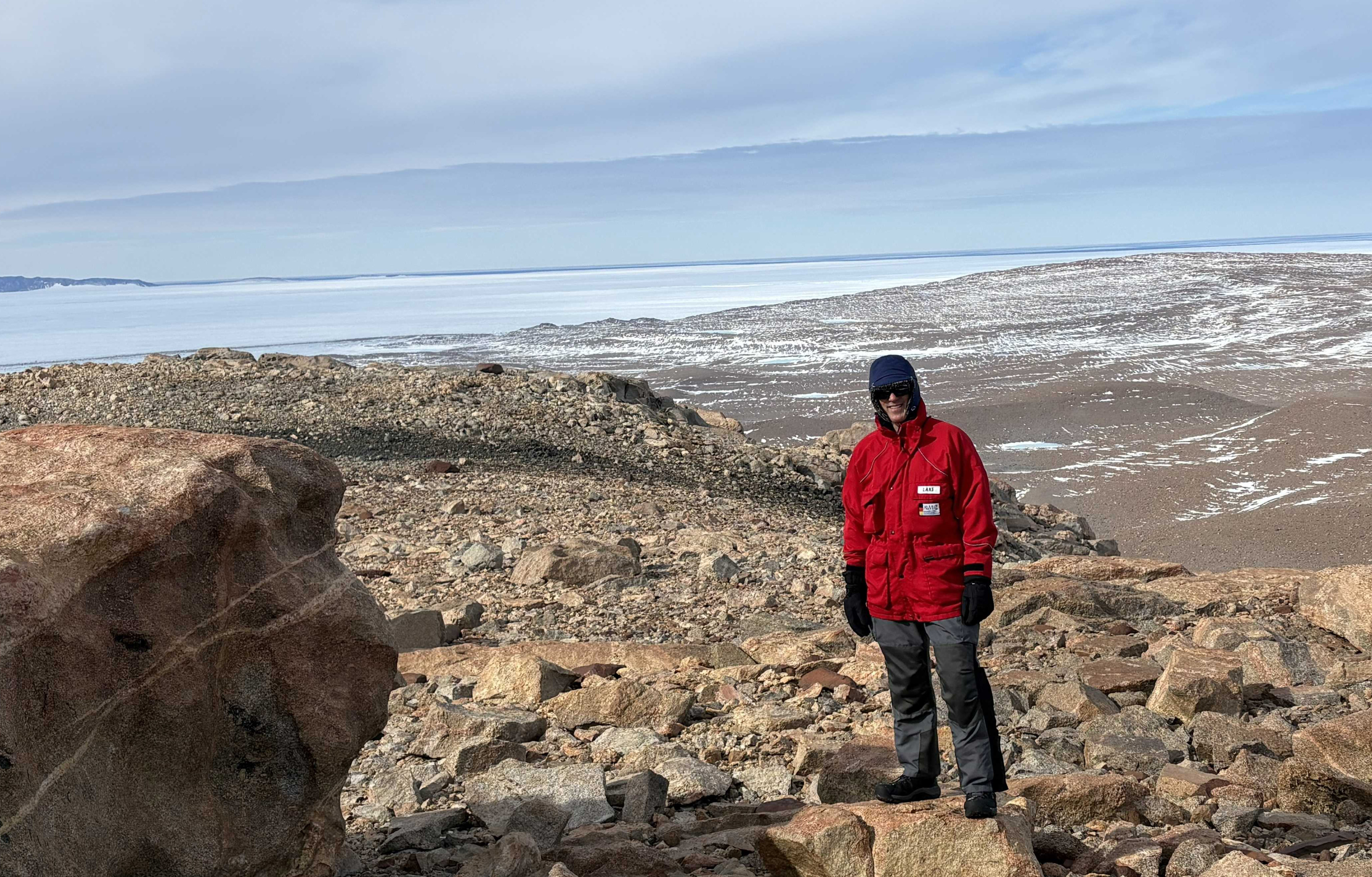
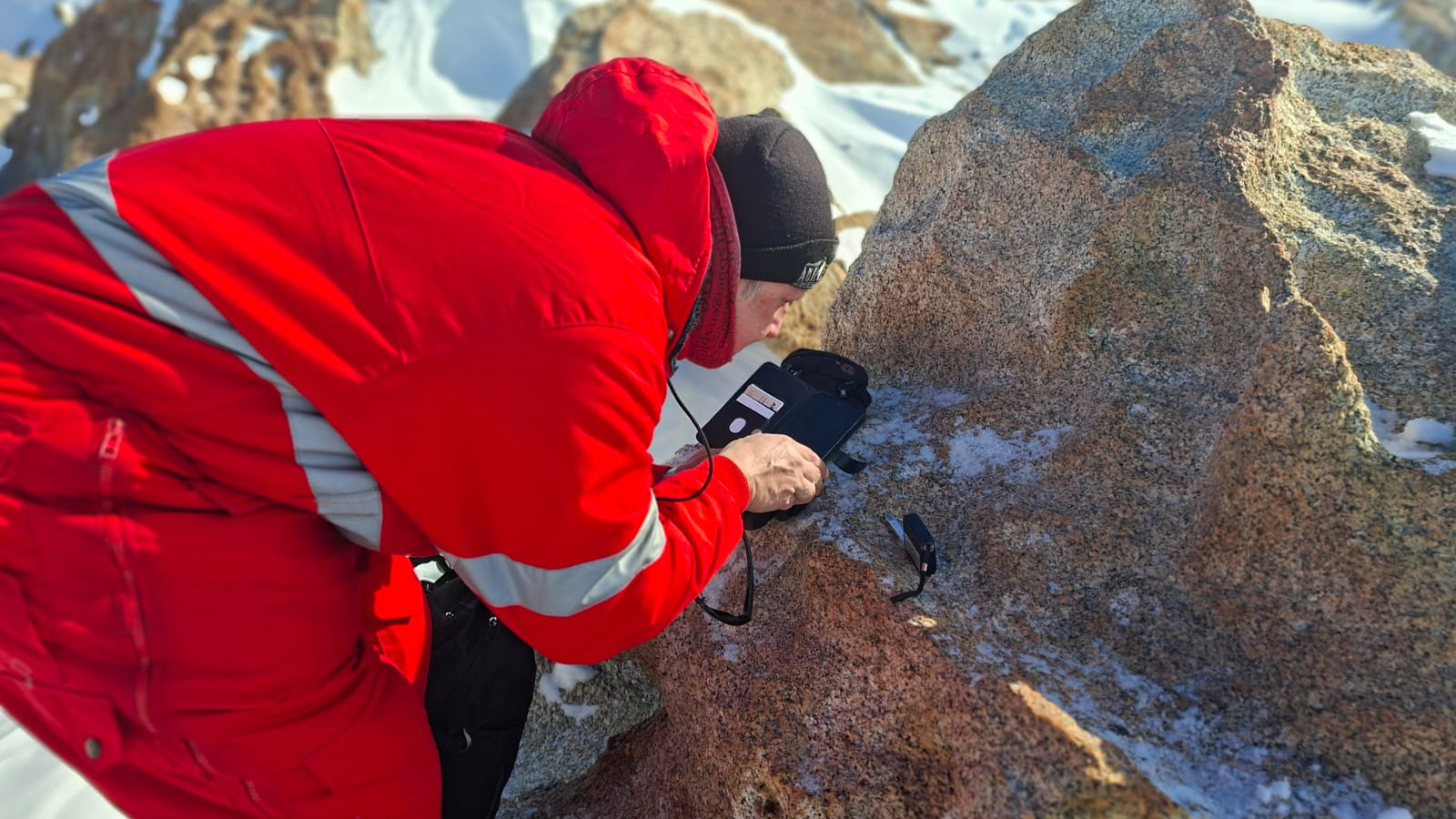
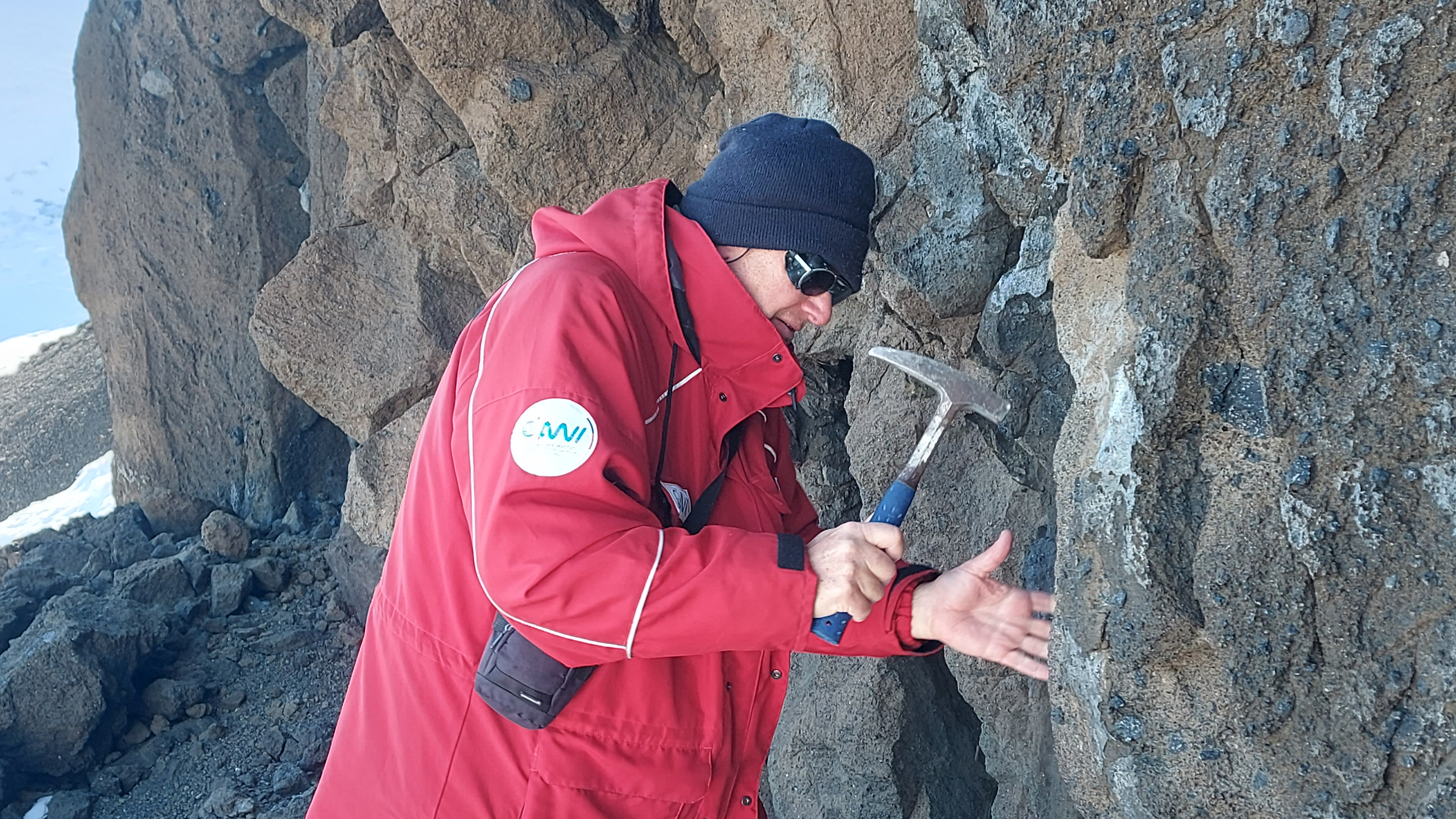
Jean-Pierre de Vera from the Microgravity User Support Center at the DLR Space Operations and Astronaut Training institution
For his own experiments, de Vera – a space biologist from the DLR Space Operations and Astronaut Training institution – needs, above all, extreme environmental conditions: "Given its extremely low temperatures, intense UV radiation and extreme dryness, Antarctica bears a very close resemblance to the environment on Mars." That is why de Vera searches the Antarctic landscape of Terra Nova Bay for survival artists – organisms that flourish even under the most severe conditions. This is the case, for example, in the rock that has been highly weathered by the wind to form niches that offer microorganisms cover and refuge from the harsh conditions. "I collect a selection of samples to test them in terms of their survivability or life activity in laboratories under simulated Martian conditions," he says.
Tracking down microorganisms in Antarctica
Space biologist Jean-Pierre de Vera is investigating hardy survivors in extreme environments.
"If the result proves highly promising, select organisms can then be investigated on exposure platforms in space – as is the case with the European Space Agency's (ESA)BioSigN experiment." Samples are also collected for instrument testing and calibration for the ExoMars mission, where the main purpose will be to search for life – so geological samples colonised with microorganisms serve as a point of reference. Last but not least, the organisms' survival mechanisms also provide insights into protection against health hazards like UV radiation.
De Vera heads DLR's Microgravity User Support Center (MUSC), so he is also closely linked to Witte's experiments: MUSC's control rooms are responsible for the operations of experiments in space. Should instrumented balloons ever be deployed on Mars, de Vera will have been closely involved from the concept stage.
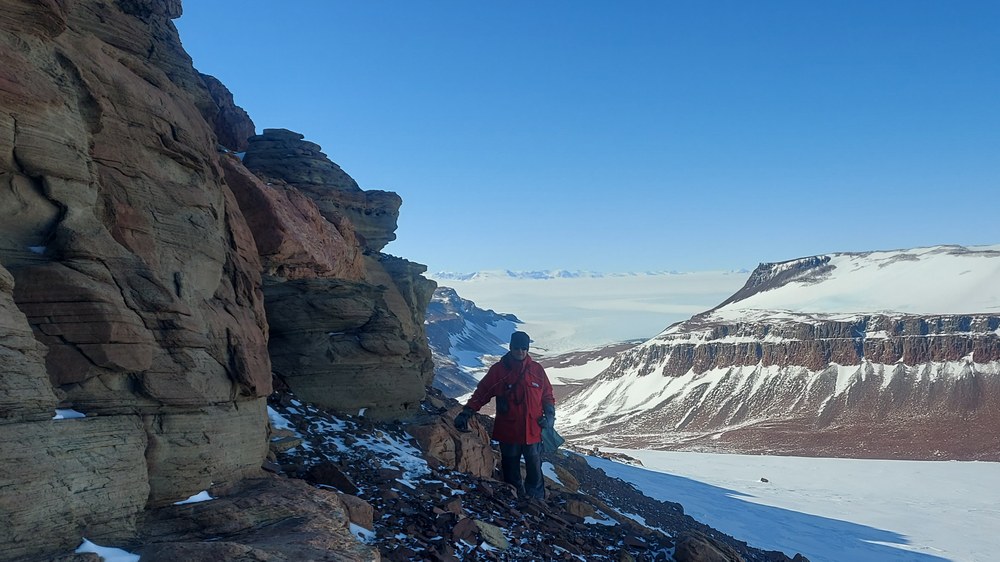
In search of ice in the Martian subsurface
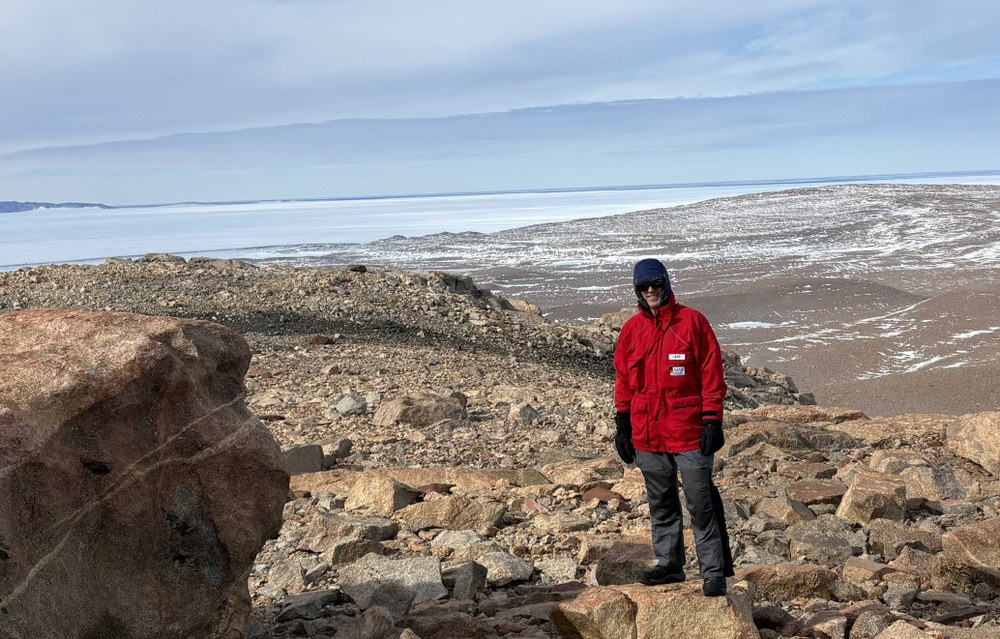
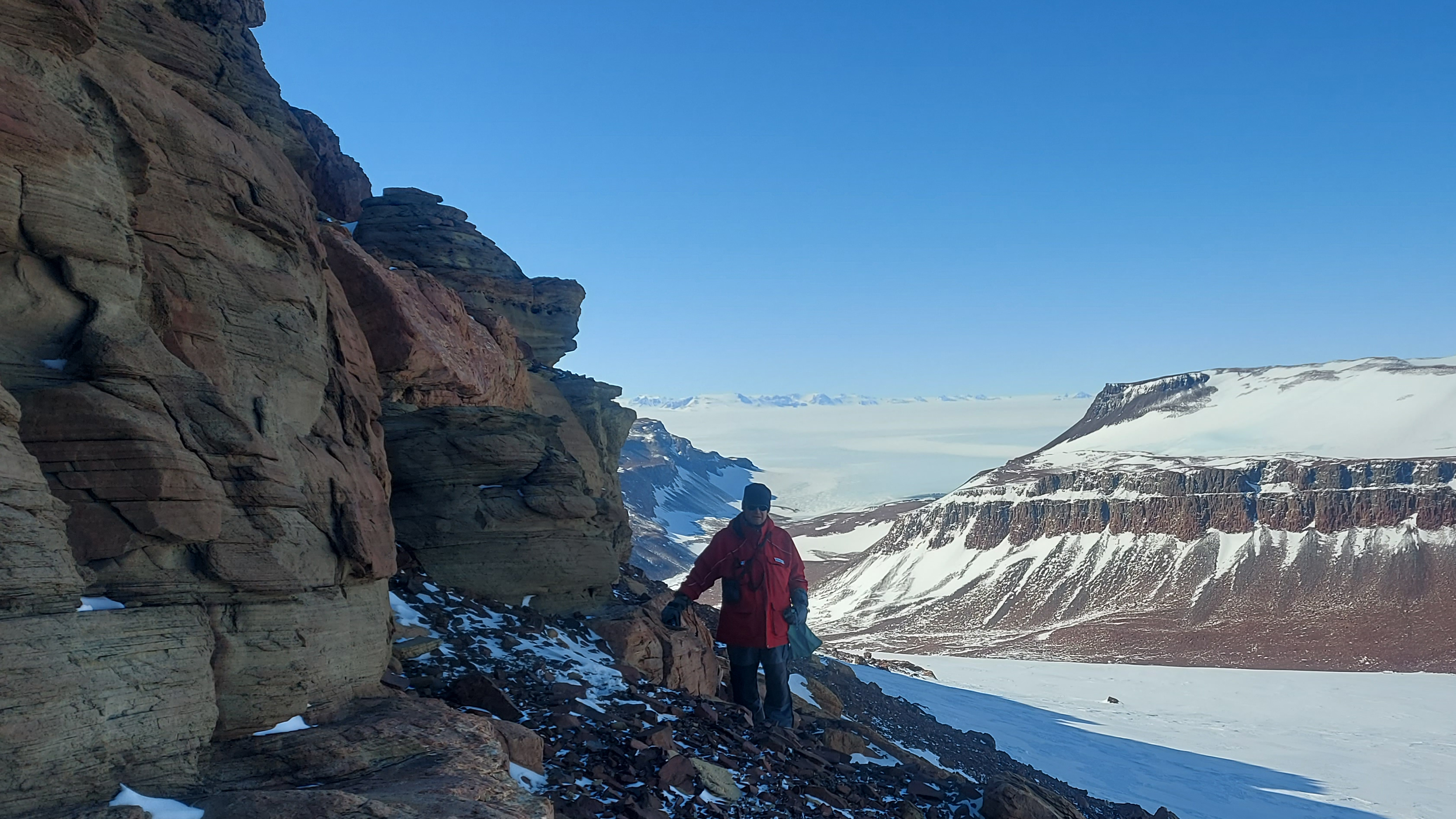
Ernst Hauber from the DLR Institute of Space Research
Even for planetary geologists, Earth remains the most important point of reference. "On Earth, we learn how geological processes occur and how they influence a planet's development," explains Hauber, a planetary researcher from the DLR Institute of Space Research. Whenever he gazes at the barren landscape around Gondwana Station, he also sees Mars: "From images of the Martian surface, we surmise that glacial and periglacial processes were active there up until recent history. We compare the corresponding surface formations with the Earth's various polar areas to get a better idea of how they have formed over time and where ice might still be located in the Martian subsurface today."
The Earth as a reference point for Martian geology
Planetary geologist Ernst Hauber is investigating glacial and periglacial processes.
If humans were ever to fly to Mars, knowledge about ice reservoirs would be of crucial importance – they could be the source of drinking water and provide a basis for producing fuel.
Depending on their proximity at launch, a journey from Earth to Mars would take at least six months – between 56 and 401 million kilometres separate the two planets. The journey to the Gondwana Station south of Australia and New Zealand is also arduous and cumbersome but is comparatively convenient for these researchers. As Hauber puts it: "Antarctica is particularly suited to these investigations because it's the coldest and driest continent on Earth, making it the most similar environment to Mars in this respect."