
Driven by solar energy
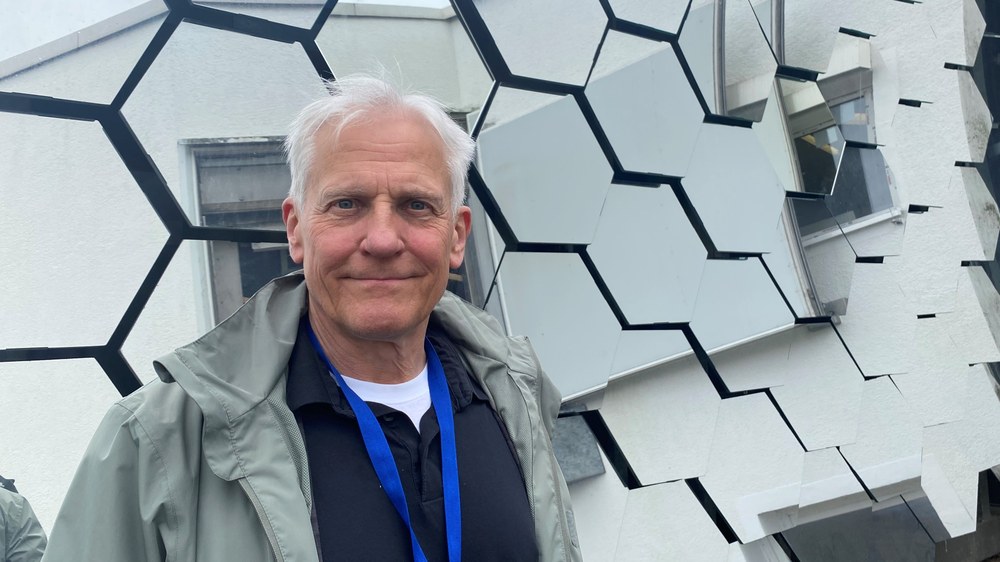

Since 1 March 2026, Gerd Dibowski has qualified for retirement. After working at DLR for 34 years, most recently as manager of the solar furnace, he could theoretically tick the aerospace centre off his to-do-list. But he doesn't want to – which is why he signed a contract for the next two years and will continue to work two days a week at the solar furnace. "I'm still interested in it all. Why would I stop now?" he asks. Aside from an apprenticeship as a radio and television technician, Gerd Dibowski's attention has always been drawn to a certain topic – energy.
And this despite the fact that, during his time studying mechanical engineering at university, solar energy wasn't the hot topic it is today. "Back then, it was said this technology could only cover two percent of energy requirements," he recalls, commenting how the topic wasn't taken seriously at all. It was written off as tales spun by "tree huggers", people who walked around in colourful clothes and whose opinions were made light of. Nuclear energy was the all the rage back then. "But after three years in nuclear technology, I found myself surprised by colleagues who refused to see it in anything but a positive light. That didn't sit right with me at all." Gerd Dibowski is not a man who stays put if he's not keen. So in 1992, he turned to the Fraunhofer Institute for Solar Energy Systems – one of the first institutes in Germany to focus on solar thermal energy – and asked if he could do his university dissertation project there. As a result, Gerd ended up researching building simulations for transparent insulation that used energy obtained from sunlight to heat the inside of the buildings, including on the south side of the European Astronaut Centre (EAC), which greatly reduced the energy costs for the training hall with its large plunge pool. "That was an amazing experience because there were people there who were driven by the idea itself, not by the prospect of career progression."
It all started with a brown envelope
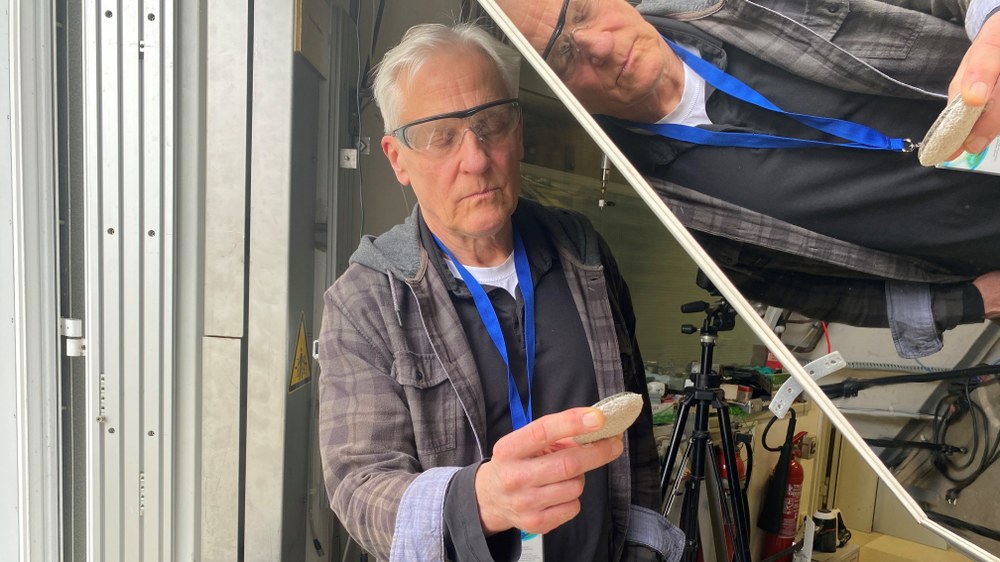
Despite having passed his degree with flying colours, jobs in solar energy were thin on the ground. Gerd Dibowski, now 66, was in the middle of starting a family, with his first child on the way. He was tied to the city of Düsseldorf. The solution was found in a regional government address book, which listed stakeholders operating in the field of renewable energies and from which Gerd picked out five potential employers located within a manageable distance. Gerd still vividly remembers the five brown envelopes containing his application documents that he took to the post box. Five speculative applications to stakeholders close to Düsseldorf, followed by three invitations to an interview – and ultimately a contract with DLR, where a mechanical engineer for the construction of a solar furnace was required.
Good work-life balance despite a full schedule
Back then, it was surely impossible to predict that Gerd would go into retirement 34 years later as the manager of this very solar furnace. Yet throughout his career, it was quite simply a great fit. After the solar furnace was successfully brought into operation in 1994, the research facility was full of hustle and bustle: "We had that many requests for experiments that we were fully booked for five years right off the bat." Even though you might not expect it from this region of Germany, Cologne enjoys around 1,500 hours of sun a year. Working on weekends or pulling a 10-hour shift here and there wasn't uncommon, not to mention completing a doctoral degree. Yet Gerd still managed to strike a good work-life balance. Whenever his wife was away working as a stewardess, Gerd would handle childcare by himself. In his words: "I was always able to make that work alongside my job."
Over time, the public perception of solar energy changed. With focus having shifted to nuclear power phase-out and climate change, "there was an entirely different perception and at solar trade fairs, attendees went from sporting flares to being suited and booted," says Gerd, chuckling. The new-found appreciation for solar thermal energy also meant more secure funding. When DLR offered him a permanent contract after five years, it would have been a good time to switch to an industry role. But he stayed put because motivation was high and the teamwork at the solar furnace was excellent.
Laboratory with high demands
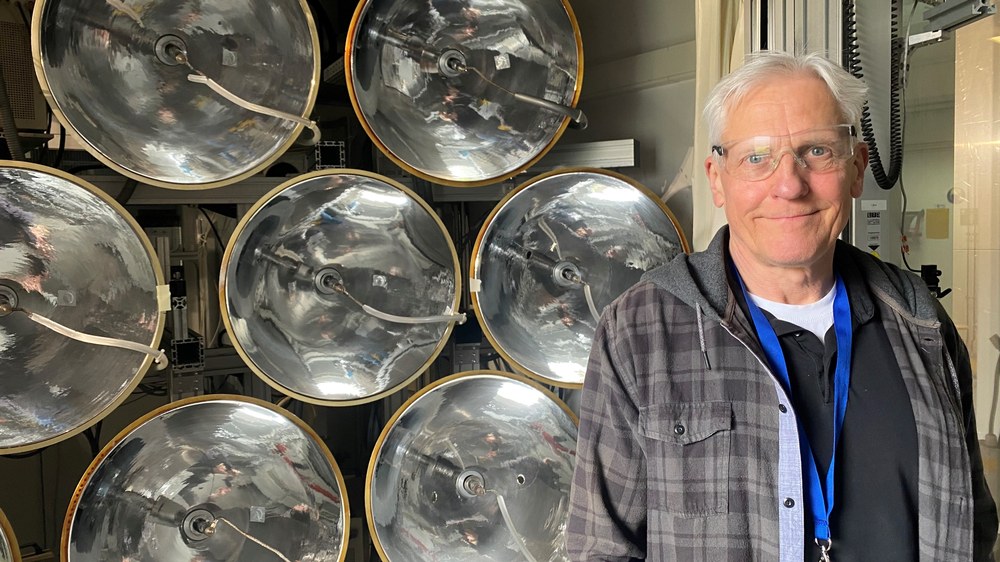
Today, the solar furnace is an established laboratory for smaller-scale experiments up to the point when the relevant key findings are passed onto, say, the Jülich Solar Tower for further processing. "Those who successfully test with us continue their work in Jülich, for instance." The simulator built in Cologne in 2007 with lamps as an artificial sun inside the building works regardless of weather, takes some of the strain off the solar furnace and handles additional experiment requests. Over time, space research has been added to the mix. Firing small bricks made of moon dust using solar energy for lunar habitats, testing coated lenses or photovoltaic cells at high temperatures – "this has upped our high demands on measurement technology even further; we're learning every day." Experiments for the production of fuel, fertiliser and cement also take place. For the past 15 years, Gerd Dibowski has taught at Cologne University of Applied Sciences. In his eyes[LG1] , whilst everyone knows about photovoltaics and wind energy, there's not yet enough awareness of concentrated solar thermal power – DLR's speciality.
Although sailing, cross-country skiing, housework and gardening would be enough to keep this retiree busy, he doesn't want to give up his other passion – his work in solar research. His long-standing colleague Christian Willsch, with whom he has conducted the solar furnace operations, still enjoys having him around; Krishna Thanda, the new manager of the solar furnace, has a smooth transition into his position. In short, the interest, motivation and great team spirit are all there – Gerd Dibowski is staying true to the solar furnace and the DLR Institute of Future Fuels.
Tags: