Medical check-up in space – Bimba Hoyer looks after astronaut Sophie Adenot during spacewalk
| Space
Medical check-up in space – Bimba Hoyer looks after astronaut Sophie Adenot during spacewalk
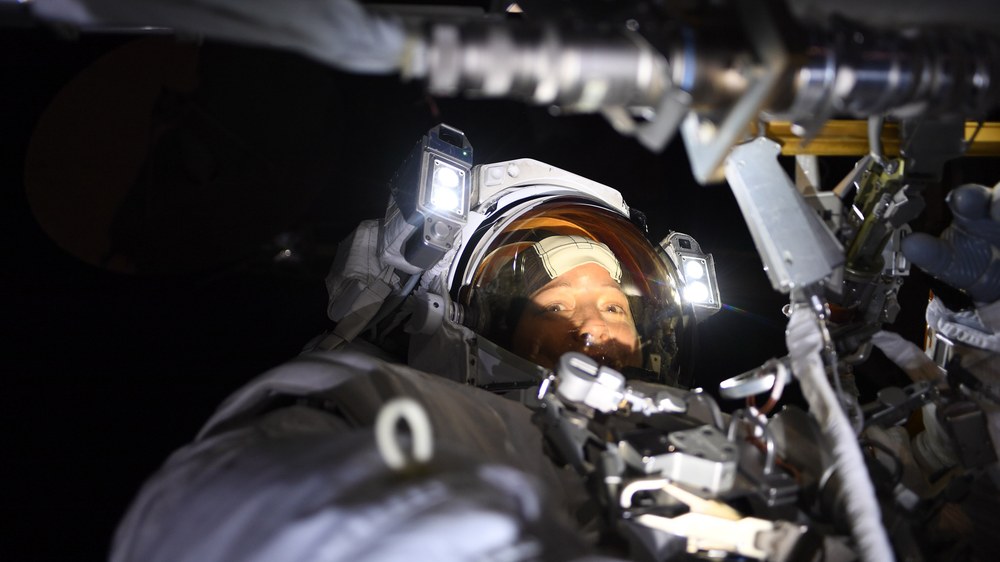
Sophie Adenot on her second spacewalk
ESA astronaut Sophie Adenot completed her second spacewalk on 25 August 2026.
Credit:
NASA/ESA
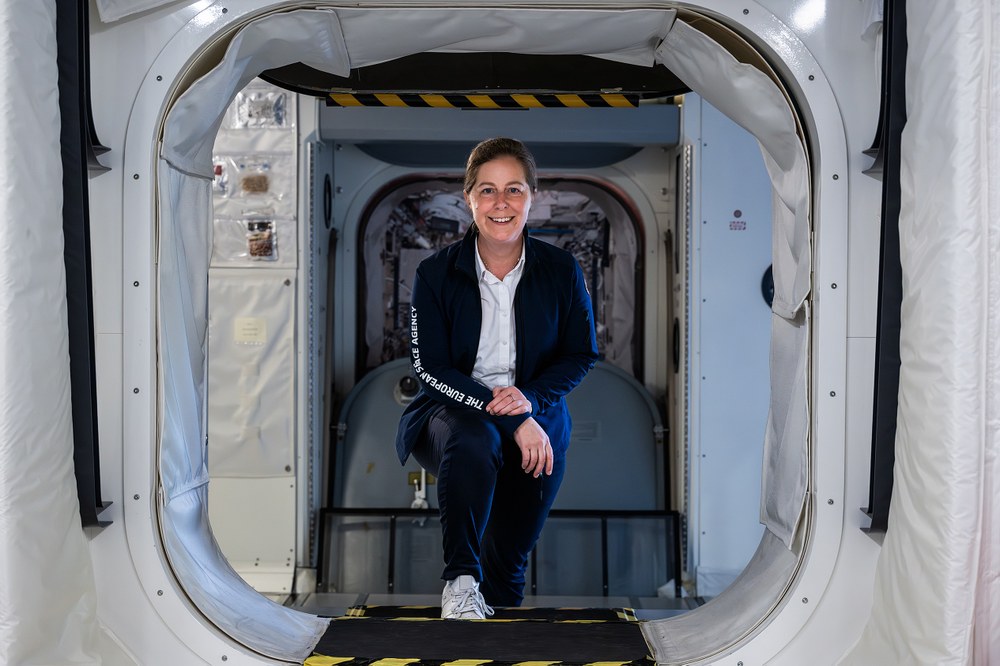
Flight surgeon Bimba Franziska Hoyer
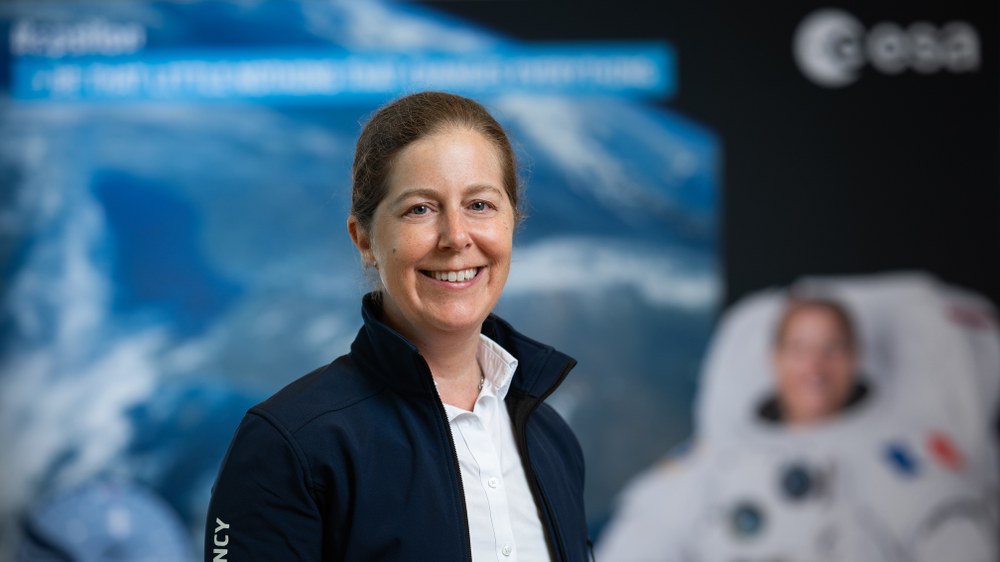
Bimba Franziska Hoyer is currently accompanying French ESA astronaut Sophie Adenot as DLR and ESA flight surgeon during her εpsilon mission on the International Space Station ISS.
On Tuesday 25 August 2026, ESA astronaut Sophie Adenot successfully completed her second EVA (extravehicular activity) on the International Space Station ISS. During the spacewalk, which lasted approximately 6.5 hours, Sophie and her NASA colleague Anil Menon completed the installation and commissioning of a replacement space-to-ground antenna.
Sophie received medical support throughout the entire operation and during the preparations on board from Bimba Hoyer, flight surgeon at the German Aerospace Center (DLR) and ESA. Here she reports on the exciting operation, which was part of the εpsilon mission.
The first shift began at midnight local time – that is, at 07:00 Central European Summer Time (CEST). Preparations were already under way, and I was able to get up to speed a little together with a NASA colleague before the spacewalk proper began at approximately 07:30 local time.
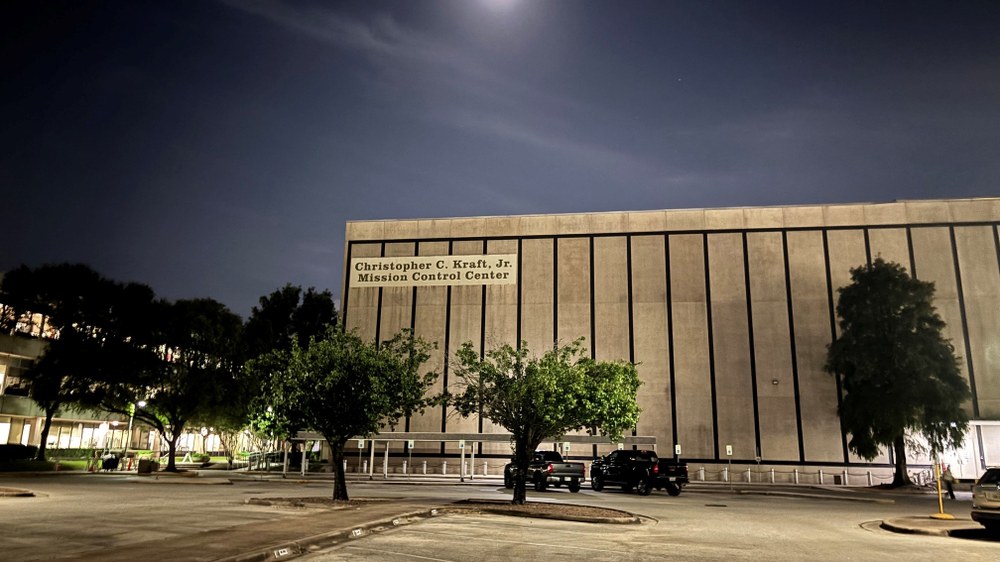
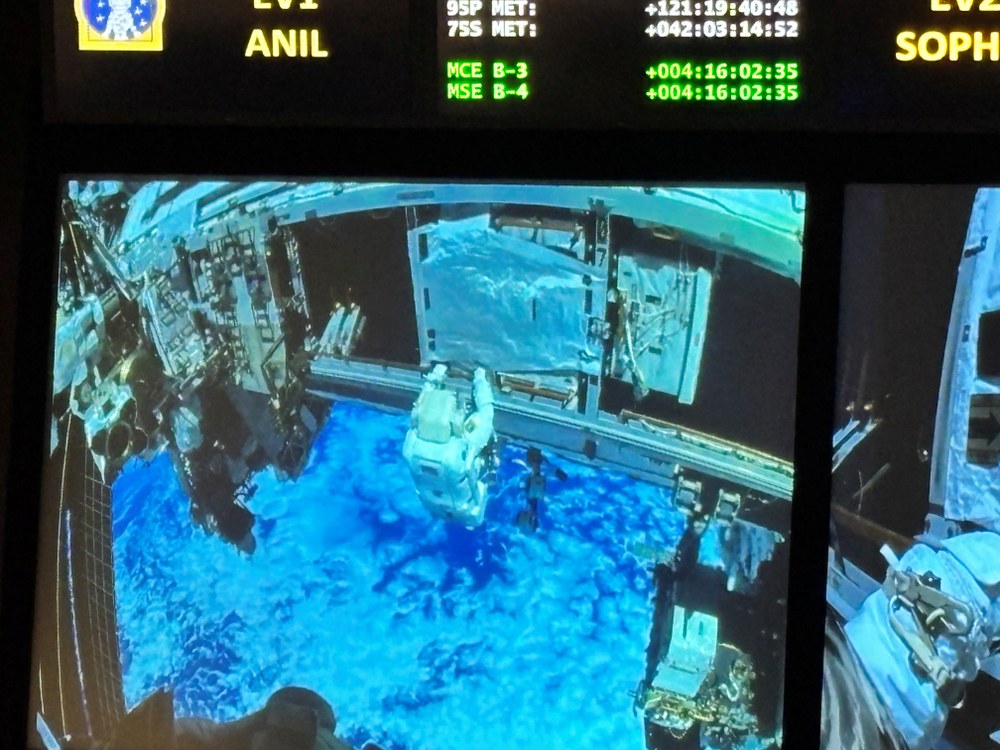
The Mission Control Center in Houston
From the Mission Control Center in Houston, Bimba Hoyer followed and monitored the activities of ESA astronaut Sophie Adenot during her EVA.
Credit:
DLR/ESA
Decompression sickness can also occur in space
As with every spacewalk, the medical support for Sophie and Anil began long before they actually went outside. The reason for this is the pressure inside the spacesuits that have to be worn in space. This pressure is only a third of normal atmospheric pressure – roughly the pressure at the summit of Mount Everest. The change from the higher pressure on board the ISS to the lower pressure in the suit creates a risk of decompression sickness – essentially, just as in diving. Nitrogen bubbles can form in the blood and lead to health problems.
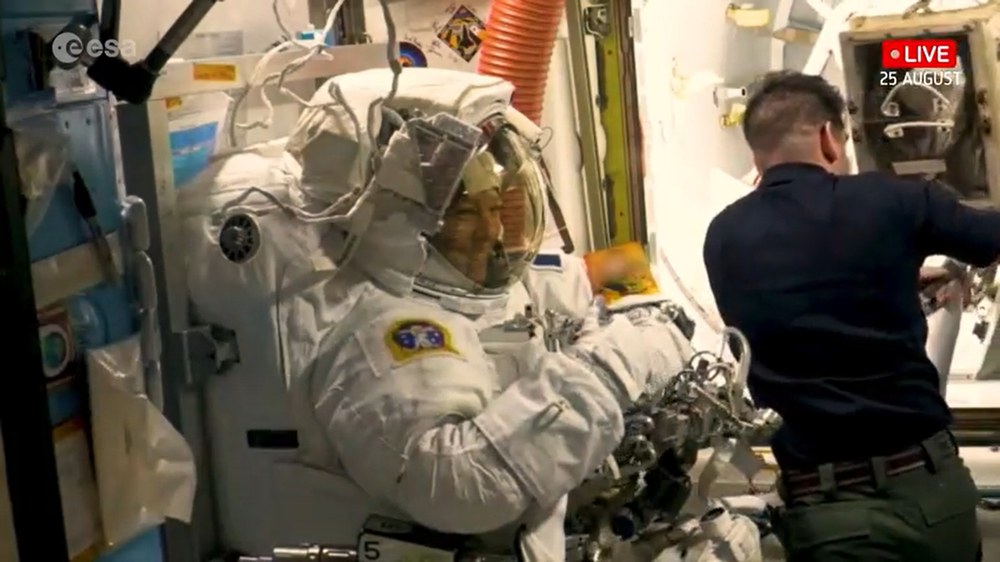
ESA astronaut Sophie Adenot in her spacesuit
The pressure in the spacesuit is only a third of normal atmospheric pressure. For this reason, various procedures have to be carried out before a spacewalk in order to avoid decompression sickness.
Credit:
ESA
To reduce this risk significantly, Sophie and Anil, like all crews, went through a prebreathe protocol. Before the spacewalk, they breathed pure oxygen for several hours while moving all parts of their bodies, to remove as much nitrogen as possible from their tissue. This procedure must be medically monitored. First, they breathed oxygen at normal ambient pressure, then the pressure was lowered somewhat – but only so far that the support crew, who assist the two before they go outside, could still remain in the area. Sophie and Anil then put on their suits and continued breathing pure oxygen while they moved.
At set intervals, 'Start Exercise' and 'Stop Exercise' were called out. In these exercises, the arms and legs are moved gently inside the suit. Leak checks were carried out several times to see whether the suits fit properly and were airtight. After the support crew had left the area, the pressure in the airlock was slowly lowered to a vacuum. In total, several hours were spent in preparation until the hatch opened to the outside and the hard, strenuous physical work began.
Fighting stubborn space tech with a toothbrush
Outside in space
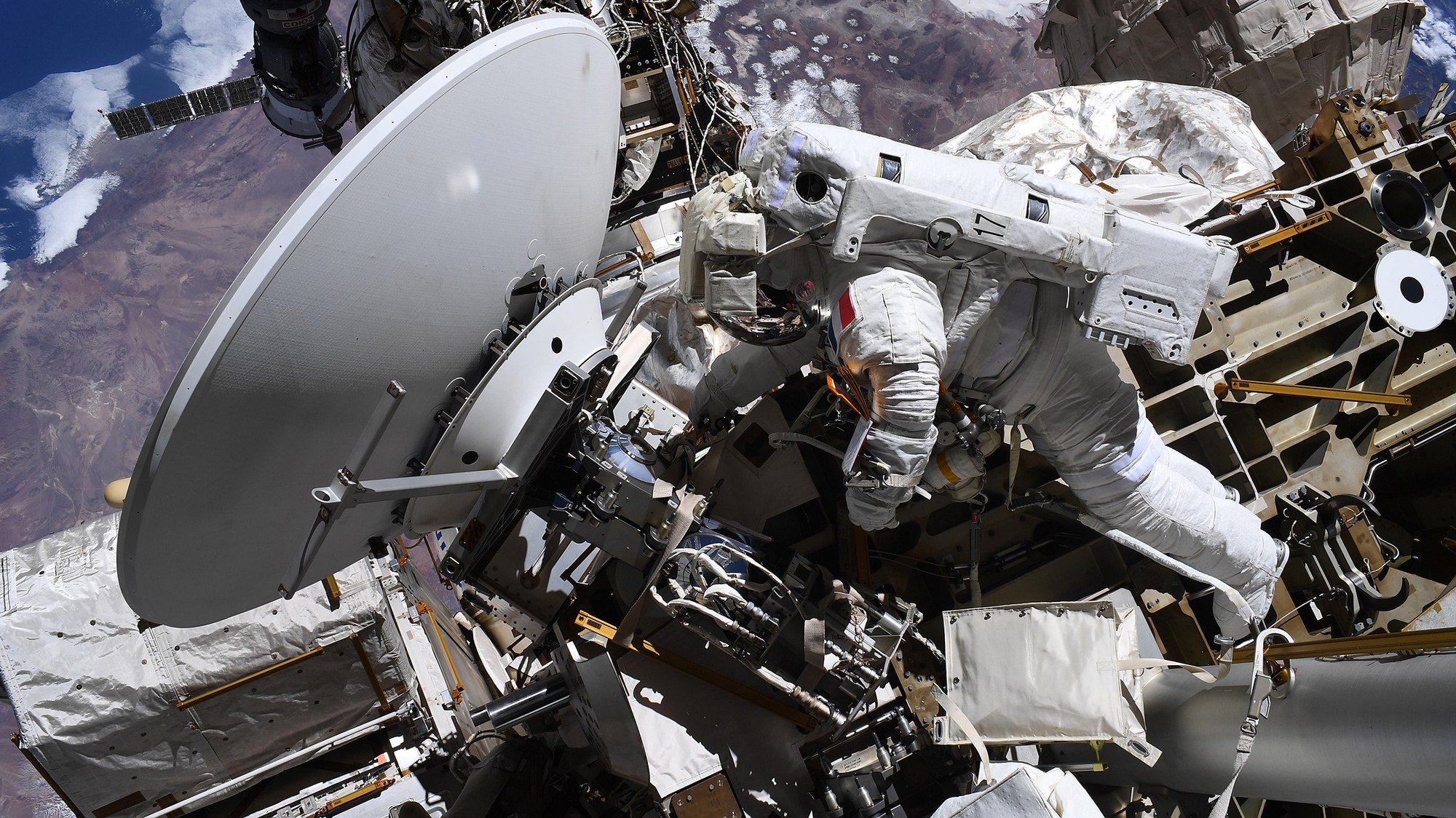
While she works on the outside of the ISS, Sophie Adenot is securely tethered. Despite the strenuous working conditions, the astronaut is in peak physical condition, which the medical crew on Earth can verify via data transmission.
Credit:
NASA/ESA
During the work, Sophie had to move along the outside of the ISS several times. Stuck screws and connectors on the faulty old antenna delayed the work, so among other things she had to grease the bolts with a 'toothbrush' – which is just how you solve problems and stuck bolts on the ISS.
On screen in the Mission Control Center
At the Mission Control Center in Houston, Bimba Hoyer followed the entire EVA on screen. There she also had access to all of the astronaut's medical data.
Credit:
DLR/ESA
Meanwhile, we constantly monitored Sophie's and Anil's heart rates, their energy and oxygen consumption and their carbon dioxide (CO2) output. We could have intervened at any point if anything was wrong. There are also, in some cases, clear medical abort criteria, such as certain cardiac arrhythmias or high carbon dioxide levels. Fortunately, we didn't have to make use of them, and could watch the two work, fascinated.
For us on the medical crew, another important phase began once Sophie and Anil were back in the airlock and the pressure was slowly raised again. Pressure equalisation went without a hitch. After six and a half hours of work in space, a good half hour of re-pressurisation, and once Sophie and Anil had 'freed' themselves from their suits, it was time for us to say: "We're done." At least, almost.
There was still the 'suit conference' to get through with the two of them, where they discuss with the suit technicians whether anything on the suit needs adjusting for next time. This was followed by a private medical conference: another call began, just my medical colleague David and me with Sophie, to clarify whether there had been any other problems. And then a tired and exhausted Sophie was allowed to have dinner and go to bed. We went back to the hotel. We, too, only had dinner, and after a 22-hour day I fell into bed, completely wiped out.
Bimba Hoyer – space operations from the ground
A spacewalk is strenuous not only for the astronauts but also for the medical crew.