Institute of Lightweight Systems
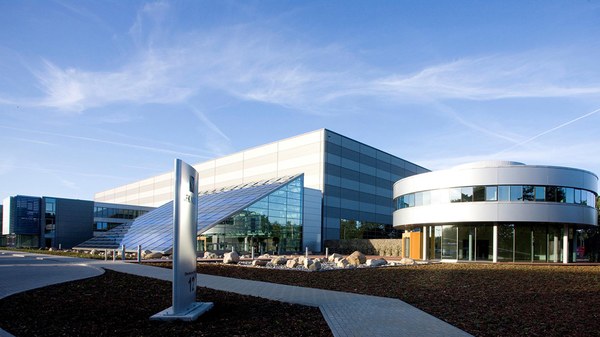
The DLR Institute of Lightweight Systems has the know-how for the design and realisation of adaptable, efficient composite structures and lightweight systems.
Duration: 2025-2028
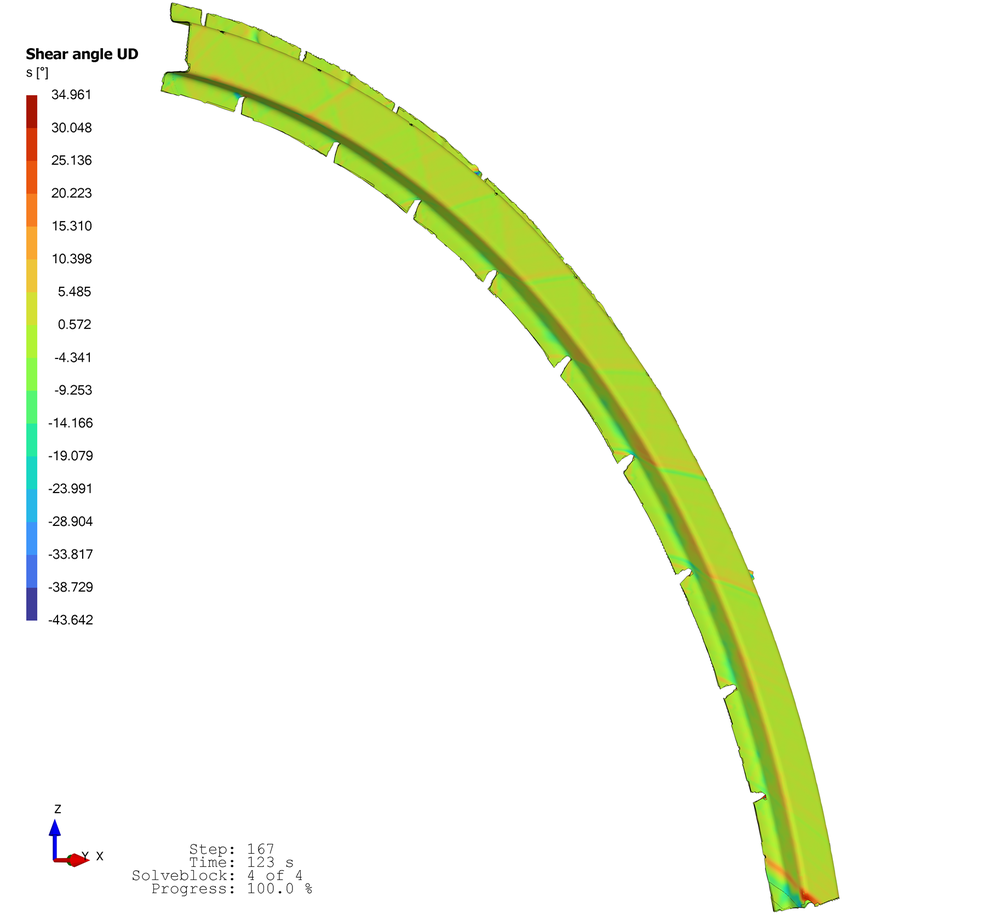

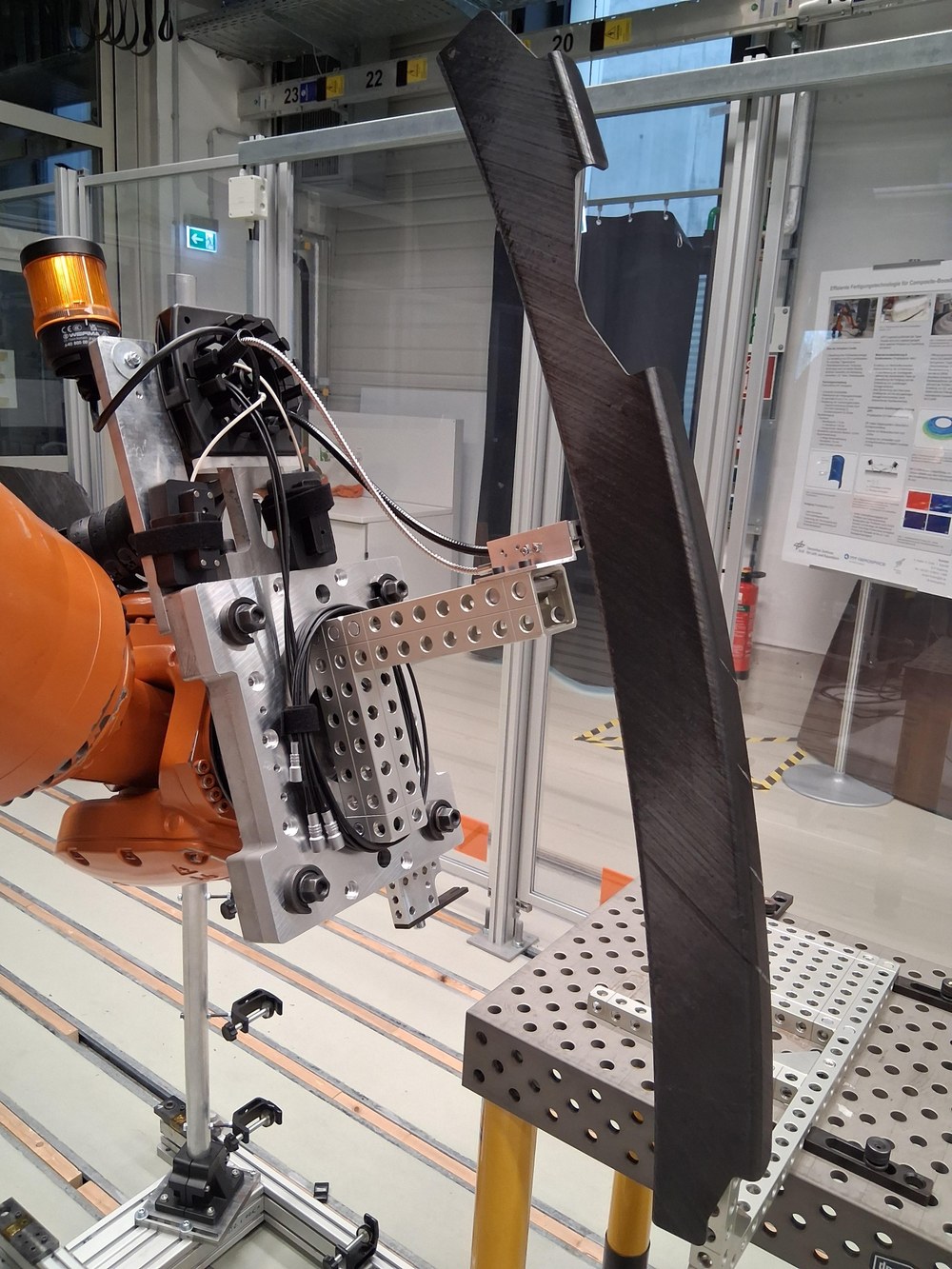
One of the enablers to achieve the ambitious climate goals of the aviation industry, is for future aircraft generations to be built to be lighter and manufactured in an even more sustainable way. Existing manufacturing processes for fiber composite structures can be optimized in terms of speed, costs, and energy-consumption for targeted production rates of over 70 aircraft per month. Conventional fiber composite construction methods do not currently fully exploit the lightweight potential of CFRP structures. There is a lack of integrated, industrialized process chains for complex fuselage backstructure parts that meet both weight targets and the requirements for automated high-rate production.
The joint project HERA, funded by the German Federal Ministry for Economic Affairs and Energy within the framework of the Aviation Research Program LuFo VII-1, aims at the development and validation of CFRP technologies for innovative, high-rate capable and sustainable fuselage backstructure parts (frames, door surround structures, small components) for future aircraft generations. The industrial research focuses on the specialist discipline of manufacturing processes for CFRP structures as well as the development of optimized architectural concepts in fiber composite construction in order to achieve maximum weight savings for the entire fuselage. By the end of the project period, the technological feasibility is to be demonstrated through the production of validators and the process chains are to be evaluated with regard to high-rate capability, cost efficiency and sustainability.
The joint work is divided into four main work packages: Requirements & Evaluation, High-Cadence Small Components, Sustainable Large Components, and Validation & Application. Airbus Operations GmbH is the consortium leader of this project. All consortium partners from industry and research are developing key technologies such as automated lay-up processes, innovative preforming technologies and efficient consolidation processes. Within the framework of the project, tooling concepts for resilient high-rate production are being developed, processes are being tested on validators and the results are being validated through structural tests and non-destructive testing.
The consortium consists of the following partners: Airbus Operations GmbH, Airbus Aerostructures GmbH, Cevotec GmbH, DLR German Aerospace Center, Fraunhofer-Gesellschaft zur Förderung der angewandten Forschung e.V., Leibniz-Institut für Verbundwerkstoffe GmbH, Xelis GmbH
The German Aerospace Center (DLR) is involved in the HERA research consortium with the DLR-Institute of Structures and Design (sites Stuttgart and Augsburg) and the DLR-Institute of Lightweight Systems. The focus is on innovative lightweight technologies, simulation-based manufacturing processes, and non-destructive testing technologies for the aerospace industry, in particular for frame manufacturing.
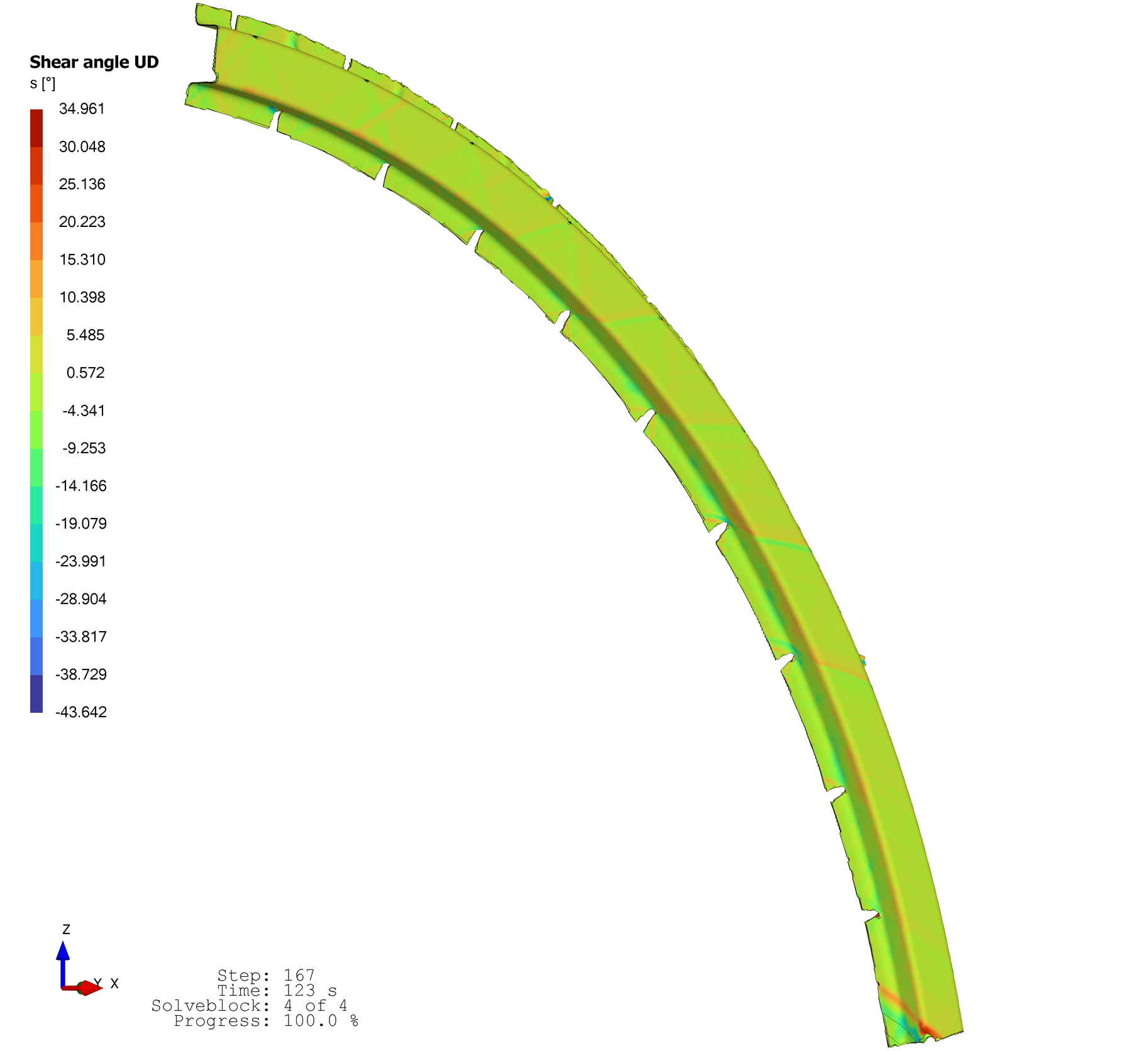
The Institute of Structures and Design at the Stuttgart site develops and validates advanced distortion simulation methods for different frame configurations in aerospace manufacturing. The aim is to compensate as fully as possible for production-induced thermal distortion using combined forming and thermal simulations. Based on the further developed simulation models, design recommendations for moulding tools as well as optimized process parameters for composite manufacturing are derived. As a result, shim-free assembly of structural components in aerospace applications is enabled, improving manufacturing quality and reducing rework effort.
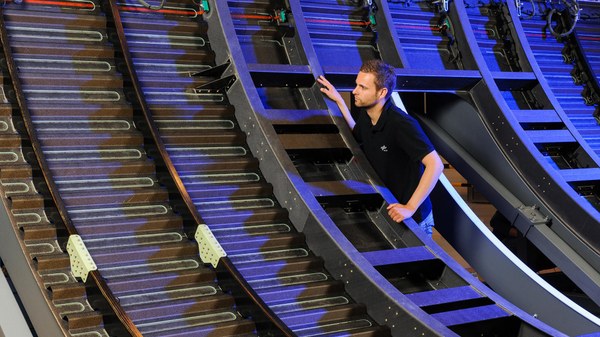
The Institute of Lightweight Systems investigates and validates the structural behaviour of new frame configurations for lightweight aerospace structures. For this purpose, a 4-point bending test device is developed in combination with simulation-based methods. Subsequently, manufactured frame segments are tested on a test bench, allowing validation of the mechanical behaviour and derivation of conclusions for design optimization.
The Institute of Structures and Design at the Augsburg site (Center for Lightweight Production Technology) develops a high-rate-capable non-destructive testing concept based on laser-coupled ultrasonic methods. First, specific geometric challenges in frame manufacturing are analysed and validated. Based on the results, an automated inspection concept for high-rate frame production is developed and demonstrated at full scale. The goal is efficient, reliable, and industrial-quality inspection of aerospace structures in serial production.
Acknowledgement: The results presented here were achieved within the HERA research project (FKZ: 20W2405B) in the framework of the Federal Aviation Research Programme VII-1, funded by the Federal Ministry for Economic Affairs and Energy, on the basis of a decision by the German Bundestag.