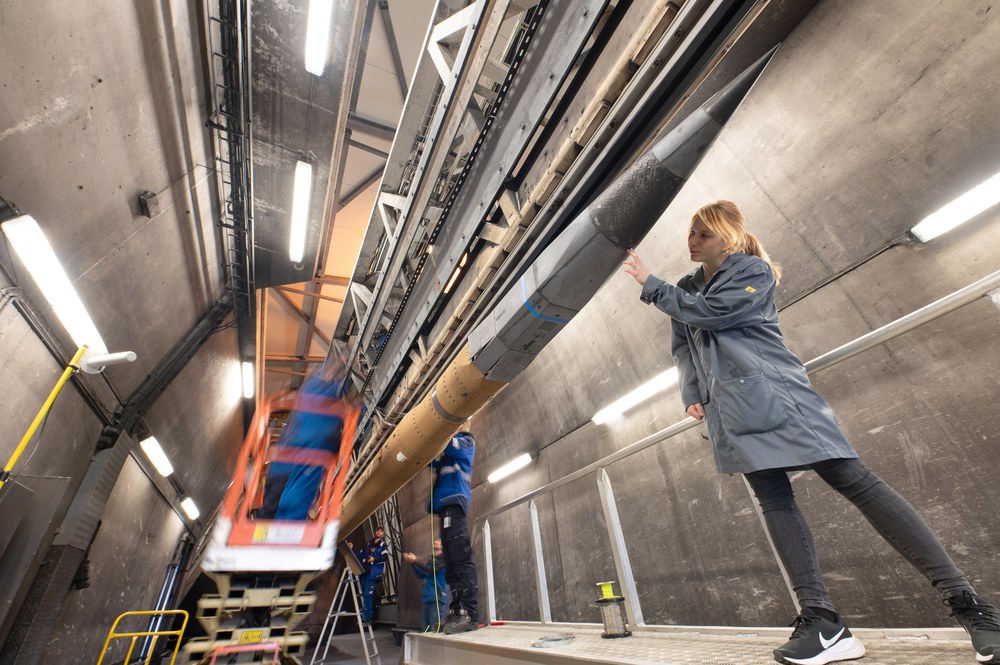
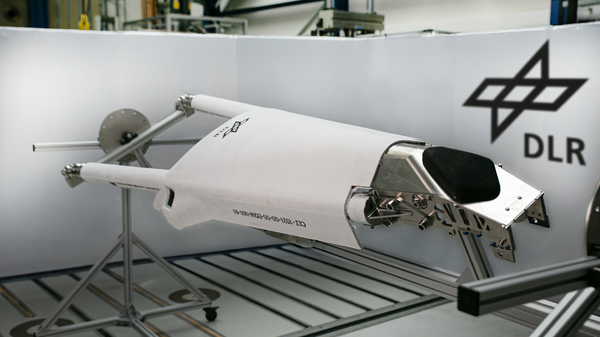
ATHEAt flight experiment positioned in the launch pad
The front body of the research rocket is made of a special fibre-reinforced ceramic developed and manufactured at DLR. It is extremely heat-resistant, stable and lightweight.
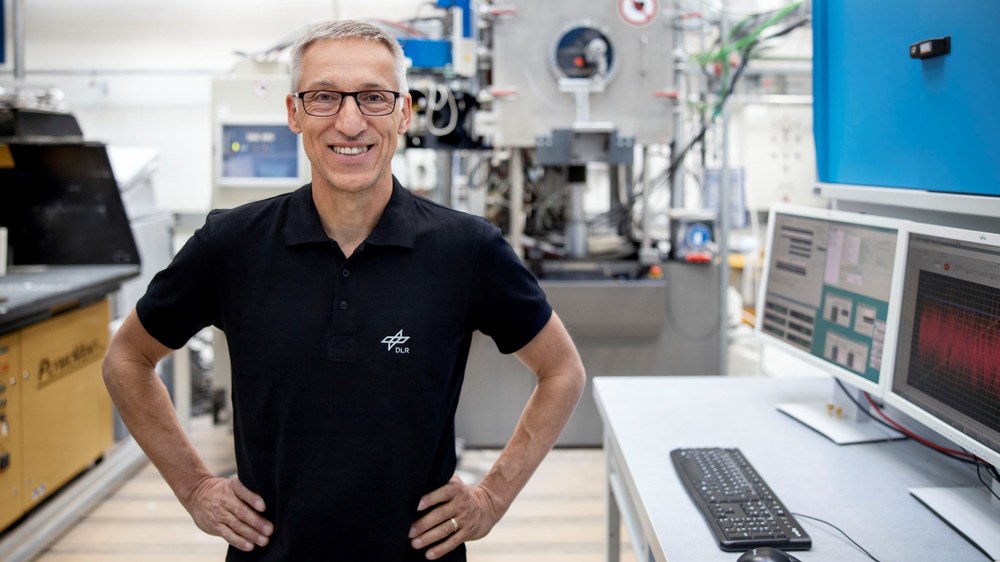
Scientist in front of our INDUTHERM Testing Facility
The test stand INDUTHERM is intended for the thermal and mechanical testing of structural components such as load introductions. Heating of the test specimens takes place inductively by a susceptor tube that produces a homogeneous temperature field in its interior.
The Structures for Space and Hypersonic Applications research area follows a clear systems-oriented approach: considering the complete system in order to develop new solutions for every detail. The requirements for structural systems in space applications are diverse – they must be lightweight, reliable, and, under thermal loads ranging from –250 °C to +2000 °C, above all temperature-resistant and strain-compatible.
The research area covers the entire process chain – from material design and manufacturing to flight-ready prototypes. The goal is to develop innovative lightweight and structural technologies that can withstand the extreme conditions of space applications.
Research Focus Areas
At the core of the work is the combination of fibre-reinforced polymers, metals and high-performance ceramics, whose properties are specifically linked through advanced manufacturing methods and simulation techniques.
By integrating digital tools, novel system solutions are created with high functional density and low weight.
Material Development and Structural Design: Development and optimisation of fibre-reinforced and ceramic lightweight materials for space applications, including UHTCMC and advanced ablators (ZURAM)
Interdisciplinary Structural Design: Component development always considered within the overall structural concept, particularly with regard to strain compatibility
Digital Process Integration: Use of advanced simulation tools to accurately represent thermal and mechanical loads
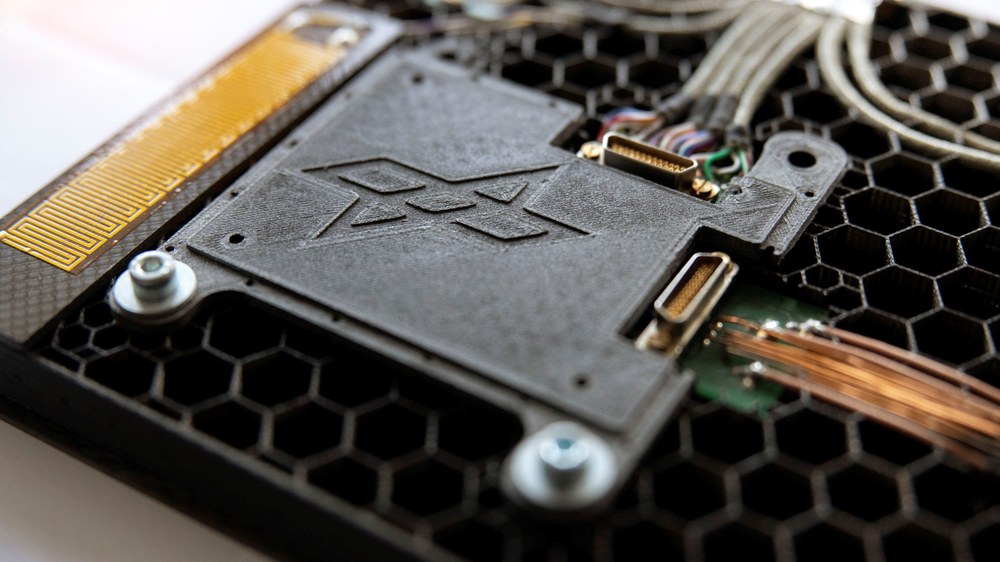
Additive and Conventional Manufacturing: Combination of different production methods for complex, multifunctional space structures
Experimental Validation: Use of flexibly configurable mechanical and thermal test facilities to verify structural performance
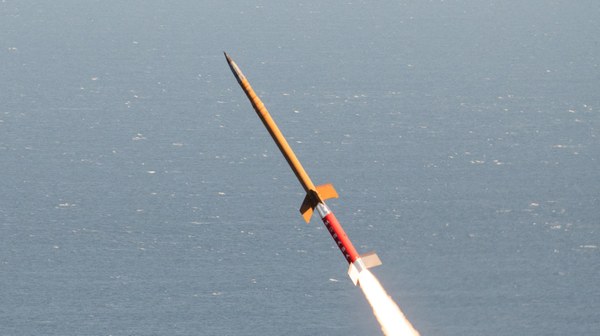
Flight Testing: Verification of structural concepts through flight experiments
Cooperation and Technology Transfer
For verification and testing, research results are validated through application-oriented flight experiments. The work is carried out in close cooperation with industrial and academic partners in order to efficiently transfer novel lightweight structures into practical applications.
A particular focus is placed on:
the cost-efficient development of highly integrated satellite systems,
the transfer of innovative structural concepts into the space industry,
and strengthening the competitiveness of German companies in the field of space technologies.