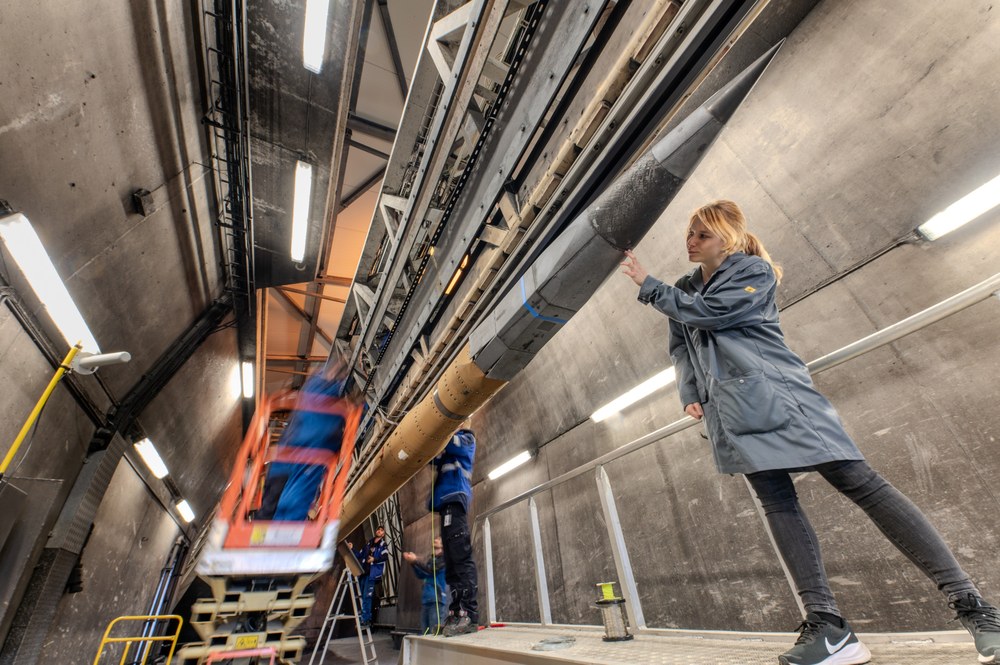
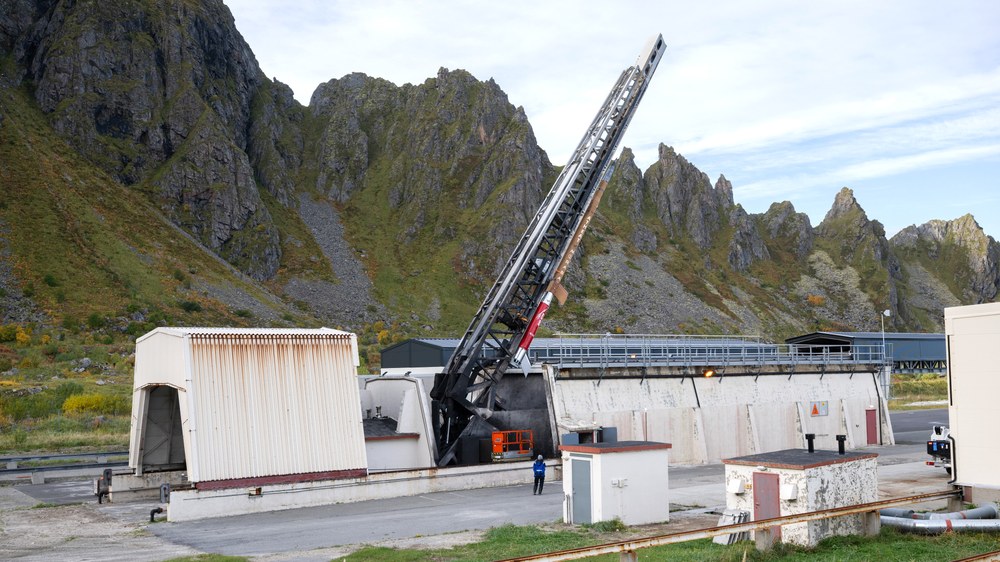
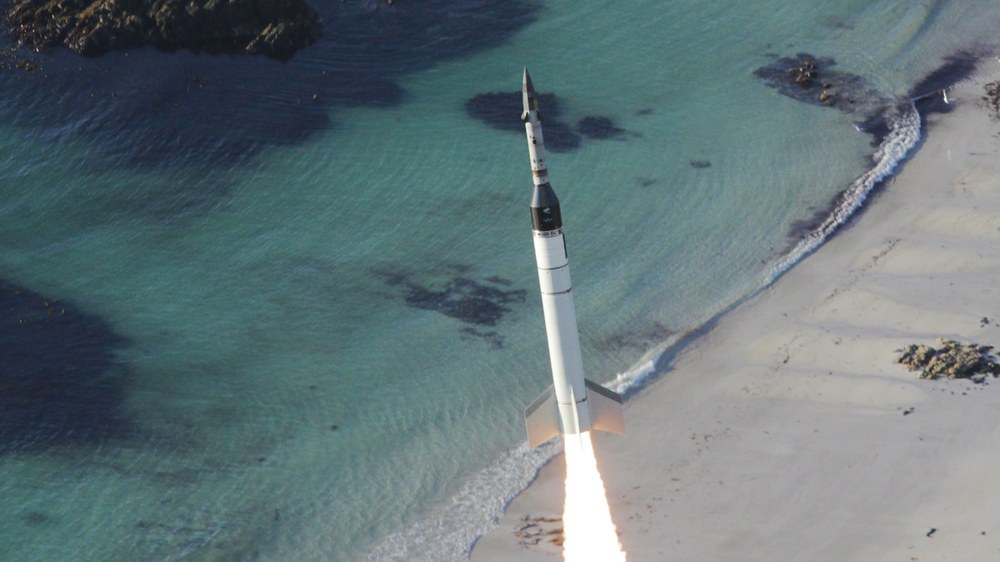
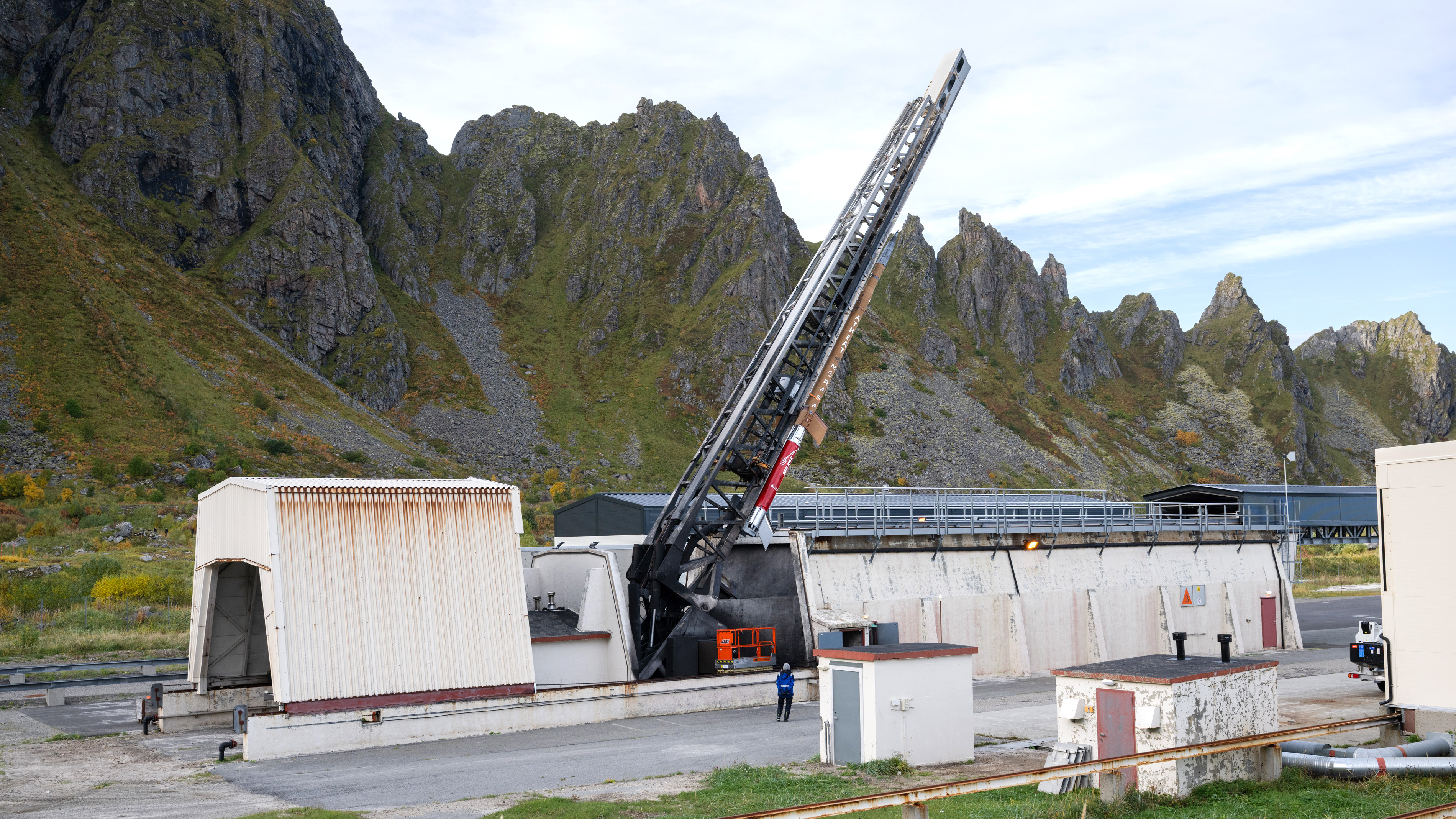
The two-stage rocket with the scientific payload is mounted on the launcher. Final work items and checks are being carried out to make everything ready for the flight.
The Structures for Hypersonic Systems research area develops technologies for vehicles reaching speeds of Mach 5 and above. Hypersonic aircraft, space planes and launch systems are exposed to extreme aerothermal loads: stagnation temperatures exceeding 2000 °C, severe pressure gradients and highly dynamic flow phenomena place the highest demands on materials, structures and manufacturing techniques.
Particularly challenging are sharp leading edges on fuselage sections, air intakes and wings. These are crucial for aerodynamic efficiency in hypersonic flight, while also being the most thermally stressed components.
The aim is to develop temperature-stable, erosion-resistant and functionally integrated hypersonic structures that enable the operation of future hypersonic transport systems, test platforms and aerospace propulsion systems.
Research Focus Areas
High-Temperature Resistant Leading Edge Structures
Development and manufacturing of ultra-high-temperature ceramic matrix composites (UHTCMC) for sharp leading edges capable of withstanding sustained loads well above 2000 °C. Material design, fibre architectures and oxidation resistance are specifically tailored for hypersonic applications.
Effusion-Cooled Edge Concepts
For extreme thermal loads, effusion-cooled structures are investigated in which a precisely metered cooling gas film is released through porous or microstructured materials, thereby thermally stabilising the surface. This enables lighter structures and extended service life in real flight environments.
Structural Functional Integration for SCRAMJET Systems
Development of planar fuel injection systems in the inlet section of hypersonic propulsion systems (SCRAMJET). The aim is to achieve uniform fuel distribution to stabilise shock structures and improve combustion efficiency. This involves combining integrated injection modules, thermomechanically optimised inlet panels, and ceramic or metallic high-temperature materials.
Experimental High-Temperature Validation
Hypersonic structures undergo testing in:
arc-jet facilities
plasma wind tunnels
thermal shock and oxidation test rigs
transient high-enthalpy loading environments
These experiments enable the derivation of material models and lifetime predictions under realistic hypersonic conditions.
Cooperation and Technology Transfer
Hypersonic systems are gaining global importance – both for civilian high-speed applications as well as for security and space programmes. The research area contributes to:
Europe’s competitiveness in hypersonic technologies
Technological sovereignty in high-temperature materials, structural design and thermal protection
Knowledge building for industrial partners, particularly in the fields of hypersonic flight, high-temperature materials and SCRAMJET technologies
Support for national programmes in hypersonic research and flight demonstrators