The ZEIT research project (Zero Emission Industrial Technologies) investigates suitable materials and manufacturing technologies for cryogenic hydrogen tanks in aviation. The project complements other research activities focusing on innovative propulsion and tank concepts, with a particular emphasis on suitable tank materials and their industrial processing.
Both German aviation research initiatives and the strategic approaches outlined in the Strategic Research and Innovation Agenda (SRIA) pursue a common goal: the drastic reduction of aviation emissions. One key approach is the use of hydrogen as an energy carrier. Almost all corresponding aviation concepts are based on the storage and transport of hydrogen as a cryogenic liquid. This requires hydrogen tanks that are lightweight, robust and suitable for very low temperatures.
Fibre-Reinforced Materials for Cryogenic Hydrogen Tanks
As part of the ZEIT project, the DLR Institute of Structures and Design is collaborating with the DLR Institute of Lightweight Systems and the DLR Institute of Space Propulsion Systems. Together with partners from industry and research, they are developing suitable materials for cryogenic hydrogen tanks in aviation. The project partners include Teijin Carbon Europe GmbH, the Fraunhofer Institute for Casting, Composite and Processing Technology and the Faserinstitut Bremen.
The focus is on investigating the suitability of fibre-reinforced composite materials for cryogenic applications. Due to their high specific strength and low weight, fibre-reinforced composites offer considerable potential for use in future hydrogen tanks and thus for lightweight and efficient aviation structures.
Thermoplastic Materials and Automated Fibre Placement (AFP)
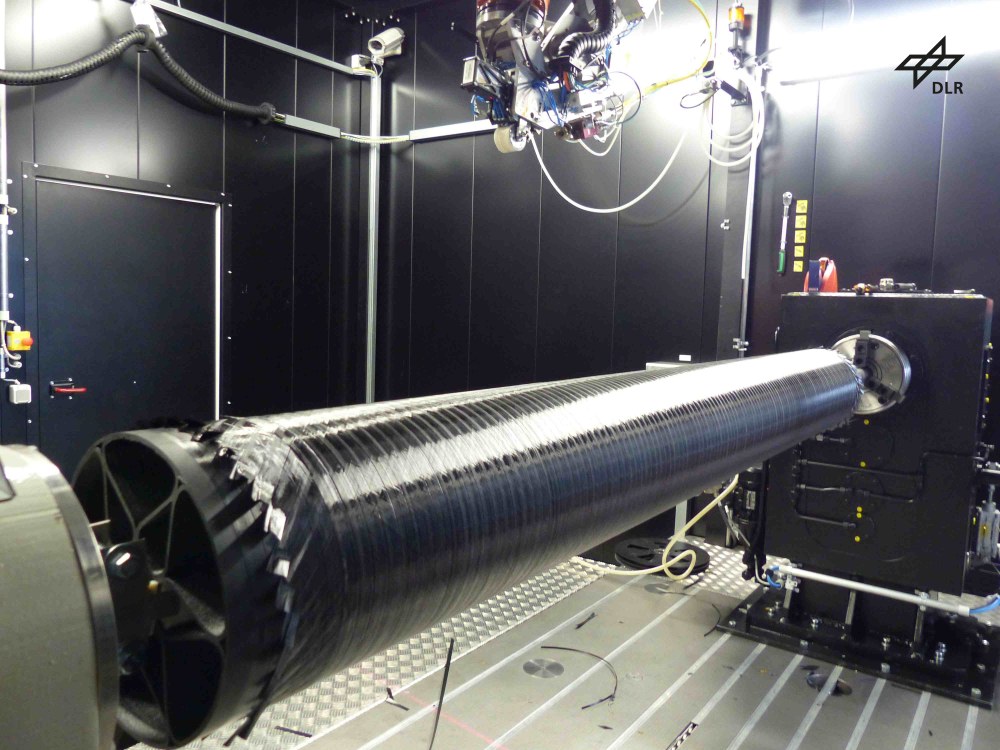
As part of ZEIT, the DLR Institute for Structures and Design is investigating various thermoplastic prepreg materials based on CF-LMPAEK. The composite structures are manufactured using, among other methods, Automated Fibre Placement.
The aim is to quantify the suitability of different areal weights and ply thicknesses, as well as to compare standard prepregs with so-called thin-ply materials (<0.1 mm). To this end, laminates are initially manufactured and characterised with regard to their mechanical properties.
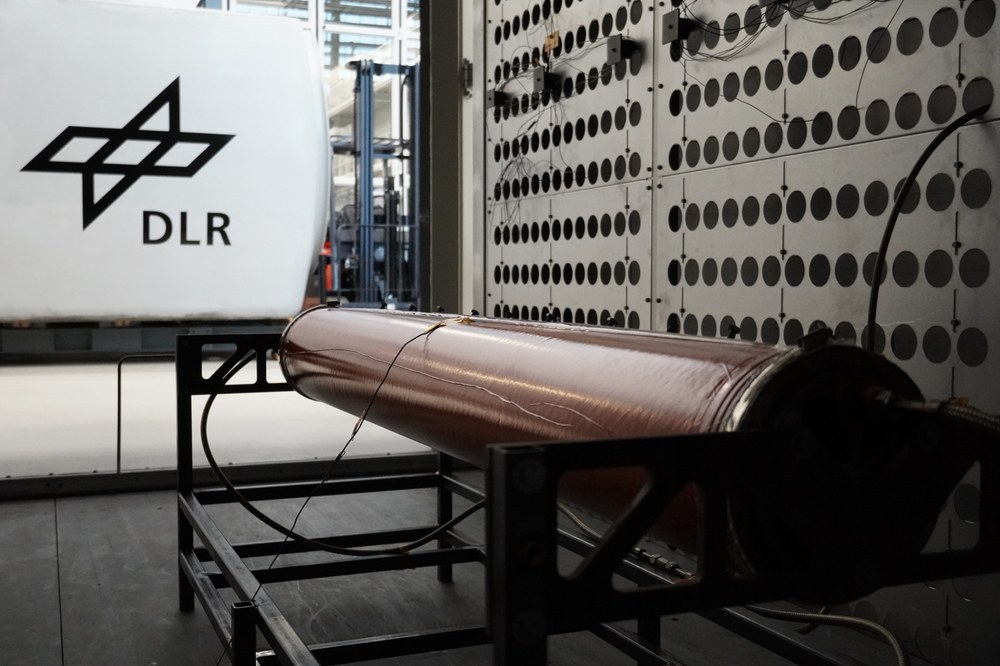
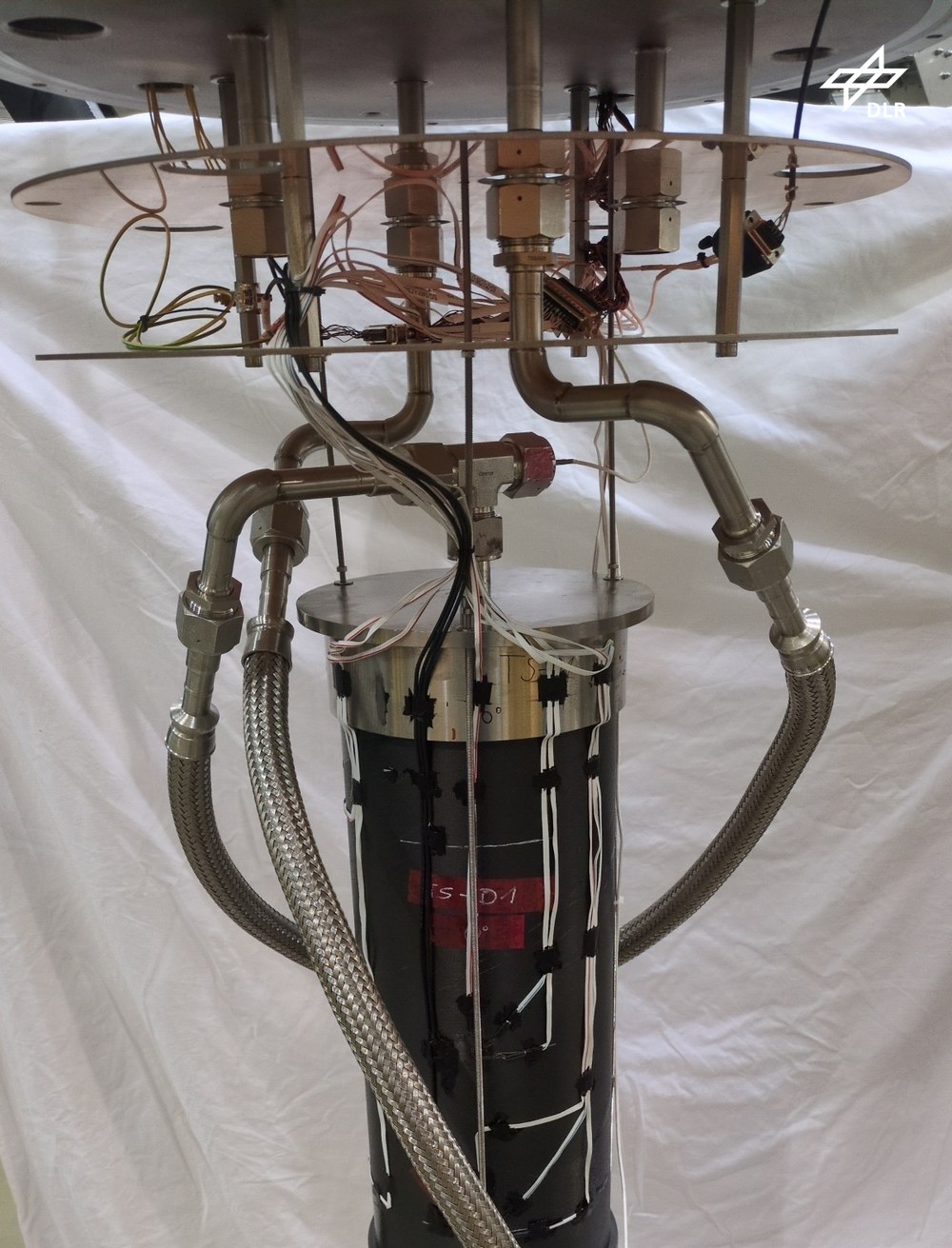
In addition, we manufacture simplified tank geometries from thermoplastic fibre-reinforced composites, which are subjected to mechanical loading at cryogenic temperatures. This is used to investigate how the materials and structures perform under the specific conditions associated with cryogenic hydrogen storage.
The results are intended to help establish the material and manufacturing foundations for future cryogenic hydrogen tanks in aviation and to further advance the use of thermoplastic fibre-reinforced composites for lower-emission aviation concepts.