Manufacturing and integration technologies for sustainable aircraft fuselage production
The use of thermoplastic, fibre-reinforced semi-finished products for primary fuselage structures offers great potential due to their properties. In addition to the weight advantages over metallic structures, there are also new possibilities for further processing compared to thermoset materials, e.g. through welding processes, but also for recycling and further use in the circular economy.
Within the joint ZEUS project, DLR addresses three main objectives:
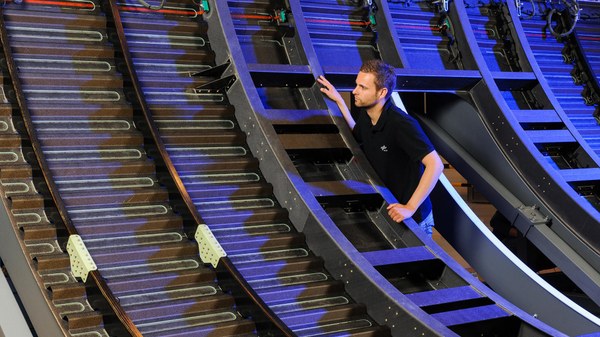
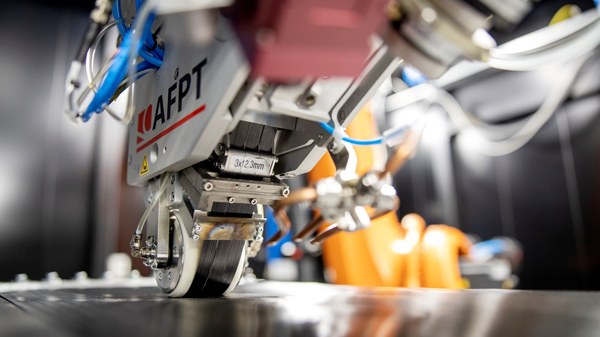
Increasing the laying rate for the production of complex curved thermoplastic preforms
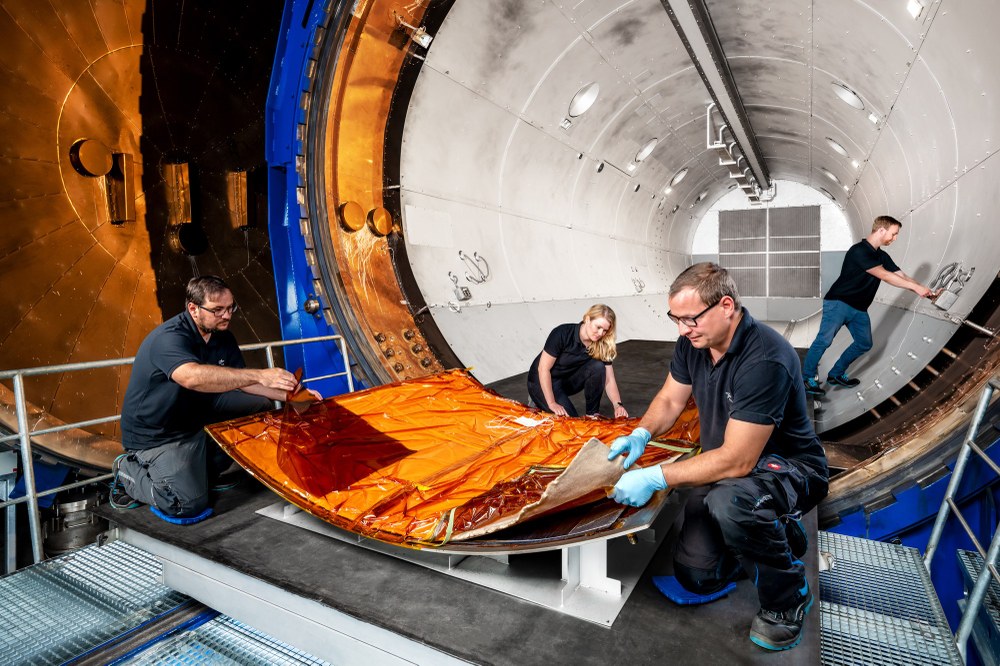
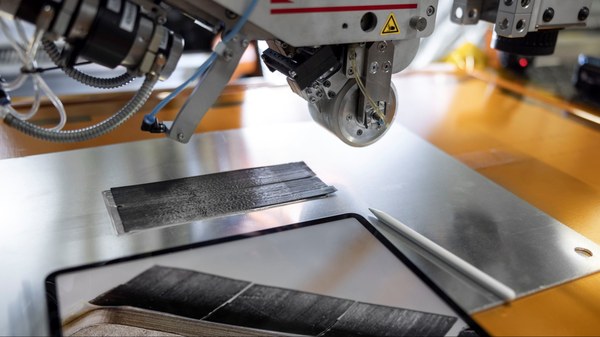
Increasing the technological maturity and robustness of autoclave-free consolidation of thermoplastic laminates, with a focus on complex curvature and large wall thicknesses
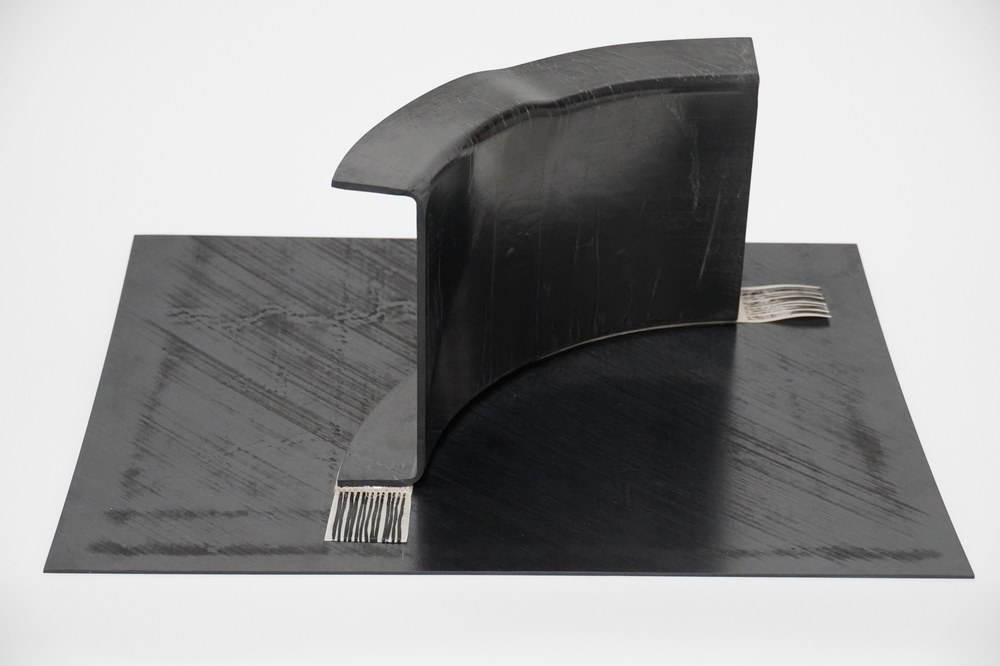
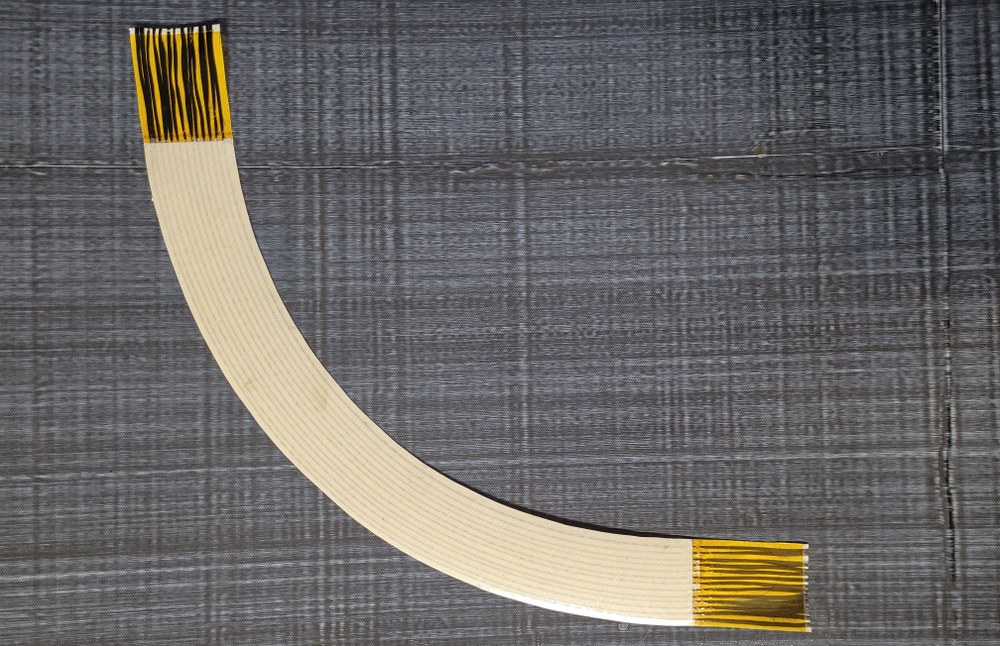
Further development of resistance welding technology and maturation for the integration of a complex door surround structure
Technologies for the deposition and consolidation of skins are being addressed in order to be prepared for medium-term scenarios for future aircraft fuselage architectures. To this end, both thermoplastic tape laying and consolidation are being investigated and further developed with a view to maximising laying performance and minimising production costs. In addition, the integration of a complex door environment structure on a cylindrical skin panel is being demonstrated. To this end, resistance welding of complex, non-rectangular welding surfaces is being further developed and adapted to a real door environment.
All technology components used are validated using NDT methods and mechanical tests. These results, along with the knowledge gained on achievable lay-off rates and consolidation quality, are incorporated into a cross-sectional evaluation in order to make optimal use of specific advantages. Several routes are being specifically investigated and further developed for skin removal, consolidation and joining. The aim is to develop specific technological responses to different scenarios and applications so that no blind spots are generated for alternative fuselage architectures in the medium term.
The results presented here were achieved within the ZEUS research project (FKZ: 20W2106C) in the framework of the Federal Aviation Research Programme VI-2, funded by the Federal Ministry for Economic Affairs and Energy, on the basis of a decision by the German Bundestag.