VIRLWINT
Virtual acoustic twin of distributed drives
Through the VIRLWINT project, DLR is acquiring methods and expertise for the psychoacoustic evaluation of noise emissions from distributed propulsion systems of electrified aircraft concepts.
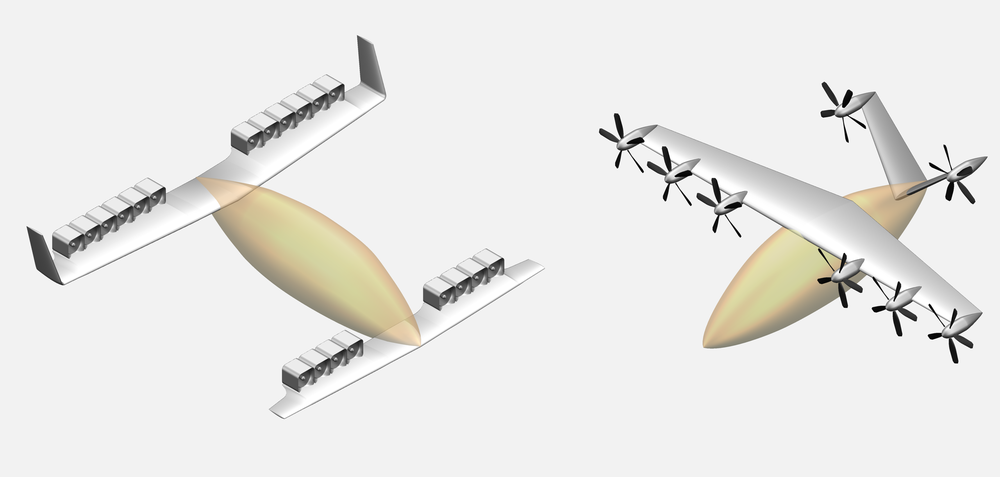
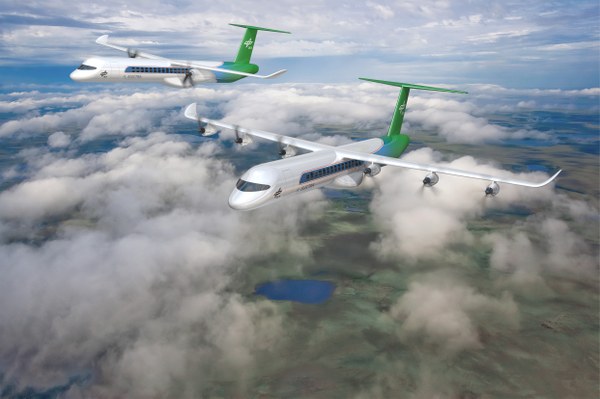
In urban and regional air mobility, alternative CO2-saving propulsion concepts with distributed thrust are increasingly being planned, whereby the thrust is generated with distributed, shrouded fan stages and/or distributed, open propellers.
The auditory impression of these new, distributed drives will differ fundamentally from the auditory impression of conventional concepts. One reason for this is acoustic effects resulting from the number and installation position of the propulsors, such as interference effects or boundary layer induction. Propulsors are the dominant source of noise, especially for electrified drive systems. Therefore, the noise effect of propulsors is a key factor for the acceptance of novel aircraft concepts by the population. The VIRLWINT project addresses this problem by developing new methods that specifically enable the low-noise design, audibility and psychoacoustic evaluation of distributed propulsion systems. The methods are being developed using the example of urban air taxis and can also be applied to other concepts, such as regional aircraft, in the long term.
The noise emissions are obtained from individual fan test bench and wind tunnel measurements and digitally linked to different systems of distributed drives. In particular, propulsion systems that differ from conventional concepts, such as spanwise installed propulsors or wingtip propellers, will be analysed. The method developed in VIRLWINT enables DLR to carry out a psychoacoustic evaluation of distributed propulsion systems and a step towards optimising the propulsion systems for a lower noise impact (design-to-perceived-noise). The chosen approach includes the creation of a tool (e.g. app, software) with which the population can be actively involved in the development process at an early stage. This allows procedural participation in the development process and identification with the innovation product, which is accompanied by increased acceptance (acceptance-by-design). The expertise gained establishes the DLR's ability to assess distributed drives acoustically and can be used to advise certification authorities.
Project goals
The VIRLWINT project focuses on the acoustic emissions of distributed propulsion systems. The overarching goal is to provide a method developed by DLR that enables the auralisation and subsequent psychoacoustic evaluation of novel drive systems with distributed thrust.
- Preliminary design of drives and vehicles
- Aeroacoustic measurements of propulsors and drive train
- Digitalisation of distributed drive concepts
- Sound perception of the distributed drive concepts
Project period
01.01.2023 - 31.12.2026
Project management
Institute of Electrified Aero Engines