Institute of Maritime Technologies and Propulsion Systems
Digital Twin
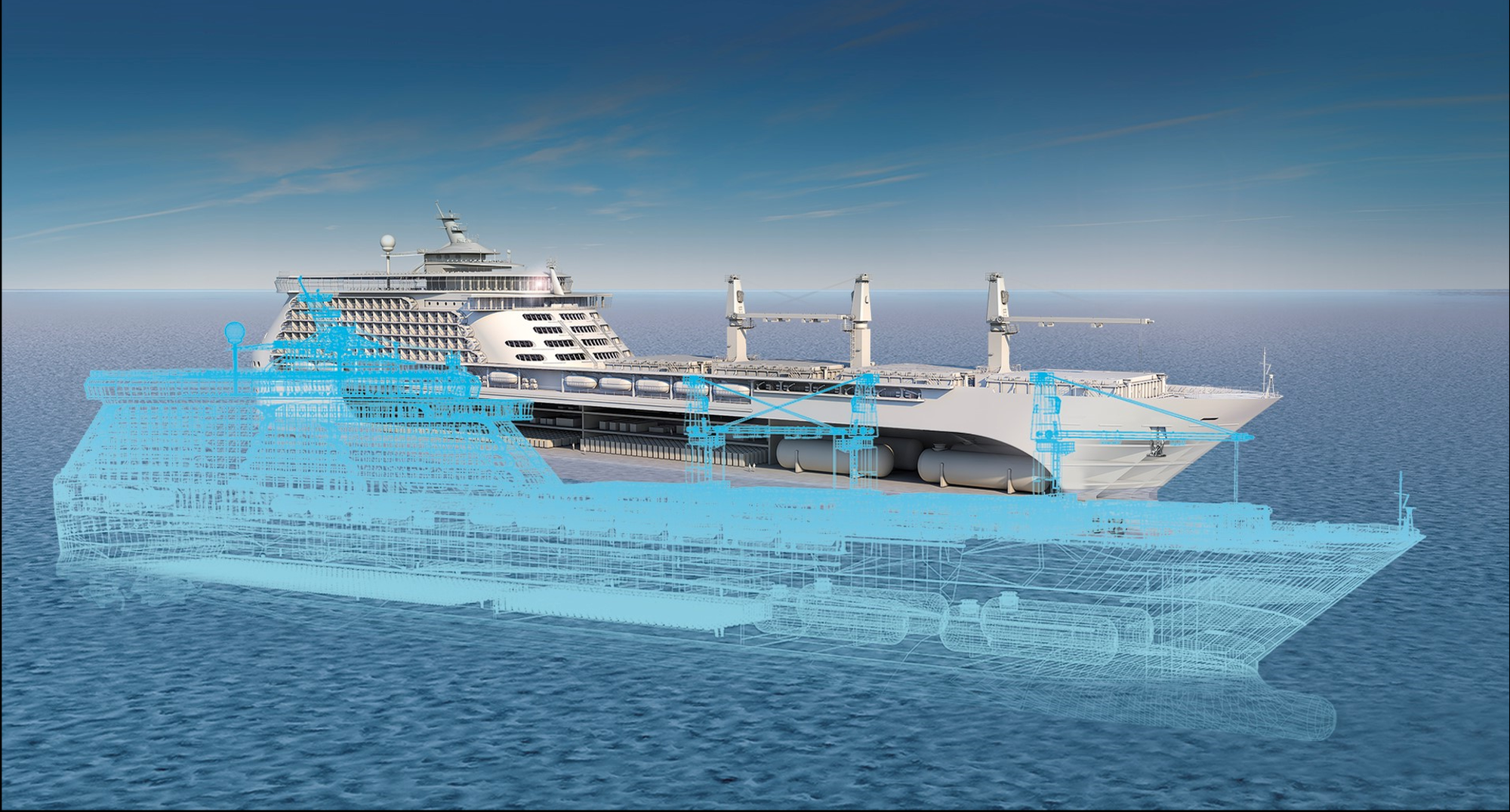
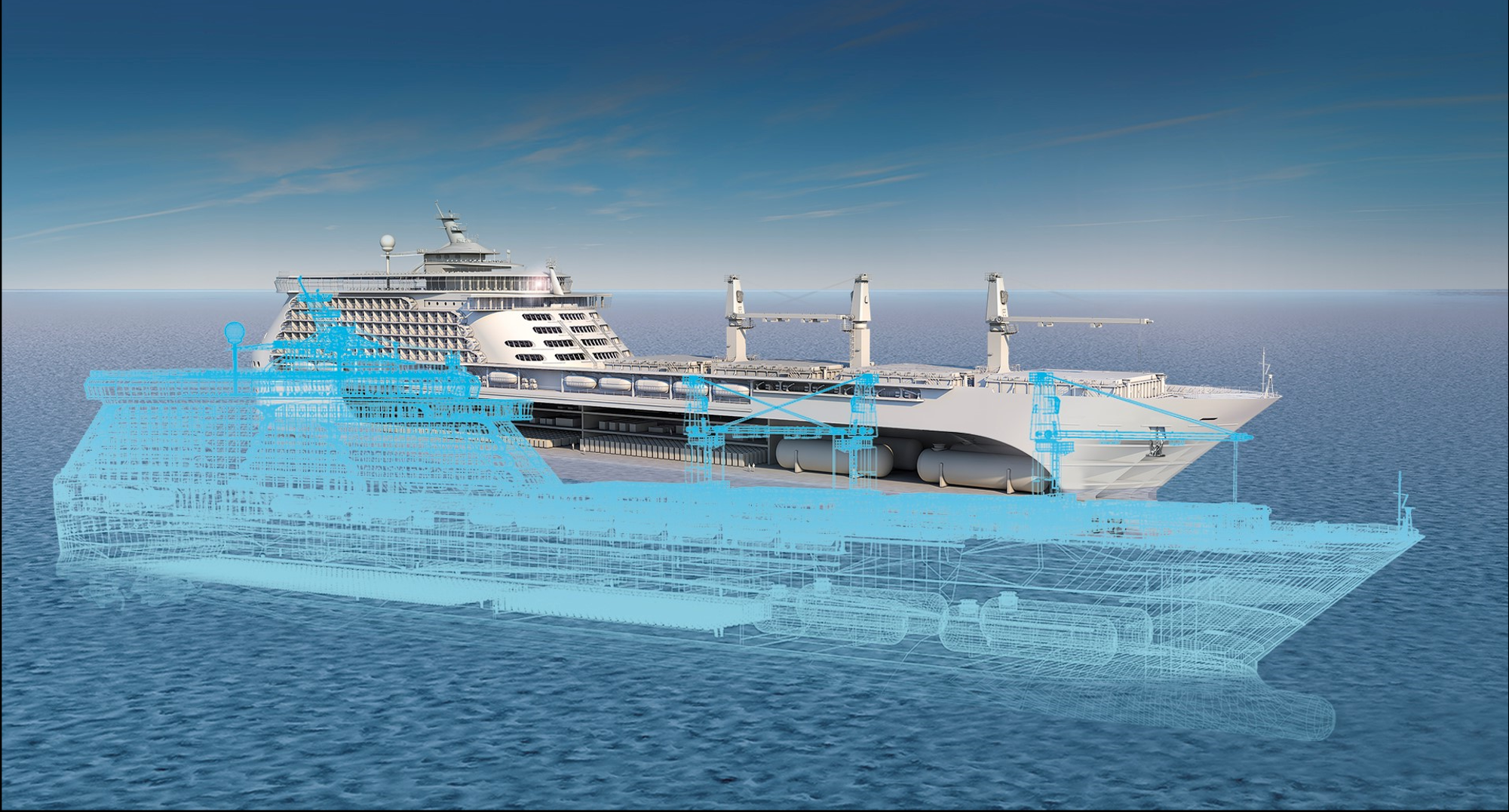
Digital twins are used to enable innovative holistic analyses of maritime energy systems. Among other things, the operating behaviour of a ship is recorded by sensors and continuously compared with validated simulations in order to identify anomalies and optimise efficiency.
Security of technologies for the maritime industry
At the Institute of Maritime Technologies and Propulsion Systems in Geesthacht and Kiel, we provide technological developments to give the maritime industry security for its investment decisions in new technologies and thus accelerate the transformation of waterborne transport.
Shipping is essential for the economic well-being of the world and handles 80 per cent of international freight traffic. Therefore, the maritime industry needs reliable ship concepts and technologies to fulfil different and typically unique transport tasks with unique ship concepts.
The Institute's vision does not stop at the quay wall, but considers the ship as a system in a global transport concept with its own interfaces to air and land transport. Our international team of over 100 employees is working on energy-saving drives, efficient energy generation on board, fuel cells, optimised ship designs, safe energy storage and solutions for emission-free fuels and their infrastructure in ports and on board. Among other things, we work with analytical and AI-based modelling, simulations and numerical calculations and, in future, in a comprehensive laboratory environment.
In future, scientists will also be able to develop emission-reducing systems and components in the laboratory and continuously adapt them to future conditions before they are tested with the modular seagoing technology platform and integrated into ship and port operations. These facilities will also enable industrial companies in particular to test the feasibility of new systems and technologies at an early stage and at low cost.
Strategic topics and goals
Reduction of emissions by the maritime industry and enabling increased use of renewable energy in waterborne transport
Development, integration, and testing of efficient energy systems in ships (e.g. fuel cells, batteries, DC grids, wind-assist drives, solar panels, etc.)
Onboard energy storage and infrastructure for alternative fuels
Development of design methods for ship integration and reliability assessment of new energy systems
Development of design and evaluation methods and technologies for the provision and distribution of electricity, heating and cooling on board
Development of transportation concepts for import of alternative fuels
Development of port energy supply infrastructure
Development of intelligent discrete, statistical and deterministic simulation methods based on digital twins for controlling and evaluating complex systems
A brief chronology of the institute
2020: Foundation of the Institute of Maritime Energy Systems as the first DLR research facility in Schleswig-Holstein
2024: Relocation of the institute within Geesthacht and construction of the first research hall
2024: Opening of a second facility on the Kiel shipyard site
2026: Renaming of the institute to Maritime Technologies and Propulsion Systems
2026: Relocation within Kiel to the final site of the Kiel branch office and research hall
2026: Build up of a large-scale research infrastructure including storage facilities for alternative fuels, hybrid drives, test stands for fuel cells and batteries as well as special measuring and testing stands