
AI in European crisis management

- An international team of experts led by Prof. Tina Comes handed over a new report to the European Commission.
- The report addresses the use of artificial intelligence in emergency and crisis management.
- The findings show that AI has great potential for faster analysis and better decision support in crises.
- At the same time, the report warns of potential ethical risks a fragmented European data landscape, and stresses the need for European AI autonomy.
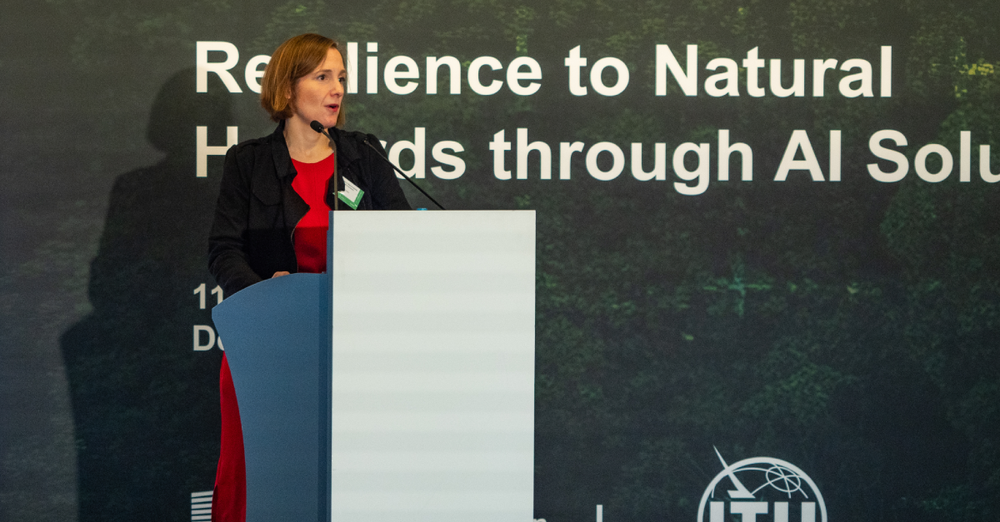
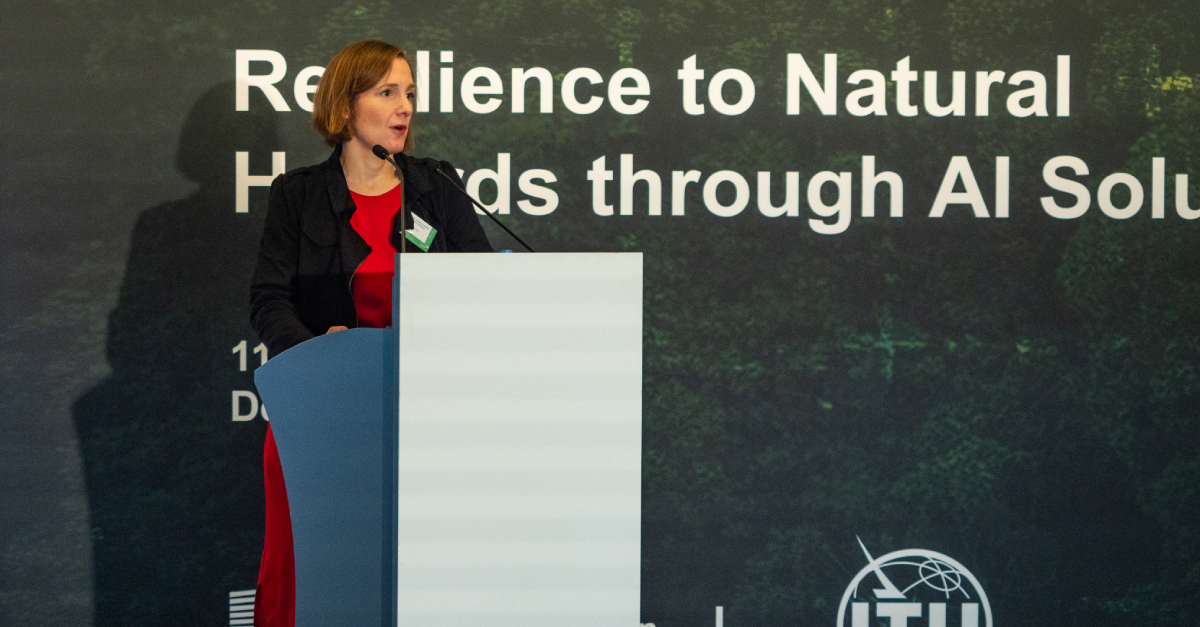
A group of renowned scientists submitted a groundbreaking report on the role of Artificial Intelligence (AI) in emergency and crisis management to the European Commission. Led by Prof. Tina Comes, Co-Director of the DLR Institute or the Protection of Terrestrial Infrastructure and Chair of the SAPEA working group, the study was presented to Maciej Popowski, Director of the Directorate-General for European Civil Protection and Humanitarian Aid Operations (DG ECHO). The expert group was nominated by the European Academies of Science as a part of the EU Scientific Advice Mechanism and provided an independent rapid review of scientific evidence as well as concrete options for action for European policy.
The report emphasizes the great potential of AI to strengthen European crisis management – especially in the case of recurring natural disasters such as floods, wild fires, heat waves or droughts. AI systems can collect data and monitor tasks on a large scale, assess social media and analyze damage much faster than would be possible for human teams. Particularly in the case of data-intensive and standardized tasks, there is a clear added value for AI-based early warning systems, situational awareness and decision support.
At the same time, the scientists stress the need for the responsible use of the technology. AI must be human-centered, transparent and comply with European safety and ethical standards. AI should not be used for morally demanding decisions, where tools do not hava a mandate, or for dealing with new types of crises that are difficult to classify - here, control must remain with human decision-makers.
The report sees a central problem in the fragmented European data landscape. "Crises cross borders, but data is managed nationally, which leads to different standards. This can lead to a fragmentation of the data landscape that AI cannot easily bridge, especially during a crisis," Prof. Tina Comes explains. Investment in European data preparedness is therefore crucial to make AI-based decision support effective at the EU level and to strengthen European technological autonomy.
Policy options include the development of a European framework for data preparedness, supported by harmonized standards, common benchmarks, guidelines, codes of conduct and so-called sandbox environments. These could be used to test AI systems before they are widely deployed in an emergency. The Academies of Science call on the European Commission to use AI in crisis management responsibly – as a powerful tool, but not as a substitute for human control and agency.