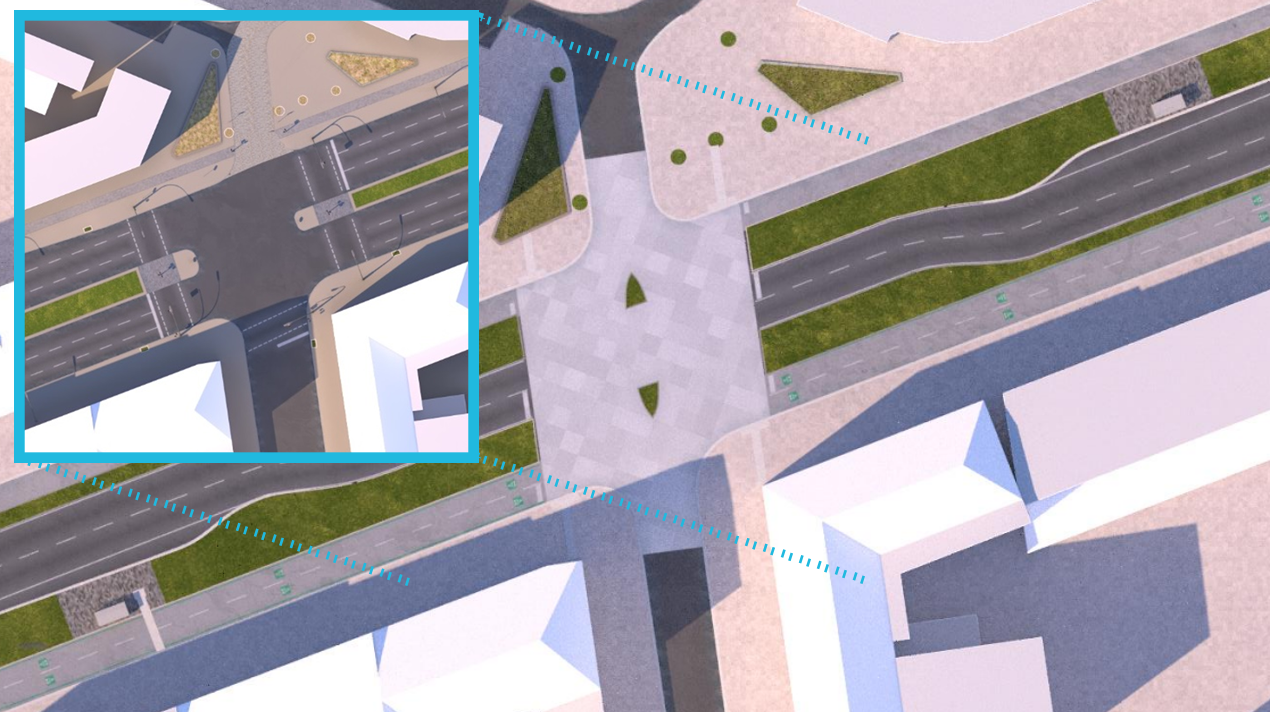
With "Future worlds of mobility" (mozu), the German Aerospace Centre (DLR) is getting a new large-scale research facility.
The aim is to make the mobility transition tangible, analysable and assessable.
At the same time, all the senses - touch, smell, hearing, taste and sight - are to be involved in order to jointly shape the mobility worlds of the future.
Mobility plays a significant role in our daily lives and in society. Conventional visualisation is often not sufficient to understand the complex interactions of urban mobility. With mozu, DLR is closing this gap by making new mobility worlds a virtual experience for all the senses. The centrepiece of the system is the VisionLab. Here, several people can interact simultaneously in a virtual 3D world and thus participate in the design process. This contributes to better planning and acceptance of future changes. The mozu facility is expected to go into full operation in November 2026.
The VisionLab as an immersive experience
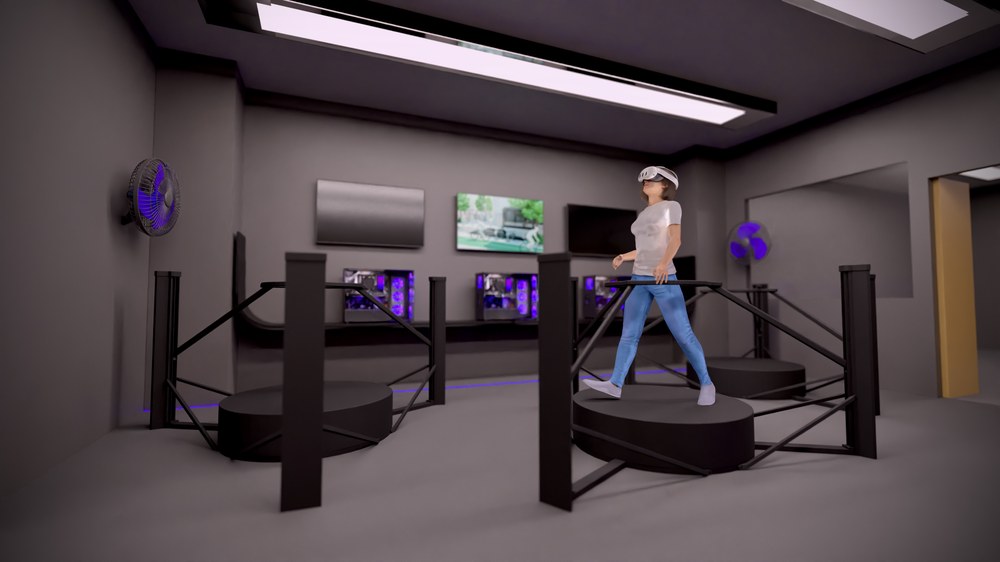
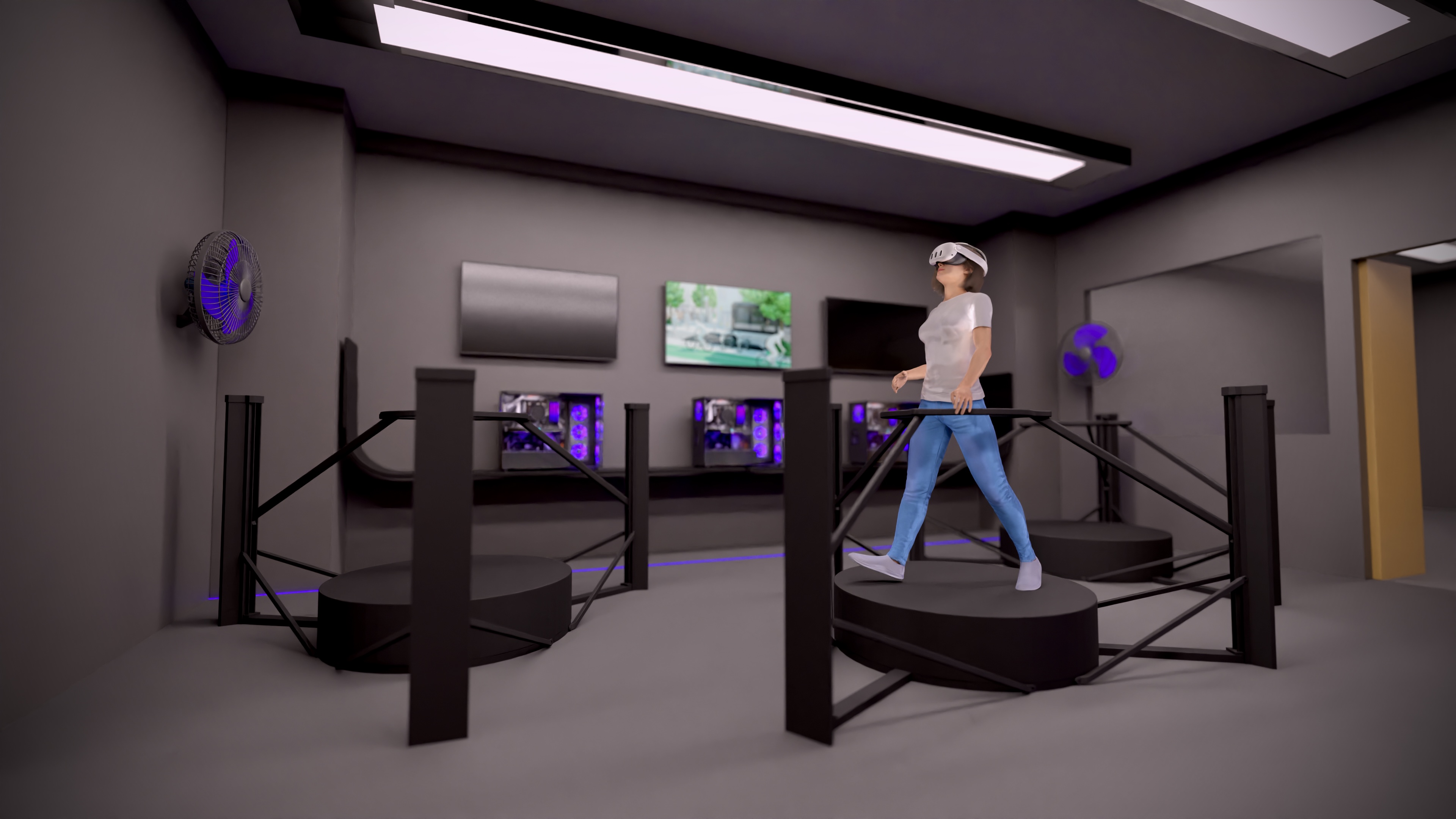
The immersive experience takes place in the VisionLab. It includes a large video wall and several VR stations. The visualisation is supported by sound and smell simulation so that users can fully immerse themselves in the world. Effects such as wind, rain, heat, cold, sounds and odours are also integrated. This makes it possible to see what stops look like or how attractive new public transport services actually are. VR worlds and immersive experiences can make some people feel uncomfortable, which is why the effects are customisable and can be used to varying degrees.
Engaging in dialogue together
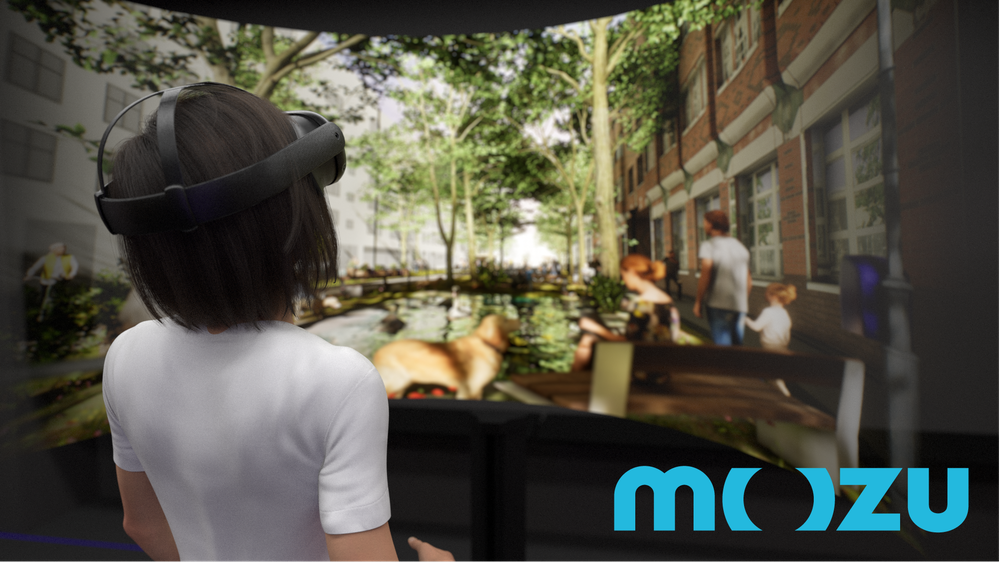
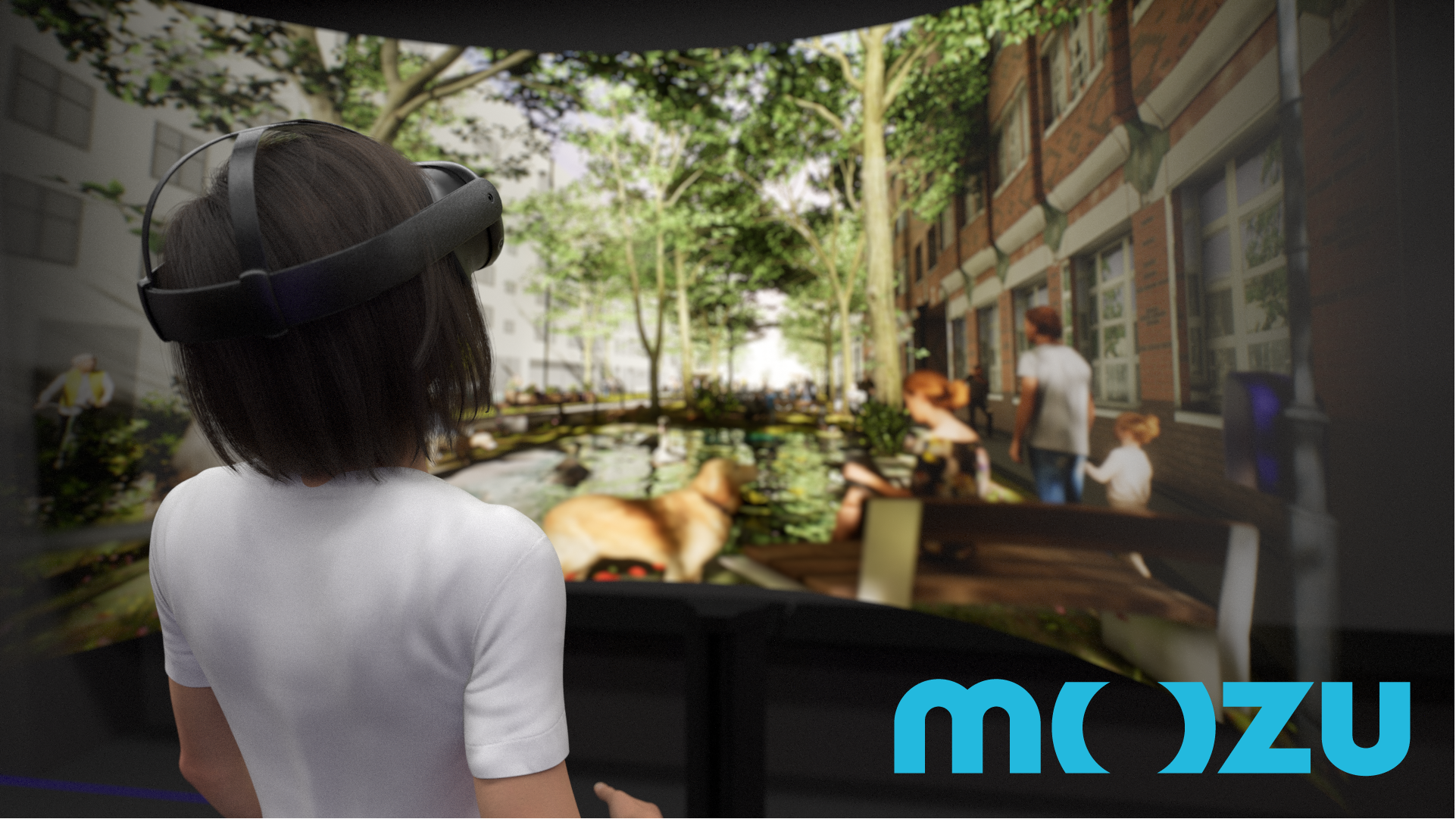
Traffic situations can be observed life-size on a large video wall and discussed in the group.
For the presentation of future mobility worlds, 360° images and videos through to interactive, animated 3D worlds can be created. The focus is on experiencing and designing places, means of transport and infrastructure. To enable real human interaction, several people can simultaneously observe what is happening in the transport system, interact with each other and discuss in a group.
Walk freely in the VR world
All VR stations are equipped with omnidirectional treadmills. These make it possible to move freely in virtual space and interact with other people.
Framework for the virtual mobility worlds of the future
The integration of key data from traffic models is planned. For example, traffic behaviour or traffic flows could be incorporated into the virtual worlds. This is where the system particularly benefits from DLR's expertise: the comprehensive data and models that analyse traffic research in an interdisciplinary and systemic way and are incorporated into the virtual design. Different needs can be visualised through a change of perspective (e.g. age, time of day) and thus better incorporated into the planning. In addition, different planning variants can be compared and changes made. A corresponding framework is being developed for mozu for this purpose.
Freedom to design the transport system
Redesigning the existing transport system at the touch of a button: mozu incorporates the latest scientific findings into the design options for the transport system.
A DLR-wide VR asset database is used to manage transport-related 3D objects such as means of transport, bus stops and corresponding room furniture and entire scenes. Existing VR assets can be integrated and new ones added. The advantage of this database is to promote the DLR-wide exchange around VR and to facilitate future work in this area.
VR asset database
The DLR-wide VR asset database provides a central platform with transport-relevant 3D objects and 3D scenes. This will facilitate work on future VR worlds and promote exchange.