Research project BesGASa

Accelerating the energy transition through grid forming with wind parks and strategies for critical grid situations to replace synchronous machines

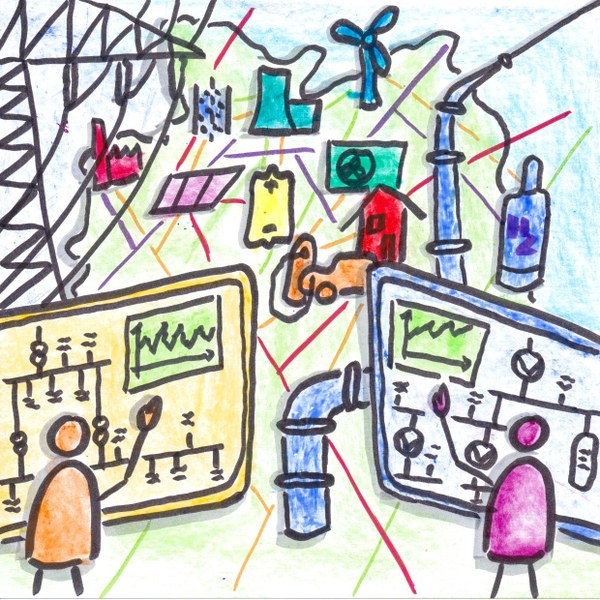
With the increasing expansion of renewable energies, decentralised power generation plants will dominate the electricity supply in the future. To ensure grid stability even without the technically advantageous inertia of conventional power plants, wind energy systems (WEA) must obtain so-called grid-forming properties. So far, systems primarily operate in a grid-following manner, that is, they orient themselves according to the grid. The joint project BesGASa (literally "without gas", derived from Slavic language use), funded by the Federal Ministry for Economic Affairs and Energy, develops strategies to convert WEAs into voltage sources that actively contribute to grid stabilisation. This aims to reduce the dependency on fossil reserve capacity and to ensure the supply security in critical grid situations, such as during the restoration of the grid after a blackout.

Research project BesGASa


Duration

January 2025 to December 2027

Funded by

Federal Ministry for Economic Affairs and Energy

Project participants

  • Institute of Networked Energy Systems
  • WRD Wobben Research and Development GmbH
  • University of Kassel

The project addresses the technical challenge of grid-forming WEAs generating fundamentally new interactions with the grid. The task is to develop control concepts for converters, operating instructions, and wind park controls that function stably in both interconnected operations and islanding mode. A particular focus lies on the active support of grid rebuilding after a failure: Grid-forming wind parks are intended to enhance frequency stability as soon as initial grid structures are reinstated. To meet the high safety requirements, extensive systemic case studies are undertaken to anticipate future requirements for grid connection rules (grid codes) and minimise development risks for the industry.

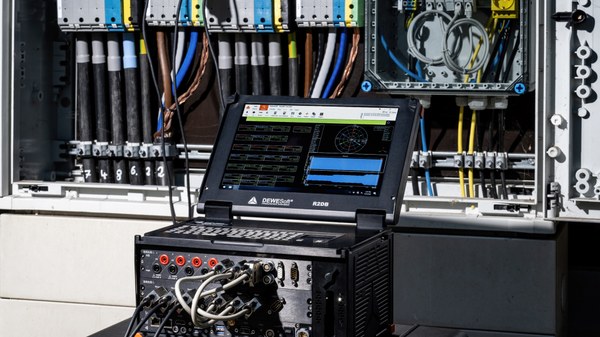
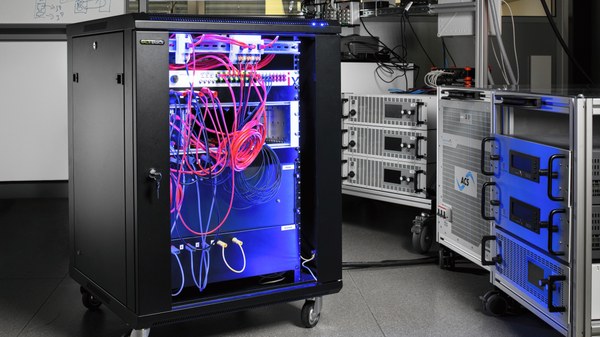
At the Institute of Networked Energy Systems, the research focus in the BesGASa project is on systemic consideration and the development of control architectures for future wind parks. The team develops scenarios for future grid connection conditions and, building on these, park control concepts that allow the coordinated integration of grid-forming WEAs. A significant work area is the validation of these concepts in model-in-the-loop (MiL) and hardware-in-the-loop (HiL) environments. In addition, the team is dedicated to the development of passive methods for detecting unintended island grid formations in the medium-voltage grid and defines communication protocols between wind parks and system operators. This work forms an important basis for the safe operation of electrical networks in a renewable dominated energy system.

Contact

Flexibilities and Ancillary Services

Research Group
Institute of Networked Energy Systems