Research project NoRaLock-H2
Necessary framework conditions to avoid lock-in effects and to ensure a sustainable green hydrogen supply
In the coming years, our energy system will be gradually expanded to include infrastructures for the production and utilisation of hydrogen. Produced from renewable energies, hydrogen will be available in the future as a CO2-neutral energy source across all sectors, for example as a storage medium to stabilise electricity grids, as a raw material for industry or as a feedstock for mobility and heat generation. However, the development of production and transport infrastructures will take a long time, meaning that the production capacities for green hydrogen will not be able to meet the constantly growing demand at all times. As a result, it is highly likely that other, non-CO2-neutral hydrogen sources will also be used. Against this background, the NoRaLock-H2 research project, funded by the German Federal Ministry for Economic Affairs and Energy, aims to develop strategies to ensure necessary investments in future-proof technologies.
Research project NoRaLock-H2 | |
|---|
Duration | January 2023 to December 2025 |
Funded by | Federal Ministry for Economic Affairs and Energy |
Project participants | - DLR Institute of Networked Energy Systems
- Wuppertal Institute
- IZES gGmbH
- ECOLOG Institute
|
In its research approach, the project is focussing on the regulatory framework conditions. They are to be defined in such a way that the investments to be made today and in the near future are managed in such a way that they lead to a cost-efficient and sustainable hydrogen supply. In particular, the aim is to avoid so-called lock-in effects, which can arise, for example, if fossil hydrogen is also used in the long term due to investments that have already been made, instead of replacing it with green hydrogen. Another example is when green hydrogen is used, but at systemically unfavourable locations. This can lead to high network loads and high system costs.
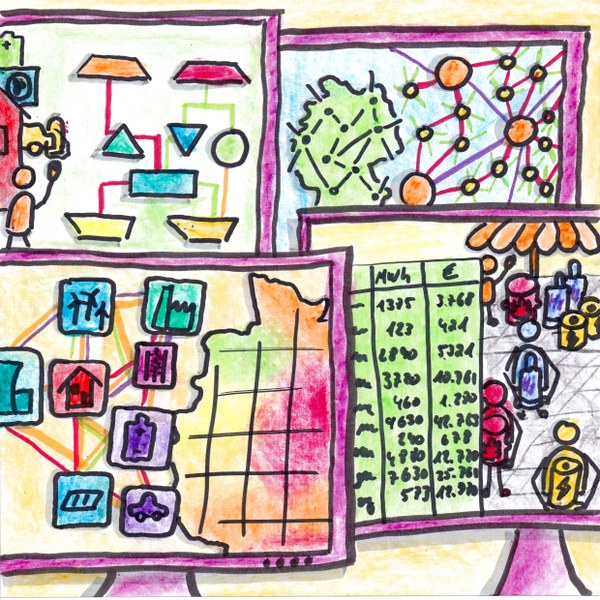
In the NoRaLock-H2 project, the Institute of Networked Energy Systems is determining the existing potential for the production of green hydrogen. To this end, cost potential curves for the generation of electricity from renewable energies are created using area and weather data as well as techno-economic parameters generated with the help of the EnDAT tool.
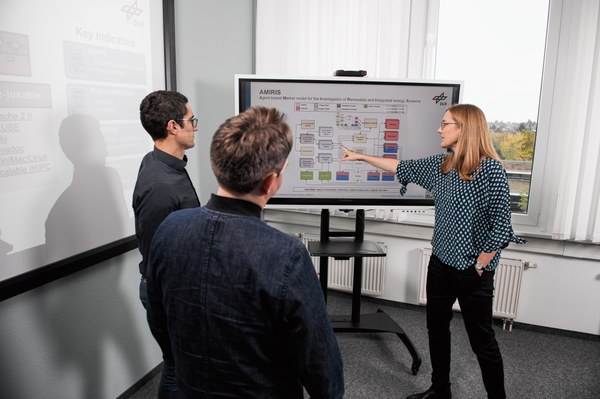
In a further research focus, DLR researchers are working on the simulation of investment behaviour in hydrogen production plants under various framework conditions. Knowledge of this behaviour is of great importance because investment decisions are usually made on the basis of a wide range of information and motivations within set framework conditions. In order to be able to simulate the rational motivations for investment decisions in hydrogen production plants, the DLR researchers are expanding the agent-based simulation model AMIRIS with a separate investment module that includes a hydrogen investment agent. Among other things, regulatory instruments to support the hydrogen ramp-up (e.g. contracts for difference or investment cost subsidies) are modelled and various operating strategies for electrolysers to produce green hydrogen are simulated. In this way, the corresponding investment behaviour can be mapped under different regulatory framework conditions.
Based on this methodology, the NoRaLock-H2 project determines development paths that are compared with system-wide cost-optimised developments (created by the Wuppertal Institute during the course of the project). This allows the researchers to analyse where there is a risk of lock-in effects and how these can be avoided. As a result, favourable and unfavourable framework conditions for the cost-efficient and climate-neutral production of hydrogen can be identified.