Sfctools – macroeconomic modelling of the energy transition
Modelling tool
Sfctools – macroeconomic modelling of the energy transition
The open-source software module sfctools, developed at DLR, is capable of modelling both decision-making behaviour at the microeconomic level and financial transactions and assets at the macroeconomic level. This allows various actors to interact with each other in a modular fashion within a simulation.
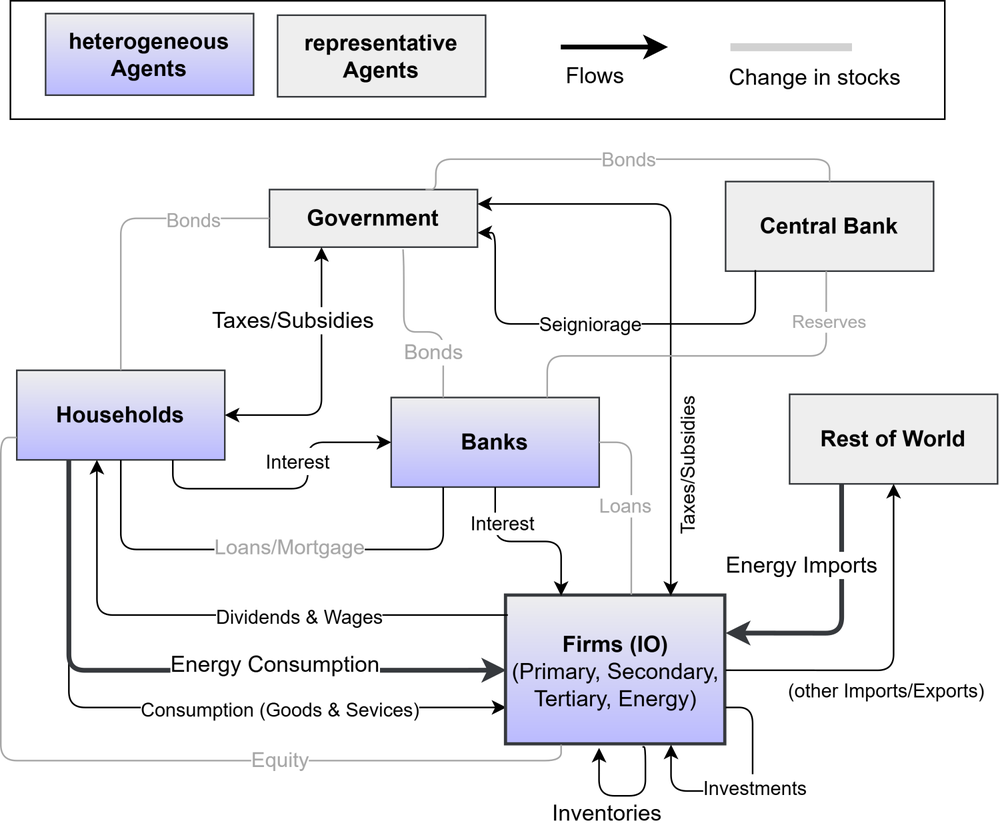
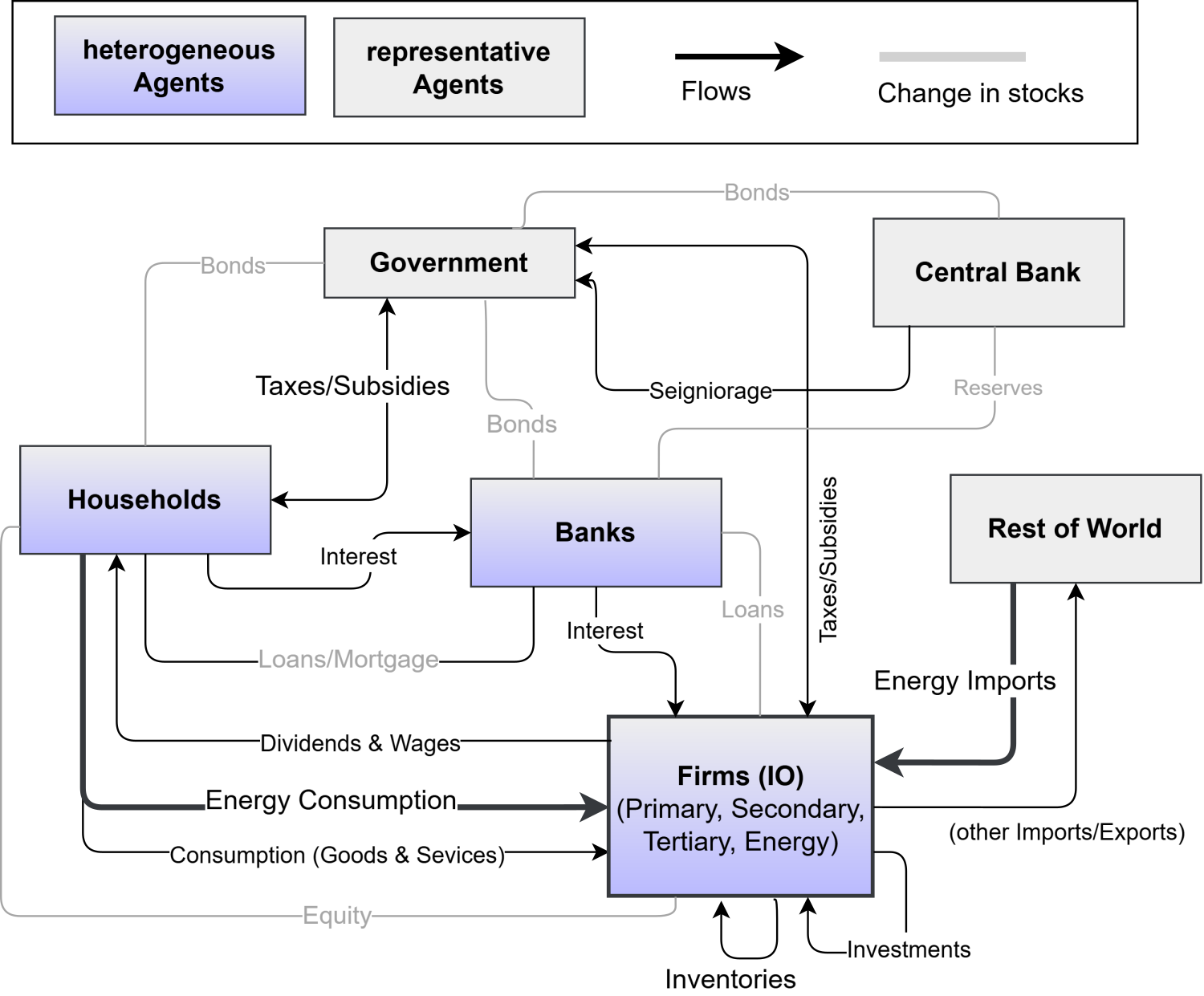
The open-source model sfctools, developed at the Institute of Networked Energy Systems, combines elements of agent-based modelling (ABM) with stock-flow consistent modelling (SFC). This combination allows for valuable insights into the interactions between energy systems, businesses, banks and households, taking into account various regulatory frameworks. Consequently, this new modelling approach enables a more precise assessment of the impacts of potential transformation pathways in the reshaping of our energy system.
To evaluate the impact of potential transformation pathways on our energy system, we need to consider not only techno-economic but also macroeconomic dynamics. This requires new modelling approaches to capture the complex interactions between energy systems, companies, banks, and households under consideration of regulatory framework conditions.
Against this backdrop, researchers at the Institute of Networked Energy Systems have developed the open-source software module sfctools. The tool combines agent-based modelling (ABM) with stock-flow consistent modelling (SFC). Specifically, while ABM enables the representation of decision-making behaviour of heterogeneous agents such as households, companies, and banks at the microeconomic level, SFC ensures that all financial transactions and assets are consistently represented on the macroeconomic level within the model.
Sfctools offers a unique set of tools for constructing agents, checking model consistency, and providing basic data structures for modelling. A graphical user interface also supports the modelling process and provides an overview of the entire workflow, from data input to model execution.
By combining these approaches, sfctools facilitates the investigation of complex systemic relationships and the evaluation of different transformation pathways and policy scenarios. Building on this, DLR researchers can simulate, for example, the impact of changes in financial markets on investments in renewable energy, companies' reactions to changed regulatory frameworks, or the effectiveness of various funding instruments during crises. This allows for the early identification of macroeconomic risks and the assessment of long-term effects of policy measures and courses of action. As open-source software, sfctools is available to the scientific community and is continuously developed in research projects.