
First laser pulses from the BepiColombo Laser Altimeter BELA
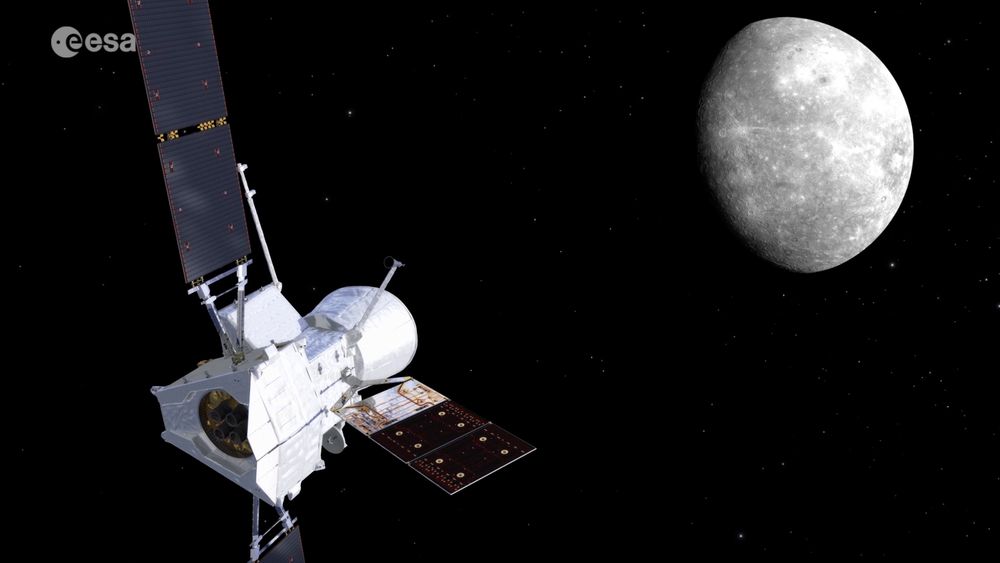
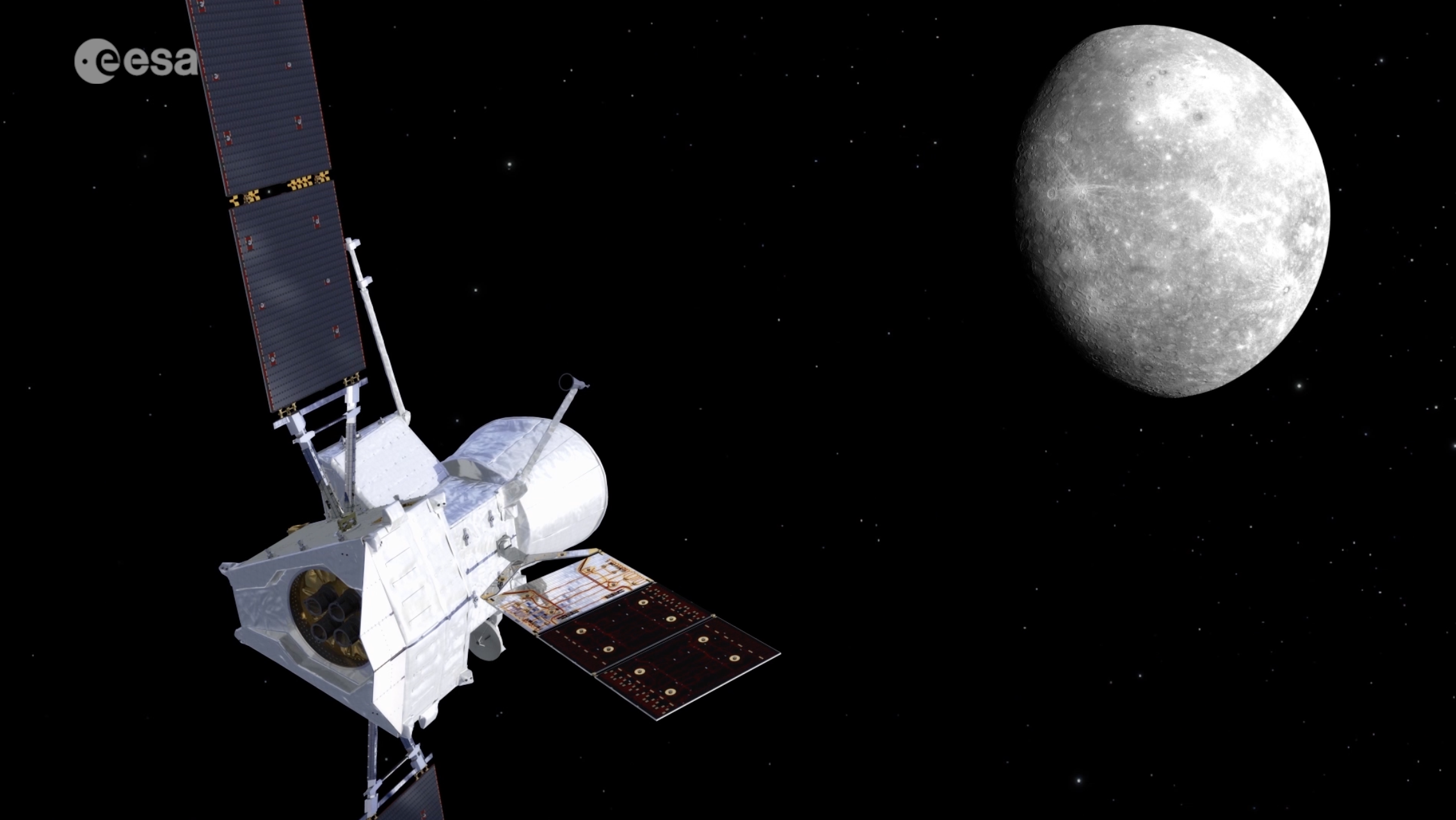
After nearly eight years in flight, the ESA/JAXA BepiColombo mission to Mercury, the innermost planet, has almost reached its destination. In the early afternoon of 3 September 2026, the propulsion stage, the Mercury Transfer Module (MTM), separated from the mission’s two orbiter modules, which are attached to one another and will reach their orbits around Mercury in the months leading up to the end of the year and in early 2027. Since 3 September, the BepiColombo Laser Altimeter (BELA) and several other instruments on the Mercury Planetary Orbiter (MPO) have thus had a clear view into space for the first time since launch. Previously, this clear view had been blocked by the MTM, to which the MPO was attached. For the BELA instrument, which uses lasers to map the topography of Mercury’s surface, this presented the first opportunity to transmit laser pulses into space and thus verify the lasers’ functionality. After eight years of interplanetary flight, this is a momentous occasion for the BELA team.
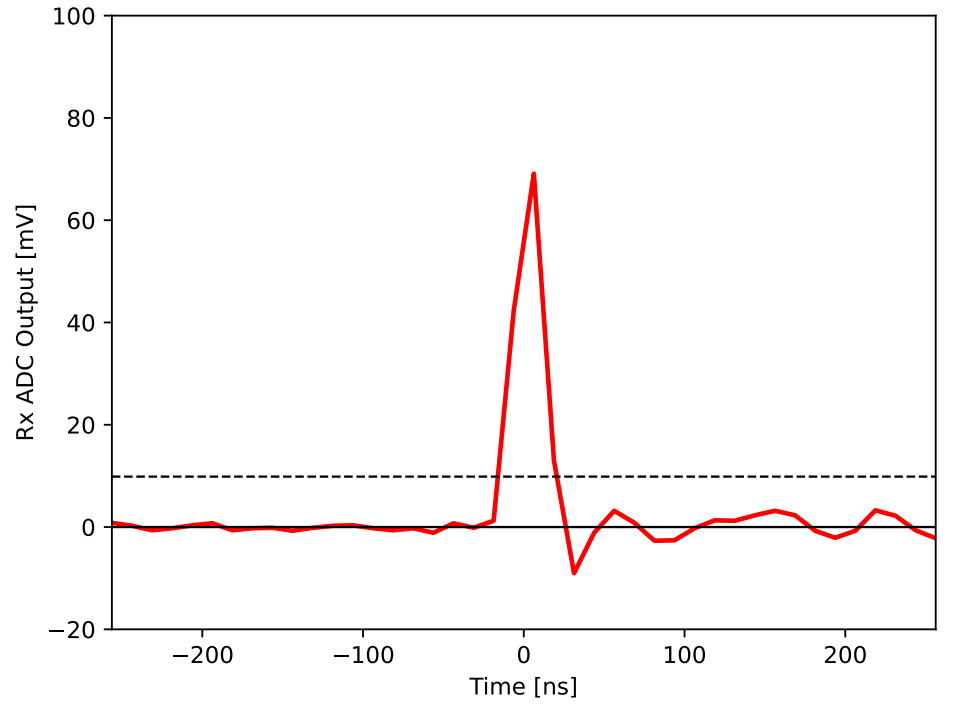
On 14 September, members of the BELA team were at the ESA control centre ESOC in Darmstadt and at the DLR Institute of Space Research (DLR-WR) in Berlin to carry out the laser commissioning. This took place in stages over a period of around nine hours, in direct communication with the instrument on the spacecraft. Commands were sent via ESOC in Darmstadt to the spacecraft and BELA via the large radio antenna in Cebreros near Madrid, where they were processed and executed directly. The data obtained – in particular regarding the instrument’s status (temperatures, currents, voltages) and, later, the detected laser pulses – was received directly from the spacecraft via radio signal from the ESA antenna in Cebreros and transmitted to Darmstadt. There, and in Berlin, the data was then analysed and evaluated by the BELA team in collaboration with ESA and the laser manufacturer Hensoldt Optronics. Only after careful evaluation of the data was the next step in the commissioning process carried out. This cautious approach was necessary because, after eight years of interplanetary flight characterised by high temperatures and high levels of cosmic radiation, unforeseen situations can arise. Following the initial positive assessment of the situation at the instrument on the space probe, around a hundred laser pulses were fired into space for ten seconds and recorded as outgoing pulses by the BELA detector (Fig. 1). Once this step had also been successfully completed and further configurations had been tested, the laser was operated for a period of around 40 minutes, corresponding to 24,000 pulses. The laser demonstrated stable operation even over this extended period, and its efficiency corresponded almost exactly to the ground tests carried out eight years ago. Both the tension and the great relief following the successful completion of the commissioning and the receipt of data from the first laser pulses were palpable amongst the team in Darmstadt and Berlin, as well as at the other partner institutes at the University of Bern and the MPS in Göttingen. However, after eight years of flight time, the team still had to be very patient on this day: the light travel time between the ground station and the space probe is around 11 minutes, and twice that time is required to observe and assess the instrument’s response to a specific command issued from the ground. In total, the tests therefore took around nine hours.

Following successful commissioning, BELA is now ready to collect data on Mercury. However, this will only take place routinely from March 2027 onwards, once the MPO has reached its target orbit and the mission’s scientific data collection has begun.
The BepiColombo Laser Altimeter (BELA) was developed and built in collaboration with the DLR Institute of Space Research, the University of Bern, the Max Planck Institute for Solar System Research and the Instituto de Astrofísica de Andalucía. German funding for the development of BELA was provided by the DLR Space Agency on behalf of the Federal Ministry of Economics and Technology (now: Federal Ministry of Economics and Energy).