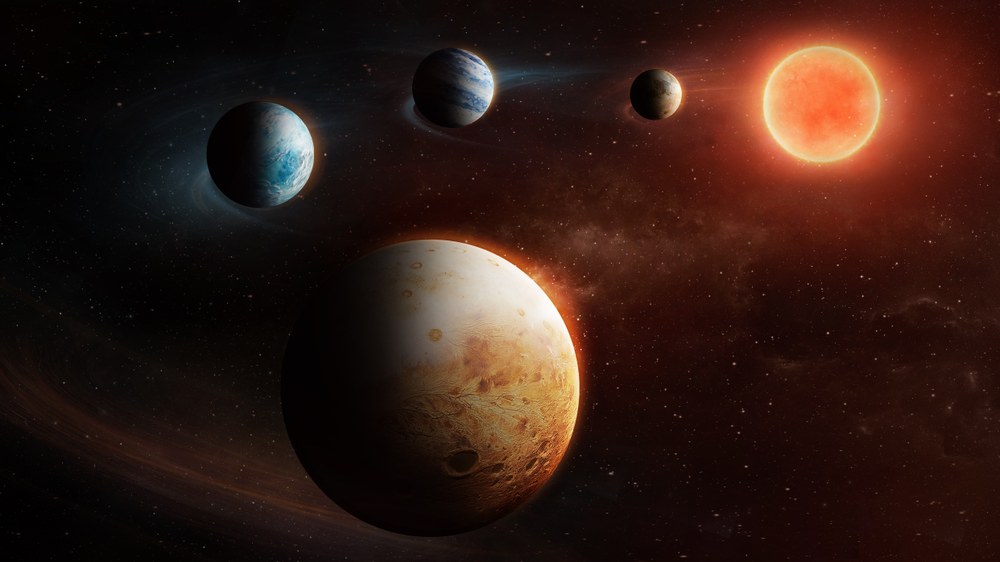
Artist’s impression of the planetary system around the star LHS 1903
The outermost planet orbiting this dwarf star was discovered by CHEOPS. Contrary to expectations – rocky planets close to the star, gas giants on the outer edges – the arrangement here is turned on its head. It is possible that this planet formed much later than its siblings and therefore had less material available.
CHEOPS – CHaracterising ExOPlanet Satellite was developed specially for characterizing already known exoplanets. Using the transit method, CHEOPS performs ultrahigh precision photometry on bright stars that host exoplanets.
CHEOPS determines planetary radii with an accuracy down to ~1%. Selected observation objects in the mass range between super-Earths and mini-Neptunes, whose mass has already been estimated using ground-based spectroscopic investigations. CHEOPS determines planetary radii with a high degree of accuracy, achieving up to ~1%. This has and continues to make it possible to find other planets in known planetary systems.
The planets precisely characterised by CHEOPS, particularly the rocky planets, represent suitable targets for future space missions designed to spectroscopically investigate potential planetary atmospheres.
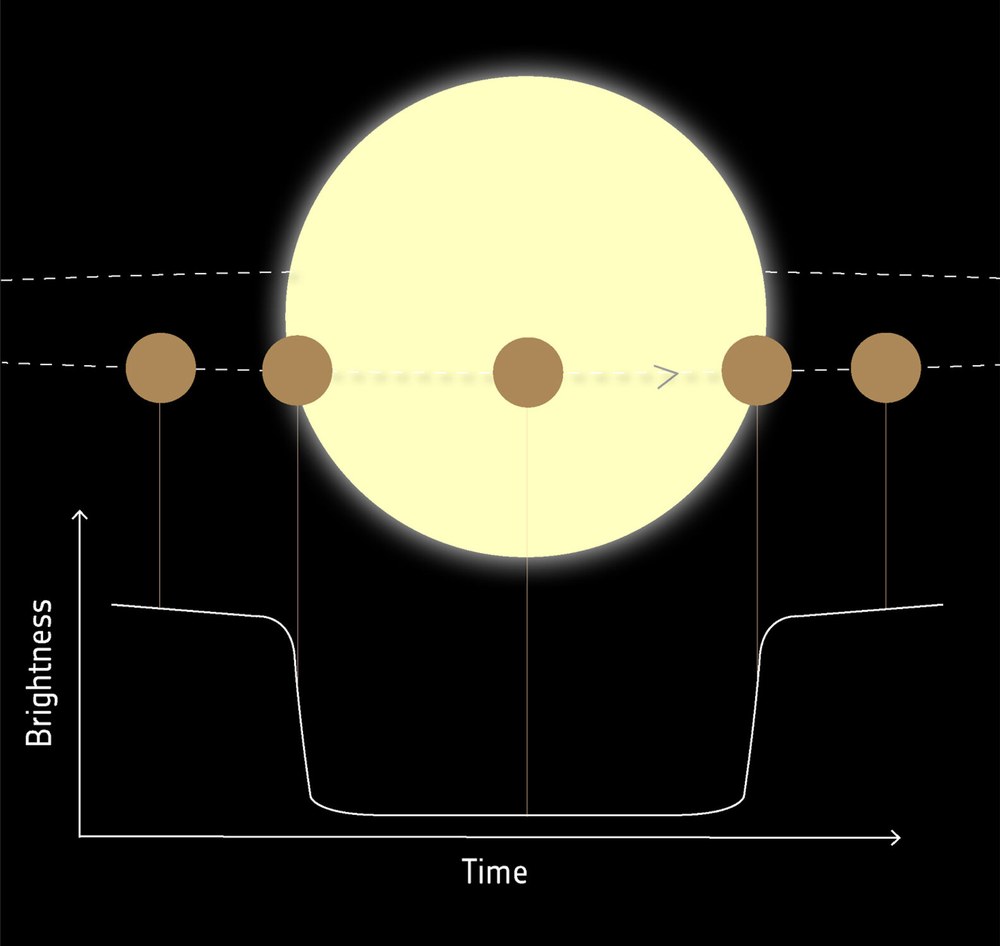
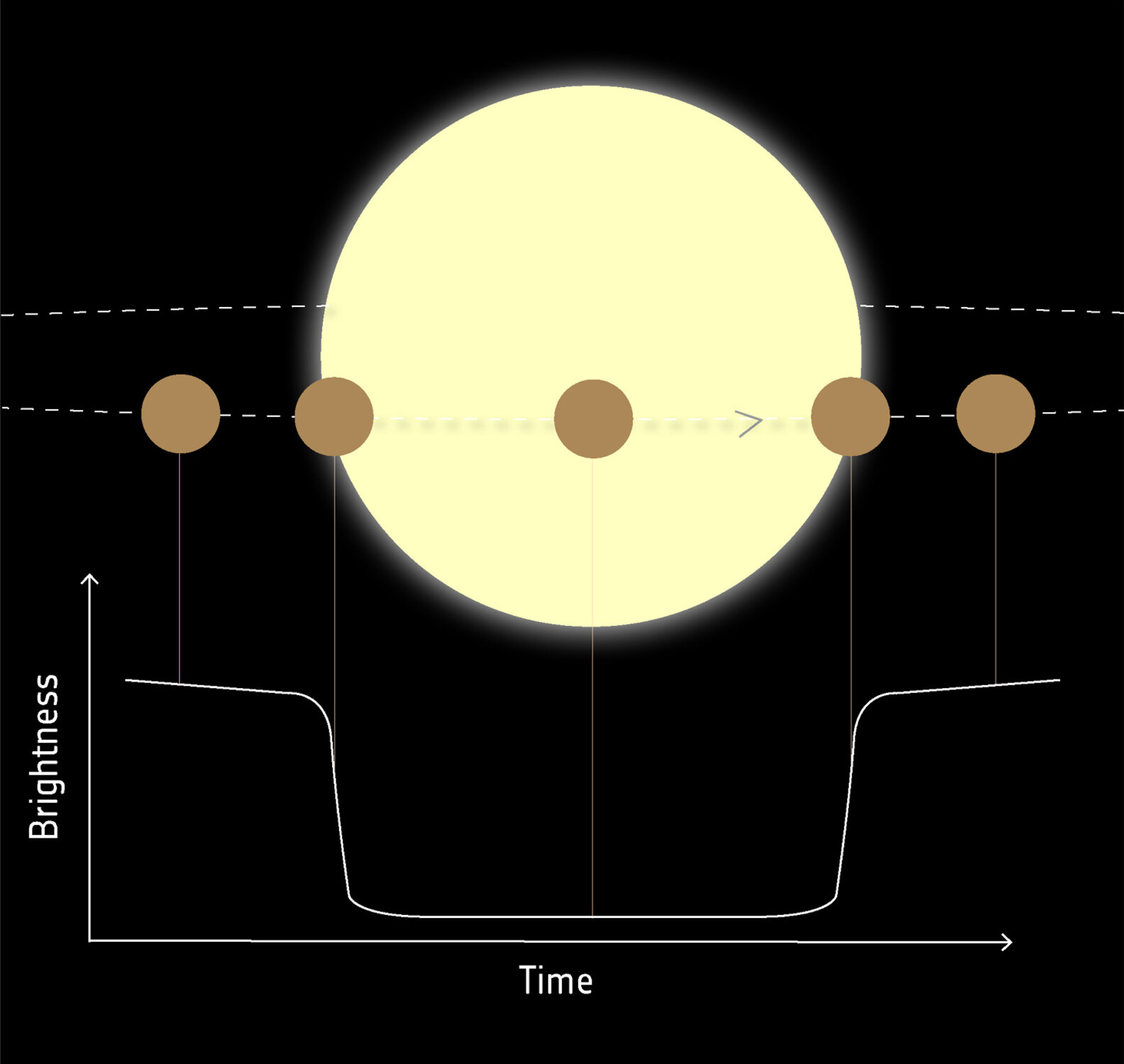
Detecting plantes with the transit method
Transit events occur whenever a planet passes in front of its star, thereby causing it to dim slightly – from the observer’s perspective. The planet’s radius can be calculated from this decrease in brightness, provided the stellar radius is known.