MH-AC – a hydrogen-based air-conditioning system designed to save energy
MH-AC – a hydrogen-based air-conditioning system designed to save energy
Air-conditioning systems in trains and trams consume a surprising amount of energy: in extreme weather conditions, up to 40 per cent of total energy consumption is used for heating and cooling. The energy consumption of a local train amounts to up to 35 MWh per year per carriage – enough to heat five flats measuring 60 square metres, each with an annual energy requirement of 7,000 kWh, for a whole year.
On electrified lines, this high energy requirement can be met continuously via the power supply from the overhead lines. However, this high consumption poses a challenge on non-electrified lines – that is, in those sections of the rail network that can only be served by diesel, battery or hydrogen-powered trains. Consequently, whether outside temperatures are high or low, more battery capacity or fuel (or hydrogen) must be carried on board. Particularly when using hydrogen as an energy source – given the high costs associated with it – it is also especially important to seek ways of reducing consumption. We aim to contribute to this with the cooling technology presented here.
Metal hydride air conditioning system (MH-AC)
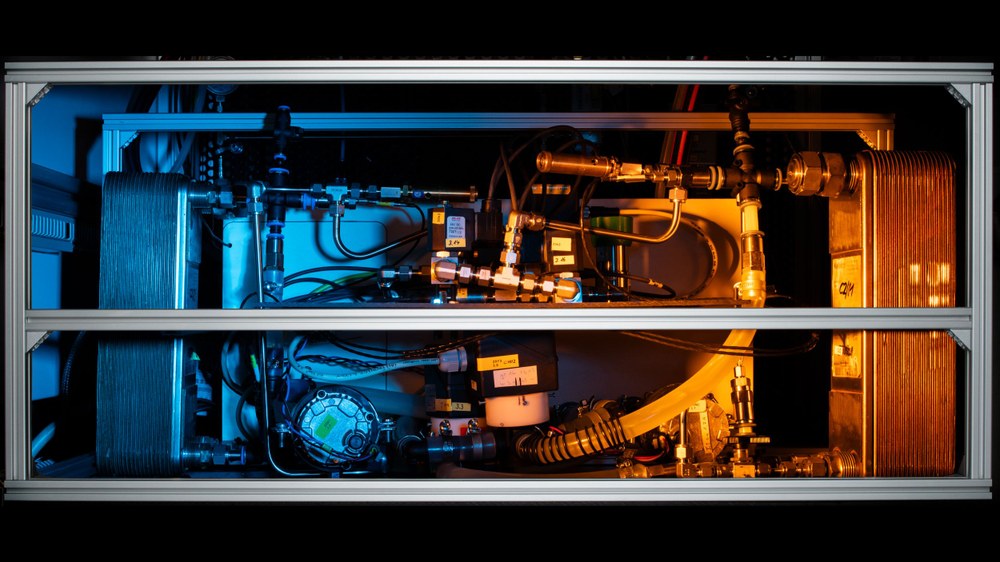
Metal hydride air conditioning system (MH-AC) with a cooling heat exchanger (left) and a heating heat exchanger (right). Hydrogen valves for switching between the tank and the fuel cell are shown at the top centre, and coolant valves and pumps are shown at the bottom centre.
Previously unused energy powers the air-conditioning system
To save a significant amount of cooling energy, we have developed a hydrogen-based air-conditioning system that utilises the previously unused pressure energy from the tank. This new technology is expected to make the air-conditioning systems in hydrogen vehicles over 10 per cent more efficient.
On the train, this innovative air-conditioning system utilises the pressure difference between the hydrogen tank and the fuel cell to create a cooling effect. The hydrogen in the tank is highly compressed and is therefore under high pressure. In the fuel cell, where the hydrogen is needed, the pressure is, by contrast, relatively low. Until now, the excess pressure has been reduced by valves, resulting in the loss of the energy stored within it. The MH-AC air-conditioning system, however, utilises this energy, thereby reducing hydrogen consumption.
Heat exchangers utilise the pressure difference between the tank and the fuel cell for cooling
The system consists of two heat exchangers filled with metal hydride powder. This metal powder is capable of absorbing hydrogen at high pressure. During this absorption, heat is released and transferred to the surroundings. When the powder releases the hydrogen again at low pressure, energy – i.e. heat – is extracted from the surroundings, thereby cooling them down. This cooling effect is utilised by the air conditioning system.
The heat exchangers are installed between the tank and the fuel cell and always operate alternately: first, one unit is connected to the tank – the metal hydride powder absorbs hydrogen under high pressure. The system is then connected to the fuel cell – due to the lower pressure there, the powder releases the hydrogen again, producing the cooling effect.
As soon as the first heat exchanger is disconnected from the tank via a valve switch, the second heat exchanger connects to it, and the process repeats. The finely coordinated switching of the valves ensures continuous cooling and enables the system to switch from hydrogen absorption to hydrogen release. When designing the heat exchangers, the main priority is to minimise energy losses and achieve a high power density.
The system must prove itself under real-world conditions for the first time in a field trial
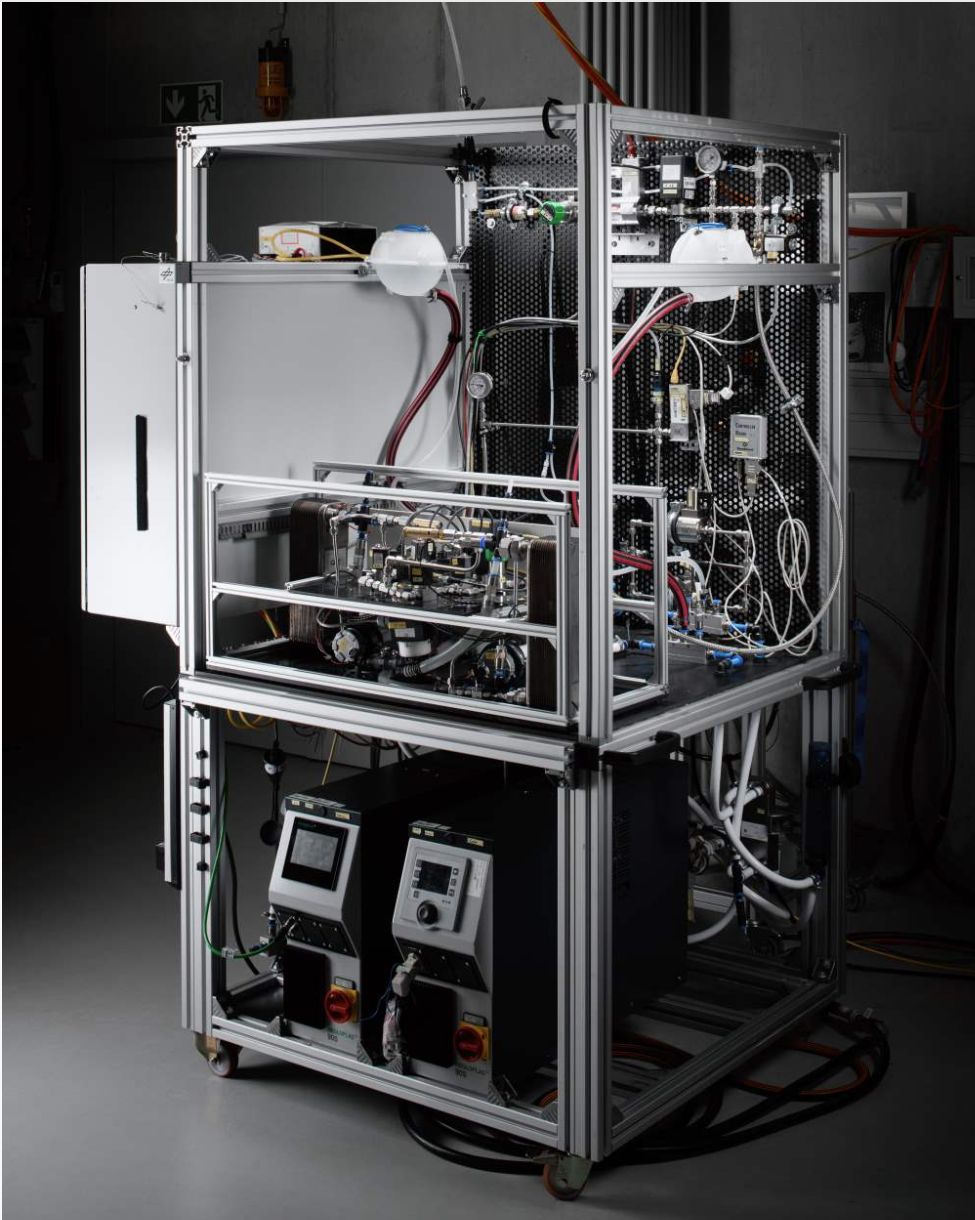
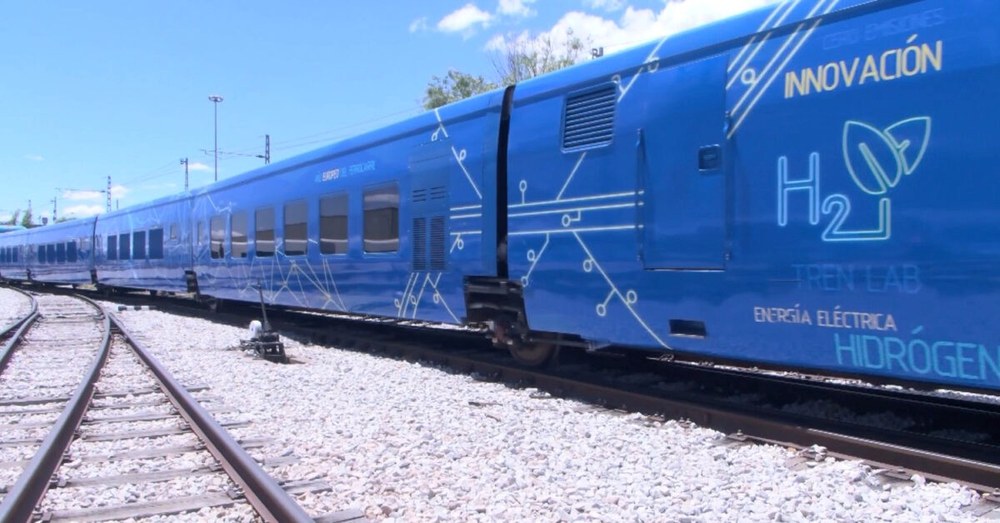
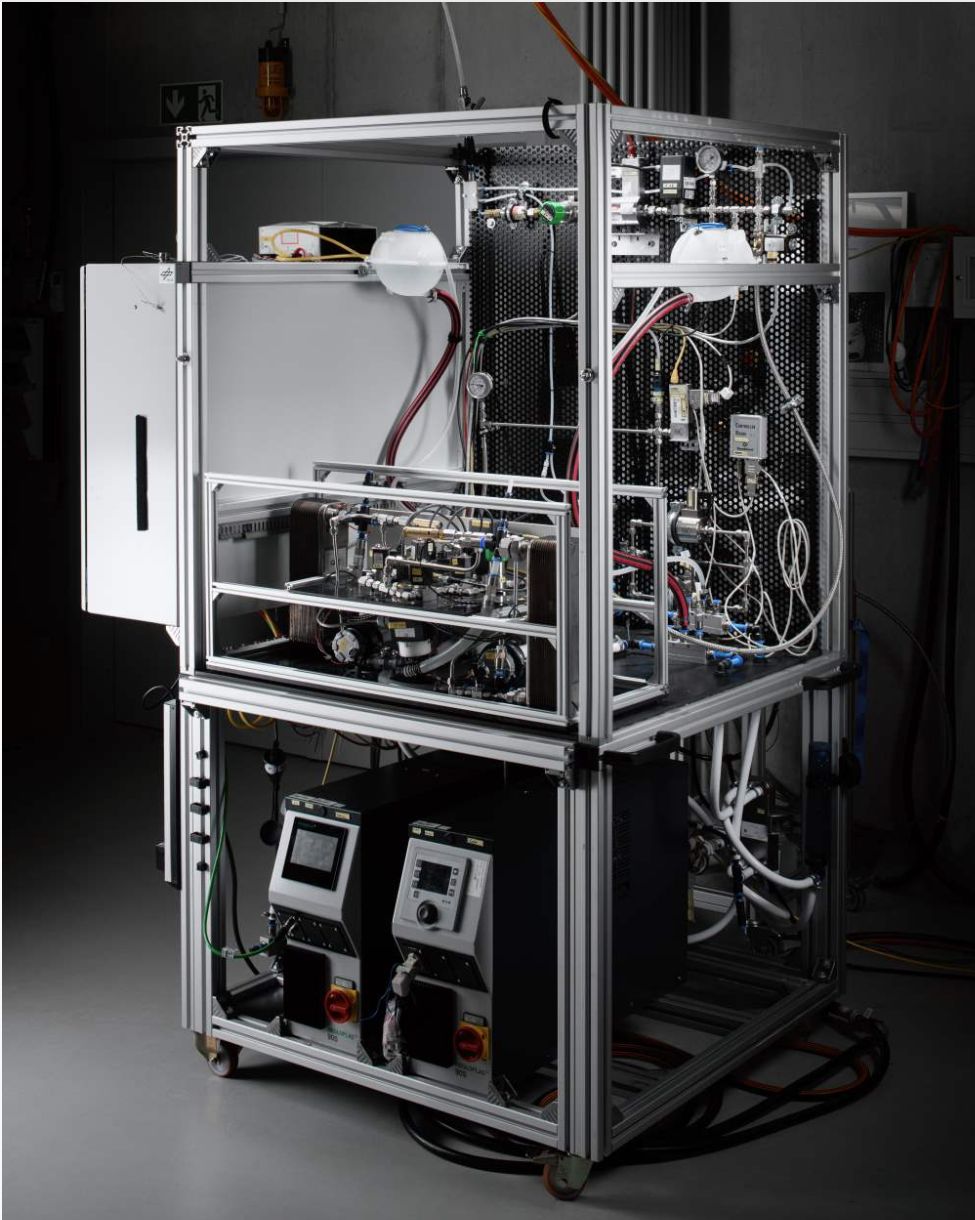
From mid-October 2026, MH-AC’s technology will be used for the first time in a field trial under real-world conditions. A prototype of the air-conditioning system will be tested on a fuel-cell train for two weeks in close collaboration with the train manufacturer Talgo. The test system has an output of around five kilowatts and can thus save up to 18 per cent of the energy per carriage in everyday operation, for example at an outside temperature of 28 degrees Celsius.
The results of the test will enable industry stakeholders to assess the extent to which the technology can be further developed and whether it meets their own requirements. If the patented DLR technology proves its worth in the field trial, it will also achieve a higher Technology Readiness Level (TRL). This is a further fundamental step towards the certification and approval of the technology and is therefore a prerequisite for enabling the widespread use of this advanced cooling technology in everyday operations.
TALGO TPH2
Credit:
TALGO
Project MH-AC – Hydrogen-based air conditioning system for energy saving
Duration: 1 April 2025 to 31 March 2027
Project type: Demonstration project
Funding body: Transfer Management
Lead DLR institutes: Institute of Vehicle Concepts and Institute of Technical Thermodynamics