
LeihMM-I
Lightweight and heatable materials for furniture and interior design, illustrated by the example of the caravanning industry

Fraunhofer ICT
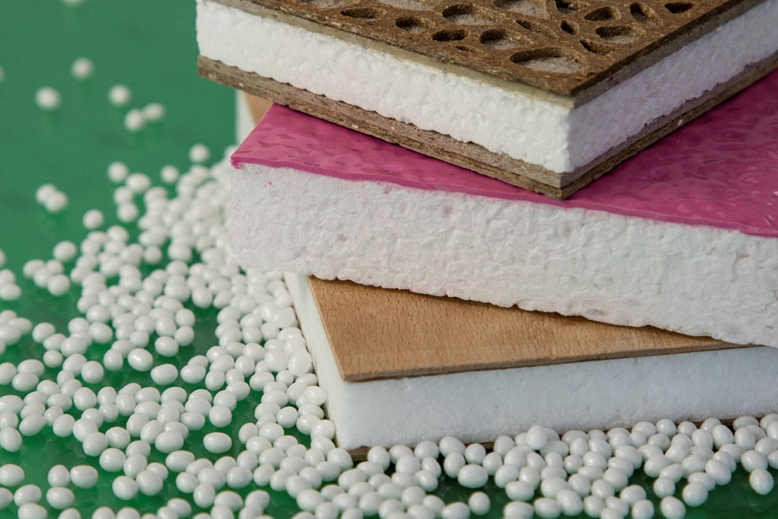
In a pioneering collaboration between Fraunhofer WKI and the German Aerospace Centre (DLR), the Fraunhofer Institute for Chemical Technology (ICT) and industry partners, researchers are developing innovative, resource-efficient and climate-friendly lightweight construction materials based on renewable raw materials. These materials are not only recyclable, but can also incorporate functional heating and lighting features.
“Our aim is to develop a high-quality hybrid material that meets the requirements for design, comfort and functionality in vehicles such as caravans and tiny houses. The innovative sandwich facing layers made from hardwood and EPLA foams enable the production of lightweight, thermally insulating components that are ideally suited for use in the construction and automotive industries,” reports Peter Meinlschmidt, project manager at Fraunhofer WKI.
A particular advantage is the integration of heating functions into furniture and interior fittings. Instead of a water-circulating surface heating system, an electric surface heating system is integrated. The researchers’ innovative approach relies on a heating paint manufactured by the Austrian company Villinger. Whether this material is itself suitable for bonding is being investigated as part of the project.
Visually appealing wood species such as cherry, alder or maple, as well as durable species such as black locust, are produced as visible veneers.
The design and construction of aesthetic furniture and interior fittings are being carried out in collaboration with the Berlin-based design studio Studio Sofia Souidi, the joinery firm Flick, which specialises in furniture and exhibition stand construction, and the companies Verpackungswerk Huckschlag GmbH & Co. KG, Nolax, Delignit AG and Obel-P Automation A/S.
The project is not only technologically advanced but also offers economic benefits. The use of regionally available raw materials reduces dependence on fossil fuel sources and strengthens the competitiveness of German industry.
Funding
The ‘LeihMM-I’ project is funded by the Federal Ministry of Food and Agriculture (BMEL) via the project management organisation Fachagentur Nachwachsende Rohstoffe e. V. (FNR).
The project is listed in the FNR’s funding database (funding reference: 2220HV081A).