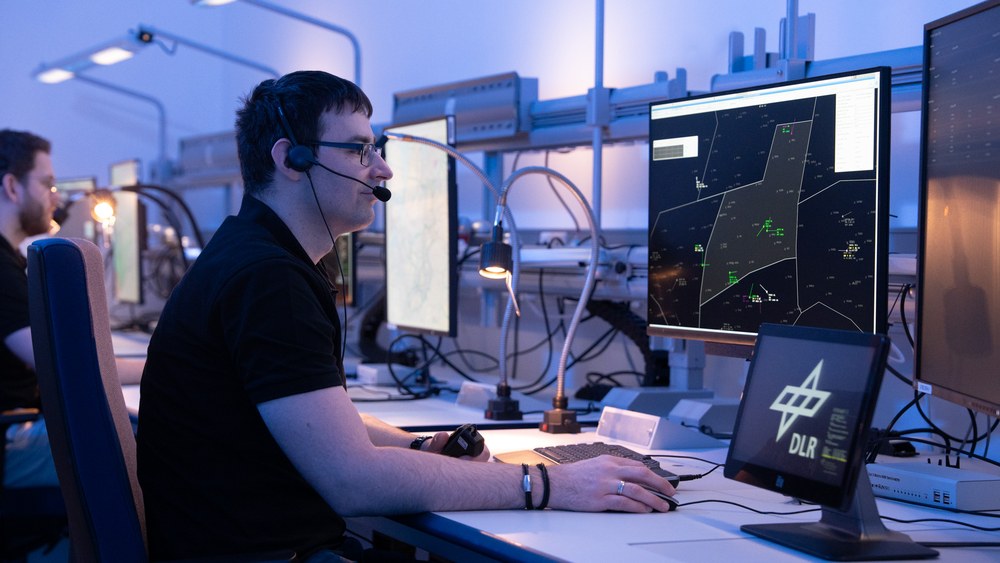
AI-Driven Automation and Flexibility for Air Traffic Control
Smarter Skies
Staff shortages, increasing traffic demand, climate-related constraints, and growing operational complexity are pushing European air traffic control to its limits. At the upcoming Airspace World 2026, DLR will present innovative scientific solutions for an AI-based, highly automated and flexible air traffic control. Visit the DLR stand to discover the latest research results in three key areas that are shaping the smart skies of the future!
Digital Controller
With the Digital Interactive Radar Controller (DIRC), DLR demonstrates a virtual partner designed to actively support air traffic controllers and enable single-controller operations. Validation exercises with European ATCOs showed that traffic loads of up to 125% of declared sector capacity could be handled safely and efficiently.
Flexible Controller Endorsements
Traffic flows are becoming increasingly dynamic due to geopolitical events and rapidly changing demand patterns. DLR's competency-based endorsement concept, developed in the SESAR IFAV3 project, enables greater flexibility in controller deployment across sectors, without compromising safety or situational awareness.
Automated Apron Control