
Advancing U-space in Germany – DLR offers expertise

- European U-space regulations are in place but still need to be implemented legally and organizationally in Germany.
- Clear central coordination is essential for the safe and scalable integration of unmanned aircraft systems.
- DLR can take on a coordination role by contributing its expertise, infrastructure, and neutrality.
The topic of U-space is gaining increasing importance in Germany and across Europe. While regulatory foundations for safe and secure airspace integration of drones have already been established at the European level, further key steps are required for its successful introduction and implementation in Germany. The German Aerospace Center (DLR) contributes its scientific and technological expertise as a neutral partner to the design, implementation, and evaluation of national processes and is also available to take on a possible coordinating role in the field of U-space.
At the European level, important foundations have already been established through the regulatory framework of the European Union Aviation Safety Agency (EASA). The next crucial step is to transpose these regulations into national law and to establish the necessary organizational structures in Germany. One of the key prerequisites is the designation of an official body as U-space coordinator to support the German Federal Supervisory Authority for Air Navigation Services (BAF) and the Federal Ministry for Digital and Transport (BMDV). Clear responsibilities are essential for a reliable, nationwide, and future-oriented implementation of U-space in Germany.
At the same time, requirements are increasing. The safe integration of unmanned aircraft systems into existing airspace demands robust technical solutions, harmonized procedures, and a shared understanding among all stakeholders involved.
The DLR Institute of Flight Guidance contributes comprehensive expertise in this field:
- Extensive professional expertise in air traffic management and U-space
- A modular simulation infrastructure – a “digital U-space twin” for the analysis and validation of complex scenarios
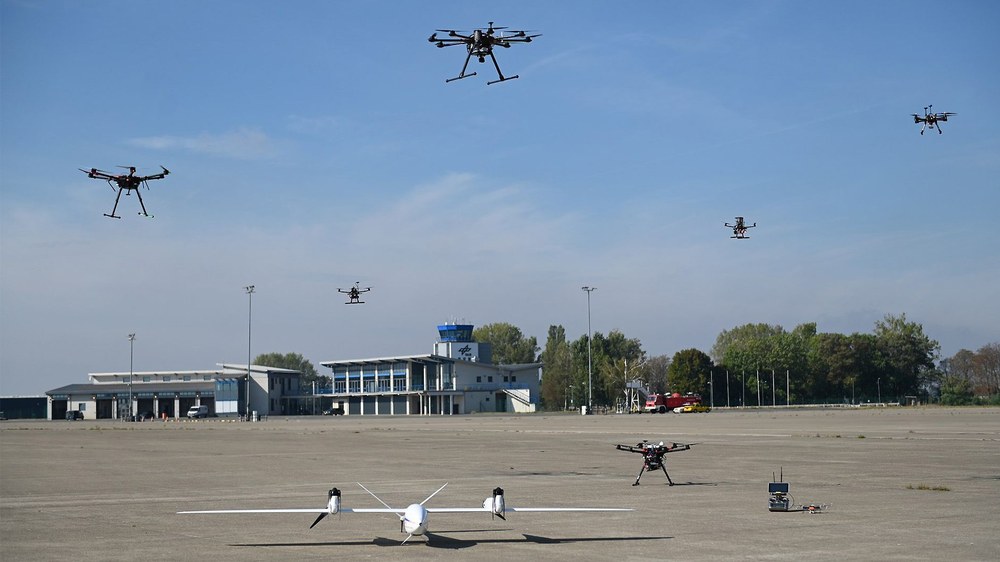
- Practical implementation through the development of a prototype U-space at the National Experimental Test Center for Unmanned Aircraft Systems at the DLR site in Cochstedt
- Independent action as a national research institution without own commercial interests
DLR sees itself as a reliable partner for authorities, industry, and research institutions to jointly shape the next steps toward a safe, secure, efficient, and future-ready U-space in Germany. With the Institute of Flight Guidance and the National Experimental Test Center for Unmanned Aircraft Systems, DLR brings together all key prerequisites to assume a coordinating role and ensure the holistic involvement of all relevant stakeholders.
Further information on U-space: https://www.dlr.de/de/fl/forschung-transfer/projekte/area-u-space.