
The next step towards the safe integration of space travel into European airspace

- The ESA-initiated ISTAT project is developing an interface for the fast and secure exchange of information between space and aviation.
- Increasing space activities require a joint approach to air and space as one security zone.
- The project supports European and international regulations for greater safety and sustainability in space.
The increasing number of rocket launches and re-entries worldwide places high demands on safe and efficient integration into European and international airspace. The European Space Agency (ESA) has recognised this need and launched the new project "Interface between Space Traffic and Air Traffic Management" (ISTAT). A consortium based in Braunschweig, consisting of the company OKAPI:Orbits, the Technical University of Braunschweig and the German Aerospace Center (DLR), is developing an interface on behalf of the ESA that, similar to a messenger service, will enable direct, fast and secure information exchange between the parties involved.
Reliable exchange of information between space and aviation
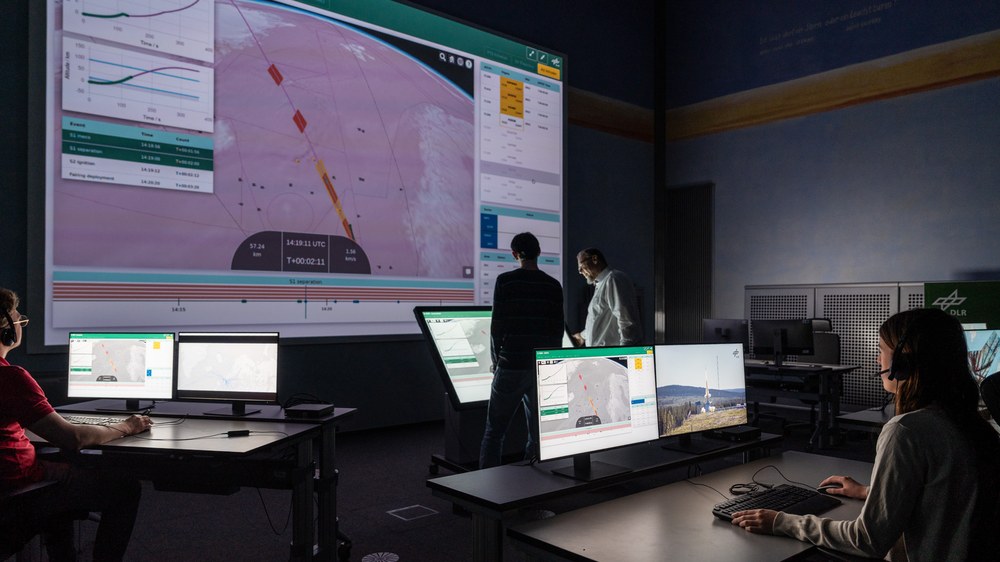
The new interface will cover the entire spectrum of space activities that have an impact on air traffic. This includes rocket launches, controlled and uncontrolled re-entries, and the operation of rocket planes or space gliders. Planning data and real-time information will be packaged in a harmonised format, a "message", and made available to the aviation sector. An essential component of the message is the areas affected by space activities around which air traffic must be diverted. These can often only be determined at short notice and therefore require a dynamic response from the aviation sector. This, in turn, is only possible if the aviation sector receives the necessary information in real time. The messages sent are intended to enable such real-time responsiveness. For application testing, the interface will be integrated into the existing Launch Coordination Centre of the DLR Institute of Flight Guidance.
SpaceX-Imagery from Pixabay
Airspace and space as a contiguous security area
Germany and Europe are currently focusing on independent and sovereign access to space. In this context, there will be an increase in space launches from Europe, particularly of rockets or rocket planes from German space companies. The need for closer integration between space and air traffic systems has become increasingly evident. An estimated 130 million space debris fragments currently orbit Earth, while only around 40,000 objects are actively catalogued and tracked.
As satellite constellations expand and more spacecraft re-enter the atmosphere, the potential impact on aviation safety increases. Recent incidents in which commercial aircraft had to avoid debris from rockets taking off over the Caribbean have made it clear that space activities can directly affect air traffic. These events underscore how closely space activities and aviation operations are interconnected, reinforcing the importance of treating airspace and outer space as a connected safety domain.
Alignment with European and Global Policy
The project supports Europe’s evolving regulatory framework. The proposed EU Space Law emphasizes space safety, sustainability, and coordination across sectors, while explicitly recognizing the downstream effects of space activities on aviation and ground safety. At the international level, the work aligns with the United Nations Committee on the Peaceful Uses of Outer Space Long Term Sustainability Guidelines and with cooperation between the United Nations Office for Outer Space Affairs and the International Civil Aviation Organization. These initiatives aim to reduce space debris, improve information exchange, and integrate space operations into aviation safety frameworks.