AI4HyDrop
The main goal of the project is to define a methodology for an airspace structure organisation and the effective and efficient flow of information between the different U-space services. It also incorporates various AI tools for flight planning, wind and turbulence prediction and drone detection.
AI4HyDrop stands for „An AI-based Holistic Dynamic Framework for a safe Drone’s Operations in restricted and urban areas“. Starting on September 2023 and with a duration of 30 months, it is supported by the SESAR 3 Joint Undertaking. The project joins the expertise in the field of partners from Norway, Spain, France, Turkey, Czechia and Germany and is coordinated by the University of South-Eastern Norway (USN). The project envisions a Technology Readiness Level 1 or 2.
Paving the way for a safe UAS operation at Very Low Level (VLL) airspace
Previous projects like CORUS XUAM or AMU-LED have developed a framework underlying the U-space Concept of Operations focused on Urban Air Mobility and considering advanced U-space services (U3). But these do not sufficiently describe the advanced services, with many questions still to be tackled, like how to assess and quantify the level of safety for U-space operation, how to define a safety framework in strategical or tactical operations, how to authorize to operate in a specific airspace, or how the trajectories may be impacted by other airspace users or the given conditions.
Besides, the expected increase of the traffic density will require the automation of most of the traffic management tasks. But, what level of automation and Artificial Intelligence (AI) is acceptable? What safeguards or supervisions are in place from the operator or ATM? How to provide a framework to allow us to optimize the use of the airspace, balancing in fair manner between operational criticality, volume, and capacity whilst maintaining separation at tactical level? What will be the rational and factors for flight approval process, which may allow us to further digitize such decision support tools?
AI4HyDrop intends to help address some of these questions raised above and investigate how AI techniques could lead ultimately to automated air traffic management while considering potential risks, societal impacts, and environmental concerns.
Validation
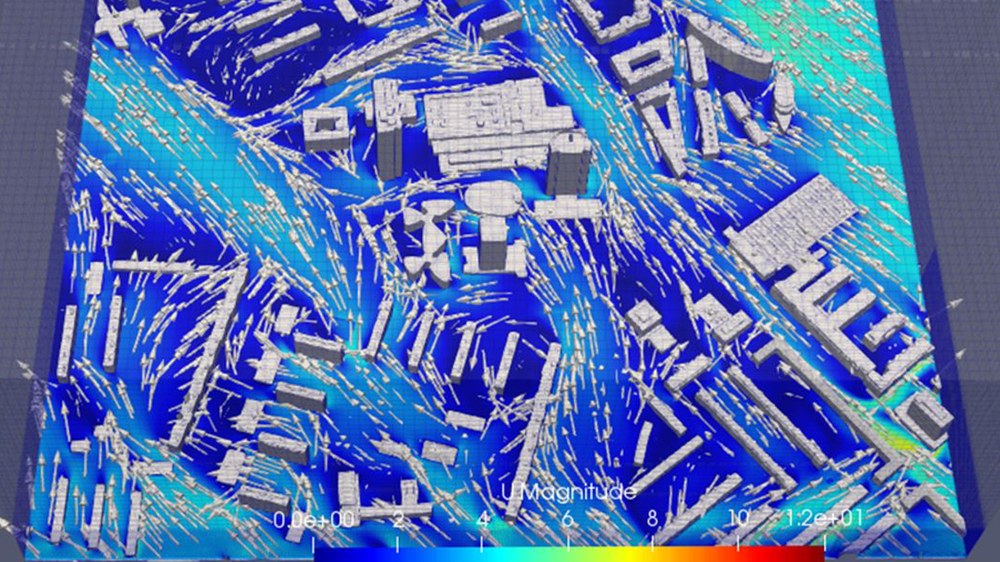
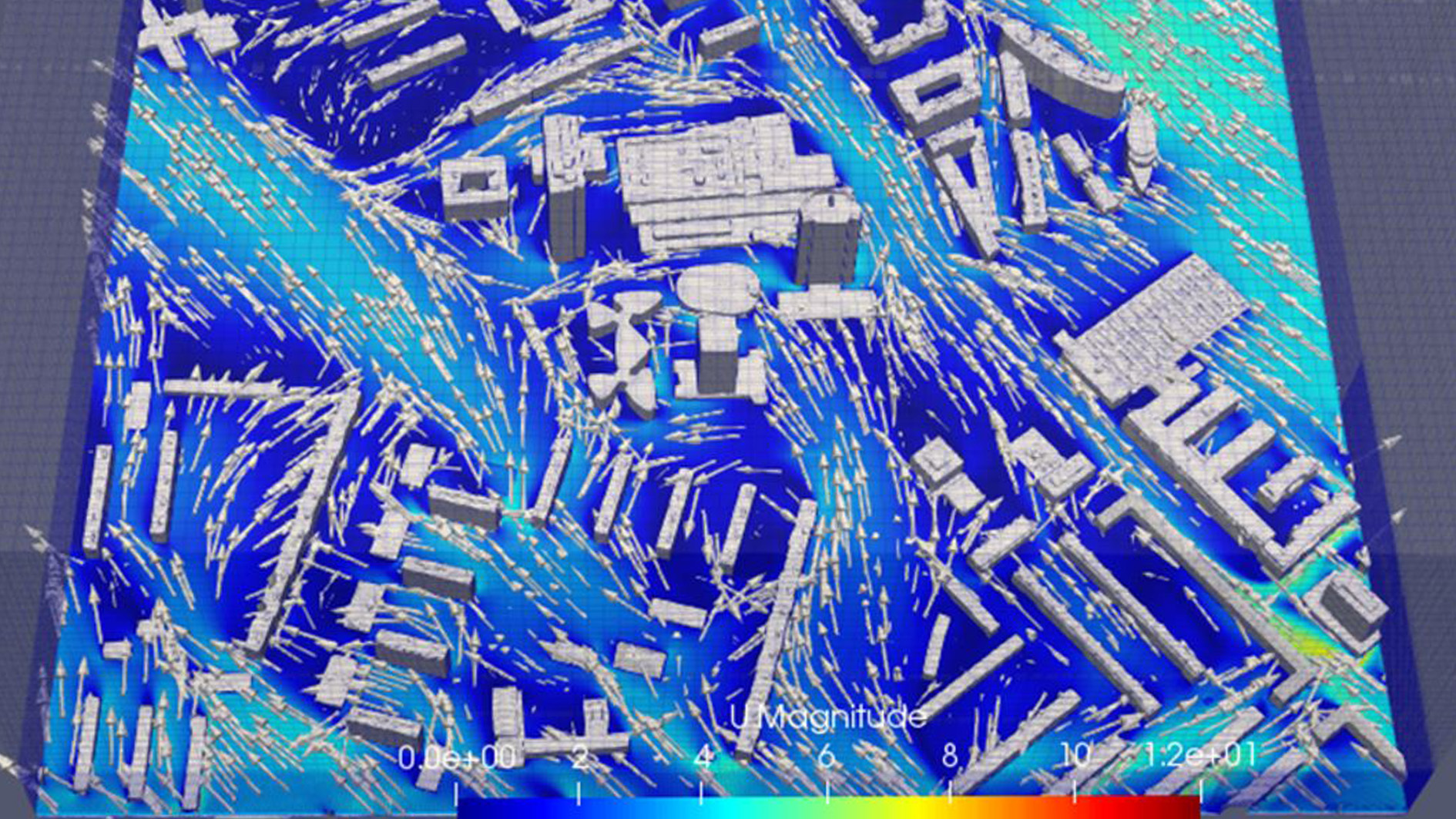
The development of the holistic framework for a safe drone operation in urban areas will be exemplified with validations. Using as scenarios maps of cities interested in the management of the drone traffic, these will serve as examples of airspace structure design and identification of required logistics. Use cases include urban air mobility and medical supplies delivery. Simulations with relevant traffic density forcing some specific events, will allow us to check if the safety and efficiency of the operations has been correctly supported by the policies, procedures and services proposed. Concretely about services, two of them supported with AI will be implemented during the project. One in charge of estimating the location of turbulences and the possible impact of the wind, and a second for drone detection and identification.
The role of DLR in the project is to participate in the definition of the holistic framework in its different aspects, to coordinate the validation, and to implement part of the software required.
Key data
| | |
|---|
Project | AI4HyDrop (An AI-based Holistic Dynamic Framework for a safe Drone’s Operations in restricted and urban areas) |
Participants | University of South-Eastern Norway (Koordinator)
Universidad Europea Madrid (UEM)
KATARA (KTR)
Istanbul Technical University (ITU)
SINTEF
The Czech Aerospace Research Centre (VZLU)
German Aerospace (DLR)
General Directorate of State Airports Authority (DHMI)
Düzce Municipality (DZC)
Kongsberg Municipality (KG)
Sopra Steria Group (SSG) |
Duration | 2023 – 2026 |
Funding | SESAR 3 JU / Horizon Europe programme |
Website | https://ai4hydrop.eu |
AI4HyDrop has received funding from the SESAR3 Joint Undertaking under grant agreement No 101114805 under European Union’s Horizon Europe research and innovation programme.