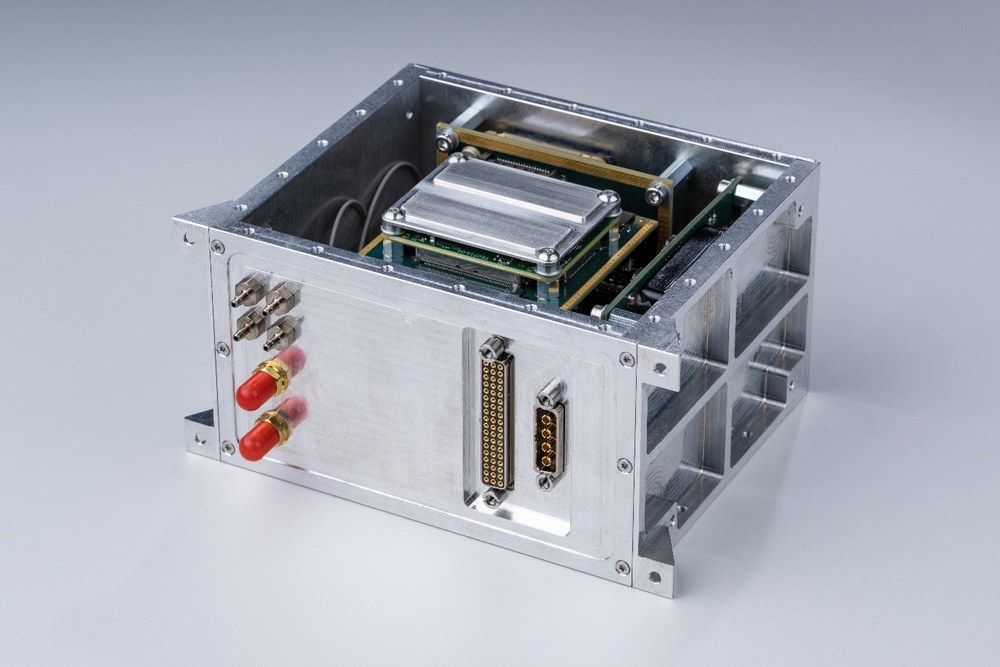
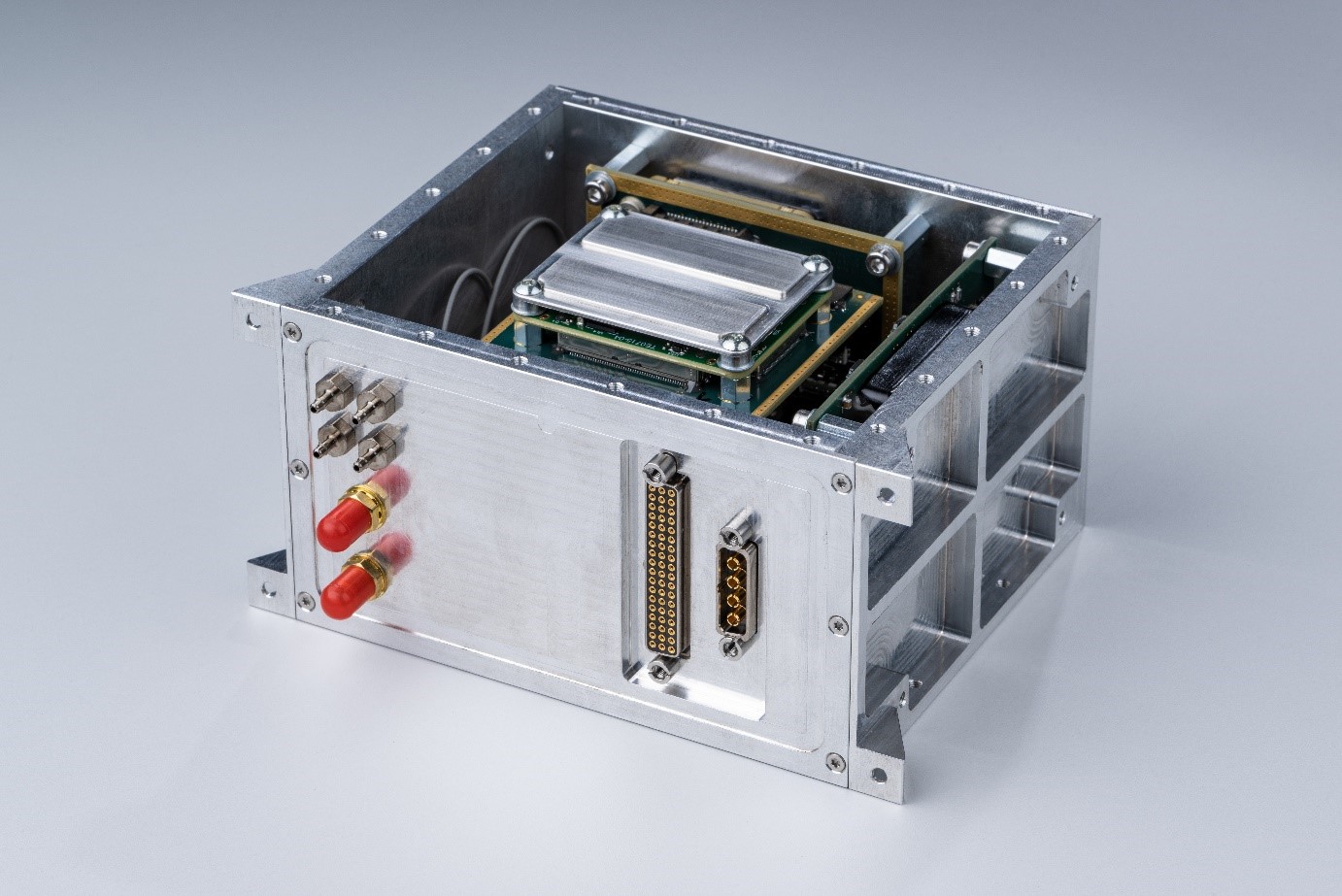
The DLR Flight Control Computer is a highly integrated avionics platform designed for small- to medium-sized unmanned aerial vehicles. The computer stands out due to its wide range of communication interfaces, integrated sensors, and powerful processors. These features enable flexible deployment across various application scenarios. The redundant implementation of critical components, such as power supplies and processors, enhances the avionics platform's reliability and integrity.
The Avionics Systems working group researches topics relating to the planning, development and certification of avionics software and hardware.
One focus is on model-based processes, e.g. for systems engineering. Here, we combine innovative methodologies, such as the STPA (System Theroetic Process Analysis) developed at the Massachusetts Institute of Technology (MIT), with modern modelling languages like SysML v2. Model-Based Systems Engineering (MBSE) is a key capability in order to maintain an overview of the system design despite increasing complexity and at the same time ensuring a coherent design.
Another focus is on the implementation of avionics systems, taking into account current techniques from IT, such as Rust or Infrastructure-as-Code) - in particular with regard to real-time operating systems and their Apllication Programmin Interfaces (API) like ARINC 653.
While modern programming languages, such as Rust, can detect many errors at design time, Infrastructure-as-Code guarantees an organised and reproducible development process. The combination of complicated niche technologies in particular, which are often used for systems of the highest security level, can otherwise quickly lead to results that are difficult to reproduce.
The third focus is FPGA (Fine-Pitch Ball Grid Array) development, for example for high-availability systems, but also for accelerating calculations, like the inference of neural networks. The sophisticated performance optimisations in modern microprocessors in particular prevent a precise characterisation of the temporal behaviour of software. In contrast, FPGAs are much more predictable. FPGAs also offer significant advantages for parallel data processing thanks to comparatively simple functional units compared to microprocessors, which is why they have become an indispensable part of avionics development.