
Small UAS (Unmanned Aircraft Systems)
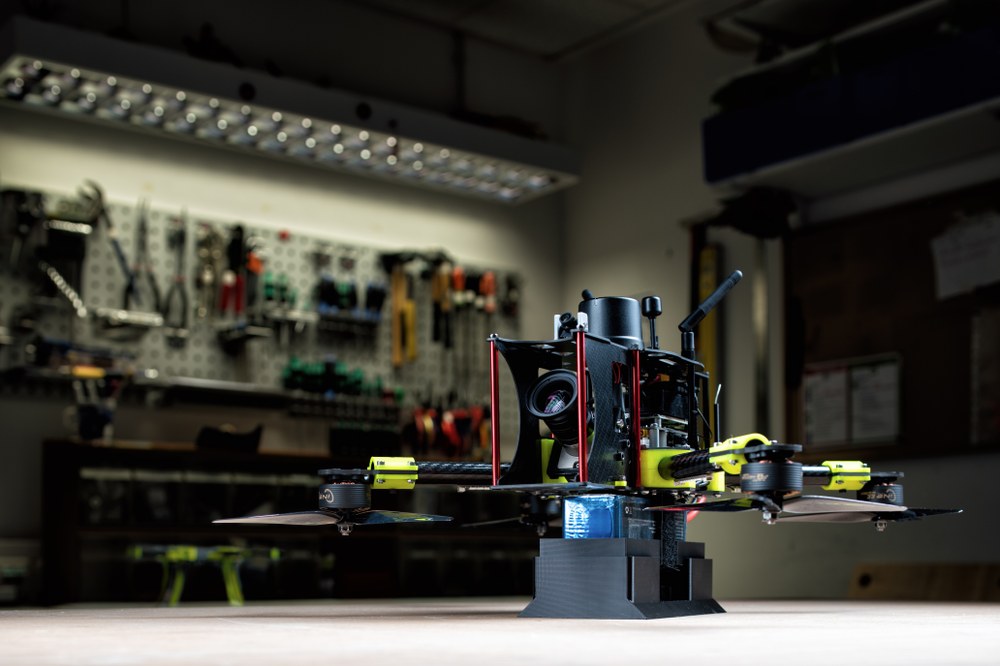


In the Department of Unmanned Aircraft, a wide variety of small unmanned aircraft are used for different research areas. The fields of application range from research into highly automated and autonomous systems to drone swarms and counter-UAS technologies.
Small unmanned aircraft systems are a flexible and resource-efficient means of rapidly testing new approaches and methods. In the Department of Unmanned Aircraft, these systems are used across a wide range of research areas. This includes research into automation functions aimed at improving the onboard capabilities of individual drone systems. In addition, small UAS are used to study swarm behaviour and the interaction between drones within a swarm. Another important focus area is counter-UAS research. Our approach involves the development of specialised drones that can detect hostile or misused drones in the air and act upon them, with an emphasis on innovative and safe interception methods.
Highlights of Small UAS
- High flexibility – Thanks to their compact design and wide range of applications, small unmanned systems can be quickly adapted to different research objectives and operational scenarios.
- Low development effort and short development cycles – These systems can be developed and modified with relatively few resources, enabling the rapid testing of new technologies and methods.
- Modularity – Their modular design allows components such as sensors or control units to be easily exchanged, facilitating targeted investigation of specific research questions.
- Platform for swarm research – Small UAS provide an ideal platform for studying complex swarm behaviour and drone interactions, as well as for developing new cooperation strategies.
- Dedicated research on interceptor drones – A particular focus is placed on the development and testing of drones specifically designed for counter-UAS applications, employing safe and innovative interception methods.