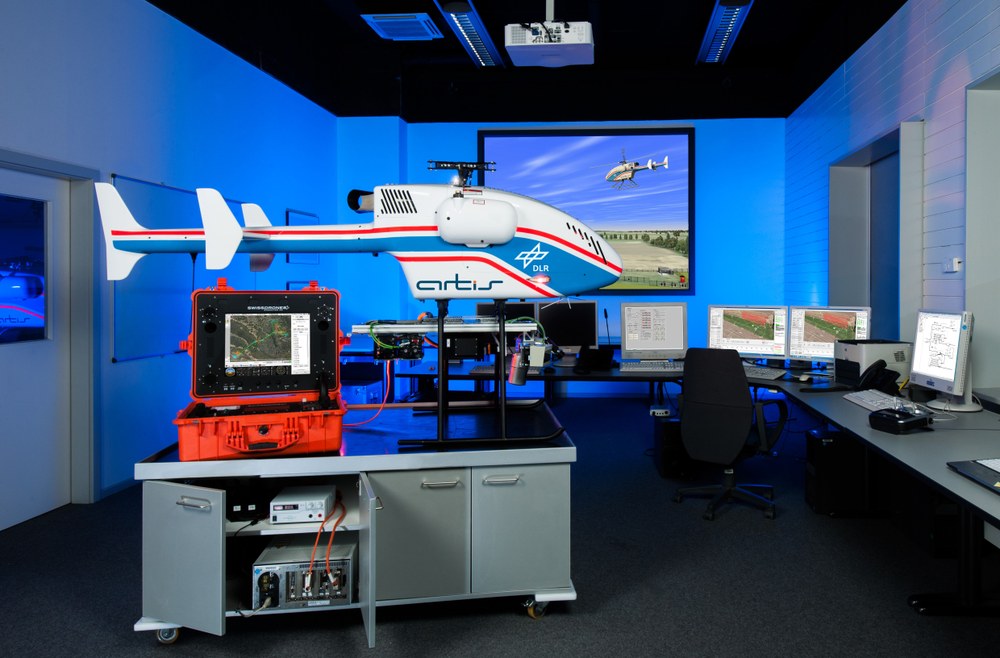
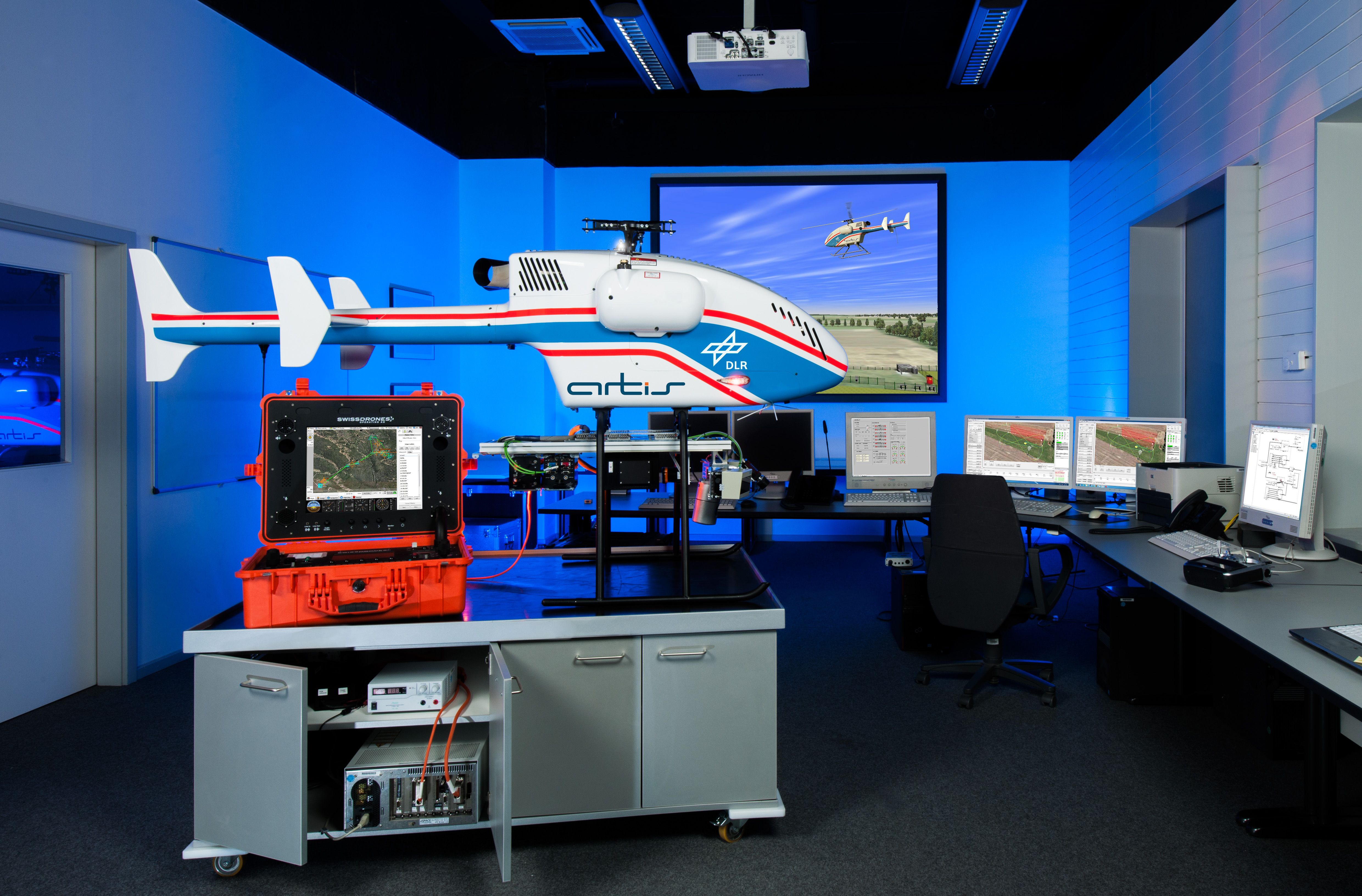
Before functions are tested in flights, they must be validated through laboratory simulations. The research laboratory of the department of Unmanned Aircraft is specifically equipped for this purpose.
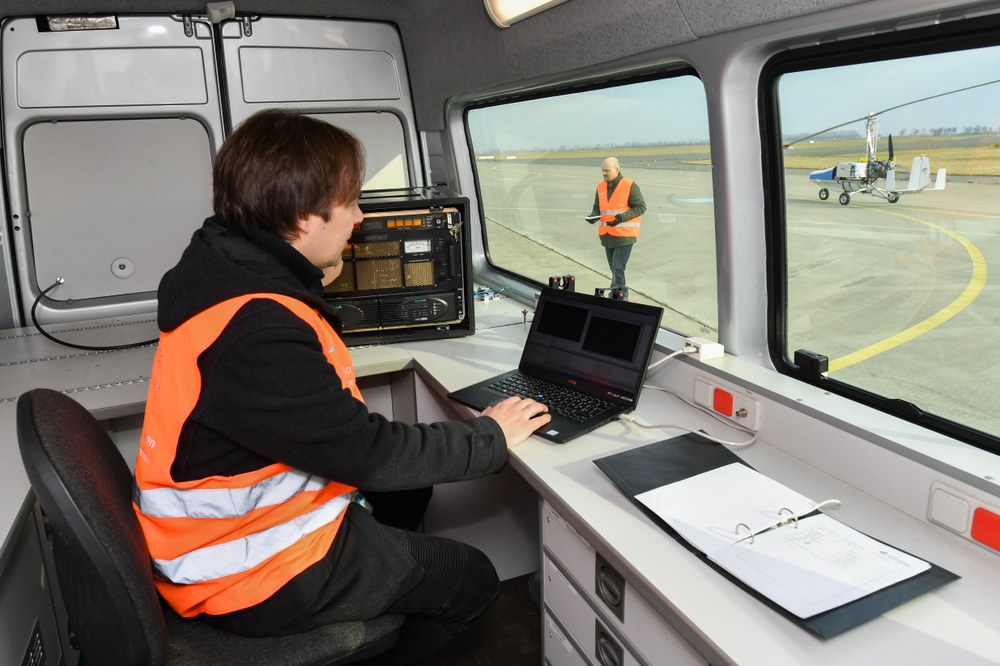
An essential component of any unmanned aircraft system is the ground control station. At the Institute of Flight Systems, various concepts have been realized, ranging from tablet-PC or laptop systems to a portable ground control station box with integrated data links. To ensure the fast and seamless execution of flight tests, a specially equipped transport vehicle is in use. This vehicle contains three workstations, including hardware, data links, an internal network, and a power supply. Additionally, a mounting system is available for the safe transport of different flight test platforms.
Various data links transmit the status data from the airborne system to the ground control station, making them available in near real-time. This enables monitoring, programming, and control during experiments. An operator has access to instruments, diagrams, numerical displays, simulated external views of the test carrier, and a map display. As a redundancy measure, a safety pilot is on standby during the whole test flight, capable of manually taking over the controls of the aircraft using a conventional remote control in case of malfunction or emergency.
Simulator and Test Facilites
In parallel with the hardware development of our unmanned aircraft, extensive tools have been created for their modeling, simulation, and control. The so-called software-in-the-loop simulation enables rapid testing of new methods and technologies, as well as parameter adjustments on any standard workstation computer. If successful, the same tests are conducted in the laboratory using hardware-in-the-loop simulation under significant more realistic conditions. In this simulation, the original avionics of the aircraft is used in combination with emulated sensors. A dedicated real-time simulation system is available to compute sensor data based on assumed model behavior and environmental conditions. The results obtained through this approach closely resemble actual flight tests, significantly reducing the likelihood of test failures.
The simulators can be linked to a custom visualization environment, where the experiments are displayed in a 3D representation of real-world environments. 3D models of various actual flight test areas are also available for this purpose.