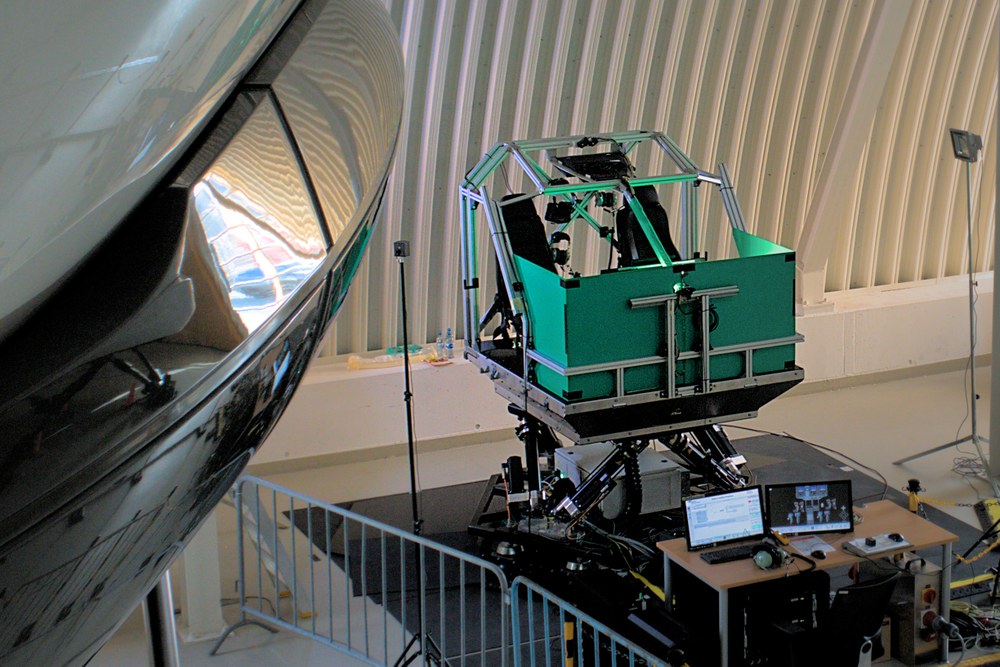
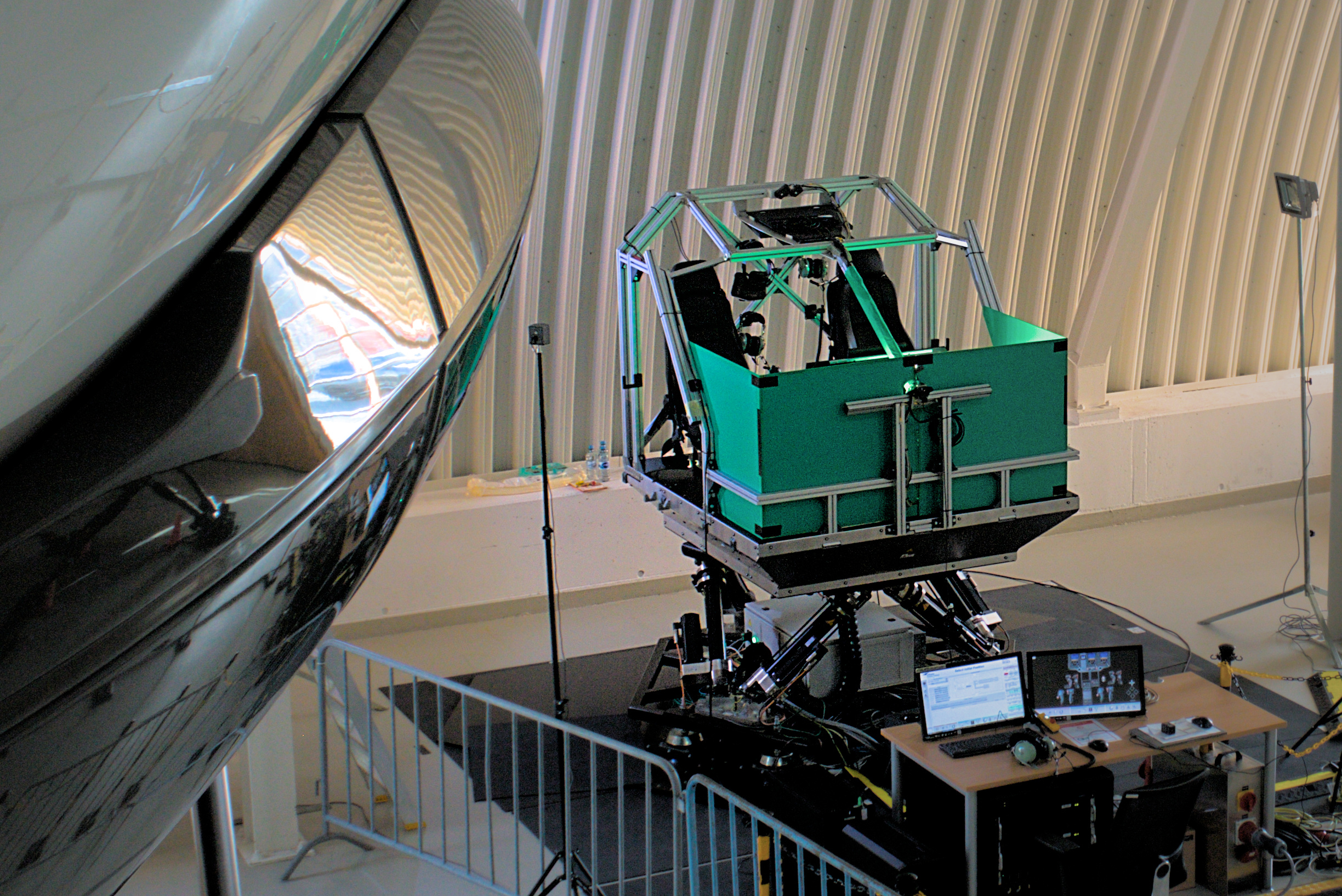
The mixed-reality simulator from the ARiTra project (Augmented Reality in Training Simulation) during the ARiTra final study at LAT (Lufthansa Aviation Training) in Frankfurt
As part of the ARiTra project, a mixed-reality simulator was developed by Reiser Simulation and Training; this forms the basis for the ARTE project and is to be enhanced with MCC capability. In a major final study at LAT in Frankfurt, the simulation quality of the mixed-reality simulator was compared with that of a full-flight simulator.
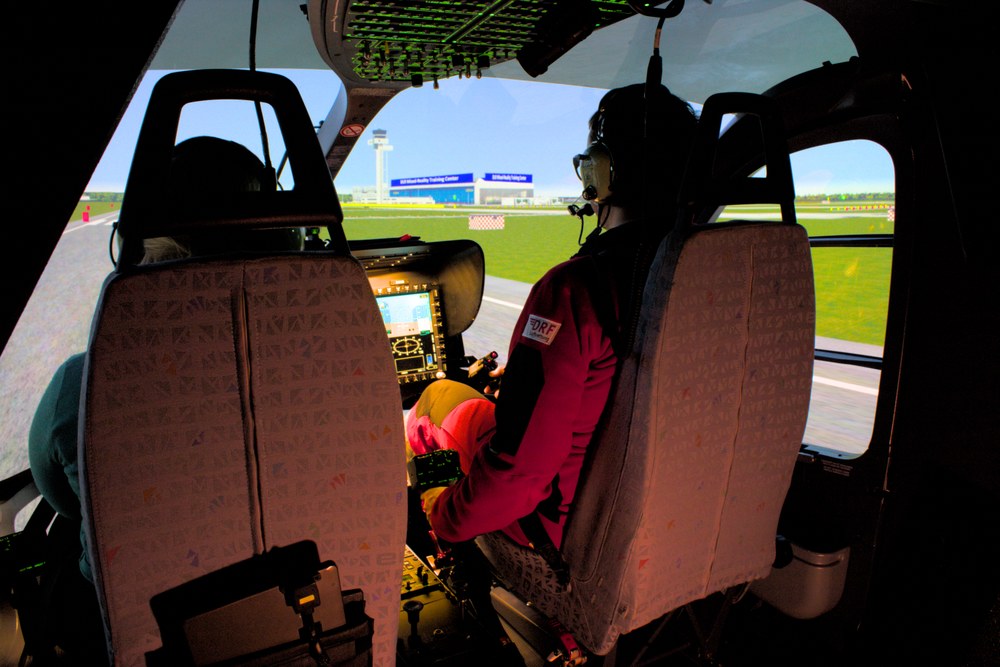
Interior view of the H145 full-flight simulator from Reiser Simulation and Training at LAT (Lufthansa Aviation Training), which was used in the ARiTra final study for comparison with the mixed-reality simulator
In the ARiTra final study, the pilots completed standardised flight test manoeuvres as well as standard tasks, and subsequently assessed the simulation quality. The study was carried out with the support of the DRF pilots.
ARTE stands for Augmented Reality for Training Excellence and is a joint research project between Reiser Simulation and Training (RST) and the German Aerospace Centre (DLR). The aim is to take Multi-Crew Coordination (MCC) training for helicopter crews to a new level through the use of Augmented and Mixed Reality (AR/MR) technologies.
The project is funded under the aviation research programme LuFo Klima VII-1 and makes a measurable contribution to greater safety, efficiency and sustainability in aviation.
Motivation
Modern helicopter operations place high demands on teamwork, situational awareness and decision-making skills among pilots. Traditional training methods are increasingly reaching their limits – both economically and ecologically.
This is precisely where ARTE comes in: through realistic simulator training using AR/MR technologies, actual flight hours can be reduced, CO₂ emissions significantly lowered, and at the same time, training quality and safety enhanced.
Project objectives
The key objectives of ARTE are:
Scientific development of an AR/MR flight simulator with multi-crew coordination capability (MCC)
Improvement of training quality through live performance metrics (e.g. eye-tracking)
Reducing the workload of flight instructors through AI-supported analysis of physiological data
Reduction in actual training flights, leading to savings in costs, noise and emissions
Assessment of qualification eligibility in accordance with EASA and FAA standards
Technological innovations
The ARTE project brings together several technological innovations:
Virtual Instructor Operator Station (IOS): A fully virtual IOS is displayed directly in the instructor’s mixed-reality headset. This allows the flight instructor to sit alongside the pilot – much like in a real cockpit – whilst simultaneously controlling the simulation.
Live performance metrics: Using eye-tracking and physiological sensor data, live metrics are being developed that provide insights into stress levels, attention and training progress. This enables more targeted feedback and a more personalised training programme.
Multi-Crew Coordination in AR/MR: The existing ARiTra simulator is being expanded to include a second set of MR glasses, enabling genuine MCC training with a pilot and a flight instructor in a shared mixed-reality environment.
Sustainability & Climate Impact:
By shifting training hours from real aircraft to the simulator, significant savings can be achieved:
A medium-sized helicopter emits approx. 632 kg of CO₂ per flight hour
Potential savings: around 1,900 tonnes of CO₂ per year in helicopter training
In addition, AR/MR simulators require less energy than traditional full-flight simulators, thereby further contributing to the conservation of resources.
Outlook
ARTE is laying important foundations for future training standards. The results will be incorporated into the further development of certifiable AR/MR simulators and will support safe, efficient and sustainable pilot training in the long term.